The Prayer of St. Ephrem
I’ve added a new prayer to my Catholic Prayers podcast feed, since Hallow doesn’t seem to have the Prayer of St Ephrem…

Prayer of St. Ephrem (Download)
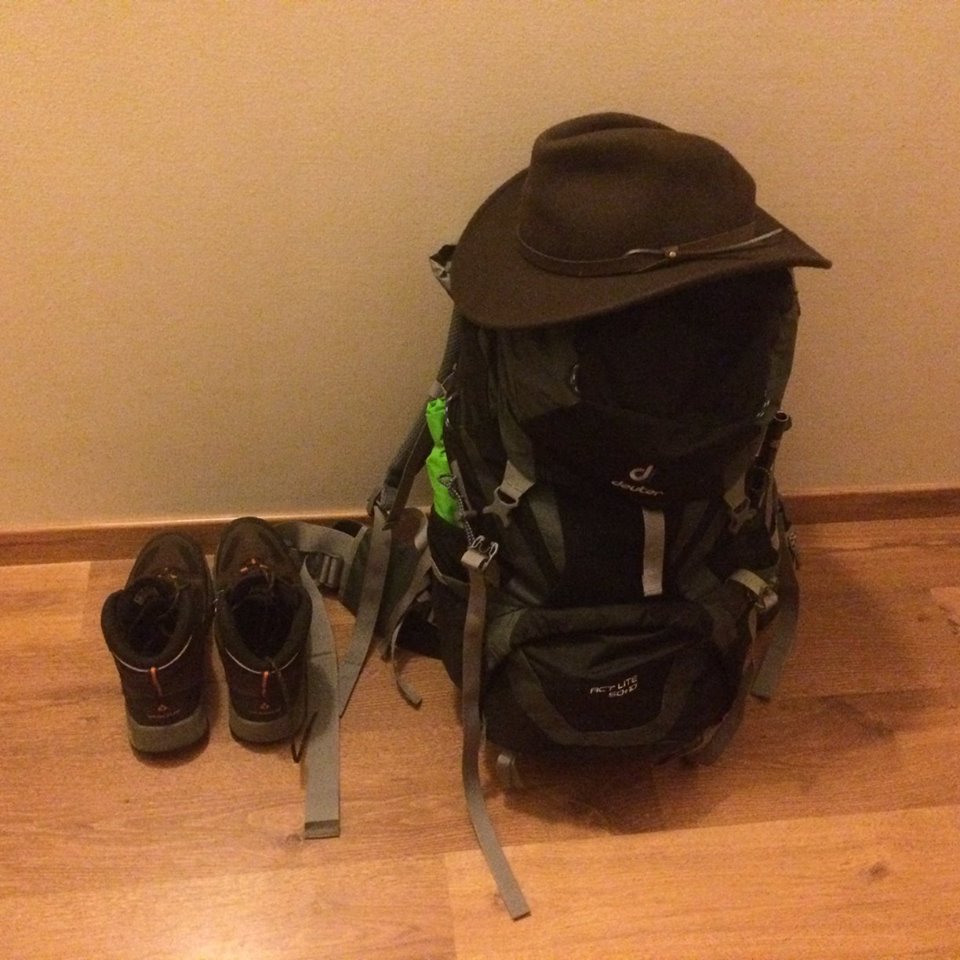
"We are travellers…not yet in our native land" – St. Augustine
I’ve added a new prayer to my Catholic Prayers podcast feed, since Hallow doesn’t seem to have the Prayer of St Ephrem…

Prayer of St. Ephrem (Download)
Things have been a bit non-stop this last week, so I’m afraid these notes are late, slightly shorter than usual and a little bit rushed, but as GK Chesterton said, “If something is worth doing, it’s worth doing badly”…
After Jeremiah, Isaiah is my favourite prophet. This book is often called “The Fifth Gospel” and, with a passage like this, it’s easy to see why. Here, God gives a beautiful invitation to His people to come and be satisfied, to return to Him, to come and be filled free of charge! Why settle for anything less?
When we recognize our hunger and our dependence on God, He will fill us and give us life.
Thus says the LORD:
“All you who are thirsty, come to the water!
You who have no money, come, receive grain and eat;
Come, without paying and without cost, drink wine and milk!
Why spend your money for what is not bread; your wages for what fails to satisfy?
Heed me, and you shall eat well, you shall delight in rich fare.
Come to me heedfully, listen, that you may have life.
I will renew with you the everlasting covenant, the benefits assured to David”
Suggested Questions:
The earliest depiction of Jesus’ crucifixion doesn’t, in fact, come from a Christian source. It is known as Alexamenos Graffito and, as the name suggests, it’s a piece of graffiti. It was found near Rome’s Palatine Hill and is dated sometime between 1st and 3rd Century:

The text underneath the picture says in Greek “Alexamenos worships [his] God”. The picture itself shows Jesus on a cross with a donkey’s head, with another person on the left (presumably “Alexamenos”) raising his hand in worship. It’s clear that this was written by someone who knew Alexamenos and wanted to mock him and his Christian faith.
Unfortunately a little rushed this week, but here you go…
The readings this week concern themselves with the tricky subject of relationships and, in particular, relationships between Christians. The passages address the question of how sin and disputes are to be handled in the Church.
Last week we heard from the Prophet Jeremiah. This week we have switched to the Prophet Ezekiel, but continue with the theme of God’s word.
Thus says the LORD:
“You, son of man, I have appointed watchman for the house of Israel; when you hear me say anything, you shall warn them for me. If I tell the wicked, ‘O wicked one, you shall surely die’ and you do not speak out to dissuade the wicked from his way, the wicked shall die for his guilt, but I will hold you responsible for his death. But if you warn the wicked, trying to turn him from his way, and he refuses to turn from his way, he shall die for his guilt, but you shall save yourself”
I wanted to just blog briefly about a passage of scripture which I’ve been thinking a lot about recently, 2 Samuel 24:18-24:
That day Gad came to David and said to him, “Go up and build an altar to the Lord on the threshing floor of Araunah the Jebusite.”
So David went up to do what the Lord had commanded him. When Araunah saw the king and his men coming toward him, he came and bowed before the king with his face to the ground. “Why have you come, my lord the king?” Araunah asked.
David replied, “I have come to buy your threshing floor and to build an altar to the Lord there, so that he will stop the plague.”
“Take it, my lord the king, and use it as you wish,” Araunah said to David. “Here are oxen for the burnt offering, and you can use the threshing boards and ox yokes for wood to build a fire on the altar. I will give it all to you, Your Majesty, and may the Lord your God accept your sacrifice.”
But the king replied to Araunah, “No, I insist on buying it, for I will not present burnt offerings to the Lord my God that have cost me nothing.” So David paid him fifty pieces of silver for the threshing floor and the oxen.
I few years ago I came across this passage only minutes before I was about to do something I really did not want to do. The part that stuck out to me was that David refused to offer to God the free gifts from Araunah:
“I will not [make a sacrifice that] cost me nothing“
This Scripture passage showed me what makes a sacrifice…a sacrifice. The very nature of a sacrifice is that it costs us something. It reminded me that living a life which gives glory to God sometimes requires us to do what we would rather avoid.
“The sacrifices of God are a broken spirit; a broken and contrite heart.” – Psalm 51:7


Now that I’ve built a preliminary glossary of Islamic terms, it’s time to read some more chapters of the Qur’an! Today I’m reading suwar 106, 101, 75, 104, 77, 50 and 90.
Surah 106 – “Winter” (Quraish)
This chapter addresses the Quraysh the tribe who dwell in Mecca. Allah says that because of the blessing He has given them, they should worship Him.
Questions
Q1. In what sense is the Ka’bah Allah’s “House”? Does he dwell there in any special sense as Yahweh did in the Jerusalem Temple?
Last year I didn’t complete my Reading List and so to encourage me to finish it this year I’m going to post an update on the 1st of every month with my progress.