I saw someone post this on Facebook and thought it was simply brilliant:
Everyone puts their phones in the middle of the table. Whoever cracks first by touching their phone, pays for the entire meal.
The purpose of the game was to get everyone off their phones, away from twitter, facebook, texting, etc and to encourage conversations. In other words, help cure the “Anti-Social Social Media Craziness”. Here are the rules:
1. The game starts after everyone sits down.
2. Everybody places their phone in the middle of the table.
3. The first person to touch their phone loses the game.
4. Loser of the game pays the bill for everyone’s meal.
5. If the bill comes before anyone has touched their phone, everybody is declared a winner and pays for their own meal.
In anticipation of Season 4, Matt sat down and shared some of his favourite quotations from the book which we will be reading this Season, The Screwtape Letters…
There is no need to despair; hundreds of these adult converts have been reclaimed after a I brief sojourn in the Enemy’s camp and are now with us. All the habits of the patient, both mental and bodily, are still in our favour…
If once they get through this initial dryness successfully, they become much less dependent on emotion and therefore much harder to tempt.
The Screwtape Letters, Letter 2
Teach them to estimate the value of each prayer by their success in producing the desired feeling; and never let them suspect how much success or failure of that kind depends on whether they are well or ill, fresh or tired, at the moment.
The Screwtape Letters, Letter 4
He really does want to fill the universe with a lot of loathsome little replicas of Himself—creatures, whose life, on its miniature scale, will be qualitatively like His own, not because He has absorbed them but because their wills freely conform to His. We want cattle who can finally become food; He wants servants who can finally become sons. We want to suck in, He wants to give out. We are empty and would be filled; He is full and flows over.
The Screwtape Letters, Letter 8
…the Trough periods of the human undulation provide excellent opportunity for all sensual temptations, particularly those of sex
The Screwtape Letters, Letter 9
The Enemy’s demand on humans takes the form of a dilemma; either complete abstinence or unmitigated monogamy
The Screwtape Letters, Letter 18
It is the business of these great masters to produce in every age a general misdirection of what may be called sexual “taste”. This they do by working through the small circle of popular artists, dressmakers, actresses and advertisers who determine the fashionable type. The aim is to guide each sex away from those members of the other with whom spiritually helpful, happy, and fertile marriages are most likely.
The Screwtape Letters, Letter 20
You no longer need a good book, which he really likes, to keep him from his prayers or his work or his sleep; a column of advertisements in yesterday’s paper will do. You can make him waste his time not only in conversation he enjoys with people whom he likes, but in conversations with those he cares nothing about on subjects that bore him. You can make him do nothing at all for long periods.
You can keep him up late at night, not roistering, but staring at a dead fire in a cold room. All the healthy and outgoing activities which we want him to avoid can be inhibited and nothing given in return, so that at last he may say, as one of my own patients said on his arrival down here, “I now see that I spent most of my life in doing neither what I ought nor what I liked”.
The Screwtape Letters, Letter 12
You no longer need a good book, which he really likes, to keep him from his prayers or his work or his sleep; a All we can do is to encourage the humans to take the pleasures which our Enemy has produced, at times, or in ways, or in degrees, which He has forbidden
The Screwtape Letters, Letter 9
Indeed the safest road to Hell is the gradual one—the gentle slope, soft underfoot, without sudden turnings, without milestones, without signposts
The Screwtape Letters, Letter 12
Everything has to be twisted before it’s any use to us. We fight under cruel disadvantages. Nothing is naturally on our side.
The Screwtape Letters, Letter 22
To be greatly and effectively wicked a man needs some virtue.
The Screwtape Letters, Letter 29
You must therefore conceal from the patient the true end of Humility. Let him think of it not as self-forgetfulness but as a certain kind of opinion (namely, a low opinion) of his own talents and character
The Screwtape Letters, Letter 14
Surely you know that if a man can’t be cured of churchgoing, the next best thing is to send him all over the neighbourhood looking for the church that “suits” him until he becomes a taster or connoisseur of churches.
The Screwtape Letters, Letter 16
You should always try to make the patient abandon the people or food or books he really likes in favour of the “best” people, the “right” food, the “important” books.
The more often he feels without acting, the less he will be able ever to act, and, in the long run, the less he will be able to feel…
Lewis and MacDonald overhear the conversation between a Ghost whose husband is in Heaven. She initially says she wants nothing to do with him, but ends up demanding that he beg given to her. In between, we get a vivid picture of their marital life together…
A little while ago I published the list of questions which we use at the beginning of our Bible studies. Now, I know some people might find it a bit dull, and perhaps not the most interesting way to learn the Faith, but I’m a big fan of such things since it provides a framework within in which people can understand their faith. We devote time to continued learning about things which interest us in other areas of our lives, so why should it be any different when it comes to religion?
In our group we’ve recently added the names of the Twelve Apostles. Can you name them all? I’ll walk through them after the jump…
Today’s post is a continuation of yesterday’s article, introducing the readers to twenty things they might not know about C.S. Lewis…
11. Lewis addressed the nation during World War Two
After the success of his book, The Problem of Pain, Lewis was invited by the BBC (British Broadcasting Corporation) to speak on the radio to the nation during World War Two. These radio addresses later became the basis for one of Lewis’ best known books, Mere Christianity. As well as arguing for the existence of God, he used these broadcasts to defend the basic tenets of Christianity which are held across all Christian denominations.
12. He wrote many books, across many different genres
Mere Christianity was just one of the thirty or so books Jack wrote. What is particularly amazing about his vast literary output, even aside from the fact that he wrote every line with a dip pen, is that his works are of many literary styles. Lewis produced apologetics, fairy tales, science fiction, essays, autobiography, poetry and anthologies, as well as his academic work in literary criticism. In fact, you might say that he was a “Jack of all genres”…. 😉
All these successful books earned Lewis considerable wealth, but he gave away about two thirds of his income. He did this anonymously through The Agape Fund which he established.
13. There’s more to Narnia than you might think…
Probably Lewis’ most well-known works are The Chronicles of Narnia. Many of these have received TV and movie adaptations. These books were read to me as a child and, while the Narnia stories seemed to me somehow familiar, I didn’t fully grasp the Christian nature of these books until much later. However, Lewis was very quick to argue that Narnia wasn’t simply Christian allegory. Instead, he called it an “imaginative supposal”. He said:
Suppose there were a Narnian world and it, like ours, needed redemption. What kind of Incarnation and Passion might Christ be supposed to undergo there?
C.S. Lewis
Lewis understood the power of story-telling and its ability to smuggle ideas past our “watchful dragons” of prejudice. Stories allow us to encounter ideas afresh and with renewed potency. He had been affected by this himself, many years before when he read George MacDonald’s Phantastes, which he described as baptising his imagination.
However, there are even more layers to the Chronicles of Narnia! About ten years ago, Dr. Michael Ward (a convert to Catholicism and the 100th priest of the newly-formed Anglican Ordinariate), published his book Planet Narnia, which argued convincingly that Lewis had based The Chronicles of Narnia upon the medieval cosmos. Each of the books correspond to one of the seven heavens and planets. For example, Prince Caspian is associated with the planet Mars which is, in turn associated with war and trees, motifs which we find interlaced throughout that book.
14. A pen friend to many
Not only was Lewis a “man of letters”, he was also a prolific letter-writer. For example, he regularly corresponded with his Irish childhood friend, Arthur Greeves, for over half a decade!
With Lewis’ celebrity, came many more letters, sent to him by adults as well as children. Jack took this responsibility very seriously and spent several hours a day writing responses to the avalanche of fan mail. There’s even an adorable letter from a mother whose child was worried that he loved Aslan more than Jesus.
15. He was snubbed at Oxford, but recognised at Cambridge
Despite his acclaim and popularity as a lecturer, Lewis was many times overlooked for promotion at Oxford University. The commonly accepted reason for this was that he wrote and spoke openly about his Christianity. Many felt it unbecoming of a man in his position, particularly one who didn’t even belong to the Theology Faculty. Fortunately, Cambridge University created a position specifically for him which, after some persistent pestering, he eventually accepted.
This wasn’t the only prize he was invited to accept. Lewis was offered a CBE (Commander of the British Empire) by the Prime Minister Winston Churchill in 1951, but Lewis declined it, saying that he feared it might politicise his apostolate.
16. He wasn’t Catholic, but often sounded a lot like one
Many Catholics are surprised to discover that Lewis wasn’t actually a Catholic himself. This is understandable when one looks at some of Lewis’ beliefs. For example, he wrote about the Sacraments, spoke highly of the Blessed Sacrament, he believed in Purgatory and praying for the dead and regularly went to auricular confession to an Anglican priest.
Although he tried to avoid talking about his opposition to Catholicism, when pressed he cited the authority of the Pope and the veneration of Our Lady as his chief complaints. However, his Catholic friend Tolkien blamed what he called Lewis’ “Ulsterior Motive”, suggesting that the deep-seated distrust of Catholics which he had been taught as a boy in Ireland never entirely left him. Lewis himself admits to this kind of childhood indoctrination when he recounts his first meeting Tolkien:
At my first coming into the world I had been (implicitly) warned never to trust a Papist, and at my first coming into the English Faculty (explicitly) never to trust a philologist. Tolkien was both
C.S. Lewis, Surprised By Joy
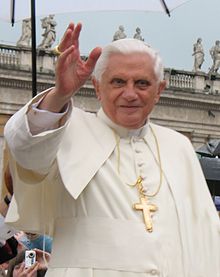
Despite Jack’s resistance to embracing Catholicism, he is very much loved by Catholics. Both Pope St. John-Paul II and Pope Emeritus Benedict XVI were very familiar with his work and spoke of it. Not only that, but many, many people credit Lewis, at least in part, with their conversion to Catholicism. This list of people includes those such as Dr. Peter Kreeft, Fr. Dwight Longernecker, Thomas Howard, as well as Lewis’ own secretary, Walter Hooper.
17. He lived most of his life as a bachelor, but married late in life
Lewis had lived most of his life as a bachelor. However, among the many letters he received from fans, one was from an American poet and writer named Joy Gresham. The two quickly developed a firm friendship. Joy visited England and eventually moved there with her two sons. When it seemed that the British Government was going to force them to leave the country, Lewis offered her a civil marriage so that she and her children could legally stay in England.
Joy and Jack Lewis
Unfortunately, shortly after they had obtained a civil marriage certificate, Joy was diagnosed with cancer. She was not expected to live long. Suddenly faced with the possibility of losing her, Jack realized his deeper feelings for his friend. They were married at her hospital bed by one of Jack’s friends who was an Anglican priest. Afterwards, the clergyman prayed and laid hands on Joy. To everyone’s surprise, she was granted a remission of four years before the cancer returned. Heartbroken by her death, he chronicled his mourning in his moving book, A Grief Observed.
18. He is probably one of the most misquoted men on the Internet
As we all know, Abraham Lincoln warned us not to believe all quotations we see on the Internet! This is particularly true of Lewis, who seems to have his name attached to many quotations which he never actually said.
In fact, when I was in Oxford a few weeks ago, while looking at the various Inklings-themed walking tours, I found one which cost a whopping $335, but which, even aside from the numerous spelling mistakes on the website, included this quotation attributed to C.S. Lewis:
“You are never too old to set another goal or to dream a new dream”
Not C.S. Lewis!
Unfortunately, he never said it and I find that people on the Internet don’t appreciate it when I point such things! I would recommend that if anyone would like to verify a C.S. Lewis quotation, that they look it up in William O’Flaherty’s book, The Misquotable C.S. Lewis.
19. His death was overshadowed
Lewis died in his bed on November 22nd, 1963 at the age of 64. This was the same day on which Aldous Huxley died, and the same day on which President John F. Kennedy was killed. As such, Lewis’ death was largely overlooked as JFK’s assination dominated the news that day and in the subsequent weeks.
Aldous Huxley
President Kennedy
Jack’s funeral was small and his brother, Warnie, who had always struggled with alcoholism, was finding comfort at the bottom of a bottle of whisky.
20. He won most arguments, except one
Lewis’ secretary, Walter Hooper likes to say that he lost every argument he ever had with Jack…except one. Lewis was convinced that nobody would continue reading his books following his death, whereas Hooper said he was certain that their popularity would continue. Not only would Hooper be vindicated by history, he would have a hand in ensuring that his friend’s legacy would endure.
In the years following Lewis’ death, Hooper released a number of new works, previously unpublished, including several volumes of Jack’s letters. However, Hooper demanded that with each new book he gave to the publishers, that they re-release two of Jack’s older works, thus keeping his books continuously in print.
Today Lewis’ popularity is greater than ever. His books continue to sell in large numbers and Netflix recently purchased the rights to The Chronicles of Narnia! Six years ago on the 50th anniversary of Jack’s death, he was officially recognised at Poet’s Corner in Westminster Abbey (London) as one of the great British writers. The Episcopal Church have even honoured him with a Collect in their Liturgical Calendar:
“O God of searing truth and surpassing beauty, we give thee thanks for Clive Staples Lewis, whose sanctified imagination lighteth fires of faith in young and old alike; Surprise us also with thy joy and draw us into that new and abundant life which is ours in Christ Jesus, who liveth and reigneth with thee and the Holy Spirit, one God, now and for ever. Amen” – Collect of the Episcopal Church
Today is the feast day of St. Peter and St. Paul, two of the great pillars of the Church:
Liturgical Surprise
This morning at the Byzantine liturgy I was struck by how the themes of patience and perseverance came up again and again in the Liturgy of the Word. The Apostolic Reading (roughly equivalent to the Second Reading in the Roman Mass) even contained my life verse where St. Paul talks about how the grace of God operates through our weakness 🙂
If I had been the one to choose the Readings today I would have probably chosen other readings, so during the Liturgy I pondered why the Church chose those particular passages…
In part, I think it might be due to the fact that Peter and Paul were not only great leaders of the Church, but they were also martyrs, enduring suffering and offering their lives to God in the most radical way. I think by focussing on the theme of patient endurance the Church is teaching us that we are all called to do the same, to be patient in adversity and to allow the “fertilizer of life” to yield fruit within us (Romans 5:1-5) and to offer our entire lives to the Lord.
First Century Example
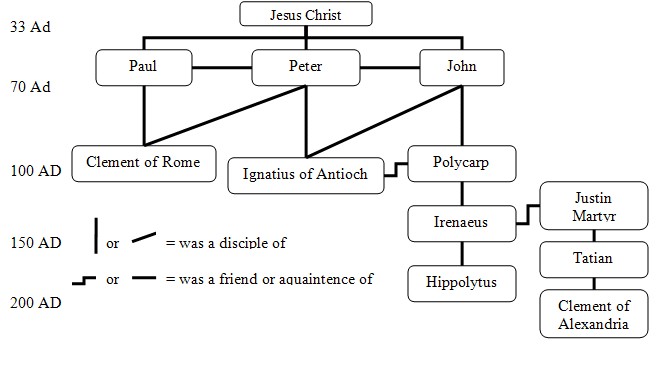
At the end of the First Century, Clement of Rome wrote a letter to the Church at Corinth. The Church at Corinth was having difficulties (again). This time they had rebelled against their clergy, so St. Clement wrote to them to resolve the issue. During the course of his letter, he spoke about how envy and jealousy had caused havoc and destruction in the lives of different Old Testament characters. He then turned to, what was for Clement, very recent events:
But not to dwell upon ancient examples, let us come to the most recent spiritual heroes. Let us take the noble examples furnished in our own generation. Through envy and jealousy, the greatest and most righteous pillars of the Church have been persecuted and put to death.
Let us set before our eyes the illustrious apostles. Peter, through unrighteous envy, endured not one or two, but numerous labours and when he had at length suffered martyrdom, departed to the place of glory due to him. Owing to envy, Paul also obtained the reward of patient endurance, after being seven times thrown into captivity, compelled to flee, and stoned. After preaching both in the east and west, he gained the illustrious reputation due to his faith, having taught righteousness to the whole world, and come to the extreme limit of the west, and suffered martyrdom under the prefects. Thus was he removed from the world, and went into the holy place, having proved himself a striking example of patience – Pope St. Clement of Rome (c. AD 96)
As you can see, Clement reminds the Corinthians of Peter and Paul, examples of those who patiently endured and, who for their fidelity, won crowns of eternal life.
Let’s Feast!
Since today is the Feast of St. Peter and St. Paul, it is also my Feast Day, since I took the name “Peter” at my Confirmation. I always make a point of celebrating my Feast Day, so I’ll be sure to pick up something delicious for dessert later 🙂
Do you celebrate your feast day? If so, what do you do?
Those of you who know me will know that I’m someone who is not a very “Christmas-y” sort of person…
Why?
Well, it’s probably partly because all my childhood recollections of school between September to January are dominated by memories of interminable carol rehearsals! I hate shopping at all times of the year, but especially during the Christmas rush. I hate picking up pine needles and I think fake trees are, well, fake. I don’t like the dark or cold which I usually associate with Christmas. I always look forward to the extraordinary liturgy of the Church at Easter, but at Christmas it is largely unchanged. And finally, nothing annoys me more than the saccharin-coated cheeriness which seems to be induced in people every December.