Best Statue In Rome

I just saw on Facebook that one of my friends is currently visiting Rome.

About a year and a half ago I also went to Rome. During my stay, my senses were flooded with beautiful architecture, paintings and statues, one of the highlights of which was Michelangelo’s Pieta found in St. Peter’s.

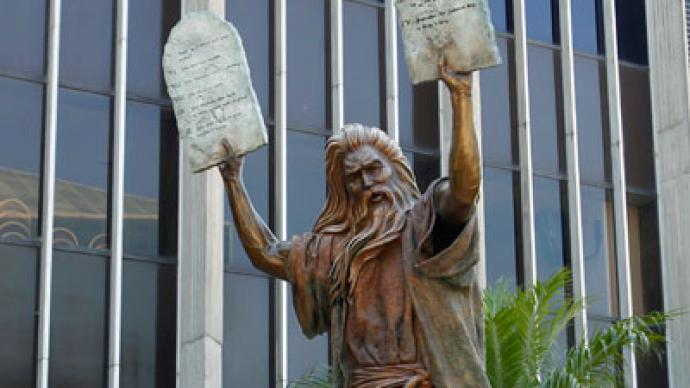
Now, no offense to Michelangelo (he is,  after all, my favourite Ninja Turtle), but the Pieta was’t my favourite statue. Rather, it was this statue found outside the “Ospedale Santo Spirito”:

“We are taught from the very first moment to discover Christ under the distressing disguise of the poor, the sick, the outcasts, Christ presents Himself to us under every disguise: the dying, the paralytic, the leper, the invalid, the orphan. It is faith that makes our work, which demands both special preparation and a special calling, easy or at least more bearable” (Mother Theresa, No Greater Love, 166)

PWJ: S4E87 – AH – “After Hours” with Marcellino D’Ambrosio

Both Matt and David love When the Church Was Young by Dr. Marcellino D’Ambrosio. After mentioning it in a couple of episodes, an increasing number of listeners read it as well. As a result, they decided to invite Dr. D’Ambrosio onto the show to discuss his book.

S4E87: “After Hours” with Dr. Marcellino D’Ambrosio (Download)

If you enjoy this episode, you can subscribe manually, or any place where good podcasts can be found (iTunesGoogle Play, AmazonPodbeanStitcherTuneIn and Overcast), as well as on YouTube. The roadmap for Season 4 is available here.

More information about us can be found on our website, PintsWithJack.com. If you’d like to support us and get fantastic gifts, please join us on Patreon.

Read more

Restless Heart: 3 – “Confession”

Confession

In the past few episodes we have indirectly at two of the Sacraments, the Eucharist and Matrimony. In today’s episode we’ll be looking directly at the Sacrament of Confession, what it is, where it comes from and a few pieces of advice to bear in mind when you go.

Episode 3: Confession (Download)


— Notes —

* A brief defense of the Catholic practice of Confession is available here.

* If you would like to read the prayers said by the priest in the Byzantine form of Confession, they are available here.

* The event we talk about at the end of the show took place a couple of days ago and you can listen to the audio here.

Please subscribe to this podcast using iTunes and Google Play and if you have any feedback or would like to pose a question for an upcoming episode, you can send us a message from the website or tweet us at @davidandnessa.

Mere Christianity – Book III – Chapter 10 (“Hope”)

Book-3

Picking back up my notes for C.S. Lewis’ “Mere Christianity”…

Notes & Quotes

1. Hope is not wishful thinking

“Hope is one of the Theological virtues. This means that a continual looking forward to the eternal world is not (as some modern people think) a form of escapism or wishful thinking, but one of the things a Christian is meant to do”

2. It does not mean we can abdicate from our earthly responsibilities

“It does not mean that we are to leave the present world as it is. If you read history you will find that the Christians who did most for the present world were just those who thought most of the next. The Apostles themselves, who set on foot the conversion of the Roman Empire, the great men who built up the Middle Ages, the English Evangelicals who abolished the Slave Trade, all left their mark on Earth, precisely because their minds were occupied with Heaven”

3. We often don’t want Heaven

Most of us find it very difficult to want “Heaven” at all-except in so far as “Heaven” means meeting again our friends who have died.

(a) …usually because we’re too focussed on this world…

“One reason for this difficulty is that we have not been trained: our whole education tends to fix our minds on this world. Another reason is that when the real want for Heaven is present in us, we do not recognise it”

(b) …even when this world should be pointing us to the next…

“There are all sorts of things in this world that offer to give it to you, but they never quite keep their promise. The longings which arise in us when we first fall in love, or first think of some foreign country, or first take up some subject that excites us, are longings which no marriage, no travel, no learning, can really satisfy. I am not now speaking of what would be ordinarily called unsuccessful marriages, or holidays, or learned careers. I am speaking of the best possible ones. There was something we grasped at, in that first moment of longing, which just fades away in the reality. I think everyone knows what I mean”

We can respond to this in three different ways:

(i) Blame those things

“He puts the blame on the things themselves. He goes on all his life thinking that if only he tried another woman, or went for a more expensive holiday, or whatever it is, then, this time, he really would catch the mysterious something we are all after. Most of the bored, discontented, rich people in the world are of this type”

(ii) Become disillusioned

“He soon decides that the whole thing was moonshine… And so he settles down and learns not to expect too much and represses”

(A) Which would be great if man did not live for ever

“But supposing infinite happiness really is there, waiting for us? Supposing one really can reach the rainbow’s end?”

(B) …but not if man lives forever

“In that case it would be a pity to find out too late (a moment after death) that by our supposed ‘common sense’ we had stifled in ourselves the faculty of enjoying it”

(iii) The Christian Way

“Creatures are not born with desires unless satisfaction for those desires exists. A baby feels hunger well, there is such a thing as food. A duckling wants to swim: well, there is such a thing as water. Men feel sexual desire: well, there is such a thing as sex. If I find in myself a desire which no experience in this world can satisfy, the most probable explanation is that I was made for another world. If none of my earthly pleasures satisfy it, that does not prove that the universe is a fraud. Probably earthly pleasures were never meant to satisfy it, but only to arouse it, to suggest the real thing. If that is so, I must take care, on the one hand, never to despise, or be unthankful for, these earthly blessings, and on the other, never to mistake them for the something else of which they are only a kind of copy, or echo, or mirage. I must keep alive in myself the desire for my true country, which I shall not find till after death; I must never let it get snowed under or turned aside; I must make it the main object of life to press on to that other country and to help others to do the same.”

4. We shouldn’t interpret the descriptions of Heaven overly-literally

“There is no need to be worried by facetious people who try to make the Christian hope of ‘Heaven’ ridiculous by saying they do not want ‘to spend eternity playing harps.’ The answer to such people is that if they cannot understand books written for grown-ups, they should not talk about them… People who take these symbols literally might as well think that when Christ told us to be like doves, He meant that we were to lay eggs”

(a) They symbolic

“All the scriptural imagery (harps, crowns, gold, etc.) is, of course, a merely symbolical attempt to express the inexpressible. Musical instruments are mentioned because for many people (not all) music is the thing known in the present life which most strongly suggests ecstasy and infinity. Crowns are mentioned to suggest the fact that those who are united with God in eternity share His splendour and power and joy. Gold is mentioned to suggest the timelessness of Heaven (gold does not rust) and the preciousness of it”

Discussion Questions

1. What is hope?

2. Does the belief in Heaven mean that we can ignore earth?

3. Why do we sometimes struggle to desire Heaven?

4. In what way does this world point to Heaven? How do people respond to this?

5. Why should we not interpret Heaven’s descriptions in the Bible?

C.S. Lewis Doodle

No doodle!

Sunday Lectionary: Power and Responsibility

Thirty-First Sunday in Ordinary Time: October 30, 2011

The Readings this week focus around the relationship between power and responsibility. It answers the question: what does the Lord demand of a leader?

In the First Reading, the Prophet Malachi speaks out against the Levite priests for abusing their position of power. They did not honour their privileged relationship with God. King David sings in the Psalm about the attitude which they should have had: humility rather than pride.

In the Second Reading we gain insight into St. Paul’s relationship with the Church in Thessalonica. Although Paul had founded that church and although he had legitimate authority over them as an Apostle he speaks tenderly to them and lovingly, as one might expect a good father.

Not so with the Pharisees! In the Gospel Jesus condemns them for not practising what they preach, for placing heavy burdens on the Children of Israel and for constantly seeking public adulation.

Jesus then turns the concept of leadership on its head. If you want to be great in the Kingdom, he says, you must humble yourself and serve. As a great man once said, with great power comes great responsibility…

Read more

Abortion Changes You

Monday marked the end of this month’s “Theology On Tap”, a Diocesan Catholic young adult event, this time hosted by the JP2 Group. Our opening speaker at the start of the month was the incomparable Paul J Kim and the series of talks was brought to a close by Michaelene Fredenburg.

Michaelene’s talk was entitled “Invitation to healing: reaching those touched by abortion”. Abortion is certainly a very sensitive subject and Michaelene handled it beautifully and delicately. She didn’t present a theological treatise as to why abortion is wrong, but rather presented insight into the life of someone who has been affected by abortion and offered some guidance as to how to sensitively help that person.

It’s inevitable that most people reading this post will have been affected in some way by abortion, either directly or indirectly. For this reason, if you were unable to make it to this last “Theology On Tap” session I would encourage you check out her website at AbortionChangesYou.com.

(In related news, the ex-fiancée of Aerosmith singer Steve Tyler has recently spoken about the abortion she had,  It’s truly worth reading. Tyler himself having spoken about this earlier in the month)

1 73 74 75 76 77 172