Summary
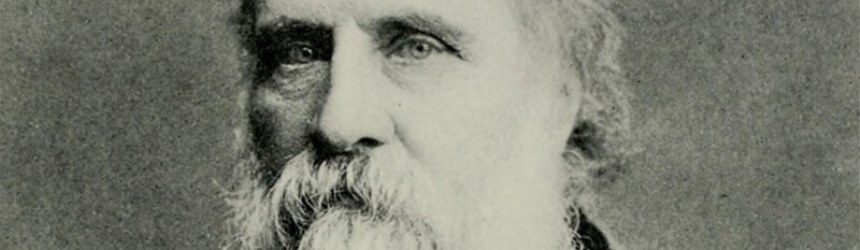
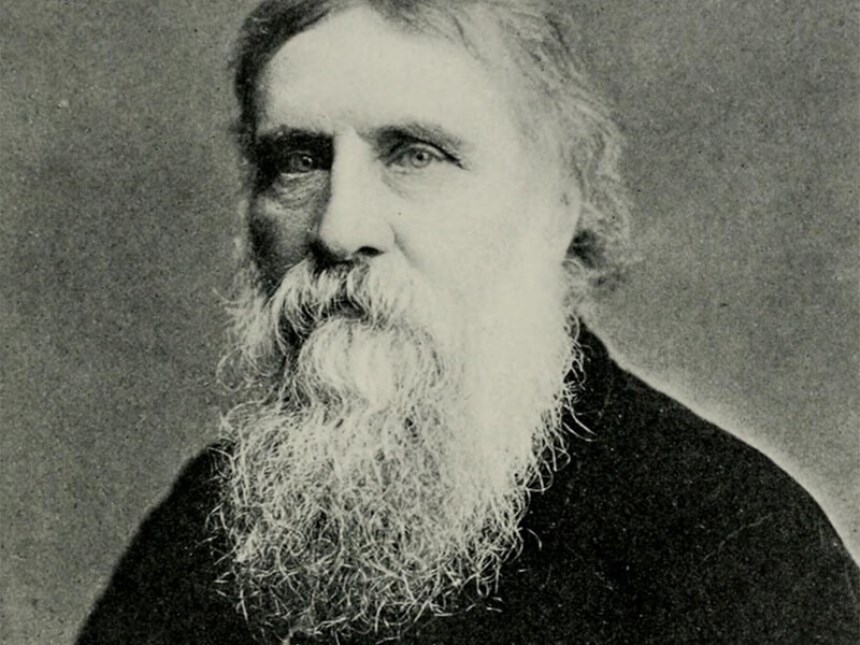
Lewis comes across another of the Bright Person, who turns out to be his hero, the Scottish writer and theologian, George MacDonald. He is invited to sit and talk a while.
Lewis asks him about the Ghosts: “Do any of them stay? Can they stay? Is any real choice
offered to them? How do they come to be here?”. MacDonald reminds him of the Refrigerium, mentioned in Prudentius and by Jeremy Taylor. The damned have holidays, either to Heaven or back to Earth. If they go back to earth, they tend to play tricks on mediums, spy on their children or haunt a house they formerly owned. He says “literary Ghosts hang about public libraries to see if anyone’s still reading their books.” He reminds Lewis that the Emperor Trajan came to visit this land and remained.
Lewis expresses his surprise that there “really a way out of Hell into Heaven”. MacDonald tells him it depends on how he’s using the words: “If they leave that grey town behind it will not have been Hell. To any that leaves it, it is Purgatory. And perhaps ye had better not call this country Heaven. Not Deep Heaven, ye understand… Ye can call it the Valley of
the Shadow of Life. And yet to those who stay here it will have been Heaven from the first. And ye can call those sad streets in the town yonder the Valley of the Shadow of Death: but to those who remain there they will have been Hell even from the beginning.”
MacDonald tries to explain this further, saying, “both good and evil, when they are full grown, become retrospective. Not only this valley but all this earthly past will have been Heaven to those who are saved. Not only the twilight in that town, but all their life on earth too, will then be seen by the damned to have been Hell”
Lewis asks if, therefore, it is correct to say “that Heaven and Hell are only states of mind”. MacDonald sternly rejects it. Hell is indeed a state of mind, “every state of mind, left to itself, every shutting up of the creature within the dungeon of its own mind-is, in the end, Hell. But Heaven is not a state of mind”. However, “Heaven is reality itself. All that is fully
real is Heavenly”.
Lewis asks if there is a real choice after death, since this doesn’t accord with either Catholic or Protestant theology. MacDonald dismisses this question, telling Lewis that he was not brought here “to study such curiosities. What concerns you is the nature of the choice itself: and that ye can watch them making.”
Lewis asks instead, “What do they choose, these souls who go back”? He is told that “There is always something they insist on keeping, even at the price of misery… Ye see
it easily enough in a spoiled child that would sooner miss its play and its supper than say it was sorry and be friends. Ye call it the Sulks. But in adult life it has a hundred fine names…Self-Respect… and Proper Pride.”
Lewis then asks if people are lost through “the undignified vices…mere sensuality”. MacDonald agrees that there are. He says that such people being “by pursuing a real pleasure…But the time comes on when, though the pleasure becomes less and
less and the craving fiercer and fiercer, and though he knows that joy can never come that way, yet he prefers to joy the mere fondling of unappeasable lust and would not have it taken from him”
MacDonald tells the story of “Sir Archibald” who visited Heaven and then returned to the Grey Town. On earth he’d been interested in nothing but survival, beginning “by being philosophical, but in the end he took up Psychical Research”. He dies and comes to the plains of Heaven “and there was no power in the universe would have prevented him staying and going on to the mountains… [But] this country was no use to him at all. Everyone here had ‘survived’ already… His occupation was clean gone”. MacDonald points out that “if he would only have admitted that he’d mistaken the means for the end and had a good laugh at himself he could have begun all over again like a little child and entered into joy. But he would not do that”.
Lewis expresses amazement at this, but his teacher responds that “It is nearer to such as you than ye think”. He reminds him of men “who got so interested in proving the existence of God that they came to care nothing for God Himself… [or] a lover of books that with all his first editions and signed copies had lost the power to read them? Or an organiser of charities that had lost all love for the poor?”
Lewis now asks why, if the Solid People were full of love, they did not go down into Hell to rescue the Ghosts. He is told that he will understand this better before he leaves, but that for the time-being, he must understand that they “have come further for the sake of the Ghosts than ye can understand… Every one of us has interrupted that journey [into the mountains] and retraced immeasurable distances to come down today on the mere chance of saving some Ghosts”. He says that it would do not good to go further, even if it were possible, since “The sane would do no good if they made themselves mad to help madmen.”
Jack asks about those who never even get into the bus, but is told that “everyone who wishes it does. Never fear”. MacDonald says that there are only two kinds of people in the end, those who say to God “Thy will be done” and those to whom God says “Thy will be done”. He says that “All that are in Hell, choose it. Without that self-choice there could be no Hell. No soul that seriously and constantly desires joy will ever miss it. Those who seek find. To those who knock it is opened.”
At this point, they hear a Ghost complaining at enormous speed to one of the Solid People. The Solid Spirit tried to speak, but never got in a word. Lewis tells MacDonald that such a women “doesn’t seem to me to be the sort of soul that ought to be even in danger of damnation. She isn’t wicked: she’s only a silly, garrulous old woman who has got into a habit of grumbling”. MacDonald says the issue is “whether she is a grumbler, or only a grumble. If there is a real woman-even the least trace of one-still there inside the grumbling, it can be brought to life again. If there’s one wee spark under all those ashes, we’ll blow it till the whole pile is red and clear. But if there’s nothing but ashes we’ll not go on blowing them in our own eyes forever”. Leaning on MacDonald’s arm, they walk away.
They see many more ghosts. The most pitiful one they saw was a female Ghost who “supposed herself still capable of attracting the Solid People… If a corpse already liquid with decay had arisen from the coffin, smeared its gums with lipstick, and attempted a flirtation, the result could not have been more appalling”
Lewis asks MacDonald about the earlier incident with the Unicorns and he says that “Ye will have divined that he meant to frighten her; not that fear itself could make her less a Ghost, but if it took her mind a moment off herself, there might, in that moment, be a chance. I have seen them saved so.”
We are told that they meet several Ghosts who come to Heaven “only in order to tell the Celestials about Hell… as if to tinge Heaven with infernal images and colours had been the only purpose for which they came”. Some were even more extreme, wanting “to extend Hell, to bring it bodily, if they could, into Heaven… [some] urged the blessed spirits…to seize Heaven ‘for their own’… planning Ghosts who implored them to… smooth out the horrible grass and moss and heather with asphalt. There were materialistic Ghosts
who informed the immortals that they were deluded: there was no life after death, and this whole country was a hallucination. There were Ghosts, plain and simple: mere bogies”. Finally, there were “grotesque phantoms in which hardly a trace of the human form remained; monsters who had faced the journey…only to spit and gibber out in one ecstasy of hatred their envy and (what is harder to understand) their contempt, of joy”.
MacDonald says that he’d even seen that kind converted, while those less obviously damned have gone back.
While standing by some bushes, they see one of the Solid People talking with a Ghost who had been a famous artist on earth. The Artist Ghost is intent on painting the view, but the Solid Spirit, himself a former artist that “Looking comes first.” He explains that his in his early days of painting, his friend’s success in painting was that he could convey glimpses of Heaven, but here he has the thing itself. He goes on to tell the ghost that after spending longer in this country, “there’ll be some things which you’ll see better than anyone else. One of the things you’ll want to do will be to tell us about them. But not yet”
As the ghost continues to ask about painting, the Solid Spirit speaks about how “Every poet and musician and artist, but for Grace, is drawn away from love of the thing he tells, to love of the telling till, down in Deep Hell, they cannot be interested in God at all but only in what they say about Him. For it doesn’t stop at being interested in paint, you know. They sink lower-become interested in their own personalities and then in nothing but their own reputations”. The ghost assures him that this will not be a problem for him. The Spirit says that any traces of this “will be cured when you come to the fountain… up there in the mountains…. Very cold and clear… When you have drunk of it you forget forever all proprietorship in your own works. You enjoy them just as if they were someone else’s: without pride and without modesty.”
As they start moving towards the mountain, the ghost reassures himself with the fact that in Heaven “there’ll always be interesting people to meet…“. He is disappointed to find out that his friend doesn’t know whether Claude or Cezanne will be at the mountain. There are no “famous” people in Heaven, at least in earthly terms. The ghost comforts himself, saying “One must be content with one’s reputation among posterity…” but then is horrified to discover that they are both completely forgotten on Earth. This is too much for the ghost, who returns to the Grey Town, determined to maintain his legacy.
Questions
Q1. How does MacDonald explain the presence of the ghosts in Heaven?
Q2. In what way is evil retrospective?
Q3. Are Heaven and Hell states of mind?
Q4. According to MacDonald, what’s the same basic reason why ghosts return to the Grey Town?
Q5. Why did Sir Archibald return to the Grey Town?
Q6. Lewis asks why Heaven doesn’t invade Hell. What is George’s response?
Q7. Why does Lewis think the Complaining Ghost unworthy of Hell? How does MacDonald respond? What does he say about those who go to Hell?
Q8. What do you make of the female ghost who tries to attract the Solid People?
Q9. They meet a number of ghosts who come to Heaven with the express purpose of bringing Hell there. What is their motivation?
Q10. Why does the Solid Spirit urge the Artistic Ghost to refrain from painting for the time-being?
Q11. Why is the Artistic Ghost disappointed with Heaven?
Q12. Why does the Artistic ultimately leave Heaven?
Previous Episode | Index | Next Episode
 The album “Hints & Guesses” is the first full-length album from