Glory Unveiled

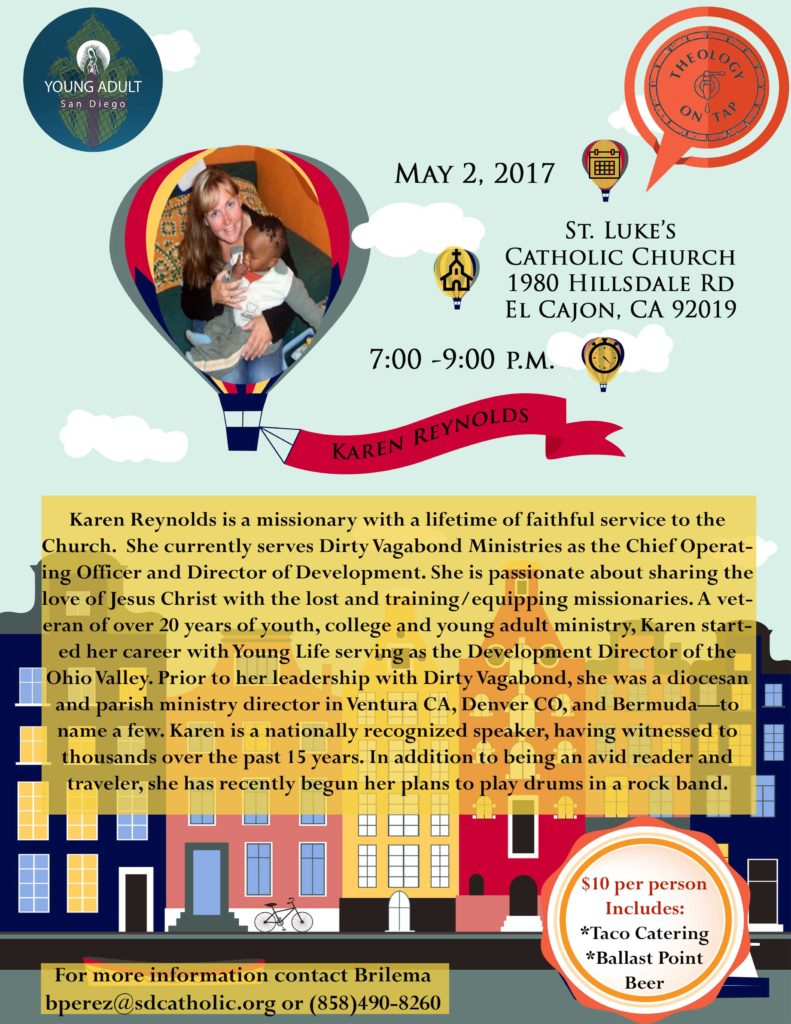
I’m late, but I’m back!  “Theology On Tap” and “Daughters Of The King” craziness is mostly over now so proper blogging should resume shortly…

2nd Sunday of Lent: 4th March, 2012

The Readings this Sunday are a source of encouragement to strengthen to us during this Lenten season.

In the First Reading we read the familiar story of the testing of Abraham. This patriarch was asked by God to offer what was most precious to him, his own beloved son. This Reading demonstrates the obedience of Abraham, but it also gives us a picture of the love of God the Father who “so loved the world that he gave his one and only Son” – John 3:16.

The theme of Christ’s sacrifice is picked up by St. Paul in our Second Reading where he asks [God] did not spare his own Son but handed him over for us all, how will he not also give us everything else along with him?”

Finally, in this week’s Gospel we read the story of the Transfiguration. Jesus, together with His “inner circle” ascend a mountain where His glory is unveiled. While transfigured, Jesus is visited by the two greatest figures in Old Testament history, Moses and Elijah.

As this Lenten season continues, let us be inspired by Abraham’s love of God, comforted by the love of the Father which made Him give His Son and humbled by the love of the Son that He would come be our redeemer. Let us too  become “transfigured”, transformed more and more into the likeness of Christ as we serve Him in the world.

Read more

Roman Catholics Say The Darndest Things

As I mentioned a few days ago, I have issued an open invitation to my friends to come with me to a Byzantine parish on Saturday, 29th June to celebrate the Feast of St. Peter and St. Paul (if you’d like to come, just let me know).

I have already written quite a bit about the byzantine tradition and about my first visit to this parish, but I thought I’d put together a couple of short posts identifying some of the liturgical differences which may be encountered by my Roman Rite friends while on their visit at the end of the month.

I’ll finish the list in a few days, but here are numbers 1-10 for Roman Catholics Say The Darndest Things:

1. “Why does the outside of the building look so weird? Is it a mosque?!”
Eastern and western churches have different architectural styles, so expect to see domes rather than a spire.

Outside Holy Angels

Read more

The Epistle of Joy – Episode #14 (Video)

Today we finish Chapter 3:

Brethren, join in imitating me, and mark those who so live as you have an example in us. For many, of whom I have often told you and now tell you even with tears, live as enemies of the cross of Christ. Their end is destruction, their god is the belly, and they glory in their shame, with minds set on earthly things. But our commonwealth is in heaven, and from it we await a Savior, the Lord Jesus Christ, who will change our lowly body to be like his glorious body, by the power which enables him even to subject all things to himself. – Philippians 3:17-21

Here’s my reflection:

For an audio-only version, please click here.

Previous Episode | Next Episode

Justin Martyr’s Worship

Justin MartyrFor the next three weeks in the JP2 Group we’re going to be looking at the worship in the Early Church.

The following text is an extract from the writing of Justin Martyr (c AD 100 – 165). The document is known as his First Apology, which was written to the Emperor Antionius Pius around AD 150-155. Various English translations were used in the rendering of this extract.

We will be studying this text as a group tomorrow.  At the weekend I’ll do another post about this text, together with a little bit of commentary…

Chapter 65: Baptism & Eucharist

After we have washed someone who has been convinced and has accepted our teaching, we bring him to the place where those who are called “brethren” are assembled. Together, then, we offer hearty prayers: for ourselves, for the illuminated person, and for all others in every place. We pray that we may be counted worthy, now that we have learned the truth, by our works be found good citizens and keepers of the commandments, so that we may be saved with an everlasting salvation.

Having ended the prayers, we greet one another with a kiss. Then bread and a cup of wine mixed with water are brought to the president of the brethren. Taking them, he gives praise and glory to the Father of the universe, through the name of the Son and of the Holy Spirit, and he offers thanks at considerable length for our being counted worthy to receive these things.

And when he has concluded the prayers and thanksgivings, all the people present express their assent by saying “Amen”, the Hebrew for “so be it”. And when the president has given thanks, and all the people have expressed their assent, those who are called “deacons” give to each person present a portion of the bread and the wine mixed with water, over which the thanksgiving was pronounced. To those who are absent, they carry away a portion.

Read more

Dealing with thorns

In the Second Reading at Mass this weekend we had my favourite passage from Paul:

Therefore, in order to keep me from becoming conceited, I was given a thorn in my flesh, a messenger of Satan, to torment me. Three times I pleaded with the Lord to take it away from me. But he said to me, “My grace is sufficient for you, for my power is made perfect in weakness. ” Therefore I will boast all the more gladly about my weaknesses, so that Christ’s power may rest on me. That is why, for Christ’s sake, I delight in weaknesses, in insults, in hardships, in persecutions, in difficulties. For when I am weak, then I am strong. – 2 Corinthians 12:7-10

The question of suffering is one that everyone has to struggle with at some point. For a good treatment on the subject I would invite you to head over to Canterbury Tales to read Taylor’s article Why do we suffer? The theological answer of St. Paul:

Nearly every religion seeks to make sense of the problem of pain. If God is both omnibenificent {all-loving} and omnipotent {all-powerful}, why then does He allow us to suffer?

The Eastern traditions such as Buddhism dismiss pain and suffering as “unreal.” This solution is difficult to explain to a child with cancer.

Other religious traditions attempt to accrue “good karma” in order to ensure that good times will come with a future reincarnated life. For these traditions, the origin of suffering is past sins, even sins committed in previous lives.

Still other religions, such as Islam, seem to place the origin of suffering in the capricious “will of Allah.”

The Catholic Faith offers an entirely different account of suffering… Continue Reading

1 52 53 54 55 56 172