This is the first entry in what I hope to be a regular series of posts about the Early Church Fathers.
It is a good thing to study the Early Fathers because by reading their writings we can get a better picture of what the Church looked like during those early centuries, both during the years of persecution and the years of peace.
The Church Fathers speak to us of the Faith they learned from the Apostles and from their immediate successors. If we would sit and listen, their words can still instruct and inspire us today, just as they did for Christians under their care in their own time.
I would like to begin this series of entries with my favourite Early Church Father, the inspirational martyr and gifted writer, St. Ignatius of Antioch.
“Blessed is the man who perseveres under trial, because when he has stood the test, he will receive the crown of life that God has promised to those who love him.”
– James 1:12
My posts on the Fathers will not normally be this long, but reading St. Ignatius for the first time had some a profound effect on me I want to try and do him justice. Read to the end, it’ll be worth it, I promise.
Today’s post is a guest post by Robin Armit who works forHoly Art, a company which sells all kinds of religious gifts. All religious items have a wondrous story to tell, and Robin enjoys telling them…
It is common knowledge that monks and nuns have a long history of manufacturing many different kinds of products. Production has traditionally been restricted to fairly standard items such as jams, sweets, beers, wine, and even some medicinal goods. Some monasteries are particularly famous for the quality of their products. For example, Trappist monk beer is considered by many to be some of the best brew in the world.
However, not all monasteries have restricted themselves to the more traditional products. Over the years, some monastic communities have branched out into more unusual ventures. For example, would you like to buy some modern cosmetics and skin care products? Perhaps you might want to learn how to ski? Maybe you would like to liven up an evening with some tonic wine? While I wouldn’t recommend trying these all at the same time, but it might surprise you to know that Catholic monks can help you in each of these cases! In the article which follows you’ll learn more about these enterprising monks, as well as the products and services which they supply.
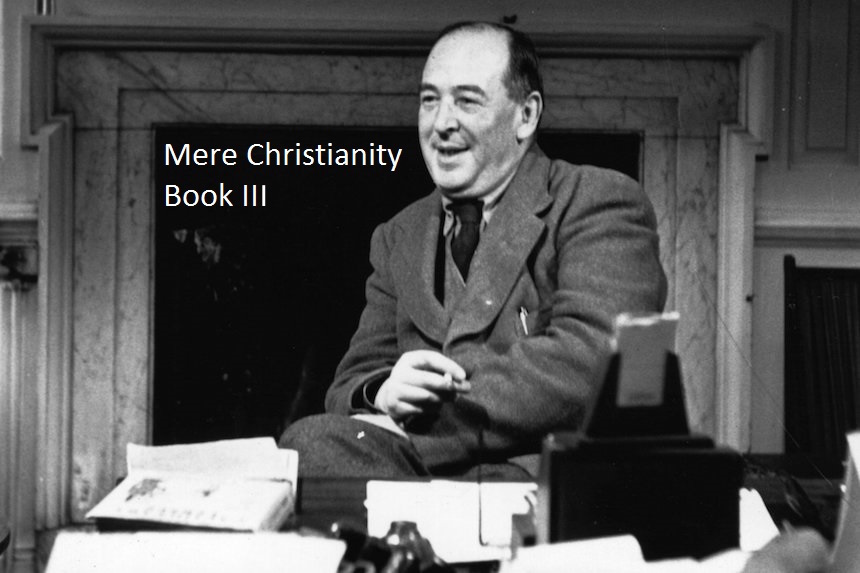
Picking back up my notes for C.S. Lewis’ “Mere Christianity”…
Notes & Quotes
1. The virtue related to sex is called “chastity”
2. “Chastity” is not the same as “modesty” or “proprietary”
(a) “modesty” is a social convention
“The social rule of propriety lays down how much of the human body should be displayed and what subjects can be referred to, and in what words, according to the customs of a given social circle. Thus, while the rule of chastity is the same for all Christians at all times, the rule of propriety changes”
“A girl in the Pacific islands wearing hardly any clothes and a Victorian lady completely covered in clothes might both be equally “modest,” proper, or decent, according to the standards of their own societies: and both, for all we could tell by their dress, might be equally chaste (or equally unchaste)”
(c) Language is in a state of flux
“While this confusion lasts I think that old, or old-fashioned, people should be very careful not to assume that young or “emancipated” people are corrupt whenever they are (by the old standard) improper; and, in return, that young people should not call their elders prudes or puritans because they do not easily adopt the new standard. A real desire to believe all the good you can of others and to make others as comfortable as you can will solve most of the problems”
3. Chastity is the most unpopular of the Christian virtues
(a) It makes people think that Christianity is wrong
“Now this is so difficult and so contrary to our instincts, that obviously either Christianity is wrong or our sexual instinct, as it now is, has gone wrong. One or the other. Of course, being a Christian, I think it is the instinct which has gone wrong”
(b) But it looks like the sex instinct is the one which is out of kilter
“…if a healthy young man indulged his sexual appetite whenever he felt inclined, and if each act produced a baby, then in ten years he might easily populate a small village. This appetite is in ludicrous and preposterous excess of its function”
4. If we treated food in the same way we treated sex, we would think it preposterous
(a) We don’t have food strip-tease acts
“You can get a large audience together for a strip-tease act-that is, to watch a girl undress on the stage. Now suppose you came to a country where you could fill a theatre by simply bringing a covered plate on to the stage and then slowly lifting the cover so as to let every one see, just before the lights went out, that it contained a mutton chop or a bit of bacon, would you not think that in that country something had gone wrong with the appetite for food?”
(b) Some might respond that this is a sign of starvation
“One critic said that if he found a country in which such striptease acts with food were popular, he would conclude that the people of that country were starving…”
(i) But we’d then need to see if much food was actually consumed…
“But the next step would be to test our hypothesis by finding out whether, in fact, much or little food was being consumed in that country. If the evidence showed that a good deal was being eaten, then of course we should have to abandon the hypothesis of starvation and try to think of another one”
(ii) …and compare to previous generations
“…we should have to look for evidence that there is in fact more sexual abstinence in our age than in those ages when things like the strip-tease were unknown. But surely there is no such evidence. Contraceptives have made sexual indulgence far less costly within marriage and far safer outside it than ever before, and public opinion is less hostile to illicit unions and even to perversion than it has been since Pagan times”
(iii) Besides, we know that appetites grow by indulgence
“Starving men may think much about food, but so do gluttons; the gorged, as well as the famished, like titillations”
5. We have been lied to about sex
“…for the last twenty years, have been fed all day long on good solid lies about sex”
(i) We have been told that sex became a mess because it was hushed up
But for the last twenty years it has not been hushed up. It has been chattered about all day long. Yet it is still in a mess. If hushing up had been the cause of the trouble, ventilation would have set it right. But it has not.
(ii) We have been told that “Sex is nothing to be ashamed of.”
(A) If they are referring to sex itself, they are right
“Christianity says the same… Christianity is almost the only one of the great religions which thoroughly approves of the body… Christianity has glorified marriage more than any other religion… If anyone says that sex, in itself, is bad, Christianity contradicts him at once”
(B) But if they are talking about the current state of the sexual instinct, they are wrong
“I think it is everything to be ashamed of. There is nothing to be ashamed of in enjoying your food: there would be everything to be ashamed of if half the world made food the main interest of their lives and spent their time looking at pictures of food and dribbling and smacking their lips… we grow up surrounded by propaganda in favour of unchastity. There are people who want to keep our sex instinct inflamed in order to make money out of us. Because, of course, a man with an obsession is a man who has very little sales-resistance”
6. We can be cured
(a) But this first requires that we desire to be cured
Those who really wish for help will get it; but for many modern people even the wish is difficult. It is easy to think that we want something when we do not really want it. A famous Christian* long ago told us that when he was a young man he prayed constantly for chastity; but years later he realised that while his lips had been saying, “Oh Lord, make me chaste,” his heart had been secretly adding, “But please don’t do it just yet.”
* St. Augustine of Hippo (4th/5th Century)
However, three reasons make this difficult:
(i) We think it “unhealthy”
“In the first place our warped natures, the devils who tempt us, and all the contemporary propaganda for lust, combine to make us feel that the desires we are resisting are so “natural,” so “healthy,” and so reasonable, that it is almost perverse and abnormal to resist them”
(A) This is a lie based on a truth
“Like all powerful lies, it is based on a truth-the truth, acknowledged above, that sex in itself (apart from the excesses and obsessions that have grown round it) is “normal” and “healthy,” and all the rest of it. The lie consists in the suggestion that any sexual act to which you are tempted at the moment is also healthy and normal”
(B) It’s actually a conflict, not between Christianity and nature, but Christian principle and other principles
“…Surrender to all our desires obviously leads to impotence, disease, jealousies, lies, concealment, and everything that is the reverse of health… Every sane and civilised man must have some set of principles by which he chooses to reject some of his desires and to permit others. One man does this on Christian principles, another on hygienic principles, another on sociological principles… The Christian principles are, admittedly, stricter than the others; but then we think you will get help towards obeying them which you will not get towards obeying the others”
(ii) We think it “impossible”!
(A) We quit before we start
“…many people are deterred from seriously attempting Christian chastity because they think (before trying) that it is impossible”
(B) We should at least try
“…in war, in mountain climbing, in learning to skate, or swim, or ride a bicycle, even in fastening a stiff collar with cold fingers, people quite often do what seemed impossible before they did it. It is wonderful what you can do when you have to”
(C) We need God’s help
“We may, indeed, be sure that perfect chastity…will not be attained by any merely human efforts. You must ask for God’s help”
(D) We need grace to persevere
“After each failure, ask forgiveness, pick yourself up, and try again. Very often what God first helps us towards is not the virtue itself but just this power of always trying again. For however important chastity (or courage, or truthfulness, or any other virtue) may be, this process trains us in habits of the soul which are more important still. It cures our illusions about ourselves and teaches us to depend on God… The only fatal thing is to sit down content with anything less than perfection”
(iii) We think it is being “repressive”
(A) Many people misunderstand what “repression” is
“…it does not mean “suppressed” in the sense of “denied” or “resisted.” A repressed desire or thought is one which has been thrust into the subconscious (usually at a very early age) and can now come before the mind only in a disguised and unrecognisable form. Repressed sexuality does not appear to the patient to be sexuality at all”
(B) Since those pursuing chastity are conscious of their resistance, they are the least likely to become repressed
“…those who are seriously attempting chastity are more conscious, and soon know a great deal more about their own sexuality than anyone else. They come to know their desires as Wellington knew Napoleon, or as Sherlock Holmes knew Moriarty; as a rat-catcher knows rats or a plumber knows about leaky pipes. Virtue – even attempted virtue – brings light; indulgence brings fog”
7. Christian morality doesn’t center on sex
“…I want to make it as clear as I possibly can that the centre of Christian morality is not here”
(a) The worst sins are purely spiritual
“The sins of the flesh are bad, but they are the least bad of all sins. All the worst pleasures are purely spiritual”
(b) It is the diabolical, not the animal which is worse
“For there are two things inside me, competing with the human self which I must try to become. They are the Animal self, and the Diabolical self. The Diabolical self is the worse of the two. That is why a cold, self-righteous prig who goes regularly to church may be far nearer to hell than a prostitute. But, of course, it is better to be neither”
Discussion Questions
1.What is the difference between chastity and modesty?
2. Either Christianity is wrong about chastity or the sexual instinct is misaligned. Why might we be inclined to think it is the latter?
Things have been a bit non-stop this last week, so I’m afraid these notes are late, slightly shorter than usual and a little bit rushed, but as GK Chesterton said, “If something is worth doing, it’s worth doing badly”…
After Jeremiah, Isaiah is my favourite prophet. This book is often called “The Fifth Gospel” and, with a passage like this, it’s easy to see why. Here, God gives a beautiful invitation to His people to come and be satisfied, to return to Him, to come and be filled free of charge! Why settle for anything less?
When we recognize our hunger and our dependence on God, He will fill us and give us life.
Thus says the LORD:
“All you who are thirsty, come to the water! You who have no money, come, receive grain and eat; Come, without paying and without cost, drink wine and milk!
Why spend your money for what is not bread; your wages for what fails to satisfy? Heed me, and you shall eat well, you shall delight in rich fare. Come to me heedfully, listen, that you may have life. I will renew with you the everlasting covenant, the benefits assured to David”
Suggested Questions:
What is the general invitation of this passage?
What does this food and drink cost? What does this say about God?
What do you think the “water” here represents?
What do you think the “grain” here represents?
What do you think the “wine” here represents?
What do you think the “milk” here represents?
In what way do we “spend [our] money on what is not bread”?
Why do we do spend our “wages for what fails to satisfy”?
What is promised together with this food?
What was the promise God made to David?
How do we experience the invitation of this passage today?
On Saturday, Harold Camping proved himself to be a false prophet when no rapture materialized…
Three days before the supposed event, I wrote the following:
When the predictions of such groups fail to come true and Jesus inconveniently decides not to turn up, excuses are usually given e.g. “Jesus did return, but did so invisibly!”. I’m guessing that probably the same thing will happen with Christian Family Radio on May 22nd.
“Radio evangelist Harold Camping said in a special broadcast Monday night on his radio program Open Forum that his predicted May 21, 2011 Rapture was ‘an invisible judgment day’ that he has come to understand as a spiritual, rather than physical event.”
Straight out of the Jehovah Witness play book! Camping’s prophetic credentials seem to be shot, but mine are looking pretty good, hey? 🙂
The other day, after a rather difficult meeting with a friend I parted with the words “I’ll pray for you”.
It got me to thinking – how many times do I say that and I never actually do it? How many times do I use it as just a farewell, or as code for “Stop talking to me about your problems”?
That’s all I have to say. Please consider that as your thought for the day…
Over the last year and a half of blogging I’ve pretty much restricted myself to theological issues. However, today I’ve decided to take my life into my own hands and finally start to address a question that I’ve often heard among my female friends: “Why doesn’t that nice Catholic boy ask me out?”
 This is the first entry in what I hope to be a regular series of posts about the Early Church Fathers.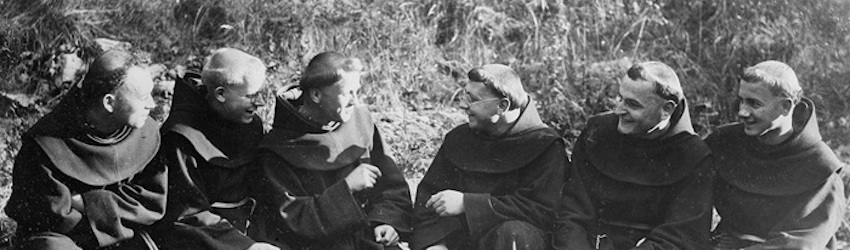
 It is common knowledge that monks and nuns have a long history of manufacturing many different kinds of products. Production has traditionally been restricted to fairly standard items such as jams, sweets, beers, wine, and even some medicinal goods. Some monasteries are particularly famous for the quality of their products. For example, Trappist monk beer is considered by many to be some of the best brew in the world.