Introduction to Islam (Part 5 of 5): The Catholic Response

Today I would like to conclude my introductory series to Islam. This series wasn’t intended to be an apologetic response to Islam, just an accurate and objective description of Islamic belief and practice. It is my hope that this will lead to a better understanding of Islam by Christians.

Over the course of this series we have looked at the origins of Islam, Muhammad, the teaching of the Qur’an, as well as the faith and obligations of Muslim life.  I would now like to conclude by looking at what the Catholic Church had to say about Islam at the Second Vatican Council.

The Catholic Church sets forth its binding teaching regarding Islam in the “Declaration on the Relation of the Church with Non-Christian Religions” (also known as “Nostra Aetate”, literally “In our time”):

#1 In our time, when day by day mankind is being drawn closer together, and the ties between different peoples are becoming stronger, the Church examines more closely her relationship to non-Christian religions. In her task of promoting unity and love among men, indeed among nations, she considers above all in this declaration what men have in common and what draws them to fellowship.

One is the community of all peoples, one their origin, for God made the whole human race to live over the face of the earth. One also is their final goal, God…

The church says that she sees it her task to “promote unity and love”. This unity and love is fostered by considering what unites humankind and, in this “big picture” vision of the world, we are reminded that every single person comes from God and every single one will, some day, return to Him.

#2 … The Church, therefore, exhorts her sons, that through dialogue and collaboration with the followers of other religions, carried out with prudence and love and in witness to the Christian faith and life, they recognize, preserve and promote the good things, spiritual and moral, as well as the socio-cultural values found among these men.

Read more

PWJ: S3E43 – AH – “After Hours” with The Tolkien Road

Continuing “Tolkien Month”, in today’s episode I spoke with John and Greta Carswell from “The Tolkien Road” podcast, focussing on Tolkien’s work, The Silmarillion.

S3E43: “After Hours” with The Tolkien Road (Download)

If you enjoy this episode, you can subscribe manually, or any place where good podcasts can be found (iTunesGoogle PlayPodbeanStitcherTuneIn and Overcast), as well as on YouTube.

More information about us can be found on our website, PintsWithJack.com. If you’d like to support us and get fantastic gifts, please join us on Patreon.

The roadmap for Season 3 is available here.

Read more

PWJ: S1E8 – MC B2C1 – “The Rival Conceptions Of God”

Jesus

With Book I of “Mere Christianity” complete, we now move on to Book II! Having concluded that the Moral Law points to God, C.S. Lewis now examines the “Rival Conceptions of God”.

If you enjoy this episode, you can subscribe manually, or through a service like iTunesGoogle Play or Podbean. As always, if you have any objections, comments or questions, please send us an email through my website or tweet us @pintswithjack.

Episode 8: “Rival Conceptions of God” (Download)

Read more

Quick Apology: Why not go to the source?

Today’s “Quick Apology” is a sequel to an earlier post, Quick Apology: You can’t pray to dead people. In that post I explained how those who have died in friendship with Christ are not “dead”, but are in fact more alive than we are. On Facebook, one of my friends responded with this question…

Objection

“But why would you want to pray to a Saint? Why not just go to the source, Christ?”

Response

This question is a reasonable one and makes sense until we consider everyday Christian practice…

When I meet up with my closest Christian friends, I will almost always ask them for their prayers concerning particular things going on in my life. However, if the above objection were valid, shouldn’t I being going directly to Christ? Why would I ask others to intercede for me when I could just instead make my requests to the Source directly?

To be certain, Christ has a special kind of mediation (1 Timothy 2:5), but that doesn’t preclude other kinds of mediation. In fact, we’re told in Scripture that we should intercede for each other (1 Timothy 2:1). So, the reasons why one would ask the Saints for their intercession are the same reasons why one would ask for the prayers of close friends. As my friend Steve said:

I’ve never seen a man in a true emergency when, for example, a car wreck requires emergency surgery for his young child, opt out of having others pray with him because he’d rather go straight to the Source.

It’s not an either/or proposition. Praying to the Lord directly is a good thing. Asking for the intercession of others is also a good thing. These two things don’t have to be in competition.

“We are taught by the Catholic faith that we may pray not only to God himself, but also to the Blessed in heaven, though in different manner; because we ask from God as from the Source of all good, but from the Saints as from intercessors – Pope Leo XIII (Augustissimae Virginis Mariae 9)

So, back to the question: why would you want to pray to Saint? Well, when we are baptised, we become part of a very large family, a “great cloud of witnesses”, all united together in Christ. What do good families do? They pray for each other.

When we ask friends to pray for us, I think it’s safe to say that we particularly request intercession from those whom we esteem as being strong in faith since “the prayer of a righteous man has great power in its effects” (James 5:16). Who is more righteous than those standing before the throne of God, those inthe city of the living God, the heavenly Jerusalem…just men made perfect”?

Cloud of Witnesses

PS – I’ll endeavour to do a more thorough post in the future as to what mean when we speak of “prayer” to the Saints. Don’t let me forget…

PPS – Joe over at Shameless Popery also blogged about this topic yesterday. Go check it out 🙂

A Sunnydale Funeral

Back in 2017 I was an avid listener to Buffering the Vampire Slayer, a podcast where the hosts would discuss each episode of Buffy the Vampire Slayer in turn. As a teenager I had rather enjoyed the campy movie starring Kirsty Swanson and, although I was suspicious at first, I soon came to really enjoy the TV series starring Sarah Michelle Gueller.

Buffering Mail…

I listened to the first few episodes of the Buffering the Vampire Slayer while I was walking the Camino, and I even sent them an email which they read out on the show. I eventually wrote to them again, this time after listening to Episode 3.08…

In that episode of Buffy the Vampire Slayer, there is a funeral. In their commentary episode, the podcast hosts where shocked to hear the word “Hades” mentioned in the reading at the graveside. They were shocked because the context was clearly Christian, yet the hosts associated the word with the occult. They wondered out loud what Christian denomination this might be.

To the library!

I sent them an email pointing out that the text comes from the first chapter of the Book of Wisdom, also known as The Wisdom of Solomon:  

“…because God did not make death, and he does not delight in the death of the living.
For he created all things that they might exist,
and the generative forces of the world are wholesome,
and there is no destructive poison in them;
and the dominion of Hades is not on earth.
For righteousness is immortal”  

Wisdom of Solomon 1:13–15

I went on and explained that the word “Hades” was simply the Greek name used to describe the realm of the dead. In Hebrew, the word is “Sheol” which is translated in English as either “the grave” or “the dead”.

The fact that this reading comes from the Book of Wisdom gives us a big clue as to the Christian denomination of the person conducting the burial. The Wisdom of Solomon belongs to a collection of books known as the Deuterocanon which was removed from the Bible at the Reformation in the 16th Century. It therefore most likely isn’t a Protestant funeral (Lutheran, Baptist etc.). That pretty much leaves either Catholic or Eastern Orthodox and, given the appearance of the priest, I’d say he it’s a pretty safe bet to assume he was Catholic.

Here’s the clip of the hosts reading out my email on their mailbag episode:

Integrating Google Calendar with my Blog

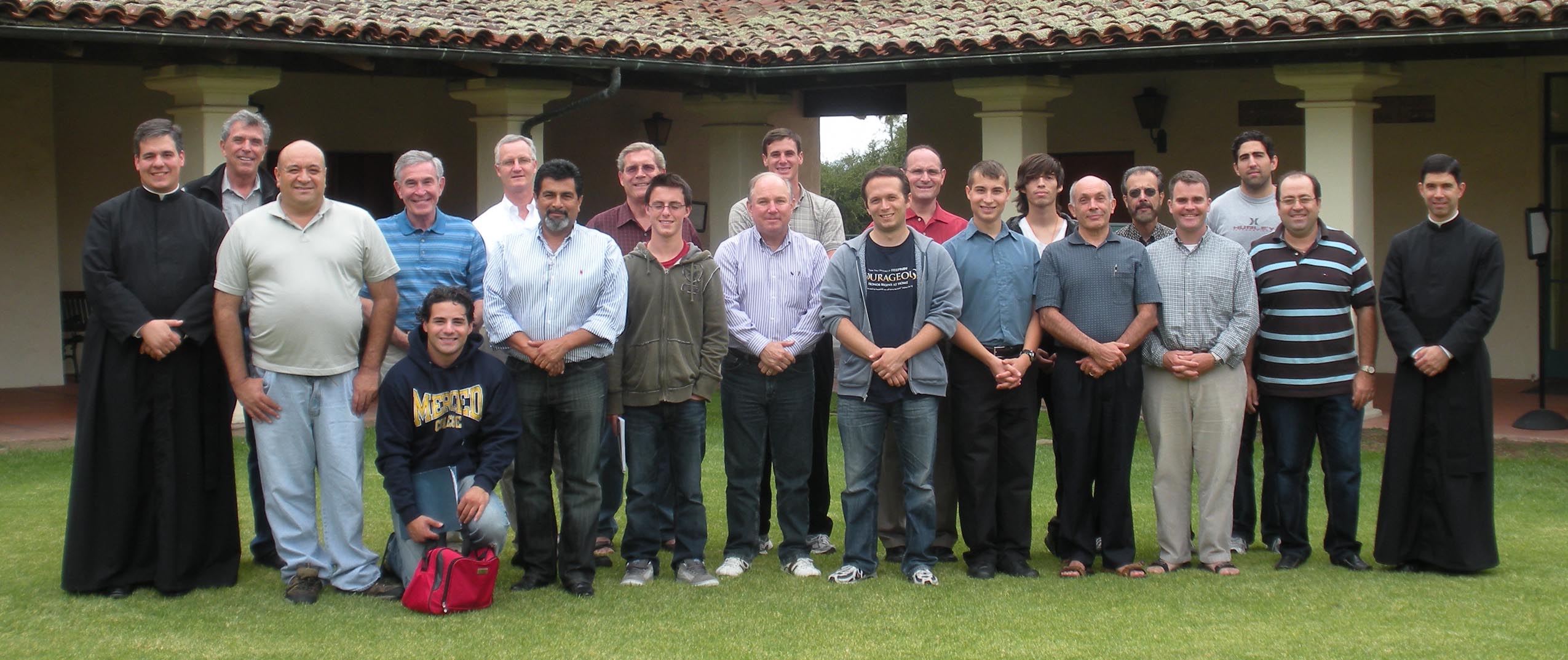
Hey everyone, this is just a little post to test Google Calendar integration for something I’m working on for a parish website. Below is embedded calendar of the JP2 Group, the young adult community which I used to lead:

Screen Shot 2014-12-03 at 4.11.40 PM

Despite what all the tutorials say, it’s not exactly straight-forward embedding a Google Calendar on a WordPress blog. The calendar is shown in an IFRAME which, unfortunately, WordPress automatically removes when you try to save it. To get around this, I installed an IFRAME plugin and this seemed to do the trick. Thankfully, this issue wouldn’t exist on a regular website 🙂

The article Integrating Google Calendar with my Blog first appeared on RestlessPilgrim.net

PWJ: S4E11 – TSL 6 – “Should I stay or should I go?”

Matt and I discuss Screwtape’s sixth letter where he explains how the patient’s uncertain future should be exploited.

S4E11: Letter #6 – “Should I stay or should I go?” (Download)

If you enjoy this episode, you can subscribe manually, or any place where good podcasts can be found (iTunesGoogle Play, Amazon, Podbean, Stitcher, TuneIn and Overcast), as well as on YouTube. The roadmap for Season 4 is available here.

More information about us can be found on our website, PintsWithJack.com. If you’d like to support us and get fantastic gifts, please join us on Patreon.

Read more
1 51 52 53 54 55 172