I can’t believe I forgot these two shows when I previously shared my favourite British comedies…
Black Books
When I was living back in Cheltenham, “Black Books”was a shared love between myself and my flatmate, Amit.
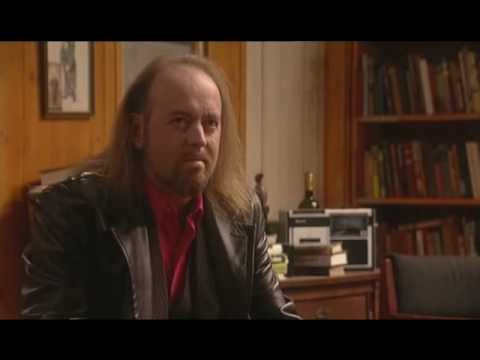
The show is set in a book store, which obviously immediately made me love it. The shop is owned by Bernard Black, a drunken slob of an Irishman. Manny, played by the musical genius Bill Bailey, is Bernard’s shop assistant/lackey/human pet. The cast is completed by Fran, Bernard’s long-time friend/drinking buddy and owner of the store next door.
Over the course of the three seasons I would say that that the comedy style changes quite a bit and becomes increasingly farcical. I initially found this a little off putting. I don’t think it matters though; you really can’t help but love these three misfits.
The clip below comes from the second episode of the first season, where Manny arrives for his first day working at Black Books:
Spaced
I remember when the show “Spaced” being released in the UK. I didn’t like it at all. It was all just a bit random and a little too weird for my tastes at the time. However, a few years later, with an evening to spare and nothing on TV, I sat down with my flatmate’s Season 1 DVD and watched the entire series in one sitting. I absolutely loved it.
This programme is really a show for geeks. If you love star wars, video games and cult classic movies, this is the TV show for you!
The other day I wrote about the trials of trying to be an “Ecumenical Apologist“, so today I would like to write a post about something rather controversial, or rather someone rather controversial – Jesus’ mother, Mary.
Mary is something of a source of contention between Catholics and non-Catholics. At best, Catholics are told that the attention they give to Mary draws glory away from God. At worst, Catholics are charged with unbiblical doctrine, necromancy and idolatry.
In this post I will not attempt to try and convince any non-Catholics of the veracity of Mary’s Immaculate Conception, her Assumption or any of the other particularly Catholic Marian doctrines. I would simply like to show you a scriptural perspective on Mary of which you may be unaware. My aim is that after reading this post you would be awed at the cohesiveness of God’s master plan and declare that Mary truly is “blessed” (Lk 1:48-49)
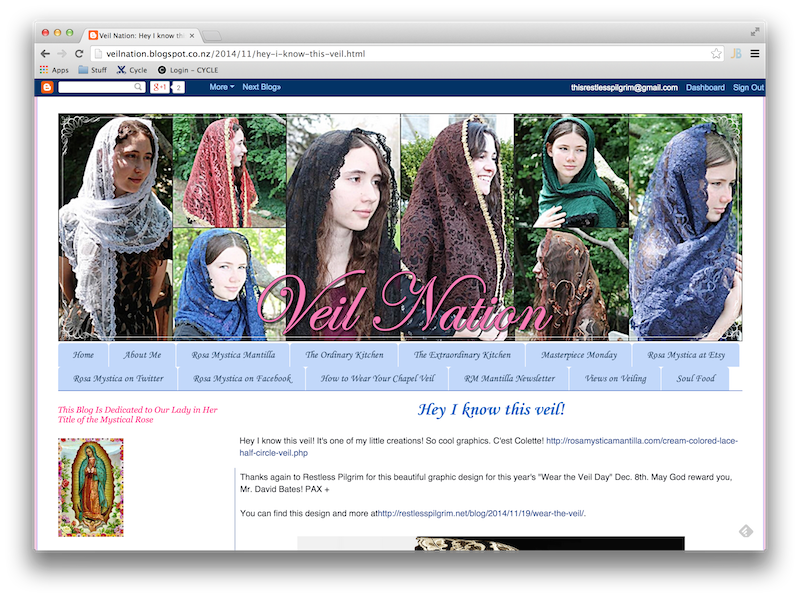
While I was on my blogging sabbatical in December, I had a couple of blogs reference my website. The first was Veil Nation:
When I produced the graphics for “Wear The Veil” campaign, I just searched Google Images for a base graphic with which to begin my work. Well, it turns out the graphic I used was of a veil called the Colette Veil, produced by Ann Anzul. Ann found my graphic and gave me a shout-out. Thanks Ann! 🙂
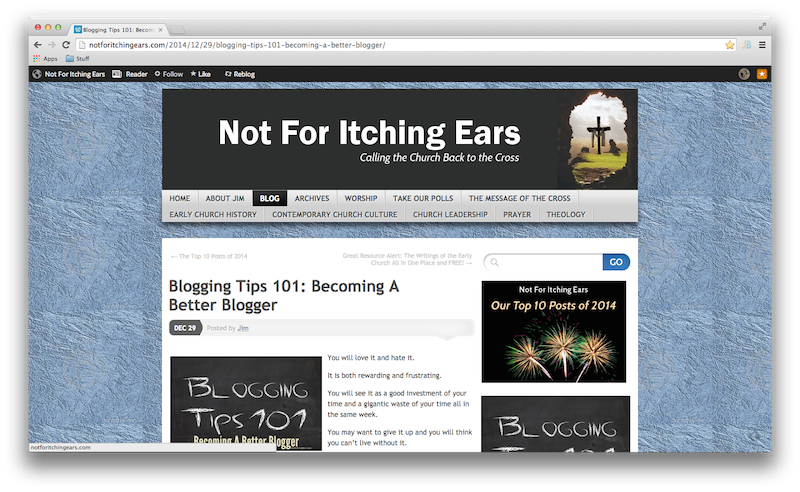
The second reference to my my blog in December came from Jim who writes at Not For Itching Ears:
Jim’s post wrote about how to become a better blogger. In the section where he spoke about reading and commenting on other blogs, he had these kind words to say about this site:
One of my favorite blogs is called Restless Pilgrim. It challenges my world view! He’s Catholic, I’m a Protestant who has wandered far, far, far from home! We have great conversations about theology and early church history, which is the kind of stuff I like and write about. He does too. David comments on my blog and I on his. I am not sure who interacted with who first, but whoever did, made blogging a lot more interesting. I have lots of stories like that and you will too if you “do unto others as you would have them do unto you.”
A few weeks ago I attended a presentation after Mass given by my friend Huliana, describing her journey from Islam to Catholicism. My friend Nessa took some photographs and I recorded the audio. Here it is…
A friend recently expressed interest in getting to know the Early Church Fathers so I said that I would put together a brief (hah!) list of resources.
I was first introduced to the Early Church Fathers by Marcellino D’Ambrosio while I was on a retreat in England. He regaled us with some of the many colourful stories from the Early Church, such as the election of St. Ambrose to Bishop of Milan. Since St. Ambrose will be my roommate’s Patron Saint when he’s received into the Church next year I’ll make sure I write about that sometime soon…
Audio Resources
This initial introduction to the Fathers by Dr. D’Ambrosio was later supplemented by the excellent lecture series given by Dr. Lawrence Feingold to the Association of Hebrew Catholics. Dr. Feingold takes the listener through a tour of the Early Church, focussing upon the issues in that Church, such the call to martyrdom, as the relationship between faith and reason, and the Arian heresy.
If you would like to get a deeper grounding in Christian history (which is, itself, the story of the Fathers), I highly recommend the extensive series of lectures by Fr. Michael Witt. If you get through the Early Church period, don’t worry! You don’t have to stop there since he also covers Church history up until the present day… 🙂
So those are a number of audio resources, but what about books?
Websites
There are several websites which provide a handy concordance for the Fathers, such as ChurchFathers.org.
Books
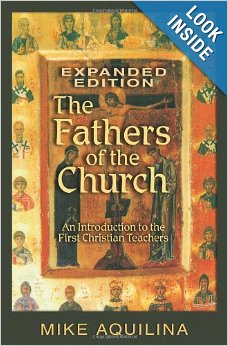
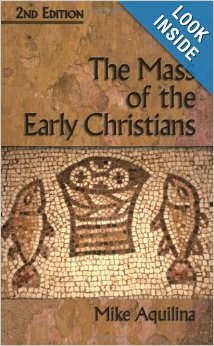
Mike Aquilina has written a number of very accessible books on the subject and I would particularly recommend his book The Fathers of the Church as it gives a good, brief survey of the Patristic period. If you’re interested in the worship of the Early Church he also has a very readable book entitled The Mass of the Early Christians.
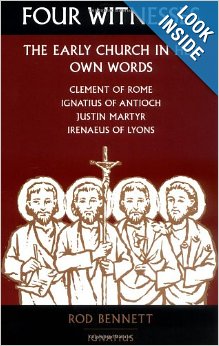
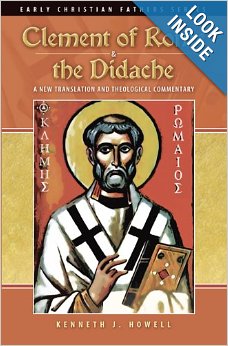
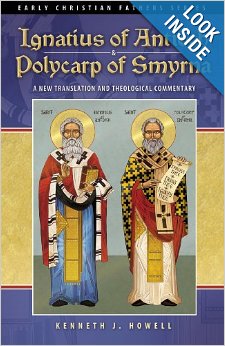
I know a lot of people were first introduced to Patristics through The Four Witnesses by Rod Bennett, which focusses just four Fathers: Clement, Ignatius, Justin and Irenaeus. Likewise, if you would like to focusses more in depth on specific Fathers, Dr. Howell has a great couple of books which focus on Clement, Ignatius and Polycarp.
a
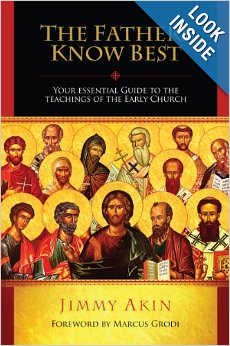
A new excellent reference book came out recently from Jimmy Akin entitled The Fathers Know Best. It is a book which arranges the writings of the Church Fathers by topic. For example, have you ever wanted to know what the Fathers thought about contraception? Well, with Jimmy’s book you can just flip to that topic and read, in chronological order, extracts from the Fathers on that subject.
Ad Fontes!
Finally, I would invite anyone wishing to get to know the Fathers better to actually get down and read the works themselves. I have several works available on this website in my Patristics section, together with MP3 recordings of the text. If you want to see what the Fathers thought about the Gospel readings at Mass each week, I’d suggest consulting the Catena Aurea. For further reading, I would recommend the Ancient Christian Writers series. The translation is excellent and there are a good number of explanatory endnotes.
So there you go! Hopefully that wasn’t too overwhelming! Pick which way works best for you and get stuck in! Get to know your Christian family 🙂
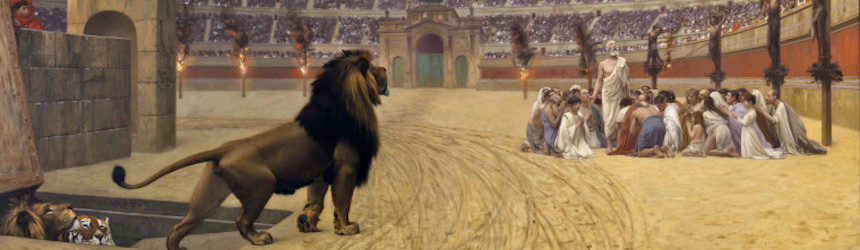
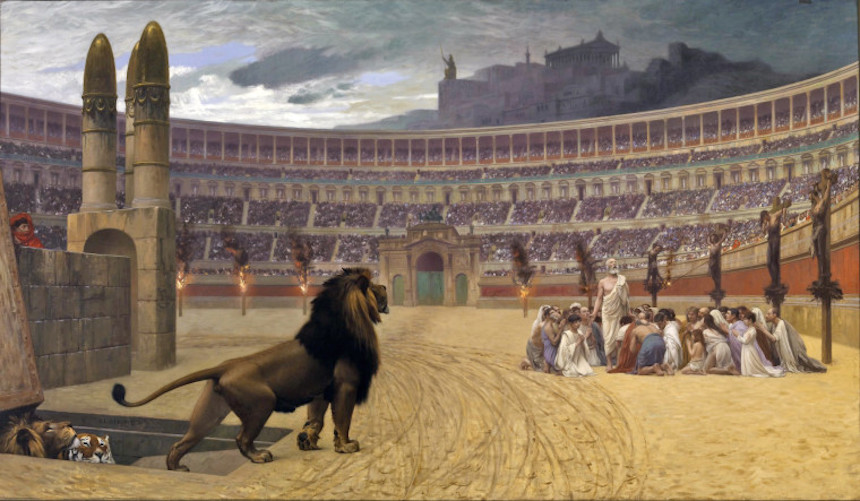
A couple of weeks ago I gave a talk at Santa Sophia entitled “Blood & Ink: How the Early Church Conquered the World”. Unfortunately, soon after given the talk, my laptop decided to die, so I couldn’t upload the audio. My laptop is finally fixed, so here you go…
Blood & Ink: How the Early Church Conquered the World (Download)
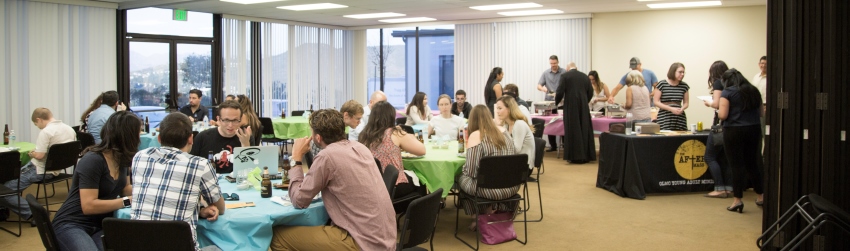
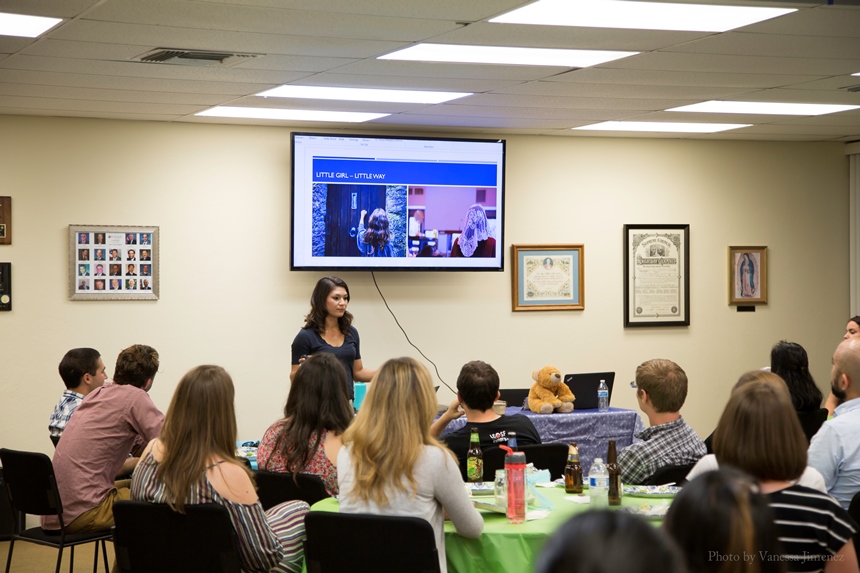
It has taken me a while, but I finally got around to editing the audio from my recent Theology On Tap session entitled “Reading the Bible for all its worth”. The audio quality wasn’t great, but I’ve cleaned it up the best I can. For the benefit of those who couldn’t attend my talk, I have created a YouTube video which plays the audio synchronized with my slides:
Extra Files
The video doesn’t contain the Q&A after the talk or the “Mega Bible Study” discussion which took place afterwards. The audio for these sections is available below:
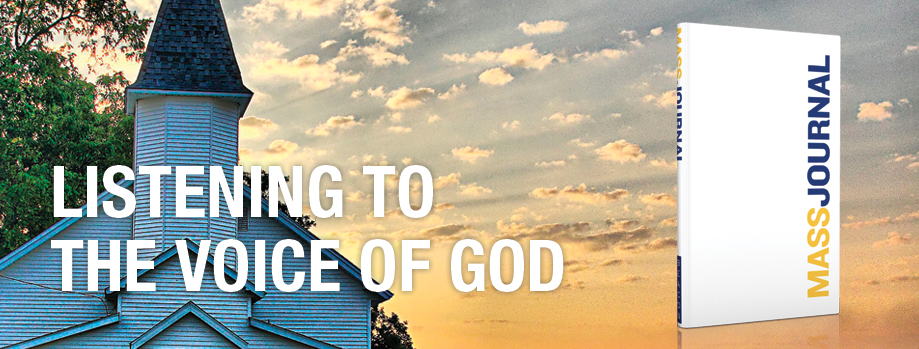
In my talk I recommend looking for one thing at each Sunday Mass to take away for your spiritual nourishment during the rest of the week and I suggest writing this down in a Mass Journal. I have six Mass journals to give away!
Simply leave a comment below describing an insight from a recent talk, sermon or Bible study which touched you. It doesn’t have to be earth shattering, just something which you might record in your new Mass Journal! The first six comments will win.
 I can’t believe I forgot these two shows when I previously shared my favourite British comedies…

 It has taken me a while, but I finally got around to editing the audio from my recent Theology On Tap session entitled