Fiat Award Acceptance Speech
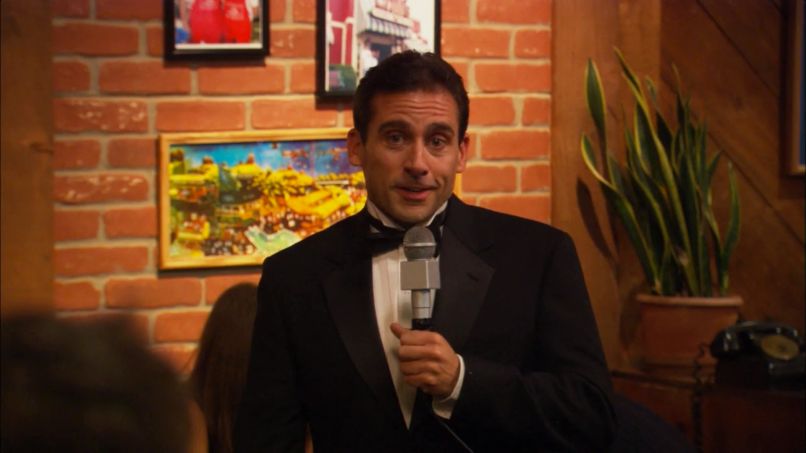
Last night I gave my acceptance speech for the Fiat Award at the San Diego Young Adult Christmas Gala. Here’s the text…
Greeting
Good evening everyone. I’m humbled and really privileged to receive this award, thank you.
I’m keen to get on with the rest of the evening, as I’m sure you are, and to bust out some sweet moves on that dancefloor…but Patrick said that I could speak to you for a few minutes and there is something, in particular, which I would like to share tonight. You see, even some of my close friends may not know everything about my Faith journey…
My Journey
I grew up in a good Catholic home, but it was the work of an Irish missionary (and the Holy Spirit) which brought my faith fully alive at University. There at University, I was surrounded by a vibrant community of Catholics, many of a similar age, who cared deeply about growing in the Faith and about about sharing the Gospel.
But it was after university that things started to go awry… I graduated and was hired by a company in an unfamiliar town. I naturally went to Sunday Mass assuming that I would find new friends there…but I was to leave disappointed. Nobody greeted me. There was no Young Adult community. As far as I could see, there were no ministries whatsoever. The place just seemed… dead.
To add insult to injury, the company which had brought me to that town went bankrupt in my first week there (It wasn’t anything I did, I swear!). But this left me in an unfamiliar town, without a job, with friends, without a community….
As a result of all this, on my way back from Mass, I wandered into a non-Catholic congregation. It was here, in that Protestant congregation that I found the community for which I was longing. I was given such a warm welcome (well, at least as warm a welcome as is possible for the English!). During my time there…
…I learned so much about the Christian life
…I found a group my own age
…I was invited to help out with their youth group
…I made friends…I had found a home
It would be many years before I would rediscover the truth of Catholicism and return whole-heartedly to the Church.
The state of our Communion
Now why am I sharing this story? I’m sharing it because I don’t think it’s unique. I don’t think it’s even rare. I think my story is common for many many, many Catholics…and many former Catholics. The total number of Catholics in the United States has dropped by 3 million since 2007, that’s about 20%, one-fifth of the total Catholic population in the United States.
Why do they leave? There are several important reasons, but I would suggest that a major reason is that people are looking for spiritual nourishment, seeking connection, a community,…and when they don’t find it in the Catholic Church….they look elsewhere.
This Award
I’m really grateful and feel very honoured to receive this award tonight, but I have done nothing that special.
My life, my very existence, comes from God…
…and my supernatural life comes through Christ and His sacrifice for me.
If I have any talents they are not my own, they come from Him.
I owe God everything. So given all that, what else could I do but put myself at His service and the service of His Church?
I would suggest that, if anything can be learned from my receiving this award tonight, it’s not that I have done anything that extraordinary….
… The lesson is rather that, ministry is not simply the domain of ordained clergy or salaried parish employees, ministry is the role and calling of every…baptized…Catholic.
Rachel
At the beginning of this year, I nominated my friend, Rachel, to receive this very award. You see, when Rachel became Catholic, she immediately set about galvanizing the Immaculata Young Adults and approached her pastor asking to start a Bible Study.
It was for this reason that I nominated her for the award. She didn’t wait for someone else in the parish to do it. She saw a need and stepped up, putting her time and her talents at the service of her parish.
Dream a little dream with me
My friends, our Diocese is often praised in other parts of the country for its Young Adult Ministry (and rightly so)… but imagine with me for a moment if you will, what this Diocese would look like if every Catholic in this Diocese imitated my friend Rachel. I promise you, our Diocese would be un-recog-nizable…
There would be activities every night of the week, every weekend. There would be opportunities to socialize, to grow in the Faith, to serve the wider community. And most importantly, the people who came to the Church seeking nourishment and community… they’d find it…and in so doing, encounter Jesus.
Objections
But there’s a problem. As soon as I spoke about each one of us finding a place to serve, a voice at the back of your head probably started coming up with a long list of objections:
“What, me? Doing ministry?! I don’t know how to do that…”
“I can’t organize big events!”
“I’m not a theologian. I’m sure someone else better qualified will do something!”
Am I right?
Small things with great love
In case you misunderstand me, I am not suggesting that each of you should head-up some grand catechesis programme in your parish, and devote all your time, every evening and weekend to that work. No, I’m simply inviting you to think about your passions and skills and consider where there is a need in the Church, because, as Frederick Buechner said:
“The place God calls you to [your vocation] is the place where your deep gladness [all those things you really love and care about] and the world’s deep hunger [and the unmet needs in the Church] meet [where they meet]”
My ministries
As for myself…
I like going to the theatre and the symphony. I therefore inaugurated “The Finer Things Club” and invited others to join me on my cultural adventures.
My housemate and I agreed that we wanted to have better accountability, so we formed a Men’s Huddle, inviting a few other guys to meet together a couple of times a month to share a beer and talk about our lives.
My friend Teresa wanted to sing Taize songs, so we picked a date and invited people over to the house for an evening of candle-lit Taize prayer and song. We now do this once a month if you’d like to join us.
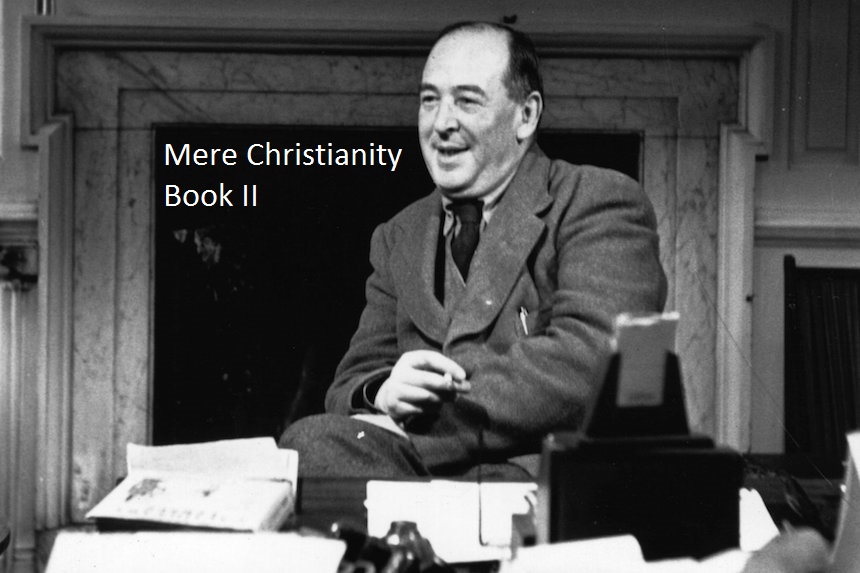
I’ve always loved the writings of C.S. Lewis, so I arranged to meet up with my friend Matt at a coffee shop, to talk about one of his books. I let other people know about it on Facebook, and a meeting of two C.S. Lewis nerds grew into a regular group and we’ve now read six of Lewis’ books.
Because of interest in this group from outside of San Diego, Matt and I then launched a podcast, where we discuss the works of C.S. Lewis chapter-by-chapter each week.
This then grew into a website, PintsWithJack.com, to host a video series which was launched this week.
My point here is that all these things began simply by doing what I love…and then inviting others to join me.
Have a little help from my friends
And I know I’m not the only one. I don’t have to look hard to find other examples from among my friends…
Joseph, having discovered Our Lady, committed to praying the rosary at the beach each week, and invited others to join him.
Kareen was troubled by the homelessness in Downtown San Diego, so with a few friends she set about making food and handing it out. Others joined her.
My friend Joe really likes scotch, so he decided to get together some friends and introduce them to the finer points of whiskey-tasting.
All of these activities build community, help deepen spirituality and make a positive change in the world (especially the scotch!).
The invitation
So what about you? What are the things you enjoy? Where do you see an unmet need in the Church? Where do you feel the tug of the Holy Spirit?
Again, it doesn’t have to be complicated…Maybe you like volleyball. You could assemble some friends to have a casual game one weekend, or purchase host a monthly movie night at your house, inviting some new parishioners you met at Mass.
Never Alone
But even with these simple suggestions, it may all seem too intimidating. But the good news is that you don’t have to do this alone.
Reach out to your pastor – he’s there to help!
Reach out to Patrick and Pam – the purpose of their office is to support you…to help you… as you help build the Kingdom.
My time is now just about up, so I would like to thank you all for your indulgence for the past ten minutes. But I’d like to end with a prayer of Blessed John Henry Newman:
“God has created me to do Him some definite service; He has committed some work to me which He has not committed to another. I have my mission… I am a link in a chain, a bond of connection between persons. He has not created me for naught. I shall do good. I shall do His work.”
Can I get an amen?


 You can look at my