Told you so
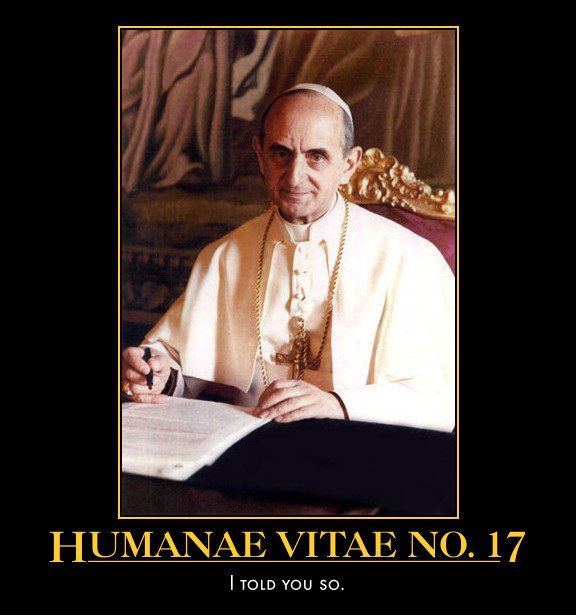
(Thanks to Niyog for this one)
In case you’re wondering to what this refers, Pope Paul VI wrote a letter in 1968 entitled Humanae Vitae. In it, he wrote the following:
"We are travellers…not yet in our native land" – St. Augustine
(Thanks to Niyog for this one)
In case you’re wondering to what this refers, Pope Paul VI wrote a letter in 1968 entitled Humanae Vitae. In it, he wrote the following:
Knowing that my interest in the subject of psychology has been increasing recently, last week a friend gave me a paper written by Daniel G. Amen, MD on the subject of Automatic Negative Thoughts (ANTs). Those who suffer from depression will almost always suffer from Automatic Negative Thoughts, filling their minds of such people are filled with a succession of dispiriting thoughts. They view the world through a dim grey lens and this colours their thoughts concerning both themselves and others. They look to the past with regret, find the present unsatisfactory and look to the future with anxiety and pessimism.
I thought Dr. Amen’s paper contained such solid advice that I would write a short post here summarizing its contents.

If you’ve been reading my blog for a while now, you’ll know that a good portion of my posts either come from questions people have asked me or from my own wondering about a particular subject. Today’s post falls into the latter category…
When Jesus preached to the crowds, Scripture records that one time He ascended a mountain to teach them (Matthew 5:1) and on another occasion He got into a boat and moved a little way from the shore (Luke 5:3). There is theological significance to both of these actions, but there’s also a very practical reason that the Lord did this – He wanted His preaching to be heard clearly by as many people as possible.
The necessity to clearly hear the words of preaching continues today and we see it reflected in the architecture of our church buildings in the presence of a pulpit/ambo/lecturn.
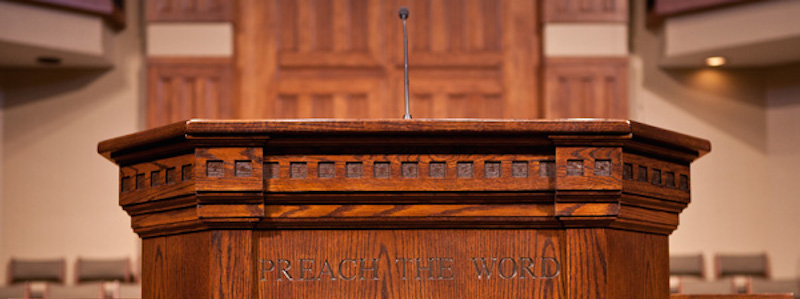
For quite a while, I’ve noticed that Catholic liturgists typically use the word “ambo” to describe the preacher’s platform, rather than “pulpit”, which you hear more often both in the Protestant world and in popular culture. However, is there really a difference between “ambo” and “pulpit”, or is this just a case of Catholic/Protestant “potato/potahto”?
Last week it was my Confirmation Anniversary. Today it’s my Baptism anniversary!
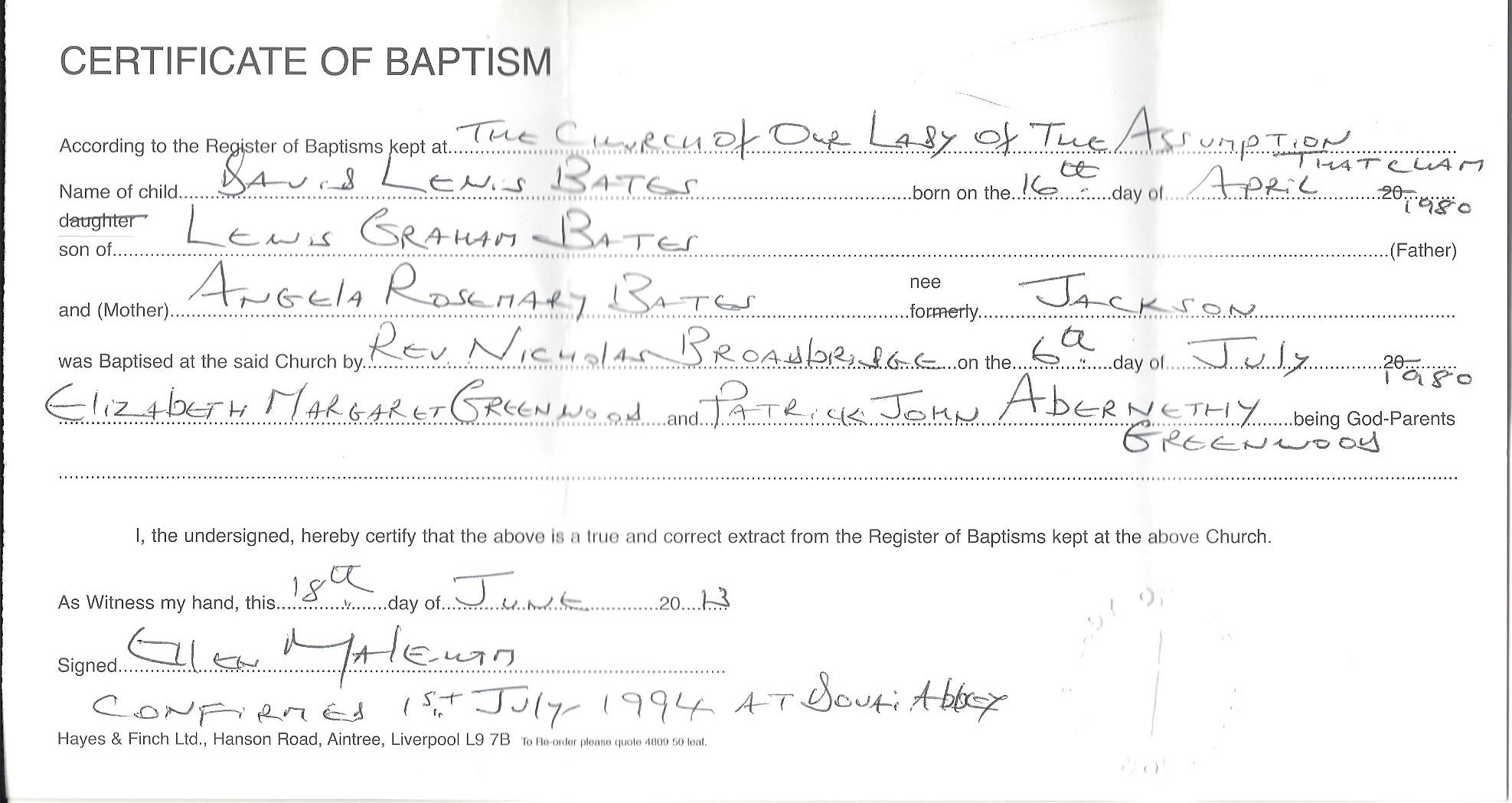
This year my baptism will mainly be celebrated with gelato…
The other day a friend asked me how, in my experience, non-Catholic Christians memorize Sacred Scripture. This is a very reasonable question. It is common to hear Catholics say how impressed (and intimidated) they are when their Protestant work colleges or classmates quote Scripture at them chapter and verse.
I responded initially with the suitably vague answer saying that, in my experience, it varies from denomination to denomination and from congregation to congregation. There are certainly some groups which emphasize Scripture memorization more than others.

“Memory! All alone in the moonlight…”
Personally, I’ve never been very good at Scripture memorization, at least as an activity in its own right. When I quote Scripture, it’s usually a rough paraphrase and it’s pretty rare that I can give the chapter, let alone the verse.
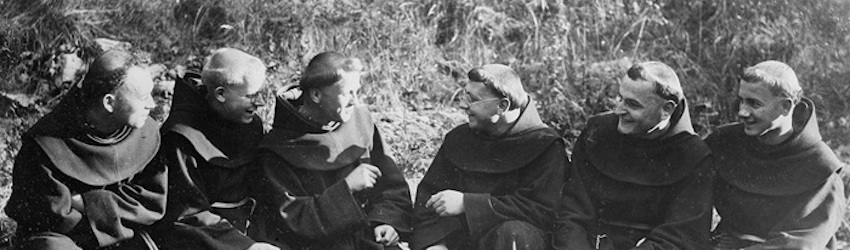
Today’s post is a guest post by Robin Armit who works for Holy Art, a company which sells all kinds of religious gifts. All religious items have a wondrous story to tell, and Robin enjoys telling them…
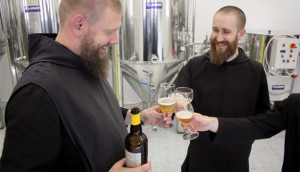 It is common knowledge that monks and nuns have a long history of manufacturing many different kinds of products. Production has traditionally been restricted to fairly standard items such as jams, sweets, beers, wine, and even some medicinal goods. Some monasteries are particularly famous for the quality of their products. For example, Trappist monk beer is considered by many to be some of the best brew in the world.
However, not all monasteries have restricted themselves to the more traditional products. Over the years, some monastic communities have branched out into more unusual ventures. For example, would you like to buy some modern cosmetics and skin care products? Perhaps you might want to learn how to ski? Maybe you would like to liven up an evening with some tonic wine? While I wouldn’t recommend trying these all at the same time, but it might surprise you to know that Catholic monks can help you in each of these cases! In the article which follows you’ll learn more about these enterprising monks, as well as the products and services which they supply.
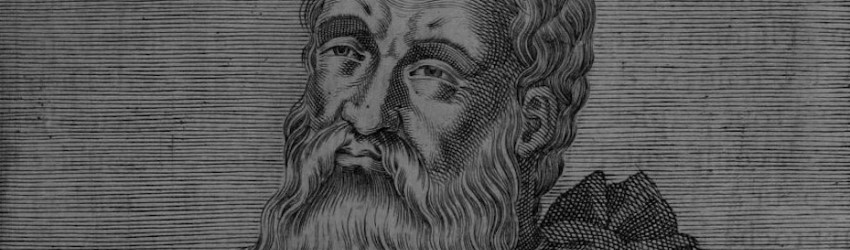
We won’t normally be posting more than one episode a week, but here is the first full episode of the Restless Heart podcast. In today’s show we talk about an important figure in the Early Church known as St. Justin Martyr and look at what he had to say about Mass in 2nd Century Rome.
Episode 1: Worshipping with St. Justin (Download)
— Notes —
* If this subject interests you, you might be interested in watching a longer presentation I have given on the subject of worship in the Early Church.
* If you have any feedback or would like to pose a question for an upcoming episode, you can always tweet us at @davidandnessa.
If you have iTunes installed, you can click here to launch iTunes and subscribe. Alternatively, you should be able to find us in the podcast section of the iTunes Store and Google Play. If you need to setup your podcast feed manually, our feed may be found here.