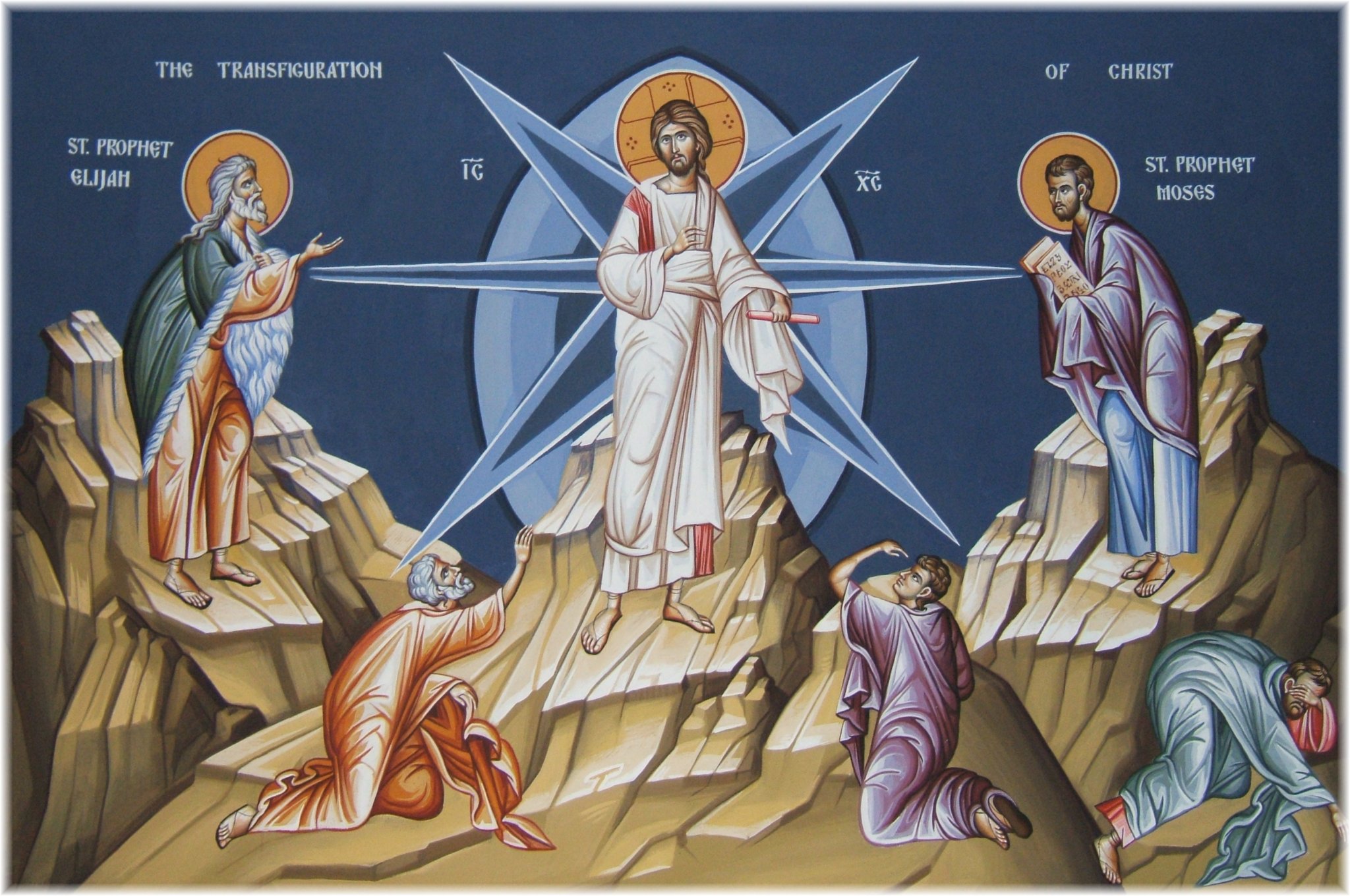
Welcome to the Year of Mercy!
I know I said I wasn’t going to be blogging, but here are some memes I created to mark the beginning of the Year of Mercy. I hope you like The Karate Kid…
Please share your favourite đ
"We are travellers…not yet in our native land" – St. Augustine
I know I said I wasn’t going to be blogging, but here are some memes I created to mark the beginning of the Year of Mercy. I hope you like The Karate Kid…
Please share your favourite đ

Continuing with my chronological read through the Qur’an, today I read the following chapters:Â 87, 92, 89, 93, 94, 103 and 100.
Surah 87: “The most high” (Al-Ala)
Allah tells Muhammad that he will make him recite the Qur’an and remember it…unless God wants him to forget it. This relates to the rather troublesome subject of abrogation in the Qur’an where, even within the lifetime of Muhammad, some chapters were overridden or replaced.
Allah promises to lead Muhammad and his followers to true religion, but the wretched to the fires of Hell.
Questions
Q1. The text says “…the Hereafter is better and more enduring. Indeed, this is in the former scriptures. The scriptures of Abraham and Moses”. Where does the Pentateuch teach about the afterlife?
I’ve been playing around with the graphics program Canva recently and if you’ve looked at the Restless Pilgrim Facebook page recently, you’ll have seen the fruit of this.
One of the graphics I produced has been particularly popular so I thought I’d share a high resolution version of it here on the blog, together with a printable PDF version. I’ve also made a version for the iPhone “Locked” Screen.

At the end of last year, Matt and I got to meet C.S. Lewis’ stepson, Douglas Gresham. In today’s episode, Matt interviews Douglas and asks him about his early life in the United States, his time living at The Kilns, as well as his life following his stepfather’s death.
S3E48: âAfter Hoursâ with Douglas Gresham (Download)
If you enjoy this episode, you can subscribe manually, or any place where good podcasts can be found (iTunes, Google Play, Podbean, Stitcher, TuneIn and Overcast), as well as on YouTube.
More information about us can be found on our website, PintsWithJack.com. If youâd like to support us and get fantastic gifts, please join us on Patreon.
The roadmap for Season 3 is available here.
Read more

I was recently a guest on two episodes of The Counsel of Trent podcast to talk about C.S. Lewis. We spent the first episode simply talking about his life. Lewis was a man who left an indelible mark on the Twentieth Century. However, despite being such an influential figure, today many people only know him for his Chronicles of Narnia, and almost next to nothing about the man himself.Â
Therefore, in this article I would like to introduce you more fully to the man behind the Lion, and the author behind works which have deeply shaped modern Christianity and apologetics. If you would like to listen to the audio version of these articles, click here.
1. He wasnât English
Often I have found people assume that C.S. Lewis was English, particularly if they have listened to one of the few remaining audio recordings of him. Lewis was, in fact, born in Belfast, Northern Ireland in 1898. He was, however, educated in England and lived in Oxford for most of his adult life.
2. He had several names…
He was baptised Clive Staples Lewis, but that wasnât what his friends called him. When Lewis was about four, his dog, Jacksie, died. From then onwards, he stubbornly refused to respond to any other name, although it was eventually shortened to âJackâ. This is why the name of my podcast is Pints with Jack, the âJackâ in question being C.S. Lewis himself.
3. Jack experienced tragedy as a child
Lewisâ mother died of cancer when he was ten. He writes about it movingly in his spiritual autobiography, Surprised By Joy, describing it as follows:
â…all settled happiness, all that was tranquil and reliable, disappeared from my lifeâ
C.S. Lewis, Surprised By Joy


The young Jack was soon afterwards sent to boarding school in England. He disliked England immediately and hated most of his schooling, so much so that in his autobiography, he names one of the schools he attended after one of the most notorious World War Two concentration camps, Belsen. Fittingly enough, the headmaster at that school would later be committed to an asylum.
4. Lewis wasnât always a Christian
Most people who have heard of Lewis will know that he was a famous Christian of his generation. However, he was not a Christian all of his life. He was raised in the Church of Ireland, but became an Atheist as a teenager. There were several reasons for thisâŚ
Lewis loved the old Pagan myths, particularly those of the Norse. As he received his education in classics, he was told that Paganism was all false, whereas Christianity was entirely true. Not only did this assessment seem wrong to the young Lewis, but since he saw clear parallels between the two, he assumed that both Paganism and Christianity were simply fanciful stories.
Like many who embraced Atheism, the problem of pain and suffering also loomed large in Jackâs mind. He couldnât reconcile a good God with the world he saw around him or with the pain he himself had endured in his life. He would often quote the Epicurean poet Lucretius who wrote:
Had God designed the world, it would not be
Lucretius (Epicurean Poet)
a world so frail and faulty as we see
5. He was a war veteran
Jack fought in World War One. In fact, he arrived at the front line on his nineteenth birthday. After being wounded in combat about a year later, he returned home.
During his training he had met a young man named Paddy Moore. The two had agreed that if one of them died, that the other would look after his family. Unfortunately, Paddy did not return from the trenches. Lewis was true to his word, living with and taking care of both Paddyâs mother, Janie, and Paddy’s sister, Maureen, for the rest of his life.


6. Jack was really, really clever…
Upon returning to Oxford after the war, Lewis excelled in his studies, earning multiple degrees. He got a First in Greek and Latin literature (“Moderations”), Philosophy and Ancient History (“Greats”), and finally in English.
Itâs clear that Lewis was very intelligent, particularly when it came to language. He was, unfortunately, terrible at mathematics. In fact, his inability with numbers nearly barred his entrance to Oxford. Fortunately, upon returning from war, his military service granted him a dispensation from those exams.
7. He became a theist before becoming a Christian
Over time, Lewis started to become discontented with the imaginative and explanatory power of Atheism. He had originally embraced Atheism, in part, because of the cruel and unjust nature of the universe. However, as he would later argue in Mere Christianity:
…how had I got this idea of just and unjust? A man does not call a line crooked unless he has some idea of a straight line. What was I comparing this universe with when I called it unjust?
C.S. Lewis, Mere Christianity
Jack moved through a number of philosophical evolutions before he finally accepted the inevitable. In his autobiography he writes:
You must picture me alone in [my] room…, night after night, feeling⌠the steady, unrelenting approach, of Him whom I so earnestly desired not to meet. That which I greatly feared had at last come upon me. [I eventually]…gave in, and admitted that God was God, and knelt and prayed: perhaps, that night, the most dejected and reluctant convert in all Englandâ.
C.S. Lewis, Surprised By Joy
He was not yet a Christian, but the seeds had already been sown…
8. He really loved his friends
Contrary to some depictions of Lewis, he was not an isolated stoic academic. He loved good beer and good conversation. He really loved his friends and they would play a huge role in his life, particularly J.R.R. Tolkien, the author of The Hobbit and The Lord of the Rings. In fact, Tolkien fans owe a great debt of gratitude to Lewis, as he was for a long time the only audience for these works and he did much to encourage Tolkien to finish them and get them published. Unfortunately, Tolkien disliked much of Lewisâ work, even The Screwtape Letters, a book which Lewis dedicated to him!

Many other names could be added to the list of Lewis’ close friends, such as Hugo Dyson, Charles Williams and Owen Barfield. All of these men shared a love of literature. In The Four Loves, Lewis would write:
Friendship is born at that moment when one person says to another: âWhat! You too? I thought I was the only one!’
C.S. Lewis, The Four Loves
Later these men would come together to form The Inklings, a literary discussion group where they would debate ideas and where they would read their work to each other. They would meet on Tuesday mornings in their favourite pub, The Eagle and Child, affectionately known to locals as The Bird and Baby, but they would also meet on Thursday nights in Lewisâ rooms at Magdalen College where theyâd have a drink and smoke.
9. Speaking of smoking, Lewis really loved tobacco
I recently came across a biography of Lewis which estimated that he smoked sixty cigarettes a day! Now, since Iâm marginally better at mathematics than Lewis, I sat down and worked out that, assuming he was awake for 14 hours a day and that it takes approximately five minutes to smoke a cigarette, that he spent a third of his waking life smoking!

Last year I visited Lewisâ home and although they had repainted the walls in the living room, they left the ceiling untouched so you could see how it was thoroughly stained by the nicotine!
10. His friends helped bring him to Christ
After converting to Theism, Lewis began to suspect that Christianity might be true. However, it was after a long, late-night conversation with Tolkien and Dyson that the last major obstacle was removed. Lewis had regarded Christianity as a myth like any of the other Pagan myths – “lies breathed through silver” – emotionally moving, but false.

Over the course of their conversation, Tolkien and Dyson helped Lewis see that Christianity was the true myth. For centuries before Christianity, manâs myths had intuited a dying and rising God. However, in Jesus of Nazareth, that myth became fact.
That’s the end of the first part of this series! The concluding part will be published tomorrow…
Part 1 | Part 2
This post isn’t going to be a thoroughly formed article, but I need to get over my writer’s block and get into the habit of writing again…

I didn’t go to Divine Liturgy this week and instead went to a Roman Mass. During the Readings, something jumped out at me. The passage in question was the First Reading from Isaiah:
Thus says the LORD:
I know their works and their thoughts,
and I come to gather nations of every language;
they shall come and see my glory.
I will set a sign among them;
from them I will send fugitives to the nations…
that have never heard of my fame, or seen my glory;
and they shall proclaim my glory among the nations.
They shall bring all your brothers and sisters from all the nations
as an offering to the LORD…
to Jerusalem, my holy mountain, says the LORD,
just as the Israelites bring their offering
to the house of the LORD in clean vessels.
Some of these I will take as priests and Levites, says the LORD.
– Isaiah 66:18-21
It does sound like the Prophet Isaiah is foretelling a situation whereby the Children of Israel will go out to the nations to proclaim the Lord’s glory and, as a result, bring these Gentiles into relationship with the God of Abraham. Christians obviously find a fulfillment of this in the mission of the Church.
I haven’t done much research on it, but the bit which peaked my interest was the final sentence. The language is a little ambiguous but Isaiah appears to say that, of those Gentiles who believe, the Lord will choose a subset to be “priests and levites”, Gentile priests! This fits very well with the Coptic, Catholic and Orthodox Church’s understanding that, although like Israel we have a priesthood of all believers (Exodus 19:6), some members of that people are set aside for ministerial priesthood…
A little while ago I published the list of questions which we use at the beginning of our Bible studies. Now, I know some people might find it a bit dull, and perhaps not the most interesting way to learn the Faith, but I’m a big fan of such things since it provides a framework within in which people can understand their faith. We devote time to continued learning about things which interest us in other areas of our lives, so why should it be any different when it comes to religion?
In our group we’ve recently added the names of the Twelve Apostles. Can you name them all? I’ll walk through them after the jump…