How Hebrew is your Faith?

How Hebrew is your Faith? I think that within Christianity there is always this Marcionite tendency to try and sever Christianity from its Jewish roots.

When I was back living in London, I had the privilege of hearing the testimony of a man called Roy Schoeman. Roy is the son of Jewish parents who escaped the Nazi persecutions in Germany before World War II. He studied for a while under the noted Rabbi Arthur Hertzberg before eventually falling into atheism. Some time later he had a dramatic conversion and, a little while later, found his way into the Catholic Church.

When I first heard Roy speak, it renewed my appreciation for the Jewish roots of Christianity. I have since listened to a number of his talks and I’ve found that his Jewish perspective often gives me a new awareness when looking at the Sacred Scriptures. I have found this particularly true for St. Paul’s epistles, especially the letter to the Romans.

I would thoroughly recommend everyone to spend some time in the Audio and Video section of his website, listening to his testimony and to some of his talks, I think you’ll find them really enlightening.

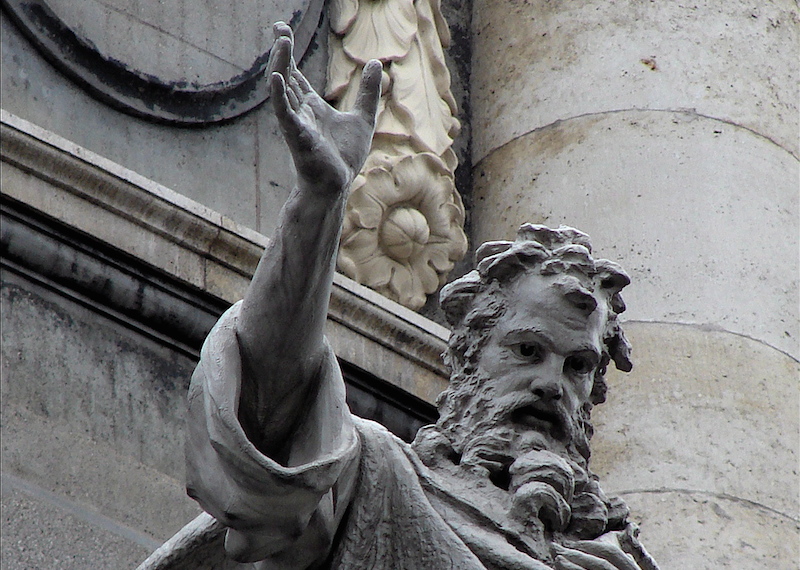
“After all, if you [Gentiles] were cut out of an olive tree that is wild by nature…[and] grafted into a cultivated olive tree, how much more readily will…[the Jews]….the natural branches, be grafted into their own olive tree!” – Romans 11:24

Qur’an Cover-to-Cover: Day 7 (“The heights” and “The Jinn”)

Today I’m going to be looking at two chapters of the Qur’an, one long (#7) and one reasonably short (#72).

Surah 7 – “The heights” (Al-Araf)
Mankind is reminded to follow Allah and also reminded of the cities which He destroyed to punish unbelieving people. The scales of judgement which weigh good deeds are also recalled.

The fall of Satan is described, in an almost identical pattern to Surah 38 (“The letter sad”). The narrative continues, however, describing the Fall of Adam and Eve. Allah told them “do not approach this tree, lest you be among the wrongdoers”. The nature of the tree or the consequences of eating from it were not really explained. Rather than saying that they will be like gods (as in the Genesis narrative), Satan promised that if they eat the fruit they will “become angels or become of the immortal”. Once they have eaten, they recognize their nakedness and sew together leaves as clothes. God arrives and chastises them. We don’t see “the blame game” which we see in Genesis, where Adam blames Eve (and ultimately God) and Eve blames the serpent.

Read more

The hem of His garment…

I’m winding down for the evening, but I wanted to quickly share something from Divine Liturgy this morning. The Gospel today on the Byzantine Calendar was the healing of the woman with a haemorrhage:

 And there was a woman who had had a flow of blood for twelve years, and who had suffered much under many physicians, and had spent all that she had, and was no better but rather grew worse. She had heard the reports about Jesus, and came up behind him in the crowd and touched his garment. For she said, “If I touch even his garments, I shall be made well. And immediately the hemorrhage ceased; and she felt in her body that she was healed of her disease. – Mark 5:25-29

As I heard the Scriptures proclaimed today I had an epiphany, seeing an Old Testament connection to this passage which I had not previously seen:

And when [the priests] go out into the outer court to the people, they shall put off the garments in which they have been ministering, and lay them in the holy chambers; and they shall put on other garments, lest they communicate holiness to the people with their garments – Ezekiel 44:19

As you can see, in the Old Covenant the garments of the priests where to be kept away from the rest of Israel, but what a wonderful reversal we have with the New Covenant! Jesus, “our Great High Priest”, goes about among His flock, freely available to the people, with His vestments bringing healing and holiness.

There’s a beautiful practice in the Eastern Churches which is inspired by today’s Gospel. I first saw it at my old Ruthenian parish, but I’m told that it’s more common in Melkite and Antiochian churches. As the priest passes along the aisles, you’ll occasionally see members of the congregation reach out and touch the priest’s vestments, made holy not by his own sanctity, but by virtue of the office given to him by Christ through the Church.

Vestments


Baptism Matters: Part 1 (Scripture)

Over the last six months, many of my non-Catholic Christian friends have given birth to their first child. This was brought about, presumably, through the combination of an extremely poor TV lineup last summer and an abundance of free time on their part.

With this wonderful addition to their family, several of these new parents are now facing a dilemma: should they baptize their newborn child? 

You see, in many cases, one spouse comes from a denomination where infant baptism isn’t performed (Baptists, Seventh Day Adventists, non-denominationals) and the other has come from a denomination where it is standard practice (Catholic, Orthodox, Lutheran, Anglican, Methodist). The parents typically make the choice to either baptize their child or to have some kind of dedication ceremony.

This is an important issue to me. I was once a member of Protestant congregation where they did infant baptisms, but they also carried out child dedications, depending upon the wishes of the parents.  This inconsistency was an important catalyst in my study of the ancient Christian faith and my eventual reversion to the Catholic Church.

infant-baptism

So, in the next few posts I would like to present the basic case in favour of infant baptism…

Read more

Fiat Award Acceptance Speech

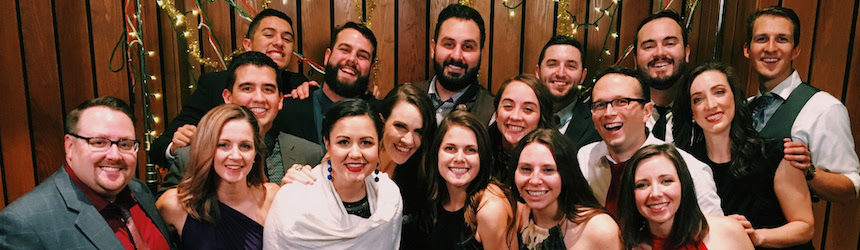
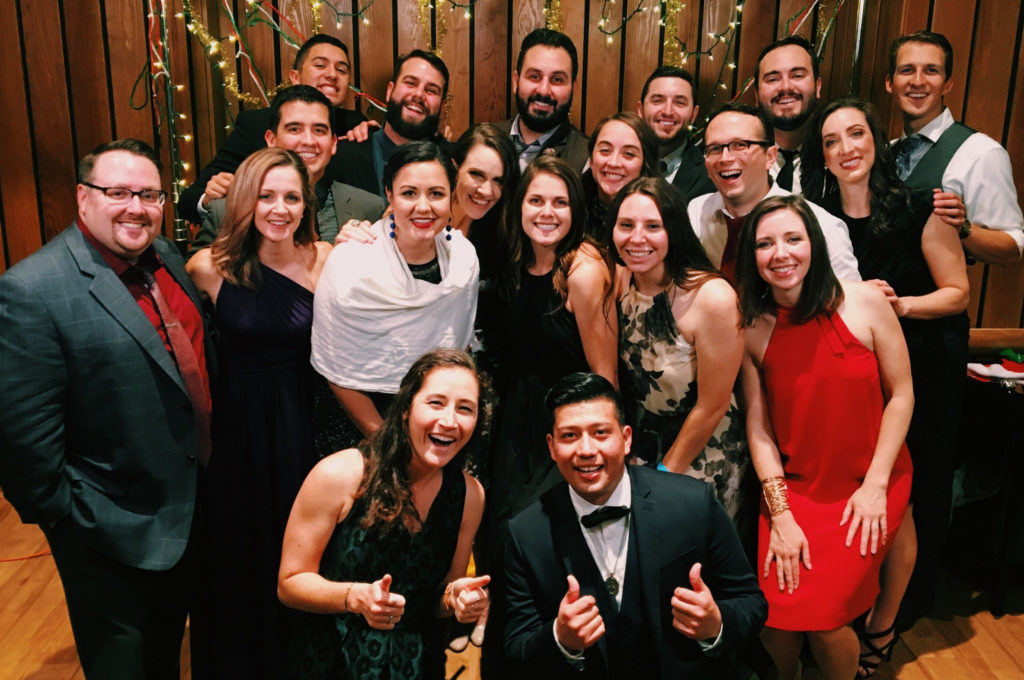
Last night I gave my acceptance speech for the Fiat Award at the San Diego Young Adult Christmas Gala. Here’s the text…

Greeting

Good evening everyone. I’m humbled and really privileged to receive this award, thank you.

I’m keen to get on with the rest of the evening, as I’m sure you are, and to bust out some sweet moves on that dancefloor…but Patrick said that I could speak to you for a few minutes and there is something, in particular, which I would like to share tonight. You see, even some of my close friends may not know everything about my Faith journey…

My Journey

I grew up in a good Catholic home, but it was the work of an Irish missionary (and the Holy Spirit) which brought my faith fully alive at University. There at University, I was surrounded by a vibrant community of Catholics, many of a similar age, who cared deeply about growing in the Faith and about about sharing the Gospel.

But it was after university that things started to go awry… I graduated and was hired by a company in an unfamiliar town. I naturally went to Sunday Mass assuming that I would find new friends there…but I was to leave disappointed. Nobody greeted me. There was no Young Adult community. As far as I could see, there were no ministries whatsoever. The place just seemed… dead.

To add insult to injury, the company which had brought me to that town went bankrupt in my first week there (It wasn’t anything I did, I swear!). But this left me in an unfamiliar town, without a job, with friends, without a community….

As a result of all this, on my way back from Mass, I wandered into a non-Catholic congregation. It was here, in that Protestant congregation that I found the community for which I was longing. I was given such a warm welcome (well, at least as warm a welcome as is possible for the English!). During my time there…

…I learned so much about the Christian life

…I found a group my own age

…I was invited to help out with their youth group

…I made friends…I had found a home

It would be many years before I would rediscover the truth of Catholicism and return whole-heartedly to the Church.

The state of our Communion

Now why am I sharing this story? I’m sharing it because I don’t think it’s unique. I don’t think it’s even rare. I think my story is common for many many, many Catholics…and many former Catholics. The total number of Catholics in the United States has dropped by 3 million since 2007, that’s about 20%, one-fifth of the total Catholic population in the United States.

Why do they leave? There are several important reasons, but I would suggest that a major reason is that people are looking for spiritual nourishment, seeking connection, a community,…and when they don’t find it in the Catholic Church….they look elsewhere.

This Award

I’m really grateful and feel very honoured to receive this award tonight, but I have done nothing that special.

My life, my very existence, comes from God…

…and my supernatural life comes through Christ and His sacrifice for me.

If I have any talents they are not my own, they come from Him.

I owe God everything. So given all that, what else could I do but put myself at His service and the service of His Church?

I would suggest that, if anything can be learned from my receiving this award tonight, it’s not that I have done anything that extraordinary….

… The lesson is rather that, ministry is not simply the domain of ordained clergy or salaried parish employees, ministry is the role and calling of every…baptized…Catholic.

Rachel

At the beginning of this year, I nominated my friend, Rachel, to receive this very award. You see, when Rachel became Catholic, she immediately set about galvanizing the Immaculata Young Adults and approached her pastor asking to start a Bible Study.

It was for this reason that I nominated her for the award. She didn’t wait for someone else in the parish to do it. She saw a need and stepped up, putting her time and her talents at the service of her parish.

Dream a little dream with me

My friends, our Diocese is often praised in other parts of the country for its Young Adult Ministry (and rightly so)… but imagine with me for a moment if you will, what this Diocese would look like if every Catholic in this Diocese imitated my friend Rachel. I promise you, our Diocese would be un-recog-nizable

There would be activities every night of the week, every weekend. There would be opportunities to socialize, to grow in the Faith, to serve the wider community. And most importantly, the people who came to the Church seeking nourishment and community… they’d find it…and in so doing, encounter Jesus.  

Objections

But there’s a problem. As soon as I spoke about each one of us finding a place to serve, a voice at the back of your head probably started coming up with a long list of objections:

“What, me? Doing ministry?! I don’t know how to do that…”

“I can’t organize big events!”
“I’m not a theologian. I’m sure someone else better qualified will do something!”

Am I right?

Small things with great love

In case you misunderstand me, I am not suggesting that each of you should head-up some grand catechesis programme in your parish, and devote all your time, every evening and weekend to that work. No, I’m simply inviting you to think about your passions and skills and consider where there is a need in the Church, because, as Frederick Buechner said:

“The place God calls you to [your vocation] is the place where your deep gladness [all those things you really love and care about] and the world’s deep hunger [and the unmet needs in the Church] meet [where they meet]

My ministries

As for myself…

I like going to the theatre and the symphony. I therefore inaugurated “The Finer Things Club” and invited others to join me on my cultural adventures.

My housemate and I agreed that we wanted to have better accountability, so we formed a Men’s Huddle, inviting a few other guys to meet together a couple of times a month to share a beer and talk about our lives.

My friend Teresa wanted to sing Taize songs, so we picked a date and invited people  over to the house for an evening of candle-lit Taize prayer and song. We now do this once a month if you’d like to join us.

I’ve always loved the writings of C.S. Lewis, so I arranged to meet up with my friend Matt at a coffee shop, to talk about one of his books. I let other people know about it on Facebook, and a meeting of two C.S. Lewis nerds grew into a regular group and we’ve now read six of Lewis’ books.

Because of interest in this group from outside of San Diego, Matt and I then launched a podcast, where we discuss the works of C.S. Lewis chapter-by-chapter each week.

This then grew into a website, PintsWithJack.com, to host a video series which was launched this week.

My point here is that all these things began simply by doing what I love…and then inviting others to join me.

Have a little help from my friends

And I know I’m not the only one. I don’t have to look hard to find other examples from among my friends…

Joseph, having discovered Our Lady, committed to praying the rosary at the beach each week, and invited others to join him.

Kareen was troubled by the homelessness in Downtown San Diego, so with a few friends she set about making food and handing it out. Others joined her.

My friend Joe really likes scotch, so he decided to get together some friends and introduce them to the finer points of whiskey-tasting.

All of these activities build community, help deepen spirituality and make a positive change in the world (especially the scotch!).

The invitation

So what about you? What are the things you enjoy? Where do you see an unmet need in the Church? Where do you feel the tug of the Holy Spirit?

Again, it doesn’t have to be complicated…Maybe you like volleyball. You could assemble some friends to have a casual game one weekend, or purchase host a monthly movie night at your house, inviting some new parishioners you met at Mass.

Never Alone

But even with these simple suggestions, it may all seem too intimidating. But the good news is that you don’t have to do this alone.

Reach out to your pastor – he’s there to help!

Reach out to Patrick and Pam – the purpose of their office is to support you…to help you… as you help build the Kingdom.

My time is now just about up, so I would like to thank you all for your indulgence for the past ten minutes. But I’d like to end with a prayer of Blessed John Henry Newman:

“God has created me to do Him some definite service; He has committed some work to me which He has not committed to another. I have my mission… I am a link in a chain, a bond of connection between persons. He has not created me for naught. I shall do good. I shall do His work.”

Can I get an amen?

PWJ: S3E21 – TWHF (Pt 2 – Ch 2) – “Troubled Vision”

Orual has a vision of the King which help her begin to see clearly…

S3E21: “Troubled Visions” (Download)

If you enjoy this episode, you can subscribe manually, or any place where good podcasts can be found (iTunesGoogle Play, Podbean, Stitcher, TuneIn and Overcast), as well as on YouTube.

If you’d like to support us and get fantastic gifts, please join us on Patreon.

The Season 3 roadmap is available here.

Read more

What’s the big deal with Latin?

Latin

A couple of weeks ago, a friend sent me a question that I’d like to answer in this post:

So, what’s the deal with Latin? It seems to be considered holy or at least holier than the vernacular and I was wondering why. I know that shortly after Christ’s death the church was based in Rome and that Latin was the primary language of most of the Church fathers, I just didn’t know if that was all that was behind it or if there was more. Is it at all important to learn to pray certain prayers in Latin? Or even work to understand the Mass in Latin?

So, what’s the deal with Latin? In my opinion, it’s a horrible language that I was forced to study for three years in school which I absolutely hated. Next question? Okay, maybe that’s not the answer you were looking for.

Why Latin?

I suppose that you could say that Latin is important to Catholicism for a few reasons…

1. Lingua Sacra
The Catholic Church’s love of Latin finds an echo in Judaism. Although most Jews spoke Aramaic (or Greek outside of Palestine), it was Hebrew that was the language of the Temple and the Sacred Scriptures. Latin in Catholicism occupies a similar position as a “Lingua Sacra” (Sacred Language).

2. History
As you rightly point out, a few centuries after Christ Latin is starting to overtake Greek as the common language of the Roman Empire. Starting with Tertullian, the Early Church Fathers increasingly wrote in Latin. This meant that, at least in the West, Latin became the language of theology, liturgy and learning in general. All this resulted in the Latin language being tied to the faith in a very special way. Even once the general use of Latin started to decline, it was still used in the Church, as well as being the universal language of published scholarly works, law, science, …

3. Catholicity 
I never really saw the point in Latin Mass until I travelled abroad where my knowledge of the vernacular wasn’t too strong. I could typically follow along with the liturgy, knowing as I did the words of the Mass by heart. However, I remember my joy when we started singing the Sanctus, Benedictus, Amen*… I got a little taste of what a universal liturgical language could bring to the sense of oneness and catholicity of the Church.

* Please note, the “Kyrie” isn’t Latin, but Greek.

Should you learn it?

Now, is it important to learn to pray certain prayers in Latin or understand the Latin Mass? You could that is isn’t because typically most of the Masses you’ll attend will be in the vernacular (something which, by the way, the Eastern Churches have always done).

However, on the other hand, you could that it is very important because it is the patrimony of the Western Church and therefore deserves our attention, since it roots us to the historic Church. Personally, I go to Tridentine Mass a couple of times a year. I prefer my usual liturgy, but I attend periodically so as to gain an appreciation for the liturgy which was celebrated by many of our great Saints. Finally, please remember this great saying:

“Quidquid latine dictum sit altum videtur”
“Anything said in Latin sounds profound”

1 96 97 98 99 100 172