Mere Christianity – Book IV – Chapter 7 (“Let’s Pretend”)

Book-4

Picking back up my notes for C.S. Lewis’ “Mere Christianity”…

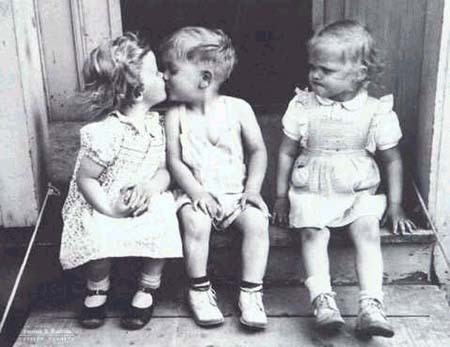
1. This chapter is about how people pretend and their pretense leads to reality

(a) Beauty and the Beast

(b) A man wearing a beautiful mask for a year and his face becomes conformed to the attractive shape of the mask

2. We “pretend” as soon as we say the first two words of the Lord’s Prayer

“…Do you now see what those words mean? They mean quite frankly, that you are putting yourself in the place of a son of God. To put it bluntly, you are dressing up as Christ. If you like, you are pretending”

(a) When you pretend, you realize what a poor imitation you really make

“…the moment you realise what the words mean, you realise that you are not a son of God. You are not being like The Son of God, whose will and interests are at one with those of the Father: you are a bundle of self-centred fears, hopes, greeds, jealousies, and self-conceit, all doomed to death”

(b) This seems like cheek, but this is what God has commanded us to do

“…this dressing up as Christ is a piece of outrageous cheek. But the odd thing is that He has ordered us to do it.

He has done so because there are two kinds of pretending:

(i) The bad kind

“…where the pretence is there instead of the real thing; as when a man pretends he is going to help you instead of really helping you:

(ii) The good kind

“…where the pretence leads up to the real thing”

This explains some of our experience:

(A) Pretending to be friendly 

“When you are not feeling particularly friendly but know you ought to be, the best thing you can do, very often, is to put on a friendly manner and behave as if you were a nicer person than you actually are. And in a few minutes, as we have all noticed, you will be really feeling friendlier than you were. Very often the only way to get a quality in reality is to start behaving as if you had it already”

(B) Children’s Games

“They are always pretending to be grown-ups-playing soldiers, playing shop. But all the time, they are hardening their muscles and sharpening their wits, so that the pretence of being grown-up helps them to grow up in earnest.”

Read more

Mere Christianity – Book III – Chapter 4 (“Morality and Psychoanalysis”)

Book-3

Picking back up my notes for C.S. Lewis’ “Mere Christianity”…

Notes & Quotes

1. Building a Christian society requires a multi-pronged approach

It means that we must begin both jobs at once – (1) the job of seeing how “Do as you would be done by” can be applied in detail to modern society, and (2) the job of becoming the sort of people who really would apply it if we saw how.

2. Christian morality claims to fix the human machine, but so does psychoanalysis

(a) We must distinguish between psychoanalysis and the philosophical views added to them by men such as Freud

“…when Freud is talking about how to cure neurotics he is speaking as a specialist on his own subject, but when he goes on to talk general philosophy he is speaking as an amateur”

(b) Psychoanalysis is not contrary to Christianity and, in fact, has some overlap, albeit different ends

“…psychoanalysis itself…is not in the least contradictory to Christianity. Its technique overlaps with Christian morality at some points…but it does not run the same course all the way, for the two techniques are doing rather different things”

3. A moral choice involves two different things:

(a) The raw materials involved in choosing

“…the various feelings, impulses and so on which his psychological outfit presents him with”

These raw materials may be:

(i) Normal

“…the sort of feelings that are common to all men”

(ii) Unnatural

“…unnatural feelings due to things that have gone wrong in his subconscious”

The job of psychoanalysis is to make these raw materials better:

“…psychoanalysis undertakes to do is to remove the abnormal feelings…to give the man better raw material for his acts of choice…bad psychological material is not a sin but a disease. It does not need to be repented of, but to be cured…morality is concerned with the acts of choice themselves

(b) The act of choosing itself

“However much you improve the man’s raw material, you have still got something else: the real, free choice of the man, on the material presented to him, either to put his own advantage first or to put it last. And this free choice is the only thing that morality is concerned with”

4. Human judgements and Divine judgement are very different

(a) We judge by actions, God judges by moral choices

“Human beings judge one another by their external actions. God judges them by their moral choices. When a neurotic who has a pathological horror of cats forces himself to pick up a cat for some good reason, it is quite possible that in God’s eyes he has shown more courage than a healthy man may have shown in winning the V.C.* When a man who has been perverted from his youth and taught that cruelty is the right thing, does some tiny little kindness, or refrains from some cruelty he might have committed, and thereby, perhaps, risks being sneered at by his companions, he may, in God’s eyes, be doing more than you and I would do if we gave up life itself for a friend… 

* Victor Cross, a medal awarded in the military

(b) At death, all will become clear

Some of us who seem quite nice people may, in fact, have made so little use of a good heredity and a good upbringing that we are really worse than those whom we regard as fiends…

Most of the man’s psychological make-up is probably due to his body: when his body dies all that will fall off him, and the real central man. The thing that chose, that made the best or the worst out of this material, will stand naked. All sorts of nice things which we thought our own, but which were really due to a good digestion, will fall off some of us: all sorts of nasty things which were due to complexes or bad health will fall off others. We shall then, for the first time, see every one as he really was. There will be surprises.”

5. Our choices matter

(a) They prepare us for Heaven or Hell

“…every time you make a choice you are turning the central part of you, the part of you that chooses, into something a little different from what it was before. And taking your life as a whole, with all your innumerable choices, all your life long you are slowly turning this central thing either into a heavenly creature or into a hellish creature… Each of us at each moment is progressing to the one state or the other”

(b) This is why Christian writers seem so strict one moment and easy at another

“They talk about mere sins of thought as if they were immensely important: and then they talk about the most frightful murders and treacheries as if you had only got to repent and all would be forgiven… What they are always thinking of is the mark which the action leaves on that tiny central self which no one sees in this life but which each of us will have to endure-or enjoy-for ever. One man may be so placed that his anger sheds the blood of thousands, and another so placed that however angry he gets he will only be laughed at. But the little mark on the soul may be much the same in both. Each has done something to himself which, unless he repents, will make it harder for him to keep out of the rage next time he is tempted, and will make the rage worse when he does fall into it. Each of them, if he seriously turns to God, can have that twist in the central man straightened out again: each is, in the long run, doomed if he will not. The bigness or smallness of the thing, seen from the outside, is not what really matters”

(c) These choices change our sensitivity to good and evil

“When a man is getting better he understands more and more clearly the evil that is still left in him. When a man is getting worse, he understands his own badness less and less. A moderately bad man knows he is not very good: a thoroughly bad man thinks he is all right… Good people know about both good and evil: bad people do not know about either”

Discussion Questions

1. What is Jack’s opinion regarding psychoanalysis?

2. What are the two different different components of a moral choice? Which one benefits from psychoanalysis

3. What is the difference between man’s judgements and God’s judgements? How will death make the truth clearer?

4.  In what way do our choices prepare us for Heaven and Hell? How do they affect our sensitivity to good and evil?

C.S. Lewis Doodle

No doodle!

New Testament Warm-Ups: Answers 28-42

Continuing the answers to the New Testament Warm-Up questions…

28. What appears after Thessalonians?
The four letters from St. Paul to individuals: Timothy (x2), Titus and Philemon. The first three of these (and sometimes all four) are commonly known as the “Pastoral Epistles”.

29. Who was Timothy?
Timothy was a constant companion of Paul, recruited during Paul’s 2nd missionary journey (Acts 16:1-3). He also traveled with Paul on the subsequent 3rd missionary journey.

30. What background information do you know about Timothy?
He was from Asia Minor with a Christian Jewish mother (“Eunice”) and a Greek (probably Pagan) father (2 Timothy 1:5; 3:15). Timothy was the co-sender of six of Paul’s letters (2nd Corinthians, Philippians, Colossians, 1st and 2nd Thessalonians, as well as this letter). Tradition asserts that Timothy was the first bishop of Ephesus and was martyred there as an old man.

31. Who was Titus?
Titus was a companion of Paul. He was a Gentile Christian who traveled with Paul and Barnabas from Antioch to Jerusalem and with Paul on his 3rd missionary journey.

32. Who was Philemon?
Philemon was man of Paul’s acquaintance. Paul was possibly instrumental in his conversion to the Faith (Philemon 1:19) and Philemon was possibly involved in some ministerial capacity (Philemon 1:2).

33. Where did Philemon most likely live?
The letter doesn’t indicate the exact location of Philemon and his family, but it is assumed that they were residents of Colossae or a neighbouring city in Asia Minor (modern Turkey). This assumption is based upon the common belief that the slave mentioned in this letter, Onesimus, is the same man delivering the Letter to the Colossians (Colossians 4:7-9).

34. What is the context of the letter?
Paul is sending back to Philemon his slave Onesimus. Additionally, Paul thinks that his captivity will soon be at an end, so he tells Philemon to prepare for his arrival (Philemon 1:22).

35. What was the name of Philemon’s slave?
Onesimus

36. What is the meaning of the slave’s name?
His name means “Useful” or “Benefit”. St. Paul makes a couple of puns on his name in the letter.

37. What does Paul ask of Philemon?
Paul requests that Philemon to forgive his runaway slave Onesimus (Philemon 1:9,17)

38. What book appears after Philemon?
The book of Hebrews.

39. Why does Hebrews appear here?
It appears at the end of the collection of Paul’s work (the “Pauline Corpus”) because of the dispute in the Early Church as to whether or not Paul was its author. Additionally, one would not really call it an epistle.

40. What literary genre is Hebrews?
It is a sermon.

41. What is the main theme of the book?
It explains Jesus in terms of the Old Covenant priesthood and sacrificial system.

42. What did St. Thomas Aquinas think about the authorship of this epistle?
“Catholic tradition holds that Luke redacted the final version of the anonymous epistle to the Hebrews on Paul’s behalf, a view endorsed by none other than Saint Thomas Aquinas.”Source

1-16 | 17-27 | 27-42 | 43-52 | 53-57 | 58-67 | 68-71 | 72-81
All Questions

The article New Testament Warm-Ups: Answers 27-42 first appeared on RestlessPilgrim.net

TEA: Is there life before marriage? (Dodge City)

BJD

So this past weekend I was at the Southern Kansas Young Adult Conference (SKYAC). I gave a few talks on the retreat, which I’ll post here over the next couple of days.

The afternoon opened up with a talk on relationships from the magnificently-bearded Dave DiNuzzo (“Relationship Martyrdom vs Relationship Suicide”).

Following Dave’s presentation, the married couples on the retreat had their own breakout talk, but all those without wedding rings on their fingers were sent to another room to listen to…me! In my talk, I tried to answer the all-important question…is there life before marriage?

“Is there life before marriage?” (Download)

PWJ: S1E22 – MC B4C9 – “Charity”

Charity

We will spend the remaining episodes of Book III, we will be looking at the theological virtues. Today we begin with Christian love, also known as “charity”…

If you enjoy this episode, you can subscribe manually, or any place where good podcasts can be found (iTunesGoogle PlayPodbeanStitcher and TuneIn).

Please send any objections, comments or questions, either via email through my website or tweet us @pintswithjack. Be sure to follow our new Instagram account!

Episode 22: “Charity” (Download)

Read more

PWJ: S2E20 – TGD 13 – “The Dwarf and The Tragedian”

Last week we read that Sarah Smith was starting to get through to her ghostly husband. In today’s chapter we see the conclusion of that encounter and MacDonald explains why misery must one day be unable to affect joy…

S2E20: “The Dwarf and The Tragedian” (Download)

If you enjoy this episode, you can subscribe manually, or any place where good podcasts can be found (iTunesGoogle PlayPodbeanStitcherTuneIn and Overcast).

Read more
1 91 92 93 94 95 172