The Great Divorce: Chapter 12

Summary

The branches of trees down one aisle of the forest dance with light and Lewis thinks there must be another river nearby. It turns out the light is coming from people in a procession. Lewis tells us that “If I could remember their singing and write down the notes, no man who read that score would ever grow sick or old”. Behind them came a beautiful lady in whose honour all this was being done.

Lewis whispers to MacDonald, “Is it? … is it?”. His teacher responds that it’s actually a lady from Golders Green named Sarah Smith, who is “one of the great ones” in this country. MacDonald identifies some of the people in the procession as angels, and others as “her sons and daughters” who were any child she met on earth. She is also surrounded by animals: cats, dogs, birds and horses. MacDonald explains that “Every beast and bird that came near her had its place in her love. In her they became themselves. And now the abundance of life she has in Christ from the Father flows over into them.”

The Lady moves towards “two phantoms: a great tall Ghost, horribly thin and shaky”, whom Lewis dubs “The Tragedian”, who is being led on a chain by another Ghost who is “no bigger than an organ-grinder’s monkey”. When they meet, despite the Tragedian being the one who speaks, the Lady addresses only the Dwarf Ghost. She kisses him and asks for his forgiveness “For all I ever did wrong and for all I did not do right since the first day we met”. The Dwarf shakes the chain and the Tragedian responds, saying he accepts her apology.

The Tragedian says that he’s been thinking only about her “all these years…breaking your heart about me”. In a small, bleating voice, the Dwarf Ghost asks if she missed him. When the Lady tells him that he’ll understand it soon enough, the Dwarf and Tragedian speak in unison to each other, saying that she didn’t answer the question. It is at this point that Lewis “realised then that they were one person, or rather that both were the remains of what had once been a person”, Sarah’s husband, Frank. The Dwarf and the Tragedian tell each other that “it would be rather fine and magnanimous not to press the point” but they aren’t sure if she’d notice, recalling a time when they let her have the last stamp and she didn’t “see how unselfish we’d been”.

The Dwarf and the Tragedian are shocked to find out that the Lady has been happy in Heaven without him. The Tragedian asks here if she even knows the meaning of the word “Love”! The Lady responds: “How should I not?.. I am in love. In love, do you understand? Yes, now I love truly”. Rather than being comforted by this, the Tragedian asks if this means she didn’t love him on earth. The Lady says she did but “only in a poor sort of way… mostly the craving to be loved… I needed you”. The Tragedian is horrified at the idea that she no longer needs him, even though she says that “We shall have no need for one another now: we can begin to love truly”.

The Tragedian, becoming even more melodramatic, laments “Would to God I had seen her lying dead at my feet before I heard those words”. The Lady tries to snap him out of it by saying to the Dwarf “Frank! … Look at me… What are you doing with that great, ugly doll? Let go of the chain. Send it away. It is you I want. Don’t you see what nonsense it’s talking?”. Her message seems to get through and he starts to smile and grow a little bigger.

Questions

Q1. How would you describe the procession? What is Lewis’ suspicion regarding the identity of the lady?

Q2. Who are the ghosts in this chapter? Why are there two ghosts, one of them on a chain? Why are the ghosts shocked to find that the lady has been happy in Heaven?

Q3. How does the lady describe her love for her husband on earth? How is it different now in Heaven?

Q4. How does the lady try to snap Frank out of the melodrama? Why might this work?

Previous Episode | Index | Next Episode

Voting for Pro-Choice Politicians

I’ve had a three different conversations recently related to voting for pro-choice politicians. Each time I’ve had these conversations, I’ve been told that pro-lifers shouldn’t let a politician’s opinion about abortion be a deciding factor as to whether or not one can vote for that candidate.

The argument is made that a candidate may indeed be in favour of “reproductive rights” (a delightful euphemism for something quite so barbaric), but I’m told that this is okay if that candidate is in favour of some social programme. I’m told that this is what it really means to be pro-life…

A game you can’t win

The real advantage of this position for the pro-choice advocate is that he can play this game ad infinitum. He will always be able to come up with another social cause which he’ll say demands our attention before we can get around to looking at abortion directly.

Even in some utopian future where there are state-funded programmes for every possible social ill, the pro-choice advocate can still postpone protecting the unborn by demanding first that more money be devoted to these government programmes.

The unanswered question

Each time I’ve had this conversation, I’ve asked a question:

Would you mind engaging in a thought experiment? Let’s say that there was a party or candidate which was onboard with all of your desired social programmes…but they also campaigned for the right for parents to have their child killed up until their first birthday. Would you vote for that candidate or party?

Question posed to pro-choice advocates

I’ve used different versions of this question, sometimes talking about a party which supports slavery, rather than infanticide. Either way, I have yet to hear an answer to this question.

Questions like this put the pro-choice advocate in a bind. After all, very few people could countenance supporting a politician who supports infanticide or slavery. This intuition points to an important truth, that one cannot vote for a party which endorses something obviously intrinsic evil.

I explain that I cannot vote for a candidate who endorses the killing of the unborn for the same reason that my interlocutor would refuse to vote for someone who endorses slavery, regardless of the candidate’s economic issues.

Our Traditional Family Meal

On Thursday I wrote a little bit about John 6 and the Eucharist in response to a conversation I had with Gerry, a non-Catholic. Today I would to take a very brief tour of the belief in the Eucharist in Early Church.

Fathers

The problem with saying that Jesus is only symbolically present in the Eucharist is that apparently nobody told this to the Early Church. Below are a collection of quotations from Christian documents of the 1st and 2nd Century. These demonstrate without a doubt that Christians have, from the earliest times, understood the Eucharist to be a sacrifice performed by priests in which Jesus Christ is truly present:

Read more

Les Miserables. Go see it now.

It has come to my attention that not yet everyone has gone to see the newly released movie Les Miserables

I find this unacceptable. If this is you, please turn off your computer and go to the cinema straight away. Seriously, what are you waiting for? Power down and go watch it now.  Don’t worry, we’ll wait for you until you come back…

[Three hours later]

I know, I know, you’re welcome…  Wasn’t that wonderful?! Aren’t you glad you watched it? You cried your eyes out too, didn’t you? 😉 Now that you’ve seen the movie, I’ll feel free to continue with spoilers

Read more

Abortion and Quality of life

For today’s entry in this series, I would like to address another comment which appeared on Facebook last year in response to my presence at the March For Life in Washington DC. One of my former work colleagues wrote the following:

“Pro life has to do with wanting people to live lives, including unborn children. But is the quality of life for both child and mother taken into consideration, or is it only about “saving” the life of the child?”

The question concerning quality of life is often raised in the abortion debate. The motivation behind it is good – we don’t want people to suffer, we want them to live the happiest lives possible.

Pregnant

Read more

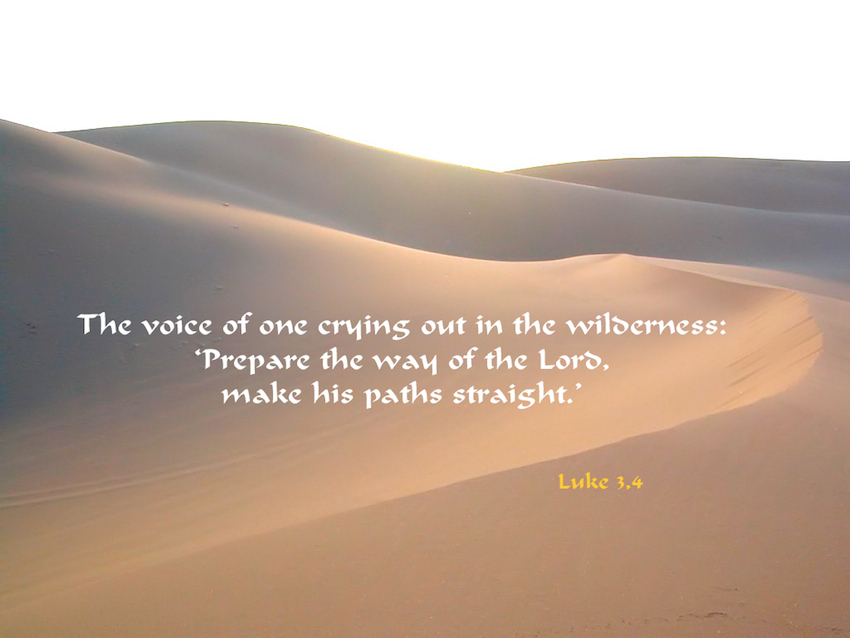
"Oh that today you would listen to his voice…"

An extract from my travel journal while in England:

23rd March 2011 – Reading, England

My tour of the UK begins today. This morning I gathered my things and went to the train station. After collecting all of the tickets for my upcoming journeys (the total cost of which  should really entitle me to my own private train), I set off for Leamington Spa to see a sign-language society friend from University.

While on the train I prayed Morning Prayer. Although I often find travelling very tedious, there is also something about it which I find draws my spirit to God. As the English countryside sped past my window, I prayed the opening Psalm of Morning Prayer:

“…Oh that today you would listen to His voice! Harden not your hearts!” – Psalm 95

 I don’t think it was by chance that the Church chose *this* psalm to be the opening prayer at the beginning of each new day. Before we face the world, with its troubles, trials and temptations, we need a reminder. We need to be reminded to attend to the Lord’s voice, both before we begin the day, and also to listen for it attentively, hidden amongst the noise and clamour of a busy world.  A heart, if it is to remain beating and life-giving, must not become stoney or calloused by time spent with the world.

As I begin this tour of England to see friends and family, I realise that I’m walking into a lot of situations where, quite frankly, I’m way out of my depth. What am I to say? What am I to do?

“Oh that today you would listen to His voice, harden not your heart” – Psalm 95

1 3 4 5 6 7 137