And so we come to the final chapter of Book III. Continuing on from last chapter, we continue to examine “faith”. This chapter focuses on faith in terms of salvation.
I don’t know how, but this song somehow managed to fly beneath my radar for the past thirty years, but I’ve been captivated by it all afternoon, as it’s a perfect song for a Restless Pilgrim like me…
Lead, kindly Light, amid th’encircling gloom, lead Thou me on! The night is dark, and I am far from home; lead Thou me on! Keep Thou my feet; I do not ask to see The distant scene; one step enough for me…
Meantime, along the narrow rugged path, Thyself hast trod, Lead, Savior, lead me home in childlike faith, home to my God. To rest forever after earthly strife In the calm light of everlasting life.
After a little bit of googling, I found out a little bit about the background to the song. It turns out that Newman penned the words while he was ill in Italy:
“Before starting from my inn, I sat down on my bed and began to sob bitterly. My servant, who had acted as my nurse, asked what ailed me. I could only answer, ‘I have a work to do in England.’ I was aching to get home, yet for want of a vessel I was kept at Palermo for three weeks. I began to visit the churches, and they calmed my impatience, though I did not attend any services.
At last I got off in an orange boat, bound for Marseilles. We were becalmed for whole week in the Straits of Bonifacio, and it was there that I wrote the lines, Lead, Kindly Light, which have since become so well known”
Question: “How do we grow in knowledge and understanding of Scripture?”
Answer: “Ask more questions”.
If you want to grow in knowledge and understanding of anything, asking questions is a great way to go about it! The sure and true way to stagnate in anything is to simply be satisfied with your current level of development and understanding and let yourself slowly atrophy.
So, if you want to grow in your knowledge and understanding of Scripture, ask questions about it! If you read a passage which contains lots of things in it that you don’t understand, get a good study Bible, find a Bible geek and keep asking questions until you’re satisfied with the answers!
For the last few days (the last nine days, in fact!), I’ve been praying a Novena. This has meant that I’ve been praying the rosary every day. As you may know, the Catholic Church has assigned to each day of the week a different set of “mysteries”:
These mysteries are the events in the life of Jesus and His mother, such as the Resurrection and when Jesus turned water into wine. Catholics are invited to meditate upon these mysteries as they pray the rosary. Previously, whenever I went to pray a rosary, I always had to do a google search to check which mysteries were assigned to that day. However, after nine days of praying the rosary, I’ve come up with a little mnemonic to work it out:
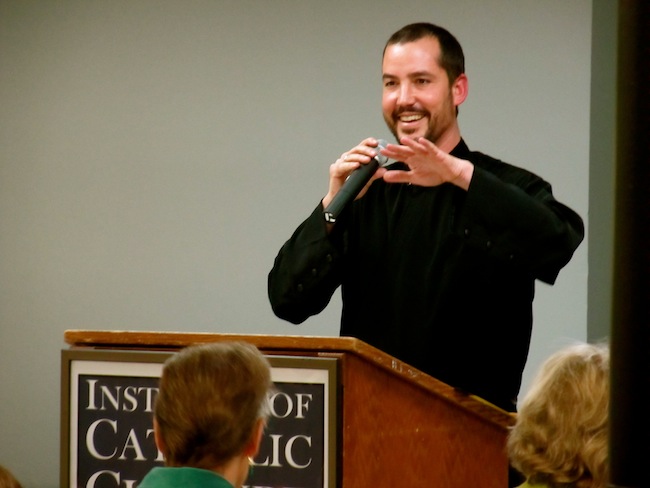
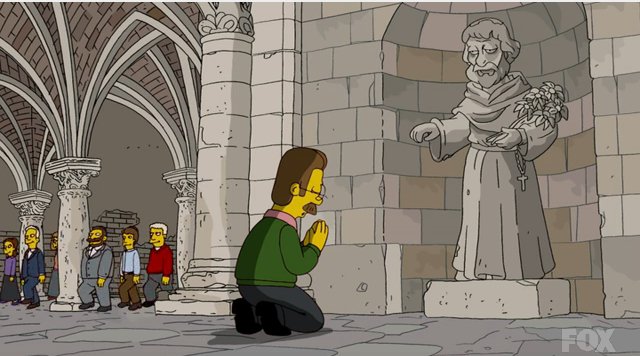
A while ago my friend Ricardo pointed out to me that I am, in fact, a canonized Saint. Even with my profound sanctity, not to mention my superlative humility, I was a little surprised when he said this. When I asked him about it, he told me that Google now shows a picture of me when you search for “St. Drogo”:
St Drogo was a Saint who lived in the 12th Century and has the dubious honour of being the patron Saint of ugly people! Over a year ago I wrote an article about him, declaring him to be the Patron Saint of this blog.
Well, it turns out that Google went looking for picture of St. Drogo, found my article and falsely concluded that my portrait was, in fact, a picture of this French Saint!
So, on the plus side, I’m now a canonized Saint! Unfortunately, it means I also died in 1185… :-/
How Hebrew is your Faith? I think that within Christianity there is always this Marcionite tendency to try and sever Christianity from its Jewish roots.
When I was back living in London, I had the privilege of hearing the testimony of a man called Roy Schoeman. Roy is the son of Jewish parents who escaped the Nazi persecutions in Germany before World War II. He studied for a while under the noted Rabbi Arthur Hertzberg before eventually falling into atheism. Some time later he had a dramatic conversion and, a little while later, found his way into the Catholic Church.
When I first heard Roy speak, it renewed my appreciation for the Jewish roots of Christianity. I have since listened to a number of his talks and I’ve found that his Jewish perspective often gives me a new awareness when looking at the Sacred Scriptures. I have found this particularly true for St. Paul’s epistles, especially the letter to the Romans.
I would thoroughly recommend everyone to spend some time in the Audio and Video section of his website, listening to his testimony and to some of his talks, I think you’ll find them really enlightening.
“After all, if you [Gentiles] were cut out of an olive tree that is wild by nature…[and] grafted into a cultivated olive tree, how much more readily will…[the Jews]….the natural branches, be grafted into their own olive tree!” – Romans 11:24
Those of you who know me will know that I purposefully attend the “Extraordinary Form” (EF) of the Mass several times a year. This form of the Mass is sometimes known as “The Tridentine Mass” and is the Liturgy which our grandparents would have typically attended.
There’s much to commend the Extraordinary Form and I would love to see it become more widely available. However, as much as I love the older form of the Mass, I have to say, that when it’s done well, I actually prefer the “Novus Ordo” (NO) Mass. This is the amended liturgy which came about following the Second Vatican Council and which is more typically found around the world today in Roman-Rite Catholic Churches.
(Having said all that, I actually go to Byzantine Liturgy on Sundays)
Although I generally prefer the Novus Ordo, I think it’s safe to say that every Catholic has been to a typical parish Mass where the service has, well, left a lot to be desired… These banal liturgies have considerably nurtured the feeling among more traditional Catholics that the Novus Ordo was a considerable misstep in the development of the Roman liturgy. However, personally I think that when it’s done well, it’s thoroughly beautiful.
In recent months I’ve been in an extended email exchange with a friend who infinitely prefers the Extraordinary Form. During our discussion, I gave some suggestions of some simple things which can be done to elevate the typical Mass-going experience and I thought I’d share them here. Not all of these are Novus Ordo-specific, but in my opinion they would resolve many of the problems which are more commonly associated with the new form of the Mass…