What does it mean “to pray to a Saint”?

This blog post is meant as a supplement to my earlier earlier posts on the subject of Saintly intercession (read here and here)…

all_saints

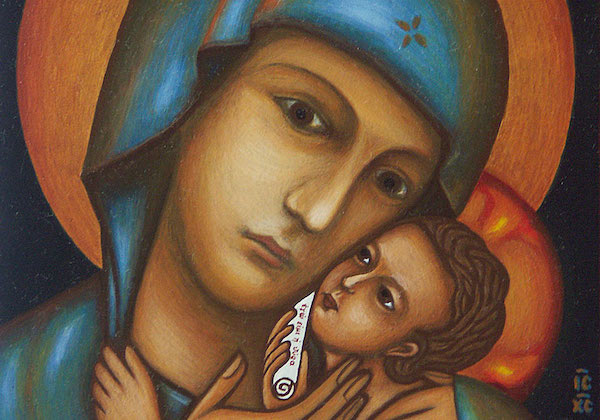
One issue we have in Catholic-Protestant dialogue concerning the Saints is the language we use. You will often hear Catholics talking about “praying to Saints”. However, it is important to point out that what we really mean is that we’re asking the Saints to pray for us.

What’s in a name?

Part of the problem is the use of the verb “to pray”. It can mean two different things, depending on context. The word itself comes into English from the Latin word “precari”, which means “obtained by entreaty”. To pray, therefore, means to ask for something.

This is aptly demonstrated in my favorite Shakespeare play, A Much Ado About Nothing (Act 2, Scene 3):

BENEDICKAn he had been a dog that should have howled thus, they would have hanged him: and I pray God his bad voice bode no mischief…

DON PEDRO: Yea, marry, dost thou hear, Balthasar? I pray thee, get us some excellent music…

Here you see both uses of the word “pray”. In the first, Benedick petitions God, and in the second, Don Pedro asks Balthasar for music. In the former, a request is made to God, in the latter, to man.

A better dialogue

While I think that pointing out this distinction goes a long way to further Catholic-Protestant dialogue, I think that Catholics should go the extra mile and be careful with the way they speak around Protestants, so as to communicate the Catholic Faith as clearly as possible.

When talking with Protestants about praying to Saints, it might be worth spelling out exactly what you mean, saying explicitly that you’re asking the Saints for their intercession before the throne of God. Rather than talking about “Praying to the Saints”, you might speak about “Praying with the Saints”. Most Protestants are used to talking about praying with friends, so when expressed in these terms, the Catholic devotion will seem less alien and more accessible.

All you angels and saints, pray for us.

Byzantine Back and Forth

This week is Holy Week and as the LifeTeen band isn’t playing this weekend, it means I can spend Easter at my favourite church, an Eastern Rite (Byzantine) Catholic parish near to where I live. Alleluia!…well, almost 😉

Christ_is_risen_21

One of the things I love about the Byzantine Rite is the standard set of greetings and responses which take place during the year. For example, when I first attended the parish I got there very early on in the morning and heard the priest greet a parishioner with the exclamation: “Glory to Jesus Christ!”, to which the parishioner responded “Glory forever!”. This seems to me like a wonderful way to begin any conversation! 🙂

These responses change throughout the liturgical year.  At “Nativity” (Christmas) it becomes:

“Christ is born!”
“Glorify Him!”

We will shortly be entering the “Pascha” (Easter) season when it will change to:

“Christ is Risen!”
“Indeed He is Risen!”

And at certain blessings, such as at the end of Great Vespers or at the Kiss of Peace:

“Christ is among us!”
“He is and will be!”

 These all seem wonderful ways of proclaiming the faith! Glory to Jesus Christ…

Roman Catholic All Day

Today I wanted to advertise Roman Catholic All Day, a Catholic clothing website which was recently started by two of my friends here in San Diego:

Not only do they have some great products, but 10% of the value of each order is donated to a Catholic organization. So, buying one of their t-shirts practically means you’re performing a spiritual or corporal work of mercy! 🙂

Their clothing line will be expanding soon through a Kickstarter Project. In the meantime, take a look at heir Facebook page and give them some feedback on their upcoming products.

Christmas is only a couple of months away now, so why not buy a t-shirt or two for the favourite Catholic in your life? Oh, and just in case you were wondering, my size is a “medium”… 😉

Time to dessert

If you’ve been reading this blog for a while, you may have noticed that I’ve been slacking for a while. I haven’t really written anything substantial for at least a month. Sure, I’ve published every day, but the posts have been extremely brief.

At the beginning of October I began a new series, The Bogwash Epistles, a spin-off of C.S. Lewis’ Screwtape Letters. Despite having notes for the next ten or so letters, I only completed a few. I had also intended to do a series of posts to supplement the talk I gave at Theology On Tap, expanding on some of the areas I had to truncate due to time constraints. That didn’t happen. I had wanted to do a post examining the logic of those who oppose Halloween. Nope, that didn’t happen either… 🙁

The last two months have certainly been busy, so time has been at a premium, but even though now my time constraints have relaxed a little I feel like I don’t have the “head space” to do much writing.

This is all a long-winded way of saying that I’m going to take another blogging hiatus. I’m going to take a break from writing for all of December. As before, quotations from the Desert Fathers are scheduled to keep you company while I’m away.

I’ve been studying Hosea recently and in that book the Lord speaks through His prophet saying that He will draw Israel back out into the desert, to the place where she first encountered Yahweh. It is there that He will speak tender words to her, restore her and rekindle the Divine Romance. I’ve booked myself a weekend silent retreat, blocked Facebook and cancelled a bunch of activities I had planned for December. I think t’s time to head back to the desert…

desert

It’s all Greek to me…

Okay, I know this title is an incredibly obvious pun (and far below my usual, high standards), but I thought I would make it now before anyone else did. 🙂

As most of my friends know, I’ve been wanting to study New Testament Greek for some time. However, this has been easier said than done. For a start, my geographical wanderings in recent years have made committing to a course of study difficult. Also, finding somewhere that teaches New Testament Greek is not such a simple task as one might imagine and finding one which is cost-effective only adds to the fun…

When I began my “Introduction to the New Testament” course about a month ago at the Pastoral Center I asked the instructor for suggestions as to how I could bring this desire to learn Biblical Greek to fruition. He suggested that I:

1. Contact Bethel Seminary
2. Learn using a self-study course

Read more

Sunday Lectionary: September 11, 2011

There’s not too much technical stuff to focus on in this week’s Mass Readings. My suggestion is to use the readings as a springboard to invite people in the study group to talk about their struggles, successes and failures in relation to that tough subject of forgiveness.

Twenty-Fourth Sunday of Ordinary Time

Last week’s Mass Readings concerned themselves with the restoration of brothers and sisters who have fallen into sin. This week’s Readings build on those of last week, focussing upon forgiveness, its centrality to the Gospel and its necessity in God’s covenant community.

“There is no offense, however serious, that the Church cannot forgive. There is no one, however wicked and guilty, who may not confidently hope for forgiveness, provided his repentance is honest. Christ who died for all men desires that in his Church the gates of forgiveness should always be open to anyone who turns away from sin” – Catechism of the Catholic Church, Paragraph 982


Reading I: Sirach 27:30-28:7

Our First Reading comes from the book of Sirach. This book is one of the books which was removed from the Bible by non-Catholics at the time of the Reformation in the 16th Century. Non-Catholics refer to this collection of books as the Apocrypha, whereas Catholics refer to them as the Deuterocanonical books. Other books in this collection include Tobit, Wisdom and 1 & 2 Maccabees.

The link between this First Reading and the Gospel passage is clear: if you would like the Lord’s forgiveness and mercy, you should treat others with forgiveness and mercy.

“Wrath and anger are hateful things, yet the sinner hugs them tight. The vengeful will suffer the LORD’s vengeance, for he remembers their sins in detail. Forgive your neighbor’s injustice; then when you pray, your own sins will be forgiven.

Could anyone nourish anger against another and expect healing from the LORD? Could anyone refuse mercy to another like himself, can he seek pardon for his own sins? If one who is but flesh cherishes wrath, who will forgive his sins?

Remember your last days, set enmity aside; remember death and decay, and cease from sin! Think of the commandments, hate not your neighbor; remember the Most High’s covenant, and overlook faults”

Possible Questions:

  • How does the author describe the sinner’s relationship to wrath and anger? What can we learn from this?
  • Practically speaking, what does this forgiveness look like?
  • There are several rhetorical questions in this passage. What point do they make?
  • What are the reasons the author gives for putting aside “wrath and anger” and “enmity”?

Read more

Catholic Encouragement for reading Scripture

Jerome

I have finally returned to a manuscript I wrote last year for a book on leading Bible Study. Each chapter begins with a quotation from a Saint or Church document which praises God’s Word or exhorts the faithful to the reading of Scripture. Today’s post will function as a notepad for all the quotations I’ve found…

Is there a quotation you love which I have omitted? Please share it in the Comments!

2nd Century

St. Irenaeus of Lyons

For we learned the plan of our salvation from no others than from those through whom the gospel came to us.  They first preached it abroad, and then later by the will of God handed it down to us in Writings, to be the foundation and pillar of our faith
– St. Irenaeus of Lyons, Against Heresies 3.1.1 (2nd Century)

3rd Century

Origen of Alexandria

One must therefore portray the meaning of the sacred writings in a threefold way upon one’s own soul, so that the simple person may be edified by what we may call the flesh of the scripture, …the obvious interpretation; while the one who has made some progress may be edified by its soul, as it were; and the one who is perfect… may be edified by the spiritual law, which has “a shadow of the good things to come” (cf. Rom. 7:14). For just as the human being consists of body, soul and spirit, so in the same way does the scripture, which has been prepared by God to be given for humanity’s salvation.
– Origen of Alexandria, On First Principles 4.11 (3rd Century)

4th Century

St. Jerome

Ignorance of the Scriptures is ignorance of Christ
– St. Jerome, Commentary on Isaiah (4th Century)

When we pray, we speak to God; but when we read, God speaks to us
– St. Jerome (4th Century)

“Do you pray? You speak to the Bridegroom. Do you read? He speaks to you”
– St. Jerome, Letter XXII to Eustochium, 25 (4th Century)

“Read assiduously and learn as much as you can. Let sleep find you holding your Bible, and when your head nods let it be resting on the sacred Page”
– St. Jerome (4th Century)

St. Athanasius

“Scripture is of all things most sufficient for us.”
– Saint Athanasius, Father and Doctor of the Church  (4th Century)

“These books are the fountains of salvation, so that he who thirsts may be satisfied with the oracles contained in them”
-Saint Athanasius, Father and Doctor of the Church, Letter 39.6 (4th Century)

St. Epiphanius of Salamis

“Reading the Scriptures is a great safeguard against sin”
– St. Epiphanius (4th Century)

St. Ambrose of Milan

 “…we speak to Him when we pray; we hear Him when we read the divine saying.”
– St. Ambrose of Milan, On the Duties of Ministers I, 20,88: PL l6,50 (4th Century)

“Let the Word of God come; let it enter the Church; let it become a consuming fire, burning the hay and stubble, and consuming whatever is worldly”
– St. Ambrose of Milan (4th Century)

St. John Chrysostom

“The Holy Scriptures were not given to us that we should enclose them in books, but that we should engrave them upon our hearts”
– St. John Chrysostom (4th Century)

“It is not possible, I say not possible, ever to exhaust the mind of the Scriptures. It is a well which has no bottom”
– St. John Chrysostom (4th Century)

St. Augustine

“If you believe what you like in the gospels, and reject what you don’t like, it is not the gospel you believe, but yourself”
– St. Augustine, Father and Doctor of the Church (4th Century)

“He will find there in much greater abundance things that are to be found nowhere else, but can be learnt only in the wonderful sublimity and wonderful simplicity of the Scriptures”
– St. Augustine, Father and Doctor of the Church, De Doctr. Christ. 2,42,63 (4th Century)

“The New Testament lies hidden in the Old, and the Old is unveiled in the New”
– St. Augustine, Father and Doctor of the Church (4th Century)

St. Ephraim the Syrian

“When you begin to read or listen to the Holy Scriptures, pray to God thus: “Lord Jesus Christ, open the ears and eyes of my heart so that I may hear Thy words and understand them, and may fulfill Thy will”
– St. Ephraim the Syrian (4th Century)

Read more

1 22 23 24 25 26 172