Video Series: Who is Jesus?


Our most recent episode has focussed on the person of Jesus. Is Lunatic, Liar or Lord?
"We are travellers…not yet in our native land" – St. Augustine
Our most recent episode has focussed on the person of Jesus. Is Lunatic, Liar or Lord?
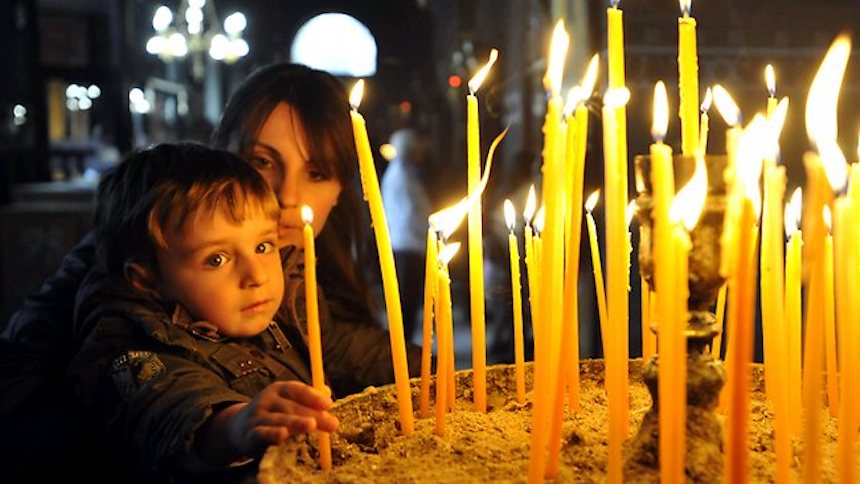
This past week, a friend of mine visited my Byzantine Catholic parish. Afterwards, she admitted that she had been rather apprehensive about how her small child was going to react to the whole experience. After all, she knew that the Byzantine Liturgy was typically ninety minutes long, rather than the forty-five minute Mass which her son had previously been used to experiencing.
Even though I have no children of my own, I offered the somewhat counter-intuitive claim that the Byzantine Liturgy is in some ways better suited to children than a Novus Ordo or Tridentine Mass. A bold claim, I know, but I stand by it! So, here are my top ten reasons why I think the Byzantine Liturgy is great if you have small children…
Read moreSorry it’s a bit late this week – I had two big posts that I wanted to write at the weekend and I kinda ran out of time… :-/

Last week we heard Jesus’ parable of the two sons and the vineyard. The Readings this week also focus around the image of the vineyard…
The bold refrain of the psalm this week is “The vineyard of the Lord is the house of Israel”. In our First Reading this image of the vineyard is used to describe how God gave Israel every possible blessing, yet all these graces were scorned. For this, Israel will have to pay the price. Yet, in our Gospel we hear how, through the rejection of Christ, the Gentiles come to have a share in God’s Kingdom.
For this week’s Readings I would suggest reading the Psalm first since it clearly establishes the metaphor of the vineyard and explains Israel’s exodus in those terms. I would then move on to the First Reading to hear how this metaphor is also used to describe God’s coming judgement. Next, I would read the Gospel as it shows how Jesus uses this familiar image to predicts His own death. I would optionally conclude with the Second Reading.


Today I’m very pleased to announce the launch of my latest podcast, “The Eagle and Child”.
If you live in San Diego, California, you may know that I’m part of a C.S. Lewis reading group called “The Eagle and Child”, named after the pub in which Lewis and “The Inklings” would regularly meet.
When I started the group, I had lots of messages from friends outside of San Diego asking how they could be part of this group. This podcast is, in part, my response to that.
Each week, my friend Matt and I will be working our way through a chapter of a C.S. Lewis book, beginning with “Mere Christianity”. So, if you’ve ever wanted to read this classic book, please pick up a copy from Amazon and join us in cyberspace for a thoughtful discussion and a beer!
More information available at PintsWithJack.com

 So, a while back I wrote a series of posts on the subject of dating which turned out to be rather popular. People clearly love to read and talk about relationships! At the end of the series, several of my friends asked me if I would be writing more entries, but I told them that I’d already said everything I had to share on the subject.
Well…it turns out that I was wrong, because here I am, a year later, writing another post on the subject of dating. A while back, I had a friend of mine message me and say “I wanna ask someone out. Any ideas for a date and how should I ask her out?” Clearly, word had got around that I now have a beautiful girlfriend and this qualifies me to answer a question of this magnitude!
Seriously though, as I wrote in an earlier article, Catholic guys are generally pretty terrible at asking girls out, so I think it’s worth publishing the answer I gave my friend. Not everyone will agree with what I have to say, but that’s fine, please leave a message in the comment box.
Now, I have not always followed the suggestions I am about to give below, but I wish I had. My advice represents the solution to some of the different kinds of mistakes I’ve made in the past… 🙂

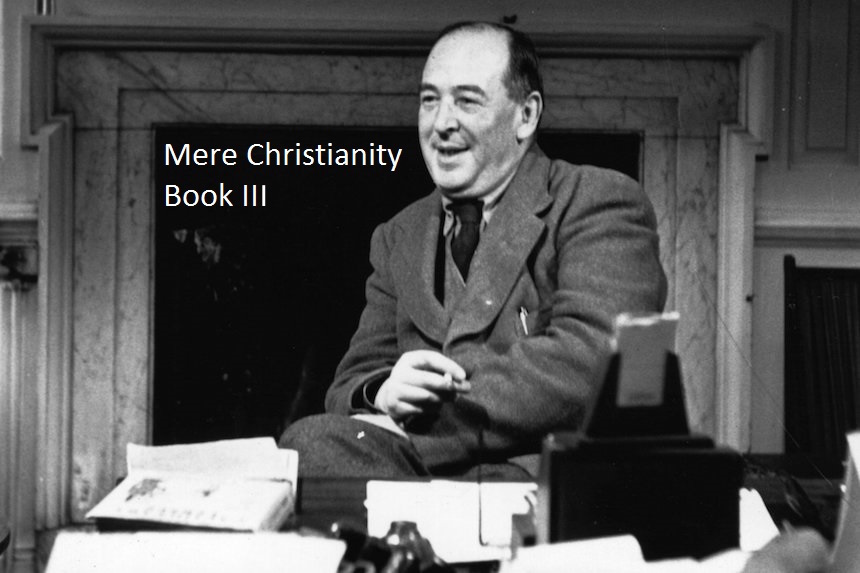
Picking back up my notes for C.S. Lewis’ “Mere Christianity”…
1. We may speak of Christian morality in terms of the seven virtues
(b) Three are called “Theological” virtues
“…as a rule, only Christians know about [these]…”
(a) Four are called “Cardinal” virtues
“…all civilised people recognise [these]… It comes from a Latin word meaning “the hinge of a door…they are, as we should say, ‘pivotal'”
(i) Prudence
“Prudence means practical common sense, taking the trouble to think out what you are doing and what is likely to come of it”
Some think that prudence isn’t really a virtue and that it’s okay to be a foolish and childish, but…
(a) Christ wants us to grow
“Christ never meant that we were to remain children in intelligence… He wants us to be simple, single-minded, affectionate, and teachable, as good children are; but He also wants every bit of intelligence we have to be alert at its job, and in first-class fighting trim.
He has room for people with very little sense, but He wants every one to use what sense they have”
(b) Christianity is an education in itself
“Anyone who is honestly trying to be a Christian will soon find his intelligence being sharpened: one of the reasons why it needs no special education to be a Christian is that Christianity is an education itself. That is why an uneducated believer like Bunyan* was able to write a book that has astonished the whole world”
* John Bunyan, the author of “The Pilgrim’s Progress”.
(ii) Temperance
“Temperance referred not specially to drink, but to all pleasures; and it meant not abstaining, but going the right length and no further”
(a) Temperance, or even abstinence, does not mean the thing is bad in and of itself
“…An individual Christian may see fit to give up all sorts of things for special reasons-marriage, or meat, or beer, or the cinema; but the moment he starts saying the things are bad in themselves, or looking down his nose at other people who do use them, he has taken the wrong turning”
(b) We should not think that temperance is restricted to drink
“One great piece of mischief has been done by the modern restriction of the word Temperance to the question of drink. It helps people to forget that you can be just as intemperate about lots of other things. A man who makes his golf or his motor-bicycle the centre of his life, or a woman who devotes all her thoughts to clothes or bridge or her dog, is being just as “intemperate” as someone who gets drunk every evening. Of course, it does not show on the outside so easily: bridge-mania or golf-mania do not make you fall down in the middle of the road. But God is not deceived by externals”
(iii) Justice
“It is the old name for everything we should now call “fairness”; it includes honesty, give and take, truthfulness, keeping promises, and all that side of life”
(iv) Fortitude
“And Fortitude includes both kinds of courage-the kind that faces danger as well as the kind that “sticks it” under pain. “Guts” is perhaps the nearest modern English. You will notice, of course, that you cannot practise any of the other virtues very long without bringing this one into play”
2. There is a difference between an individual act and a character
“Someone who is not a good tennis player may now and then make a good shot. What you mean by a good player is the man whose eye and muscles and nerves have been so trained by making innumerable good shots that they can now be relied on… In the same way a man who perseveres in doing just actions gets in the end a certain quality of character. Now it is that quality rather than the particular actions which we mean when we talk of ‘virtue'”
If we think only of particular actions, embrace three wrong ideas:
(a) How and why don’t matter
“…whether you did it willingly or unwillingly, sulkily or cheerfully, through fear of public opinion or for its own sake. But the truth is that right actions done for the wrong reason do not help to build the internal quality or character called a “virtue,” and it is this quality or character that really matters”
(b) God cares more about rules
“We might think that God wanted simply obedience to a set of rules: whereas He really wants people of a particular sort”
(c) Virtues are only for this life
“Now it is quite true that there will probably be no occasion for just or courageous acts in the next world, but there will be every occasion for being the sort of people that we can become only as the result of doing such acts here… if people have not got at least the beginnings of those qualities inside them, then no possible external conditions could make a “Heaven” for them…”
1. What are the “Cardinal Virtues”?
2. What is the difference between the “Cardinal” and “Theological” virtues?
3. Why might some Christians not think that prudence is a virtue?
4. Why is it dangerous to restrict “temperance” to “drink” and “teetotalism”?
5. What is the difference between acts and character? How might we go wrong if we think more about acts than character?
No doodle!

 Last week I wrote two posts on the subject of dating outside of the Catholic Faith. In an effort to keep those posts focussed, I had decided to address the specific scenario of a couple composed of two Christians, a Catholic and a Protestant.
However, as I was writing, there was one issue related to dating outside of the Catholic Faith that I particularly wanted to raise, but since it didn’t naturally fall within the parameters which I had set for those articles, I decided to omit it. In today’s brief post, therefore, I would like to return to this issue.
In the previous post, I presented three main areas for potential conflict between a Catholic and a Protestant:
1. The Wedding
2. Religious Practice
3. Children and family life
In addition to these three areas, when a Catholic dates a non-Christian (as opposed to a non-Catholic), there is another area of potential conflict which is particularly worth considering:
4. Chastity
Is your potential spouse committed to chastity? Will this person do everything possible to help you remain chaste?
It is worth pointing out that potential contention over the subject of chastity is certainly not limited to the situation where a Catholic is dating a non-Christian. It is possible that conflict may arise when dating a Protestant or, as I highlighted in my previous post, even a fellow Catholic. There is no guarantee that someone who identifies as “Catholic” actually will believe or practise the entirety of the Catholic Faith.