It has been quite some time since I wrote my series on Catholic dating. Those articles were certainly among the more popular here at Restless Pilgrim. The subject matter of those posts generated considerable discussion in my local Catholic community of San Diego, which pleased me no end since this was my main goal in writing them in the first place. The fact that it was also an extremely cathartic writing experience was just an added bonus! 😉
During the intervening three years since writing that series, my own love life has been, to put it mildly, anything but dull. Despite this, I’ve never felt inclined to write further on the subject of dating. That is, until now…
Over the past few months one particular question concerning dating has come up again and again, particularly as my thoughtful friends attempt to marry me off and enlist me in the ranks of the blissfully domesticated. The question has been “Hey David, what do you think about dating a non-Catholic?”
Today’s post is a guest post by Robin Armit who works forHoly Art, a company which sells all kinds of religious gifts. All religious items have a wondrous story to tell, and Robin enjoys telling them…
It is common knowledge that monks and nuns have a long history of manufacturing many different kinds of products. Production has traditionally been restricted to fairly standard items such as jams, sweets, beers, wine, and even some medicinal goods. Some monasteries are particularly famous for the quality of their products. For example, Trappist monk beer is considered by many to be some of the best brew in the world.
However, not all monasteries have restricted themselves to the more traditional products. Over the years, some monastic communities have branched out into more unusual ventures. For example, would you like to buy some modern cosmetics and skin care products? Perhaps you might want to learn how to ski? Maybe you would like to liven up an evening with some tonic wine? While I wouldn’t recommend trying these all at the same time, but it might surprise you to know that Catholic monks can help you in each of these cases! In the article which follows you’ll learn more about these enterprising monks, as well as the products and services which they supply.
As some of you know, since returning from England, I have embarked upon a period of discernment concerning the major areas of my life: vocation, location and occupation. I have been taking some time out to re-examine where I am, what I’m doing and asking if I’m where I’m meant to be…
In my early/mid-twenties I had set aside some time to specifically look at the question of ordained ministry. After getting frustrated and tying myself in knots, I received some good direction from a priest and after much prayer finally concluded that I was not being called to ordained ministry, or at least not for the time-being.
A lot of stuff has happened in my life since my mid-twenties, so it seemed like a good idea to return to this question.
A friend recently expressed interest in getting to know the Early Church Fathers so I said that I would put together a brief (hah!) list of resources.
I was first introduced to the Early Church Fathers by Marcellino D’Ambrosio while I was on a retreat in England. He regaled us with some of the many colourful stories from the Early Church, such as the election of St. Ambrose to Bishop of Milan. Since St. Ambrose will be my roommate’s Patron Saint when he’s received into the Church next year I’ll make sure I write about that sometime soon…
Audio Resources
This initial introduction to the Fathers by Dr. D’Ambrosio was later supplemented by the excellent lecture series given by Dr. Lawrence Feingold to the Association of Hebrew Catholics. Dr. Feingold takes the listener through a tour of the Early Church, focussing upon the issues in that Church, such the call to martyrdom, as the relationship between faith and reason, and the Arian heresy.
If you would like to get a deeper grounding in Christian history (which is, itself, the story of the Fathers), I highly recommend the extensive series of lectures by Fr. Michael Witt. If you get through the Early Church period, don’t worry! You don’t have to stop there since he also covers Church history up until the present day… 🙂
So those are a number of audio resources, but what about books?
Websites
There are several websites which provide a handy concordance for the Fathers, such as ChurchFathers.org.
Books
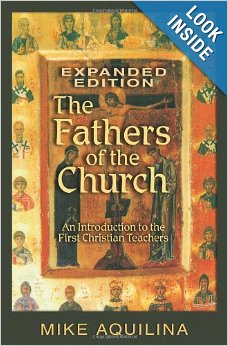
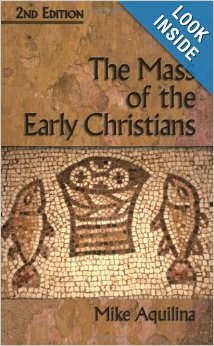
Mike Aquilina has written a number of very accessible books on the subject and I would particularly recommend his book The Fathers of the Church as it gives a good, brief survey of the Patristic period. If you’re interested in the worship of the Early Church he also has a very readable book entitled The Mass of the Early Christians.
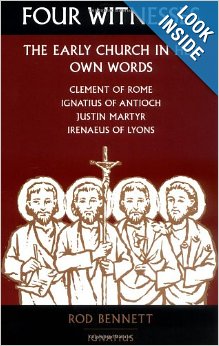
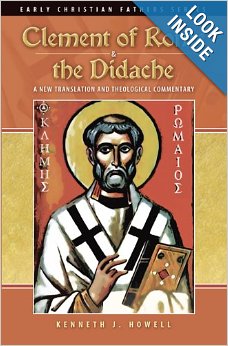
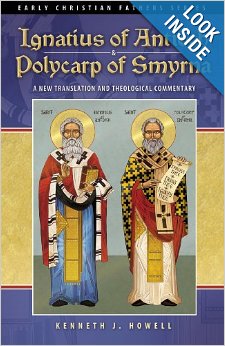
I know a lot of people were first introduced to Patristics through The Four Witnesses by Rod Bennett, which focusses just four Fathers: Clement, Ignatius, Justin and Irenaeus. Likewise, if you would like to focusses more in depth on specific Fathers, Dr. Howell has a great couple of books which focus on Clement, Ignatius and Polycarp.
a
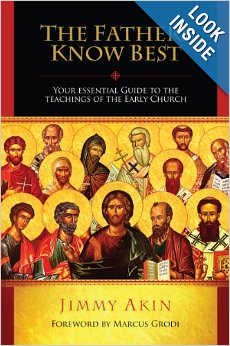
A new excellent reference book came out recently from Jimmy Akin entitled The Fathers Know Best. It is a book which arranges the writings of the Church Fathers by topic. For example, have you ever wanted to know what the Fathers thought about contraception? Well, with Jimmy’s book you can just flip to that topic and read, in chronological order, extracts from the Fathers on that subject.
Ad Fontes!
Finally, I would invite anyone wishing to get to know the Fathers better to actually get down and read the works themselves. I have several works available on this website in my Patristics section, together with MP3 recordings of the text. If you want to see what the Fathers thought about the Gospel readings at Mass each week, I’d suggest consulting the Catena Aurea. For further reading, I would recommend the Ancient Christian Writers series. The translation is excellent and there are a good number of explanatory endnotes.
So there you go! Hopefully that wasn’t too overwhelming! Pick which way works best for you and get stuck in! Get to know your Christian family 🙂
Over the next few months I’ll be writing some more about ancient Christian symbols (the fish, the anchor etc), but I thought I’d reboot my Symbolism Series by talking about something which caught my eye at Liturgy this morning.
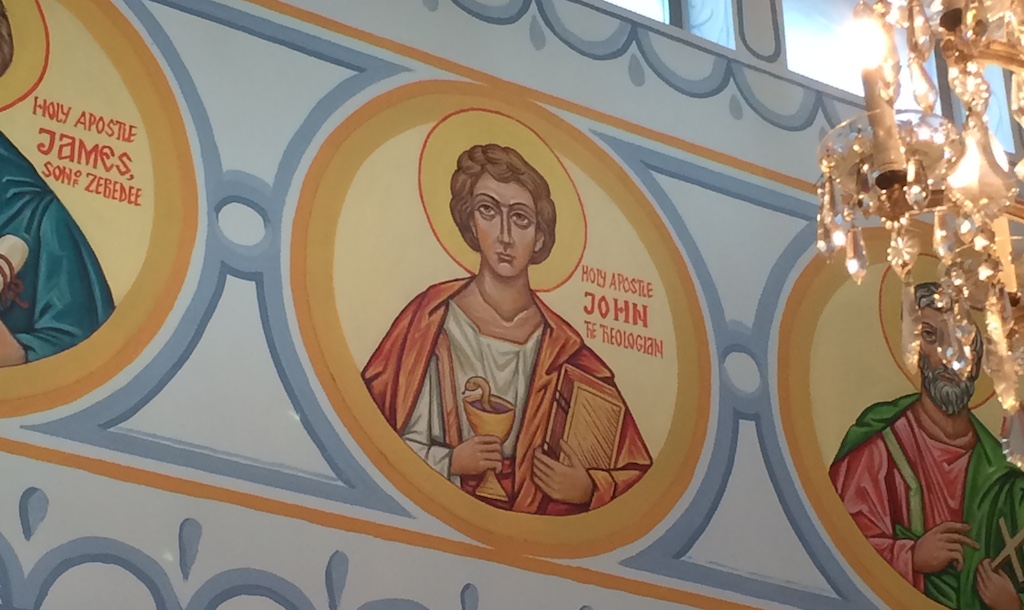
In my parish, around the inner portion of the dome, we have paintings of the Twelve Apostles (with St. Matthias replacing Judas). This morning I ended up sitting next to the following painting of St. John:
It occurred to me that, while I know the book he is holding is symbolic of his Gospel, I had no idea of the symbolism behind the chalice and snake. When I got home I needed to satisfy my curiosity, so I did some research…
The album “Hints & Guesses” is the first full-length album from Alanna-Marie Boudreau, a young musician from New York who was recently touring here in San Diego. About a month ago I received a copy of Alanna’s new album in advance of its release this September (iTunes, Website), so after a few weeks of listening to the album in my car, I wanted to share my impression of it.
The title of the album comes from a line in a TS Elliot poem, The Four Quartets, which speaks about the glimpses we get of something beautiful and awe-inspiring, but which hasn’t yet been fully revealed. In an interview on her YouTube channel, Alanna compared it to seeing the early morning sunlight before the sun itself has risen, explaining it as “the sense of home-sickness that you can’t really describe”. These are themes to which a restless pilgrim can certainly relate!
Every now and then I have readers email me directly. Here’s one I received earlier this week:
“Last week my Extraordinary Minister of Holy Communion was saying, “THIS IS THE Body of Christ.” It struck me as wrong. Is this ad-libbing, embellishing, inappropriate, or no problem?”
 It has been quite some time since I wrote my series on Catholic dating. Those articles were certainly among the more popular here at Restless Pilgrim. The subject matter of those posts generated considerable discussion in my local Catholic community of San Diego, which pleased me no end since this was my main goal in writing them in the first place. The fact that it was also an extremely cathartic writing experience was just an added bonus! 😉
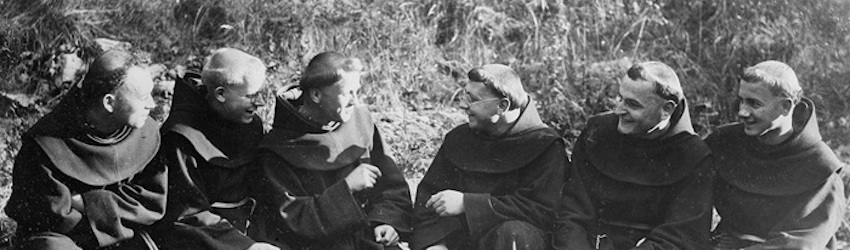
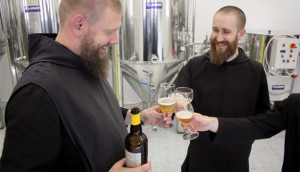 It is common knowledge that monks and nuns have a long history of manufacturing many different kinds of products. Production has traditionally been restricted to fairly standard items such as jams, sweets, beers, wine, and even some medicinal goods. Some monasteries are particularly famous for the quality of their products. For example, Trappist monk beer is considered by many to be some of the best brew in the world.

 The album “Hints & Guesses” is the first full-length album from