Regretting remaining a virgin until marriage

Last month, a controversial blog post was doing the rounds on Facebook. It was written by a lady named Samantha Pugsley and was entitled “I Waited Until My Wedding Night To Lose My Virginity And I Wish I Hadn’t”. Samantha was raised in a Christian household and remained a virgin until marriage, but now regrets her decision and has since left the Christian Faith:
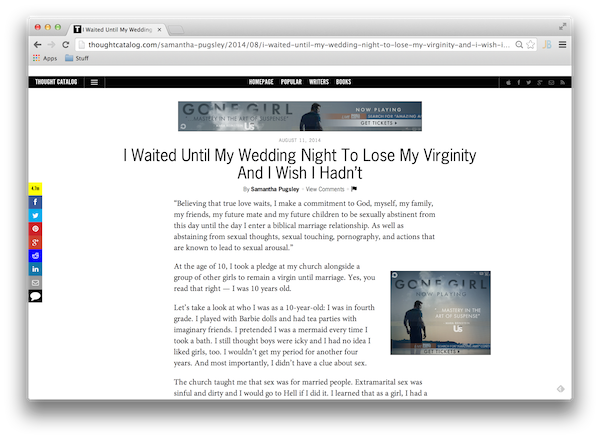
Screen Shot 2014-10-05 at 2.02.33 PM

To respond or not?

I was greatly troubled reading Samantha’s post. Her experience sounds horrific and her story truly tragic. I read through many of the reader comments at the bottom of the post and was dismayed to find that most of the exchanges between Christians and other readers were less-than-civil. For several days I debated internally as to whether or not I should write a reply. While I wanted to address various points raised in the article, I knew that it would be very easy for such a response to be seen as judgmental, condescending and “holier than thou”.

In the end, I decided that I should write a response. However, before you continue read my response, I would first invite you to read Samantha’s article in its entirety; it’s a sobering read.

My reply to her post is in no way a personal attack on Samantha. She is a child of God, made in His image and likeness and she is of countless worth. I did not have the same upbringing as this lady and I do not claim to have walked in her shoes. However, I have some thoughts I would like to share concerning her story.

Catechetical Warning

The main reason why I decided to write a response to Samantha’s post is that I think the issues raised in her article are too important to leave unaddressed. Not only that, I feel that this young lady’s story should serve as a warning to all Christian leaders and teachers. What we teach others about sex (or fail to teach) has significant consequences. Theology is important and when someone’s formation is either poor or incomplete, the results can be simply dire.

Let not many of you become teachers, my brethren, for you know that we who teach shall be judged with greater strictness – James 3:1

During his pontificate, Pope St. John Paul II gave a series of teachings which later became known as the “Theology of the Body”. It is my contention that, if Samantha had received formation in this rich theological understanding of sex and marriage, her story could have turned out very differently. I say this because I think she was badly taught and was given a theology which could be described, at best, as “anaemic”. I believe that this woefully inadequate formation set her up for the heartache which she later experienced. In this series, I hope to show the practical difference that good Catholic theology could have made to her life.
Part 1 | Part 2 | Part 3 | Part 4 | Part 5

Catholics Come Home: Part 3

Over the last two days I have briefly shared a portion of my faith journey. During this retelling I have particularly focussed upon my ecclesiastical wanderings, mentioning some of the things which pushed me away from some congregations and drew me towards others.

As I mentioned in the initial post, this blog series was originally a talk I gave at my parish called “Catholics Come Home”. As part of my preparation I spent quite some time on the Internet reading the stories of those who had left the Catholic Church. It was a heartbreaking experience. A large number of the stories I read echoed my own. Many of the sentiments expressed were also very similar. It became clear that, more often than not, the reason someone leaves the Catholic Church is because of lack of pastoral care, rather than doctrine.

In the accounts I read, there were many complaints about the welcome experienced when attending a Catholic parish (or rather, the distinct absence thereof). Many stories were told of abysmal music and of incoherent, boring preaching. There were laments concerning the lack of community and the lack of ongoing Christian formation. There were also unfortunately quite a few incidents described where people felt poorly treated by priests, catechists and other parish staff. Careless words can cut extremely deep and have serious consequences..

leave church

Read more

Covered By The Cross

I recently told this story to a friend of mine.  As I was driving home afterwards, I thought that it might be worth sharing here too…

When I was living back in England, my parish had a Hospital Visiting Ministry with which I was involved, run by the Society of St. Vincent de Paul. Every Saturday we would hand out free newspapers, identify the patients who would like to receive Holy Communion the following day and spend some time speaking with them. This would be done by two different people every week, each covering half of the hospital.

Out of all the wards we visited, the one I hated visiting the most was the ASU, where stroke victims were treated. I think I disliked visiting this ward more than any other because it was often a very frustrating experience.

I’ve always placed a very high premium on communication, and those in the ASU usually had difficulty with speaking, a common consequence of suffering a stroke. It frustrated them not being able to make themselves easily and fully understood and it frustrated me in not always being able to understand them.

Read more

Great Apostasy Questions

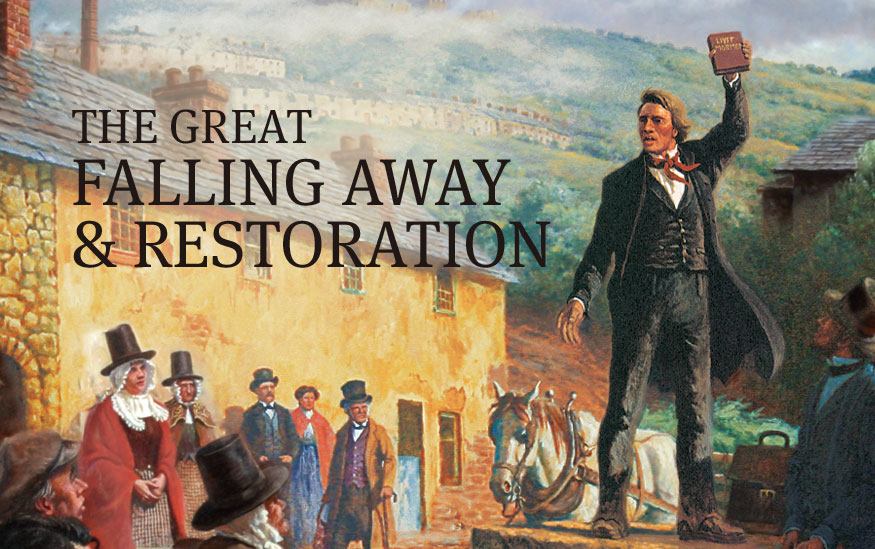
A while back, I produced a post in which I listed some Canon Questions, some specific questions I ask when talking to non-Catholics about the Table of Contents found in their Bible. Following my post concerning my recent encounter with a Jehovah’s Witness, I’ve decided to do another post similar to my Canon Questions, but this time concerning the “Great Apostasy”, the belief that that the Church effectively disappeared from the earth some time after Christ’s death.

Apostasy

Groups like the Mormons hold to the Great Apostasy and use this as an explanation for the significant differences between their doctrine and the doctrine of historic Christianity. Muslims hold to this narrative too, to justify the teachings of Muhammad which stand in stark contradiction to the New Testament. Additionally, most Protestant groups, while typically not holding such a radical version of this doctrine, usually hold to some variation of it, saying that somewhere along the line the Church went off-track in a rather major way.

Read more

One and a half thousand!

This morning’s post marks the 1,500th entry on this blog. I don’t know about you, but I can tell you that Stephen Colbert is extremely excited about this…

I began this blog about four years ago, on 11th June 2010 to be exact. At that time in my life, a few things converged and I decided that I’d have a go at running a blog. I began with a free blog at WordPress.com and, after completing a hundred posts, I decided to buy my own domain name and do things “properly”!

Since 1,500 posts is quite a milestone, I’ve put in a little bit of thought into what I could do to mark this anniversary and help take this blog to “the next level”, whatever that is! So, with that, I have a couple of announcements…

Read more

Making everything new

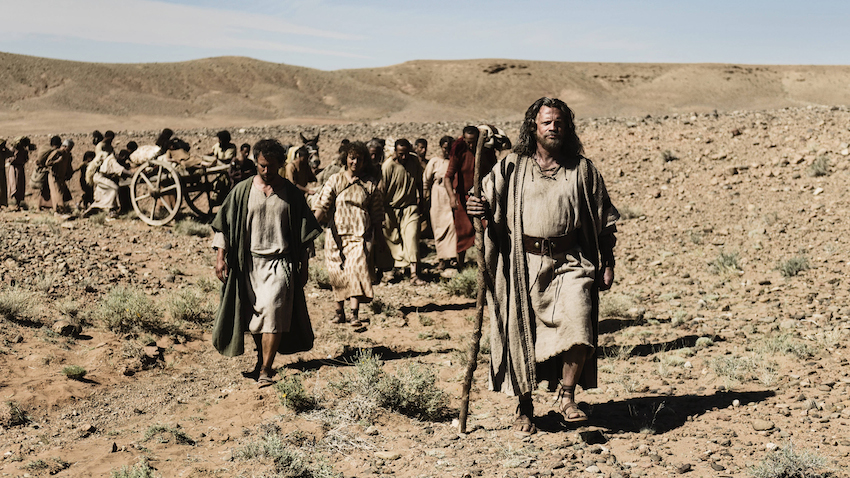
The other day I was at the pub discussing theology with one of my friends. During our discussion, I referred to “the New Exodus”, a phrase which he hadn’t heard before. I can’t say for sure, but I think I first heard it used by either Brant Pitre or Scott Hahn…someone like that…

Actually, if you listen to other theologians at the St. Paul Center for Biblical Theology, you’ll hear them use the word “new” an awful lot. They speak about the New Moses, New Manna, New Solomon, New Temple… In light of this, today I would like to give a brief overview of this way of viewing Scripture, with particular reference to the New Exodus. Understanding this perspective on Scripture can be really helpful, particularly in seeing the overarching unity of Scripture in the Old and New Testaments.

Read more

1 … 34 35 36 37 38 … 137