TEA: Mary and the Early Church (St. Ignatius)

Mary

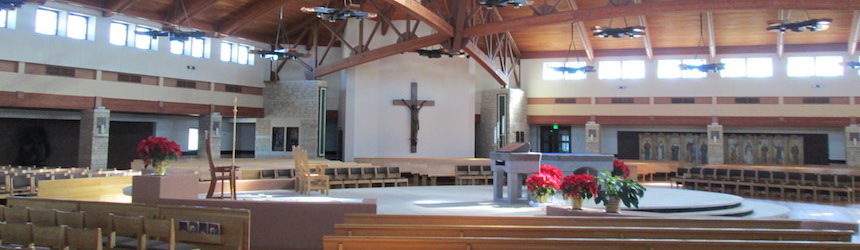
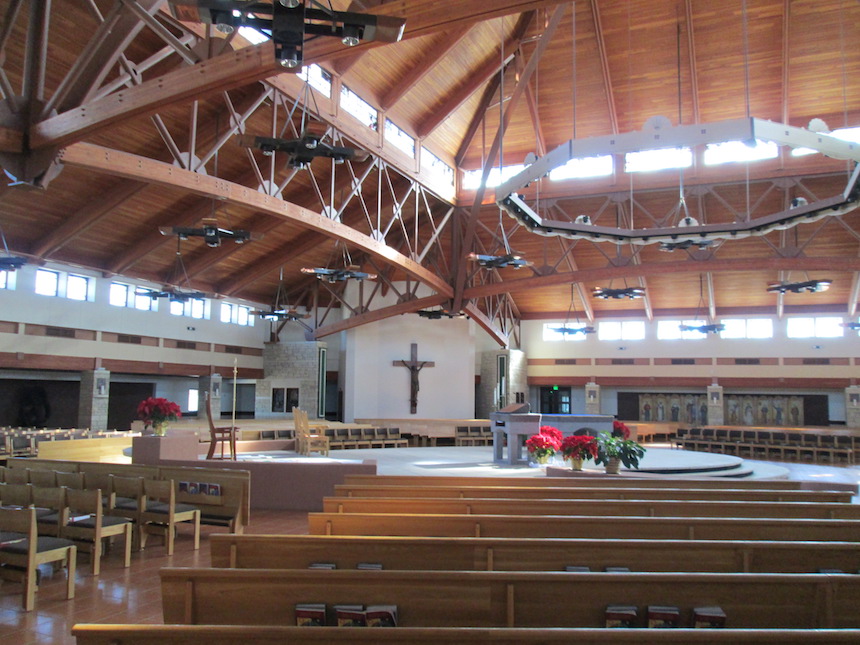
Yesterday, I visited St. Ignatius Catholic Church in Los Angeles. The St. Ignatius Women’s Group invited me to give a presentation on the Blessed Virgin and the Early Church. This was a a longer version of a talk I had previously given at St. Brigid’s here in San Diego.

Over the course of forty-five minutes, I told the story of my initial struggles concerning Mary and the Catholic Marian doctrines, explaining how I eventually came to see the truth and beauty in the Catholic Church’s teaching concerning the Blessed Virgin. The audio and the handout are both available for download.

Mary and the Early Church (Download)

I was invited to speak to the group at St. Ignatius by a long-time reader of this blog. If you’re also interested in having me speak to a group at your parish or at a Diocesan Theology On Tap, please see my Speaking page for examples of other recorded talks. Just send me an email and we can work out the details! 🙂

Sunday Lectionary: A Prophet Among Us

Fourteenth Sunday in Ordinary Time: July 8, 2012

In this week’s Readings we hear about prophethood and about our utter dependence upon the grace of God.

In our First Reading we read about the calling of the  Prophet Ezekiel, how he was strengthened by the Spirit and sent to proclaim an unpopular message to an obstinate people. In the Gospel, Jesus returns to His hometown of Nazareth and is met with suspicion and unbelief.

We are convinced beyond doubt that the truths of faith cannot deceive us; yet we cannot seem to bring ourselves to trust in them. It is easier for us to trust in human reasons and the deceiving appearances of the world. This, precisely, is the reason for our poor progress in virtue and in all that pertains to God’s glory – St. Vincent de Paul

For me though, the Readings which stand out are the Psalm and the Second Reading from St. Paul. The psalm expresses complete reliance upon God. St. Paul’s epistle to the Corinthians expresses a similar theme. Paul, probably the greatest Christian missionary in the history of the Church, knew something about strength and weakness. He knew that, in his weakness, God’s strength was more greatly manifested.

As we prepare ourselves to receive the Eucharist this week, let us come mindful of our weaknesses and therefore also recognize our need of God, thankful that He calls poor, imperfect creatures to be His children and to declare His goodness.

Read more

Tell them about “the cells”…

Today’s post is one of those posts which I’m writing purely for my own benefit. Who said this has to be selfless?! I’m hoping that, in the process of writing this, that the information will stay in my brain, or at the very least, make it easier for me to find when I forget it… 🙂

FMcIf any of you have heard Fr. Donald Callaway give a talk, you will have almost certainly heard him mention at some point something called Fetal Microchimerism, the biological process whereby cells from a fetus pass through the placenta into the mother’s own body (and vice versa).

The amazing thing about this process is that these cells have been shown to persist not only beyond pregnancy, but have even been found to remain in the mother’s body for decades afterwards. As far as I can tell, the scientific community is uncertain as to the consequence of the presence of these cells, with some suggesting that this is a source of potential disease, while others suggest that the child’s cells actually help to defend the mother.

When speaking about Fetal Microchimerism, Fr. Callaway reflects upon the intimate nature of the connection between mother and child. Even after a child has grown up, or even in the tragic cases of miscarriage or abortion, through Fetal Microchimerism, part of the child lives on in the mother.

Of course, where Fr. Callaway really goes to town is in the application of this biology to the area of theology. If this process is found in normal human pregnancies, then it is more than possible that this took place during the Blessed Mother’s pregnancy with Jesus. This would mean that some of the Saviour’s cells passed to His mother and remained there. The Lord’s human nature lived on in Mary’s body, even as He lay in the grave and even after He rose again and ascended into Heaven.

Not only that, if it is true that the child’s cells come to protect the mother from disease, then this has implications for Mary’s Assumption/Dormition, as well as providing a beautiful foreshadowing of the Eucharist, whereby Jesus gives us His Body, in the words of St. Ignatius of Antioch, as the “medicine of immortality”.

Addressing a bishop?

I’ve got a meeting today at the Diocesan Center and Bishop Brom is going to be in attendance. This got me to thinking…

How do you address a bishop?

Okay, I just checked… It appears that I have two options. I can either address the Bishop as…

“Bishop Brom” …or… “Your Excellency”

Phew! Social faux pas narrowly avoided!

Now I’ll be able to engage him in conversation and finally find out if it’s true that he can only move diagonally…

Byzantine Wedding Primer

Some of those attending our wedding (or watching it on Facebook) may not be familiar with the Byzantine Catholic Church. The video below (and transcript which follows) provides a short explanation of what will happen during our wedding so that our guests may better understand the ceremony.  We pray that we will all grow closer to each other and to the Lord through this celebration of our marriage.

Read more

Baptizing The Punch Buggy

Have you ever heard a game called “Punch buggy”?

It’s game which typically involves two people. While you’re out and about, the first person who spots a Volkswagen Beatle (a “bug”) gets to punch the other person on the arm and, if it’s blue, gets to do it twice! It’s like a violent version of “Eye Spy”. Horrible, right?!

green vw beatle

1 Punch

2 Punches

Read more

Androgynous Israel?

A very short post today. I just wanted to share a little “ah hah!” moment I had recently.

A little while back I went to vespers at an Eastern Orthodox parish. The format of the service was almost identical to that of my Eastern Catholic parish. The only real differences were alternative melodic forms and slightly different English translations.

Vespers

During my visit I noticed something about the translation of one of the psalms. Several times Israel was referred to in the masculine form, “him”. This rather surprised me since I typically think of Israel as feminine, the people to whom God has espoused Himself and which, under the New Testament, flowers into the Church, the Bride of Christ.

…I will make a new covenant with the house of Israel and the house of Judah, not like the covenant which I made with their fathers…which they broke, though I was their husband, says the Lord. – Jeremiah 31:32

After Vespers a few of us were talking to the priest and I raised this question. We agreed that Israel was probably referred to using the masculine gender to highlight the relationship of sonship between God and Israel:

And you [Moses] shall say to Pharaoh, ‘Thus says the Lord, Israel is my first-born son, and I say to you, “Let my son go that he may serve me”…’ – Exodus 4:22-23

Under the Old Covenant, God became Father to Israel and Israel became God’s first-born son, the elder brother among the nations, to manifest the wisdom of God and to lead the Gentiles back home.

The article Androgynous Israel? first appeared on RestlessPilgrim.net

1 36 37 38 39 40 137