Repost: Dear Miss Lawrence
An updated version of an earlier post, Bringing the best out in men, was published a few days ago on the Goretti Group website:
"We are travellers…not yet in our native land" – St. Augustine
An updated version of an earlier post, Bringing the best out in men, was published a few days ago on the Goretti Group website:
The other week I resumed a former “hobby” of mine. When I was living back in London I would often go and visit Eastern Rite Catholic churches…
A “Rite” in this context generally refers to a group within the wider Catholic Church which is associated with a particular liturgical tradition. The main Rite with which most people will be familiar is the “Latin Rite”. This is what is followed in most Catholic churches in Western Europe and the United States. However, what most people don’t know is that there are six other Rites in the Catholic Church. The Catechism in paragraph #1203 lists these other Rites as Byzantine, Coptic, Syriac, Armenian, Maronite and Chaldean. The majority of married Catholic priests (yes, you heard me right) will be found in these Eastern Rite Catholic churches where the discipline of celibacy is not exercised in the same way.
I love visiting Eastern Rite churches – I get to explore an unfamiliar liturgy, but unlike when I visit Protestant churches, I also am able to receive communion because the churches which I visit are in full communion with the Bishop of Rome. So far, I have participated in Maronite and Byzantine (Melkite & Ukrainian) liturgies.
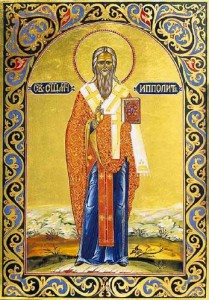 On Thursday we will be continuing the JP2 Group‘s study of worship in the Early Church by reading another extract from the Early Church. This text comes from the writing of Hippolytus of Rome (c AD 170 – 235) entitled “Apostolic Tradition” and was probably written in about AD 215.
Bishop: The Lord be with you.
All: And with your spirit.
Bishop: Lift up your hearts.
All: We lift them up to the Lord.
Bishop: Let us give thanks to the Lord.
All: It is proper and right.
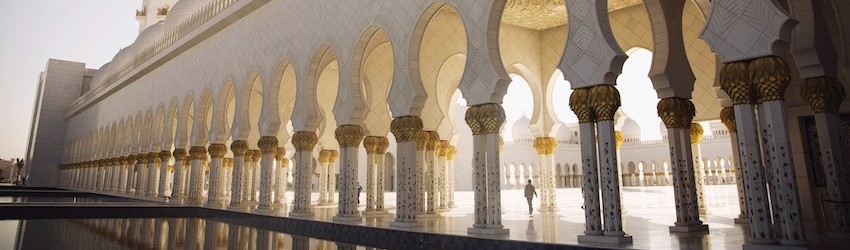
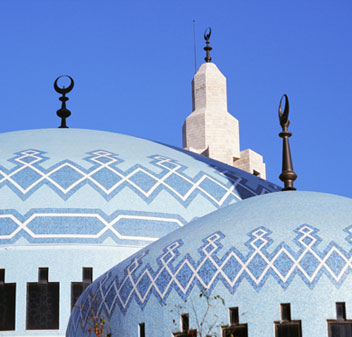 This is one of the many blog entries I was halfway through before being distracted by something shiny… I started preparing this series of entries around the time of the media storm from the “Burn a Qur’an Day“. I was rather surprised by the reaction of many Christians to this dispute, but what I found even more troubling was their apparent lack of basic familiarity with the religion of Islam.
In this series of posts I will not be disputing any assertion made by Islam. I only intend to provide a brief sketch of the religion. I would like this to be an introduction and brief overview for the average Christian who is unaware of Islam’s claims.
Please note, I have done my best to ensure factual accuracy in all these posts and have used Islamic sources as much as possible to ensure that I’m not propagating Christian misconceptions of Islam. I did send this to some Muslim friends for comment, but I have yet to hear back. If you are a follower of Islam and believe that I have misrepresented your religion, please drop me an email and I will remedy the situation.
Islam (“submission to God”) was founded by Muhammad in the early 7th Century, a little over six hundred years after Jesus’ ministry, seven hundred and sixty-six miles away from Jerusalem in Arabia. In the early part of Muhammad’s life he was a successful trader and then, through marriage to a wealthy widow, he became an important figure.
Thanks to his wealth, at the age of forty, Muhammad was able to spend much of his time in meditation in a cave on the outskirts of Mecca. It is said that it was during this time that he began to receive messages from Allah (God) through Jibril (the Archangel Gabriel). He was told that these messages were to be preached to all mankind. They were subsequently written down by his companions and collected together to form the Muslim holy book: the Qur’an/Koran (literally “the recitation”).
Muhammad’s followers were initially fairly small in number, consisting mainly of his own family. There were soon violent persecutions in Mecca against the Muslims, causing Muhammad to move to Medina where Islam was more favourably received. A little later, the first jihad (holy war) took place. Muhammad returned to Mecca and destroyed the idols there and within eight years Muslim armies had conquered (and effectively converted) the whole of Arabia.
In the Diocese of San Diego we’ve had various “Mega”-themed events. It all began with “Mega Mass”, then “Mega Adoration” and then “Mega Rosary”. We even had something akin to a “Mega Bible Study” at the end of my Theology On Tap talk.
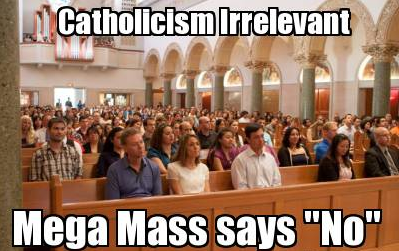
Why have “Mega” events? Well, we Christians often need to be reminded that we are part of something much larger than ourselves. We need to be reminded that the Church is far bigger than just our local parish or our local Bible study.
But you are a chosen race, a royal priesthood, a holy nation, God’s own people, that you may declare the wonderful deeds of him who called you out of darkness into his marvelous light. – 1 Peter 2:9
This idea has been brought home to me at several points in my life, but the one which sticks out to me is when I traveled to Australia in 2002 and visited Hillsong church in Sydney. If you’ve never been, it’s absolutely massive. It was quite something to be surrounded by a couple of thousand Christians singing praise to God.
After this I looked, and behold, a great multitude which no man could number, from every nation, from all tribes and peoples and tongues, standing before the throne and before the Lamb, …crying out with a loud voice, “Salvation belongs to our God who sits upon the throne, and to the Lamb!”
– Revelation 7:6-10
A while ago my friend Ricardo pointed out to me that I am, in fact, a canonized Saint. Even with my profound sanctity, not to mention my superlative humility, I was a little surprised when he said this. When I asked him about it, he told me that Google now shows a picture of me when you search for “St. Drogo”:
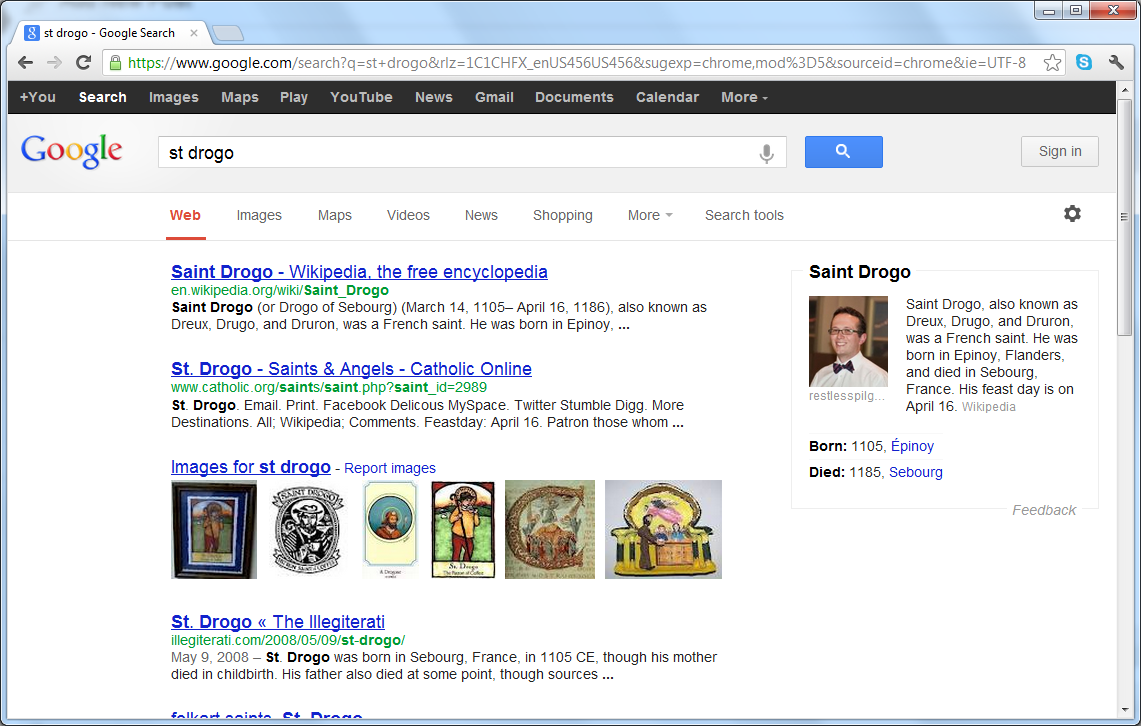
St Drogo was a Saint who lived in the 12th Century and has the dubious honour of being the patron Saint of ugly people! Over a year ago I wrote an article about him, declaring him to be the Patron Saint of this blog.
Well, it turns out that Google went looking for picture of St. Drogo, found my article and falsely concluded that my portrait was, in fact, a picture of this French Saint!
So, on the plus side, I’m now a canonized Saint! Unfortunately, it means I also died in 1185… :-/
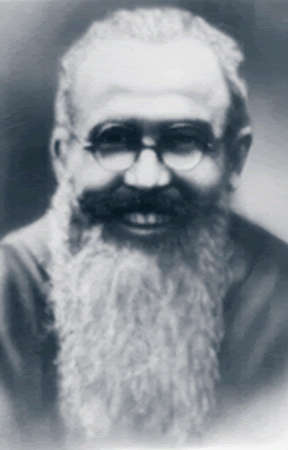 Today is the feast day of one of my favourite Saints, the great St. Maximilian Kolbe.
I’m not really sure why, but I can’t recall hearing stories of the lives of the Saints whilst I was growing up, despite being in Catholic education for most of my schooling. I actually first heard the story of Maximilian Kolbe whilst visiting a Protestant church. For me, this was an often-repeated irony, having actually been introduced as an adult to the Saints by a Baptist Pastor!
When I first heard his story in that Protestant church, Maximilian was quite-rightly held up as a model of Christ-like behaviour. Unfortunately, I also remember it was in a sermon where he was contrasted with another figure who was specifically identified as Catholic, whereas Maximilian’s background was not mentioned.
It was only when I started to read more about him and his story that I discovered that he was not only Catholic, but a priest and at that time, to my horror, someone with a very strong Marian devotion.