As noted in recent episodes of “The Eagle and Child”, my co-host Matt has a pretty dire knowledge of movies. For example, he has only recently been introduced to the Star Wars and Indiana Jones franchises. This Christmas was his first time watching It’s a wonderful life (or “Winter Wonderland” as he insisted on calling it…). Put simply, Matt has had some major flaws in his education…
Since one of the great Spiritual Works of Mercy is “Instructing the ignorant”, I could hardly call myself a good Christian if I didn’t attempt to remedy these serious deficiencies. So, with that, these are my “must-see” movies. The basic rule of thumb I’ve used is: would I judge someone if I found out they hadn’t seen these movies?
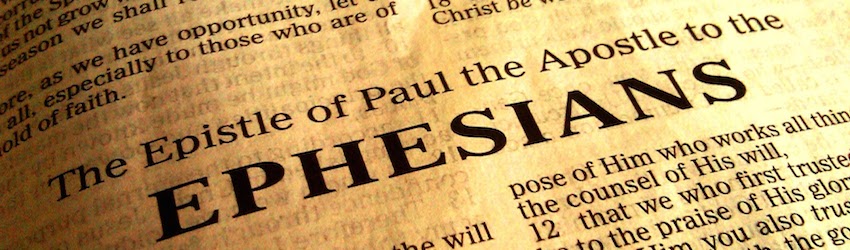
For my final month in San Diego, my Bible Study Group is going to be going through the epistles of St. John (1 John, 2 John, 3 John). However, this last week we reviewed our study of Ephesians. Here are the review questions the group came up with:
68. When was Ephesians written?
This letter is one of the “captivity epistles” and therefore was probably written during Paul’s Roman captivity in the early 60s.
69. What is significant about the destination of this epistle?
Mention of Ephesus in verse 1 is not found in the earliest manuscripts. It is therefore possible that this was a circular letter written to a number of congregations, one of which was Ephesus.
70. What was Paul’s relationship with Ephesian Church?
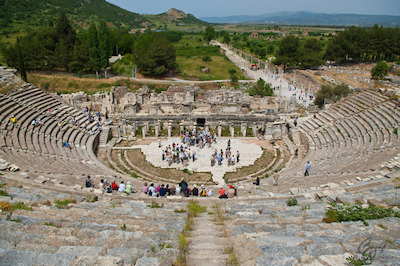
Christianity was present in Ephesus prior to Paul’s arrival. Paul used Ephesus as his base of operations for several years.
71. What does Paul write about in Ephesians?
Paul devotes most of the document to putting forth a vision of God’s redemptive work, brought about through Christ and manifested in the Church.
The Ephesians were mostly newly baptized Pagans and, because of this, some have referred to Ephesians as mystagogical catechesis.
Paul spends quite some time talking about “mystery”. This relates to Jesus’ sacrifice on the cross which draws man, both Jew and Gentile, back into relationship with God. This relationship is communicated through the Church, which has Christ as her head.
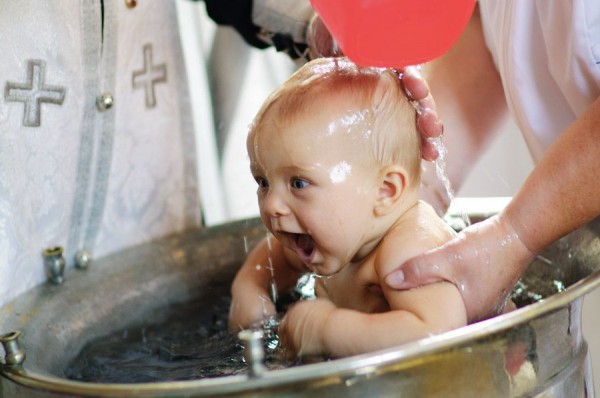
Over the last few years I’ve had the honour of sponsoring several people for Baptism and Confirmation. Over my time as a godparent, I’ve asked other sponsors what they do to live out this special vocation.
In today’s post I’ve assembled all the advice I’ve heard from other godparents and sponsors and come up with the top five ways to godparent like a rockstar… Read more
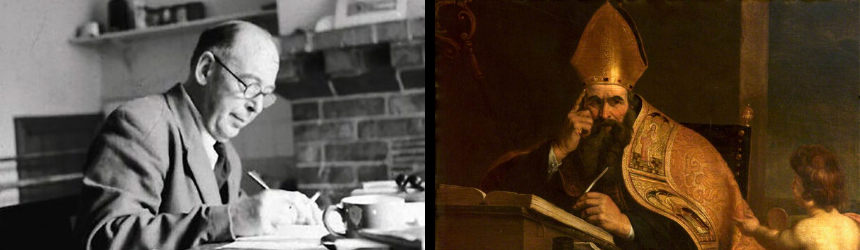
After listening to a free talk from Regent Audio by Dr. Jason Lepojärvi I knew we had to have him on the show. In this “After Hours” episode we talk about the theology of love and the disagreement between C.S. Lewis and St. Augustine.
S3E30: “After Hours” with Jason Lepojärvi (Download)
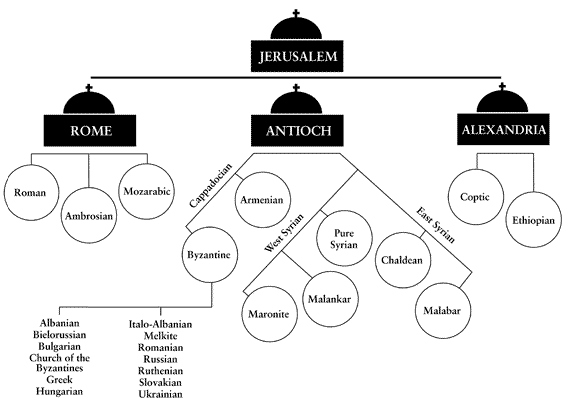
Those of you who know me, or who read this blog regularly will know that my parish is a Byzantine Catholic parish. The Catholic Church is often perceived as a uniform, monolithic structure. It is, in fact, much more diverse than most people realize. It is a communion of Churches which, while united in the one Faith, possesses a variety of liturgical and theological expressions known as “Rites”.
In this post I would like to tell the story of my discovery of the Eastern Rites of the Catholic Church and how I came to find myself a member of a Byzantine parish.
There And Back Again
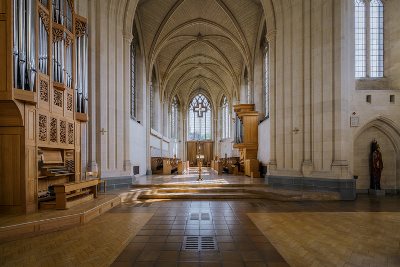
I was baptized into the Catholic Church as a baby at a typical Latin Rite parish back in England. After receiving my First Holy Communion, I became an altar server, a role which I took very seriously. As I entered Senior School at the age of thirteen, my family started going to Mass at the Benedictine Abbey which was connected to my School.
At University I had an awakening in my faith, after which I started really diving into Sacred Scripture. Unfortunately, after I graduated, I became disillusioned with the Catholic Church and spent several years attending non-Catholic congregations. However, after a few years, I began to see the fundamental problems with Sola Scriptura and the challenge of The Early Church, so I stopped attending non-Catholic congregations and once again returned to embracing Catholicism fully.
Church Visiting
At this time in my life, I was living in London, awaiting a long-term visa so that I could move to the United States. Most of my friends in London were Protestant Christians and several of them had invited me to visit their parishes. There was something about visiting other Christian communities across London which I really enjoyed. I loved “reading”, so-to-speak, the language of their liturgy.
Now, many of these congregations would have vociferously asserted that they didn’t “do” liturgy, but the truth is that every Christian community has a liturgy, whether they choose to call it that or not. For example, at my former Anglican parish, despite regular comments by the pastors that anything could happen when we gathered together, there was a very predictable pattern to each and every Sunday service.
So, regardless of whether the parish acknowledged that they had a liturgy of not, I was fascinated by what their services said about how the Christians there viewed themselves, how they viewed God, as well as their relationship to Him.
The Best of the Best
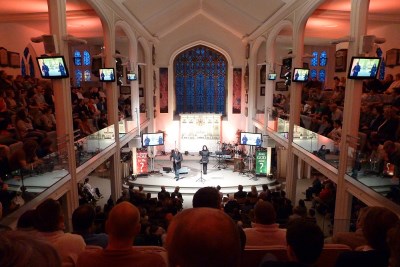
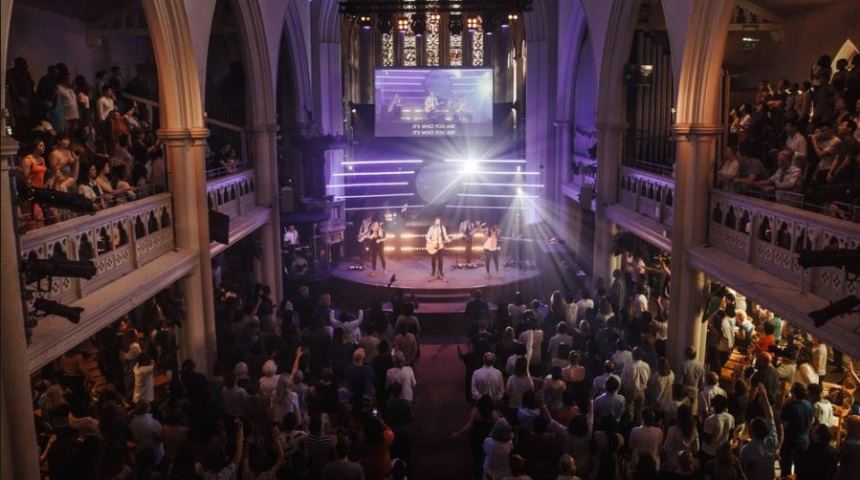
One of the Protestant parishes which I visited in London was especially interesting. The music was contemporary, but without the vacuous or insipid lyrics commonly associated with that genre of music. Instead, I noticed that the content was often strongly theological. The band was top notch. It was clear that, rather than any Eucharistic sacrifice, they saw singing as their principal act of worship. This is why I was surprised to see nobody in the congregation raising their hands in praise. Having previously been a member of a charismatic church, it took a good deal of self-control to keep my hands firmly at my sides!
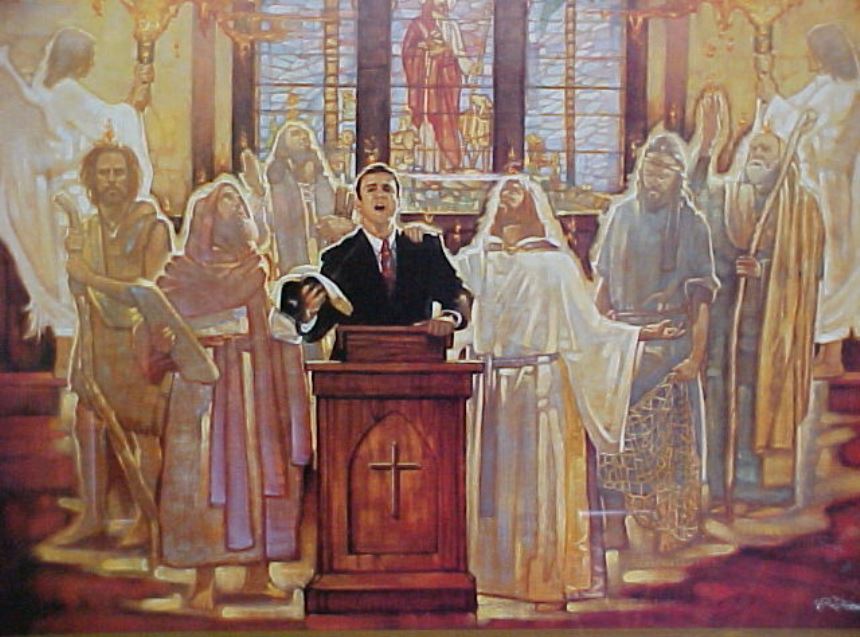
Probably my favourite aspect of that congregation’s Sunday service was a segment which they called “The Heroes of Faith”. This was as close to the honouring of Saints as I’ve ever seen in an evangelical context. What would happen was that a member of the congregation would offer a 5-10 minute presentation on a Christian from history. They freely claimed pre-Reformation Saints as their own, as well as fathers of Reformation such as Martin Luther.
No Common Meal
While I enjoyed visiting these different communities, one aspect of these trips was a cause for sadness. On the occasions I attended somewhere which celebrated Holy Communion, I would have to abstain. It is pretty well-known that non-Catholics should not receive the Eucharist at Mass, but it is less well known that, in a similar fashion, Catholics should not receive Holy Communion in non-Catholic communities.
As I travelled home after one such service, with the weight of the Reformation on my mind, there was a vague spark of a memory which told me that there was another part of the Catholic Church where the liturgy was different from the Mass with which I was familiar, but which was also still Catholic, so I would be able to receive Jesus in Holy Communion. When I got home, I fired up my computer and did some very vague googling. After a few minutes it transpired that my brain had been trying to remind me of the Eastern Rites of the Catholic Churches. I opened a new browser window and then searched for Eastern Rite parishes near me. Fortunately, since London has a large immigrant population, I found quite a few within relatively easy reach.
A Tour of the East
Like most Western Catholics visiting an Eastern Catholic parish for the first time, I was rather nervous. I didn’t know what strangeness I might encounter! Both before and during the service, I checked and re-checked that this was, in fact, a legitimate Catholic parish in communion with the Bishop of Rome.
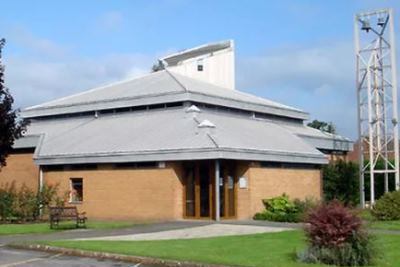
The first parish I visited was a Melkite congregation who celebrated the Divine Liturgy in an Anglican church. Since they were borrowing another denomination’s building, the interior wasn’t very eastern, although I do remember there being two large, beautiful icons of the Lord and the Theotokos which made a makeshift iconostasis. The Liturgy was in Arabic, but I could follow along somewhat using a book which had the English and Arabic side-by-side, much like the dual text you might use in a Tridentine Mass. At that Liturgy I received a foretaste of the Eastern emphasis on penance, with the entire homily devoted to the subject of fasting. This was then juxtaposed with the East’s love of feasting! As I left the building, a deacon was standing by the door holding a basket of what looked like bread. I froze, uncertain as to what was being presented to me. “What…or who…is this?”, I asked. “It’s not the Eucharist”, he replied, “It’s just blessed bread…we just like to keep the celebration going!”. My journey through the Eastern Rites of the Church now began in earnest…
The next parish I visited was a Maronite congregation, a parish which had a larger congregation than the Melkites I had visited and who shared a building with a Latin Rite parish. I was still nervous visiting, but once again I was warmly welcomed by the pastor. The Liturgy was also in Arabic, but this time the Arabic and English translation were projected onto the wall at the front of the church, which made it even easier to follow along. To my surprise, rather than handing out blessed bread at the end, we received a small, sweet pastry, something akin to baklava.
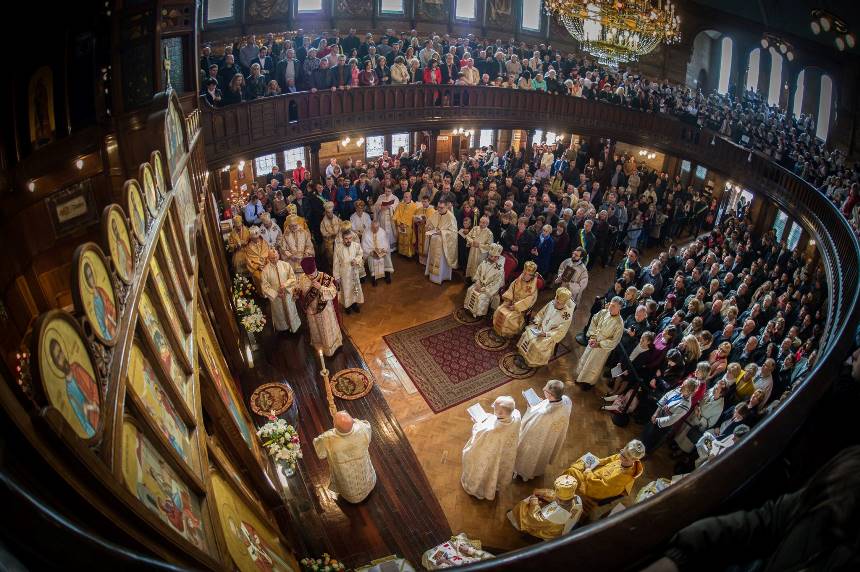
My visa for the USA came through around this time, but before I left London I had the chance to visit a Ukranian Byzantine parish. This was the largest Eastern parish I had visited so far. Seating was on two levels, but even then it was so full that I had to stand for the whole Liturgy. As with the previous parishes, the Liturgy was not in English, which meant that I had to rely on the “Liturgical Body Language” to understand exactly what was going on. It was a bit of shame that I couldn’t understand Ukrainian, because I remember the priest preaching very enthusiastically and wishing that I knew what he was saying.
Finding the East out West
When I moved to the United States, it didn’t even occur to me that Eastern Rite parishes might be found here too, so upon arrival I just set about finding myself a home in the Roman Diocese. Unfortunately, I soon found myself split between more than one parish, such as playing the music for the youth Mass at one parish and running the young adult group at another.
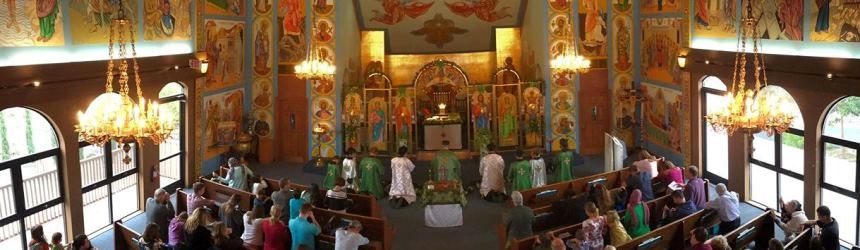
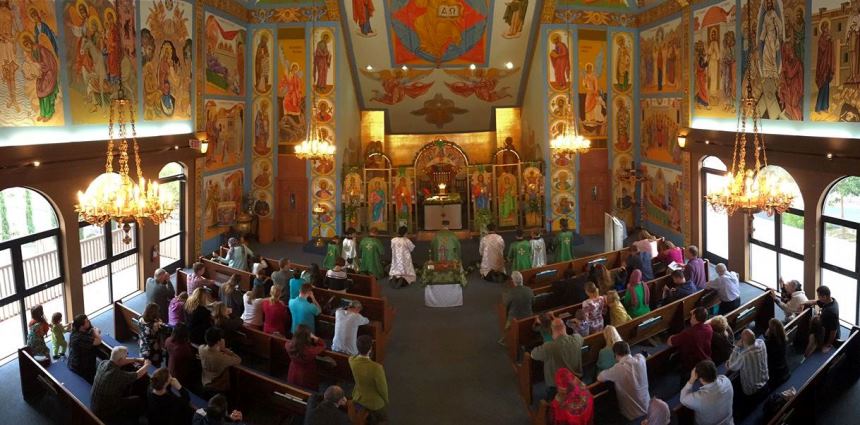
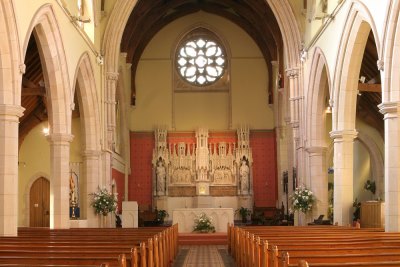
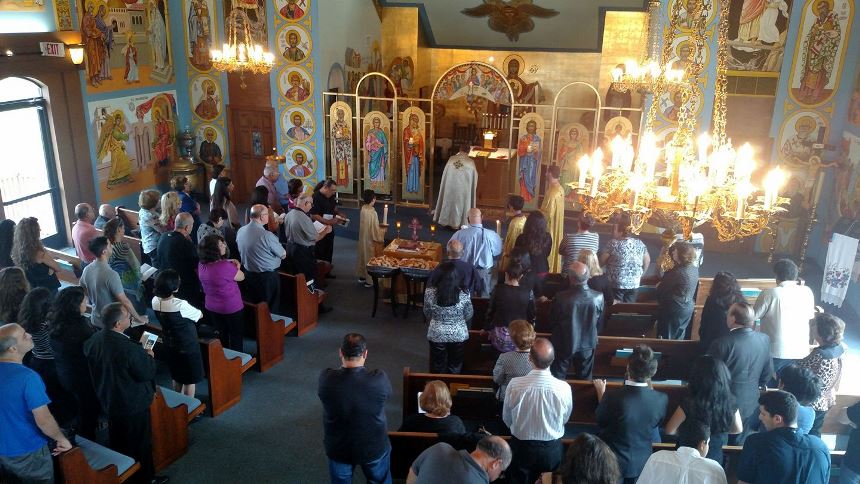
Fortunately, LifeTeen Mass did not take place during the school vacations. Realizing that I was at liberty to visit other churches, it suddenly occurred to me that I might be able to visit another of those Eastern Rite parishes. To my great delight, I discovered one close by. You can read more about my visit here, but it is safe to say that I quickly fell in love with this parish. Not only was the parish of Holy Angels covered wall-to-wall with stunning iconography, I experienced the Byzantine Liturgy in English for the first time. I was almost giddy at how often the Early Church Fathers were mentioned. I loved that we sang virtually all the prayers, the chant being both beautiful and relatively easy to learn. For the longest time in my faith journey I had struggled with Marian devotion, but in the Byzantine Church I discovered a kind of love for Mary which came very naturally to me, helped, I would suggest, by the clear Christological focus in its Mariology. The parishioners noticed that I was a newcomer and came over to welcome me. On top of all this, the Pastor, Fr. Robert, was exceptionally kind to me and more than willing to answer my many, many questions.
At the end of the Summer, I returned to playing at the LifeTeen Mass, but over the coming months I took any opportunity to return, to attend Byzantine Vespers on Saturday night, as well as the occasional weekday service. I can’t quite remember how long I continued like this, but I think it was for about a year. Eventually, I became fatigued by being split across several parishes. I decided that I needed a single parish home. The choice was obvious. So, for the first time in my life, I officially registered at a parish, Holy Angels Byzantine Catholic Church.
As I wrote in my very first post, recently I have been called upon more and more to defend my faith – Christianity in general and Catholicism in particular.
The continued questioning by others about my faith was actually one of the main reasons I started this blog in the first place. Sometimes, in an attempt to provide someone with a satisfactory explanation, I had to do quite a bit of research. A blog will now allow me to share the fruits of my hard work with more than just that one person! Also, as time has progressed I’ve noticed that much of the discussion has been around similar issues so I intend to use this blog to publish my explanations to some of the more commonly-asked questions and invite feedback.
However, before I can start addressing some of these issues, I feel the need to write about a tension that I find within myself, the tension that comes from being an “Ecumenical Apologist”…
One of the first things which struck me about the Qur’an the first time I read it was how it can suddenly and jarringly jump to a completely different scene, and even change who is speaking. For example, the following verse is clearly Allah speaking…
That is Paradise, which We will grant to whoever is devout among Our servants – Quran 19.63
…and then suddenly and without warning we now shift to the angels speaking as a group…
We only descend by the command of your Lord. To Him belongs whatever is before us, and whatever is behind us, and everything in between. And your Lord is never forgetful… – Quran 19.64


 For my final month in San Diego, my Bible Study Group is going to be going through the epistles of St. John (1 John, 2 John, 3 John). However, this last week we reviewed our study of Ephesians. Here are the review questions the group came up with: