Register for free one-day young adult retreat in San Diego!

Registration is now open for the “Restless” Retreat. This is a free, one day retreat at St. Catherine Laboure on Saturday, April 14th:
SPC

The theme of the retreat is being taken from St. Augustine’s famous line, “You made us for Yourself, O Lord, and our hearts will wander restless until we rest in you”. I swear I did not pick the retreat theme… 🙂

We will have speakers including Jamie Cleaton and Timmerie Millington.

Lunch will be provided. Did I mention this was free?

PWJ: S1E24 – MC B3C11 – “Faith” (Part 1)

Faith

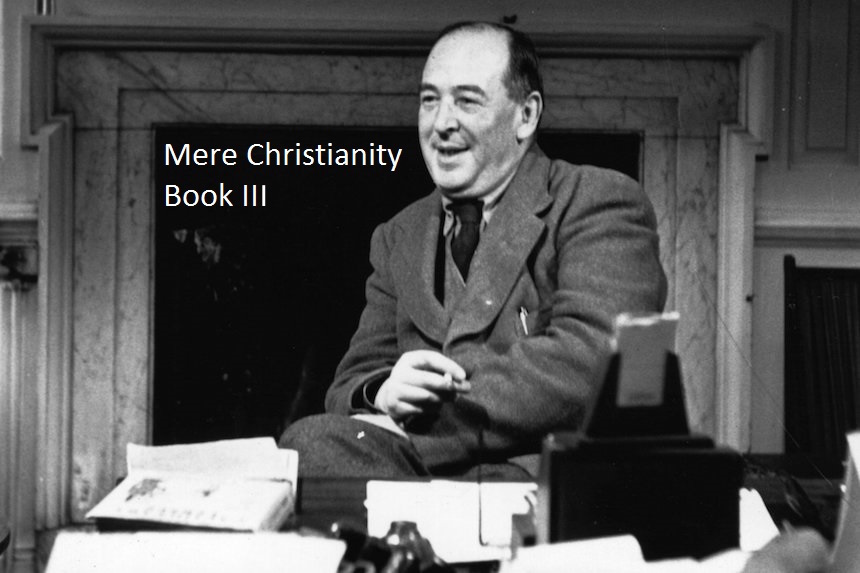
For the last two chapters of Book III we will be looking at the final theological virtue of “faith”. This chapter focuses on faith in terms of holding onto rational truths despite raging emotions.

If you enjoy this episode, you can subscribe manually, or any place where good podcasts can be found (iTunesGoogle PlayPodbeanStitcher and TuneIn).

Please send any objections, comments or questions, either via email through my website or tweet us @pintswithjack. Be sure to follow our new Instagram account!

Episode 24: “Faith” (Part 1) (Download)

Read more

Mere Christianity – Book III – Chapter 12 (“Faith”)

Book-3

Picking back up my notes for C.S. Lewis’ “Mere Christianity”…

Notes & Quotes

1. Faith (in the second sense) arises after attempting the Christian life

“…Faith in this sense arises after a man has tried his level best to practise the Christian virtues, and found that he fails, and seen that even if he could he would only be giving back to God what was already God’s own. In other words, he discovers his bankruptcy”

2. What God cares about is the kind of creatures we are

“Now, once again, what God cares about is not exactly our actions. What he cares about is that we should be creatures of a certain kind or quality – the kind of creatures He intended us to be-creatures related to Himself in a certain way…if you are right with Him you will inevitably be right with all your fellow-creatures, just as if all the spokes of a wheel are fitted rightly into the hub and the rim they are bound to be in the right positions to one another”

3. This involves discovering our bankruptcy

“And as long as a man is thinking of God as an examiner who has set him a sort of paper to do, or as the opposite party in a sort of bargain – as long as he is thinking of claims and counterclaims between himself and God – he is not yet in the right relation to Him. He is misunderstanding what he is and what God is. And he cannot get into the right relation until he has discovered the fact of our bankruptcy”

(i) This must be truly recognized

“When I say ‘discovered,’ I mean really discovered: not simply said it parrot-fashion. Of course, any child, if given a certain kind of religious education, will soon learn to say that we have nothing to offer to God that is not already His own and that we find ourselves failing to offer even that without keeping something back. But I am talking of really discovering this: really finding out by experience that it is true.”

(ii) This requires us to try our hardest

Now we cannot, in that sense, discover our failure to keep God’s law except by trying our very hardest (and then failing). Unless we really try, whatever we say there will always be at the back of our minds the idea that if we try harder next time we shall succeed in being completely good. Thus, in one sense, the road back to God is a road of moral effort, of trying harder and harder. But in another sense it is not trying that is ever going to bring us home. All this trying leads up to the vital moment at which you turn to God and say, “You must do this. I can’t.”

(iii) This requires us to look back

“It is often only when he looks back that he realises what has happened and recognises it as what people call ‘growing up.’… A man who starts anxiously watching to see whether he is going to sleep is very likely to remain wide awake. As well, the thing I am talking of now may not happen to every one in a sudden flash – as it did to St Paul or Bunyan: it may be so gradual that no one could ever point to a particular hour or even a particular year”

4. It is then we put our trust in Christ

“The sense in which a Christian leaves it to God is that he puts all his trust in Christ: trusts that Christ will somehow share with him the perfect human obedience which He carried out from His birth to His crucifixion: that Christ will make the man more like Himself and, in a sense, make good his deficiencies”

(i) It’s a great deal

“…Christ offers something for nothing: He even offers everything for nothing. In a sense, the whole Christian life consists in accepting that very remarkable offer… What we should have liked would be for God to count our good points and ignore our bad ones”

(ii) This still requires obedience

…handing everything over to Christ does not, of course, mean that you stop trying. To trust Him means, of course, trying to do all that He says. There would be no sense in saying you trusted a person if you would not take his advice. Thus if you have really handed yourself over to Him, it must follow that you are trying to obey Him. But trying in a new way, a less worried way. Not doing these things in order to be saved, but because He has begun to save you already. Not hoping to get to Heaven as a reward for your actions, but inevitably wanting to act in a certain way because a first faint gleam of Heaven is already inside you.

5. Christians have often disputed about faith and works

“Christians have often disputed as to whether what leads the Christian home is good actions, or Faith in Christ. I have no right really to speak on such a difficult question, but it does seem to me like asking which blade in a pair of scissors is most necessary”

(i) Looking at the parodies of these positions can point us to the truth

(A) Works

“One set were accused of saying, ‘Good actions are all that matters. The best good action is charity. The best kind of charity is giving money. The best thing to give money to is the Church. So hand us over $10,000 and we will see you through.’ The answer to that nonsense, of course, would be that good actions done for that motive, done with the idea that Heaven can be bought, would not be good actions at all, but only commercial speculations”

(B) Faith

“The other set were accused of saying, ‘Faith is all that matters. Consequently, if you have faith, it doesn’t matter what you do. Sin away, my lad, and have a good time and Christ will see that it makes no difference in the end.’ The answer to that nonsense is that, if what you call your ‘faith’ in Christ does not involve taking the slightest notice of what He says, then it is not Faith at all-not faith or trust in Him, but only intellectual acceptance of some theory about Him”

(ii) Scripture puts the two together in one sentence

The first half is, “Work out your own salvation with fear and trembling” – which looks as if everything depended on us and our good actions: but the second half goes on, “For it is God who worketh in you”*- which looks as if God did everything and we nothing. I am afraid that is the sort of thing we come up against in Christianity. I am puzzled, but I am not surprised. You see, we are now trying to understand, and to separate into water-tight compartments, what exactly God does and what man does when God and man are working together… you will find that even those who insist most strongly on the importance of good actions tell you you need Faith; and even those who insist most strongly on Faith tell you to do good actions.

* St. Paul’s epistle to the Philippians

6. Christianity isn’t just about morality

“I think all Christians would agree with me if I said that though Christianity seems at first to be all about morality, all about duties and rules and guilt and virtue, yet it leads you on, out of all that, into something beyond. One has a glimpse of a country where they do not talk of those things, except perhaps as a joke. Every one there is filled full with what we should call goodness as a mirror is filled with light But they do not call it goodness. They do not call it anything. They are not thinking of it. They are too busy looking at the source from which it comes”

Discussion Questions

1. Why is it important to discover our bankruptcy? How do we reach that point?

2. What does it meant to trust God? Does it still require effort and obedience?

3. How does Jack respond to the Reformation argument concerning Sola Fide?

C.S. Lewis Doodle

No doodle!

Naming the books of Moses

I’ve recently started studying the first five books of the Bible in more depth. Almost as soon as I started, I had an “Oh, I never knew that!” moment which is the subject of today’s post.

Torah

The opening books of the Bible are known by the Greek word “Pentateuch”, which literally means “five volumes”. Unsurprisingly, there are five books which make up the Pentateuch:

1. Genesis
In Greek, “Genesis” means “Beginning”, which is an appropriate title for this book since it describes the Creation of all things. It also covers the lives of the early Patriarchs, up until the time of Jacob and the Twelve Tribes.

2. Exodus
The second book of the Bible describes the escape of the Children of Israel from Egypt and the giving of the Ten Commandments on Sinai. This is reflected in the book’s title, which literally means “Departure”.

3. Leviticus
If you’ve ever tried to read Leviticus, you’ll know that it goes into great detail concerning all the different sacrifices in the cultic worship of Israel. This worship was performed in the Temple by the priestly tribe of the Levites, which gave rise to the this volume’s title, “Book of the Levites”.

4. Numbers
This book recounts the events of Israel’s sojourn in the desert. Unlike the other volumes in the Pentateuch, its title is not very descriptive, being so named because the opening pages of the book concern a census that was taken among the people.

5. Deuteronomy
The final volume in the Pentateuch contains the Law given by Moses on the plains of Moab prior to his death and before the entry into the Promised Land.

My first “Oh, I didn’t know that!” moment was when I found out the meaning of this book’s title. The Greek word for “Law” is “nomos” and it’s the word used throughout the New Testament to refer to the Law of Moses. You can see this Greek word hidden away in the name of the book: “Deuteronomy“. The prefix, “deutero” means “second” (e.g. “deuterocanon” means “second canon”). Therefore, “Deuteronomy” means “Second Law”. It is so called because it’s the second major piece of legislative material in the Books of Moses.

I previously knew that the Jewish people often refer to the Pentateuch as “The Torah”, the Hebrew word for “Instruction”, “Teaching”, or “Law”. However, what I didn’t know was that the they have different names for each of these books. The names which I listed above (Genesis, Exodus, …) come from the Septuagint (LXX), the Greek translation of the Pentateuch sometime around 250 BC. Within Judaism, however, the following Hebrew names are used:

1. Bereshith (“In the Beginning”)
2. Shemuoth (“Names”)
3. Wayiqra (“And he said”)
4. Bamidbar (“In the desert”)
5. Debarim (“Words”)

As you might be able to guess from the translations in parentheses, the Jews follow the same naming convention used in Catholic Papal Encyclicals, naming the book after the opening words of the document.

Well, that’s enough nerding out for one day… 🙂

IC XC

This past weekend I was visiting a friend in Washington State and, at the church we visited, saw the following cross hanging above the altar:

Cross at St. Paul’s Cathedral, Yakima

…and this reminded me of something else which I came to understand through studying Greek that I had meant to share…

Read more

Great Apostasy Questions

A while back, I produced a post in which I listed some Canon Questions, some specific questions I ask when talking to non-Catholics about the Table of Contents found in their Bible. Following my post concerning my recent encounter with a Jehovah’s Witness, I’ve decided to do another post similar to my Canon Questions, but this time concerning the “Great Apostasy”, the belief that that the Church effectively disappeared from the earth some time after Christ’s death.

Apostasy

Groups like the Mormons hold to the Great Apostasy and use this as an explanation for the significant differences between their doctrine and the doctrine of historic Christianity. Muslims hold to this narrative too, to justify the teachings of Muhammad which stand in stark contradiction to the New Testament. Additionally, most Protestant groups, while typically not holding such a radical version of this doctrine, usually hold to some variation of it, saying that somewhere along the line the Church went off-track in a rather major way.

Read more

1 159 160 161 162 163 172