Quick Apology: The authority to forgive sins…
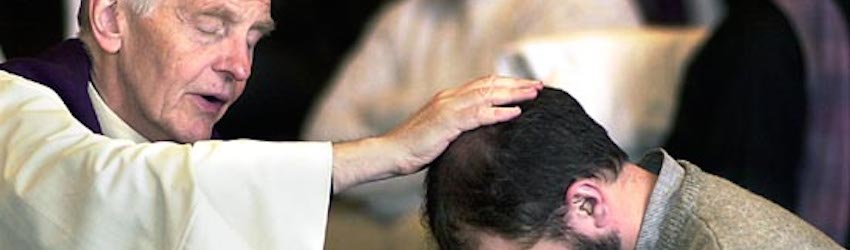
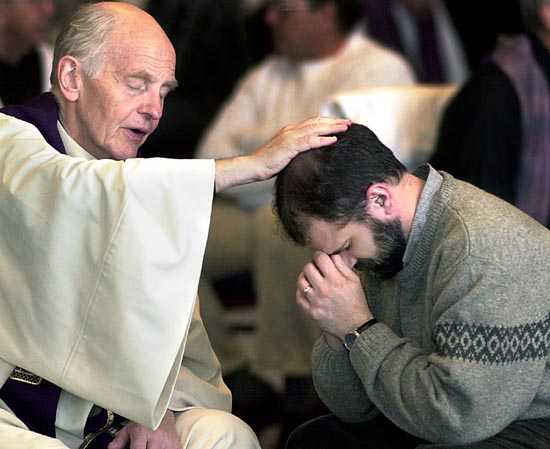
ForgivenessOne of my favourite things about having a blog is that, every now and then, I’ll get an email out of the blue from someone I don’t know. I love getting emails from people I’ve never met. There’s something quite wonderful in having an interaction with someone from across the continent or even the world, all because of something you’ve written!

Very often when I get emails they contain questions of an apologetics nature. I’m trying to get better at converting these email exchanges into posts. So, in light of that, I would like to share a response I gave to an email I received a few weeks ago. The gentleman asked the following question:

While discussing Christ’s establishment of the Sacrament of Reconciliation, I brought up John 20:21-23.  My Protestant friends said that this is Jesus’ way of warning everyone not to hold a grudge against someone by retaining their sin. I know what Jesus was doing here, but I lack the bomb-proof Catholic response to this interpretation; can you help?

I’m not sure if my response qualifies as “bomb-proof”, but here was my reply…
Read more

Pushing our pro-life religion

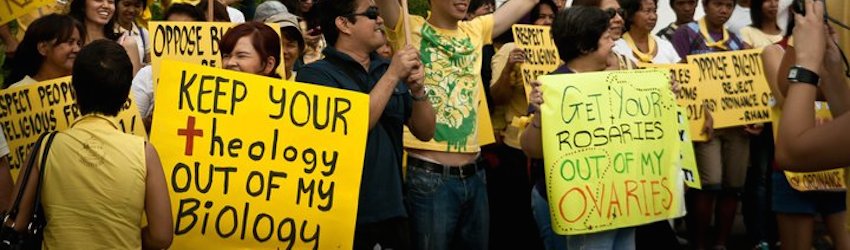
Have you ever been speaking about abortion and heard someone who’s pro-choice exasperatingly exclaim “Stop imposing your religion on me!”? Well, today’s entry in this abortion series addresses that very issue…

Why are you pro-life?

Last year, I posted on Facebook that I was at the March For Life in Washington DC. This raised the interest of some of my pro-choice friends, so I explained to them why I’m against abortion and why I’m pro-life.

In response to my explanation, I was told again and again that Christians should stop imposing their religion on others. I found the objection rather odd. Why? Well, I found it strange because I hadn’t mentioned religion once in any of my arguments. Neither had any of my friends when they contributed to the thread. All the arguments against abortion which were presented did not rely at all on a theistic worldview.

FeaturedPushingReligion

Interestingly, the people who first brought religion into our discussion were those who were pro-choice. Again and again they returned to the idea that we were arguing against abortion on religious grounds. However, we never mentioned God, nor did we cite any religious text or authority. Funnily enough, something very similar happened on Brandon Vogt’s blog around the same time…

Unfortunately, rather than responding to our (non-theistic) arguments, some retorted with cheap shots against the Christian faith. Not only that, we were repeatedly treated to my own personal pet peeve, the armchair interpretation of Bible by non-Christians, which naturally included the classic misinterpretation of “Judge not lest you be judged”.

I’ve said many times bore that, even if I were not a Christian, I’d still be pro-life. The arguments against abortion don’t require a belief in God. The pro-life arguments are scientifically, philosophically and psychologically robust. If I were an atheist I might perhaps have some difficulty explaining why human life has intrinsic value, but it’s an instinct that I don’t think I could deny, even if I wanted to.

Read more

Manvotional: Winston Churchill

I’m a regular reader of the website The Art of Manliness. I love their content, but wish that more of it was made available in audio format, in particular the “manvotionals”. At the moment I’m trying to get hold of the guys who run the site to make this request and also to offer my services as part of the team who’ll provide the audio version of their posts.

As part of my pitch, I’ve recorded a recent “manvotional” posted on their website from the autobiography of a man who is consistently voted as being the greatest Briton of all time, Sir Winston Churchill.

Screen Shot 2015-09-21 at 11.25.08 AM

Manvotional (Download)

“The Descent” Kevin MacLeod (incompetech.com)
Licensed under Creative Commons: By Attribution 3.0

The unaccompanied MP3 is available here.

Qur’an Cover-to-Cover: Day 20 (“Joseph”)

joseph

Thus far in the Qur’an we have encountered the stories of the prophets Adam, Noah, Hud, Salih, Abraham, Jacob, Shu’ayb, Moses and of Isa’s mother, Mary. Today we hear about the story of Joseph the patriarch, the one whom the Bible describes as having a “coat of many colours”:

Surah 12 – “Joseph” (Yusuf)
We open with the affirmation that the Qur’an is a “clear Book”. There is also the assertion by Allah that He is revealing “the best of stories” to Muhammad, about which he was previously unfamiliar. This seems to me to me an unlikely claim, given that Muhammad would have certainly had contact with Jews while he was a merchant trader.

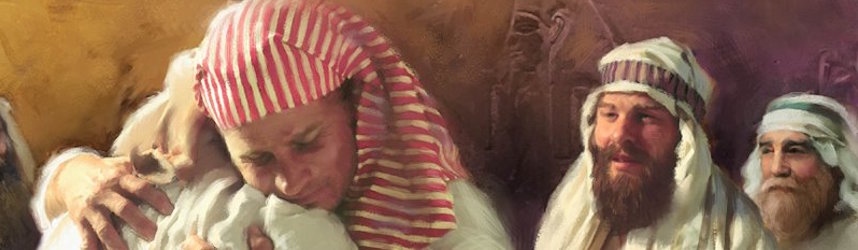
We are then treated to the Islamic version of the story of the Patriach Joseph. Joseph tells his father about his dream where the sun, moon and stars bowed down to him. Jacob tells Joseph not to share this dream with his brothers, for fear they will plot against him.

(Although I’ve questioned previously whether the author of the Qur’an knew Isaac was the father of Jacob, this chapter does appear to recognize that correct relationship when Jacob is quoted as saying “[Allah will] complete His favour upon you and upon the family of Jacob, as He completed it upon your fathers before, Abraham and Isaac”)

Read more

Easter: The Pagan Conspiracy

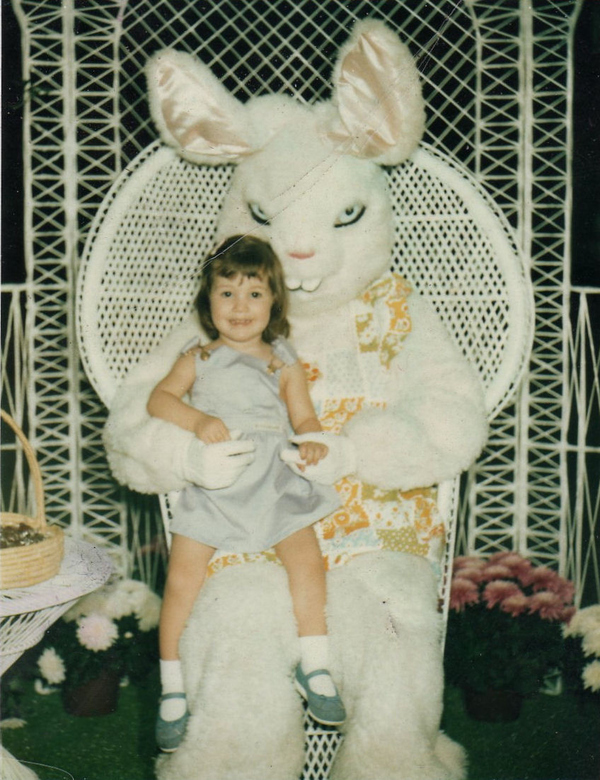
Creepy EasterI meant to write this post in the weeks leading up to last Easter, but I’m afraid it completely slipped my mind. Unfortunately, this meant that when Easter Sunday rolled around and all the “Easter is a pagan festival!” comments started to appear on Facebook and on blogs, I was repeatedly forced to write some off-the-cuff comments in response, rather than having something prepared here to which I could link.

I was reminded that I had intended to do this post a couple of days ago while reading an article in the Telegraph. The article in question was talking about how the Church of England has plans to create a new Pagan church to attract new people . Inter-faith dialog is one thing, but this sounds like something quite different. I’m intrigued as to what this’ll end up looking like. We’ll just have to wait and see…

So, I know Easter Sunday has long since passed. In fact, Pentecost has also been and gone and we’re even nearing the end of the Apostles’ Fast. However, I’ve decided to write a quick blog entry here in preparation for next year so that when we’re in the run up to Easter I’ll be ready 🙂

A festival by any other name…

The main thrust of most the comments I saw this year was over the word “Easter” itself. It was pointed out, ad nauseam, that the word “Easter” is most likely etymologically related to the word “Eostre”, a Germanic deity from paganism. The “logic” goes that, since the word “Easter” has pagan roots, the celebration itself must also be pagan. Makes sense, right? Err….no.

I’ll admit that when I see such comments I get a little irritated because I don’t think they’ve really thought through what it is that they’re saying nor have they applied their position consistently.

Read more

That special something…

Today I would like to return again to the subject of discernment. In my previous post I wrote about some of the things I’ve wrestled with during my current discernment process. I explained that I find the call to be holy and the call to Holy Orders rather difficult to distinguish from one another and I expressed my frustration that many people seem to assume that the former necessarily implies the latter….


Professional Counseling

Those who become monks and nuns take vows of (1) poverty, (2) chastity and (3) obedience. These three are known as the Evangelical Counsels. I’ve found that a lot of discernment material, when you really boil it down, focuses upon these three areas. The problem is that the Church teaches that all Christians are called to live out these counsels!

“Christ proposes the evangelical counsels, in their great variety, to every disciple”
– Catechism of the Catholic Church, #915

I guess this does affirm something that I’ve thought for some time – that there are many common threads which run through all the vocations. There are also common graces which all people are reliant upon to live out their vocation, regardless of what that vocation might be.

Read more

Coming Soon: The Liturgical Apocalypse

The third chapter of Dr. Barber’s book he discusses the relationship between the Book of Revelation and the Catholic Liturgy. It is a brief review of the the material covered in another excellent book by Dr. Hahn’s book, The Lamb’s Supper.

Familiar Imagery & Structure

Dr. Barber begins by noting that no other apocalyptic book of antiquity relies quite so heavily on liturgical imagery as the Book of  Revelation. In John’s book we find many things extremely familiar to a Catholic who attends Mass: Sunday worship, priests, vestments, incense, chalices, angels, saints etc.

In fact, the book of Revelation has profoundly impacted Christian liturgy and architecture throughout the centuries.  For example, the celebrant’s chair is symbolic of the throne of God, and the surrounding chairs like those of the “elders” (Revelation 4:4).

This final book of the Bible is even divided into three parts which each have parallels with the sequence of the Catholic liturgy:

1. Penitential Rite
The early section of Revelation concerns seven letters which call the Church to repentance.

2. Liturgy of the Word
Later, a book is opened which brings about judgement.

3. Liturgy of the Eucharist
The book ends with the Church being united to Christ in the supper of the Lamb.

But why use liturgical imagery? Revelation uses liturgical imagery because the Eucharistic celebration is the way the Lord comes to His Church. Dr. Barber points out that the Greek word “parousia” which is used to refer to the Lord’s “coming” actually has the primary meaning of “presence”. Upon hearing this fact, every Catholic immediately thinks of the Eucharist and Jesus’ real presence in the Sacrament.

“Every Eucharist is Parousia, the Lord’s coming” – Cardinal Ratzinger

liturgy

Read more

1 148 149 150 151 152 172