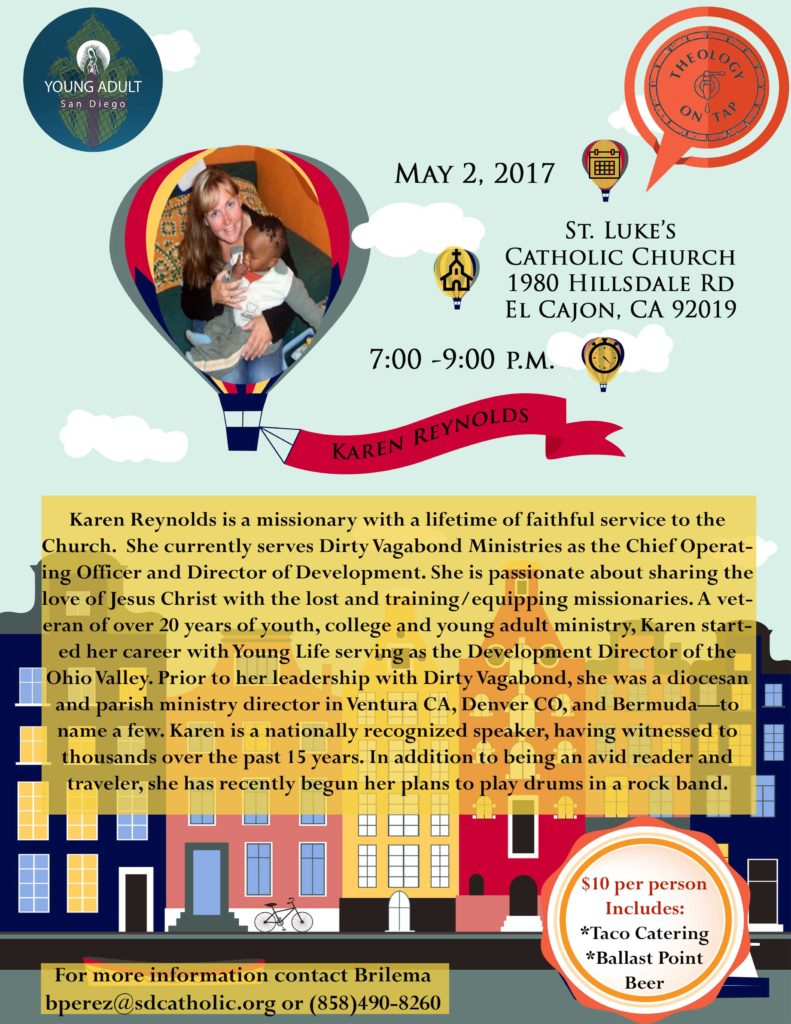
Karen Reynolds is a missionary with a lifetime of faithful service to the Church. She currently serves Dirty Vagabond Ministries as the Chief Operating Officer and Director of Development. She is passionate about sharing the love of Jesus Christ with the lost and training/equipping missionaries.
A veteran of over 20 years of youth, college and young adult ministry, Karen started her career with Young Life serving as the Development Director of the Ohio Valley. Prior to her leadership with Dirty Vagabond, she was a diocesan and parish ministry director in Ventura CA, Denver CO, and Bermuda – to name a few.
Karen is a nationally recognized speaker, having witnessed to thousands over the past 15 years. In addition to being an avid reader and traveler, she has recently begun her plans to play drums in a rock band.
I hadn’t planned to write about last weekend’s Gospel reading, but it has kept coming up in conversation and I’ve spoken to some people who have been really troubled by Jesus’ words, perhaps rightly so:
Great crowds were traveling with Jesus, and he turned and addressed them,
“If anyone comes to me without hating his father and mother, wife and children, brothers and sisters, and even his own life, he cannot be my disciple. Whoever does not carry his own cross and come after me cannot be my disciple.
Which of you wishing to construct a tower does not first sit down and calculate the cost to see if there is enough for its completion? Otherwise, after laying the foundation and finding himself unable to finish the work the onlookers should laugh at him and say, ‘This one began to build but did not have the resources to finish.’
Or what king marching into battle would not first sit down and decide whether with ten thousand troops he can successfully oppose another king advancing upon him with twenty thousand troops? But if not, while he is still far away, he will send a delegation to ask for peace terms.
In the same way, anyone of you who does not renounce all his possessions cannot be my disciple.”
Masochism or poor linguistics?
What did Jesus mean when he said we must “hate” our family and even “hate” our own lives? That sounds rather masochistic!
Is this just a bad translation? Actually, no, it’s not. The Greek word being used here is “miseo”, which, according to Strong’s Greek Lexicon means “to hate, pursue with hatred, detest”.
I originally had the following post scheduled for this weekend, but since yesterday Joe posted an article entitled Defending the Deuterocanon Book by Book (Part 1), I thought I’d post it a little earlier…
In case you were unaware, Catholic Bibles are bigger than Protestant Bibles. Protestant Bibles are lacking the following books:
Tobit, Judith, Wisdom, Sirach, Baruch, 1 Maccabees, 2 Maccabees, … …as well as three chapters of Daniel (3:24-90; 13; 14) and six chapters of Esther (10:14-16:14)
Occasionally I run across a non-Catholic who insists that this Deuterocanonical books (referred to as the “apocrypha” by Protestants) should not be part of the Bible. I don’t usually get too much into the apologetic arguments in favour of the inclusion of the Deuterocanon, although they certainly do exist. Instead, I just invite the person simply to read them! I usually suggest that they start with Wisdom, Sirach and Tobit as they’re my favourites.
Before they do that though, I always invite them to start by the following extract from Wisdom, to which I’ve added a series of underlined New Testament hyperlinks. Does any of this sound strangely familiar?
…the ungodly by their words and deeds summoned death… they reasoned unsoundly, saying to themselves…
Let us see if his words are true, and let us test what will happen at the end of his life; for if the righteous man is God’s son, he will help him, and will deliver him from the hand of his adversaries. Let us test him with insult and torture, that we may find out how gentle he is, and make trial of his forbearance. Let us condemn him to a shameful death, for, according to what he says, he will be protected.” Thus they reasoned, but they were led astray, for their wickedness blinded them, and they did not know the secret purposes of God, nor hope for the wages of holiness, nor discern the prize for blameless souls…”
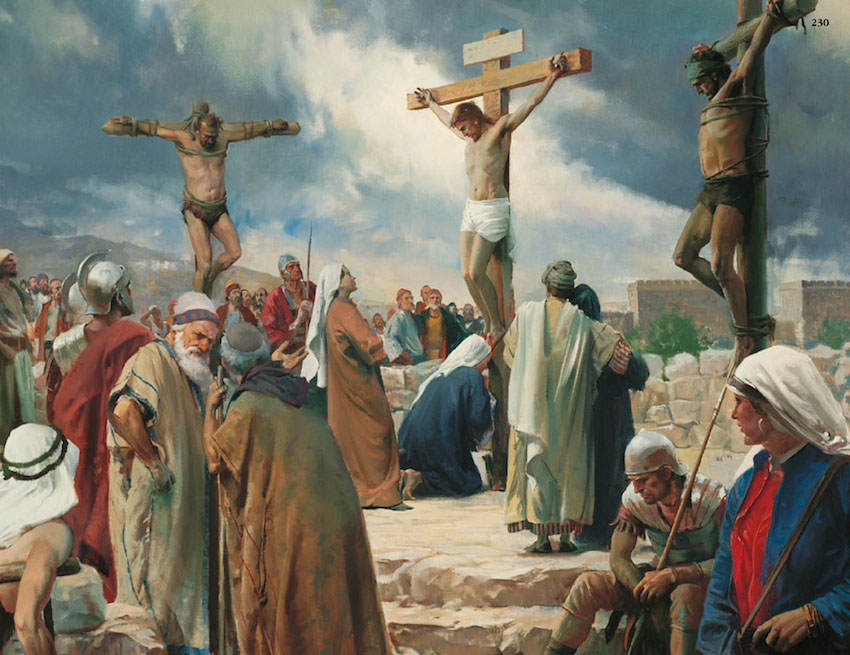
This Sunday is Palm Sunday so, in addition to an initial Reading at the beginning of Mass, we also hear a long Passion narrative after the Second Reading. Rather than provide commentary for all these Readings (since I would also quite like to get some sleep this week!), I will not be providing any commentary for the narrative of Jesus’ crucifixion.
Palm Sunday: 1st April, 2012
We are about to enter Holy Week. All our Lenten practices of prayer, fasting and alms-giving have been preparing us for this moment, to walk these final few miles with our Lord to Calvary.
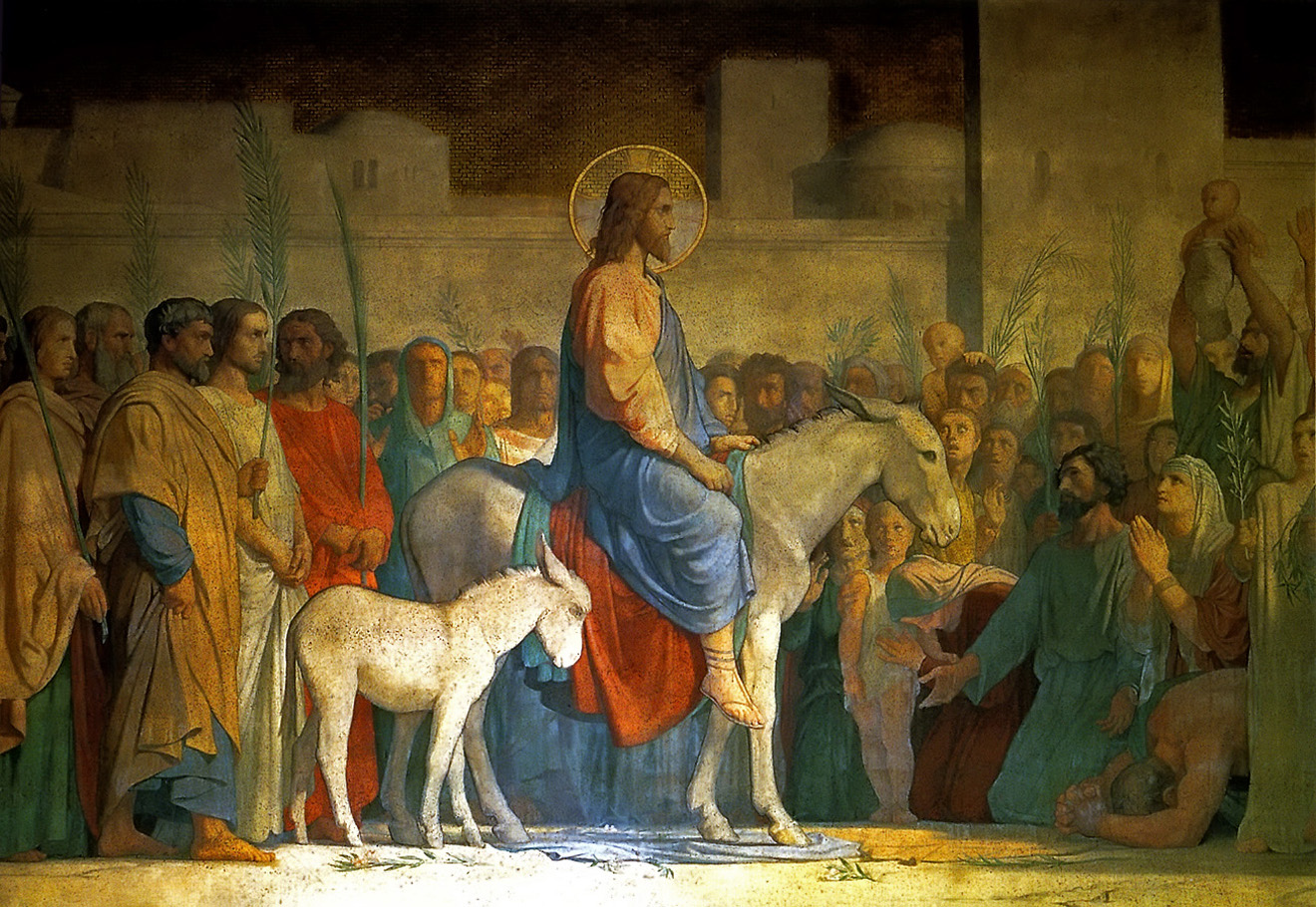
Our Mass begins with an account of Jesus’ entry into Jerusalem. He is welcomed as royalty, but in a few short days the crowds which shouted “Hosanna in the Highest!” will be shouting “Crucify Him!”. Their hatred fulfills the prophecy spoken of by Isaiah in our First Reading.
In the Second Reading from the letter to the Philippians St. Paul describes in poetic terms Christ’s humiliation and final exaltation. This is also the theme of this week’s psalm which was the prayer on the lips of Christ as he hung on the cross. The psalm speaks of one scorned, pierced in hands and feet, surrounded by enemies, all hope appearing lost… Nevertheless, the psalmist trusts in God and, like Christ, in the end, is vindicated.
I fear no foe, with Thee at hand to bless; Ills have no weight, and tears no bitterness; Where is death’s sting? Where, grave, thy victory? I triumph still, if Thou abide with me – Henry F. Lyte
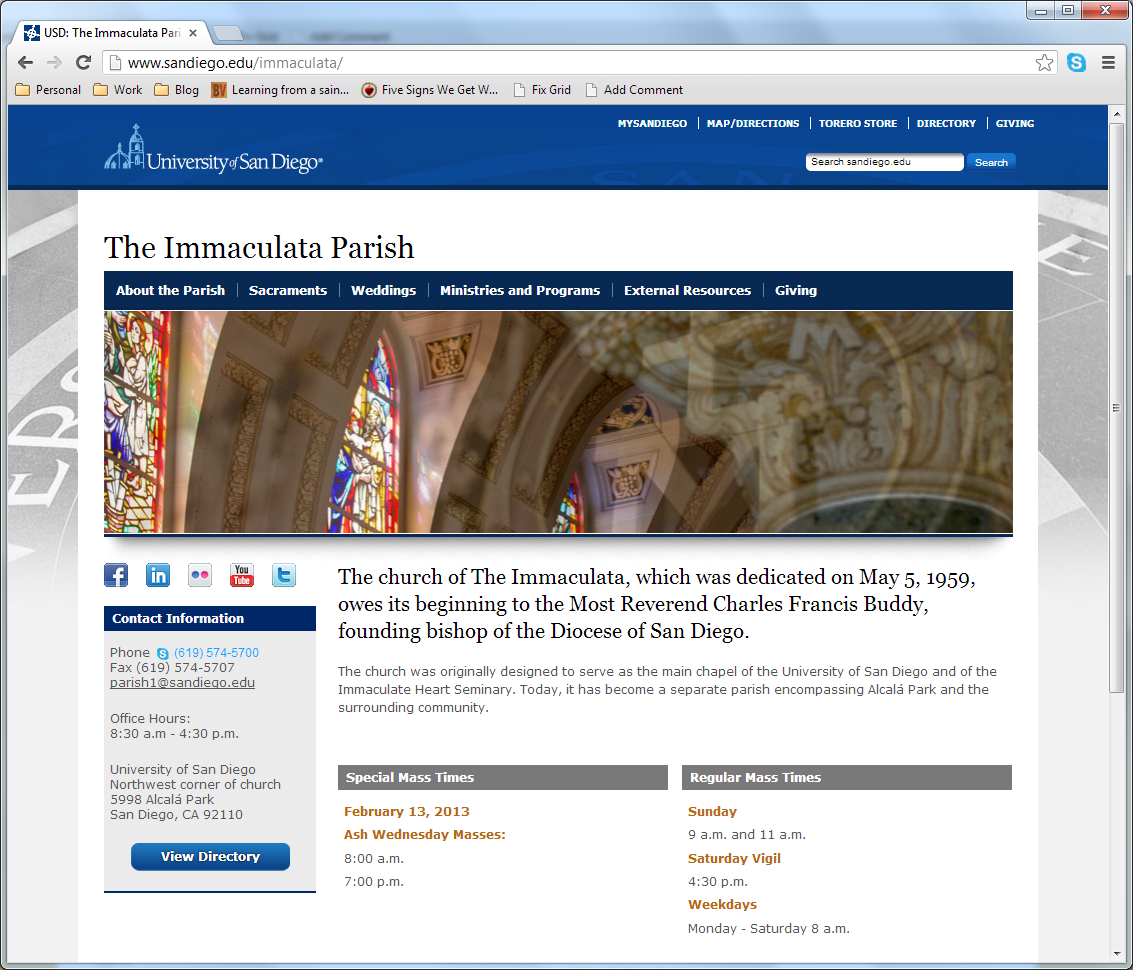
Yesterday I wrote a post about the importance of parish websites and how they can play a key role in attracting people to your parish and integrating them into parish life.
Today I would like to follow up on this topic and speak a little bit about some of the thought which should go into the construction and structure of your website. Having a website is not enough. It must also be functional and engaging.
With that in mind, here are my top five tips for parish websites:
1. “When’s Mass?”
If I’m going to a parish’s website, chances are I’m looking for the Mass and Confession times. Please don’t make me have to click around for five minutes and dig into submenus before finding them.
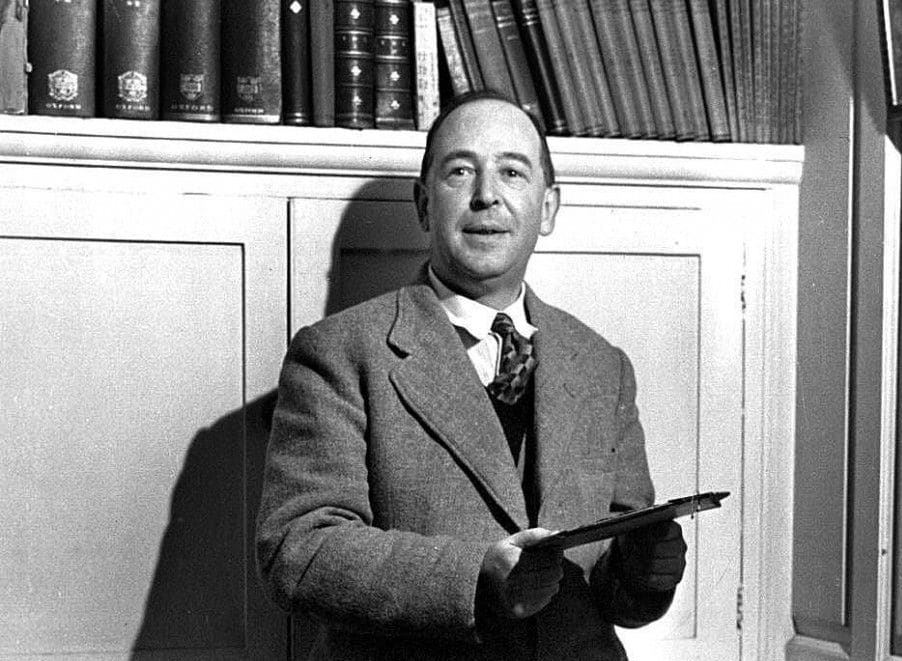
I was recently a guest on two episodes of The Counsel of Trent podcast to talk about C.S. Lewis. We spent the first episode simply talking about his life. Lewis was a man who left an indelible mark on the Twentieth Century. However, despite being such an influential figure, today many people only know him for his Chronicles of Narnia, and almost next to nothing about the man himself.
Therefore, in this article I would like to introduce you more fully to the man behind the Lion, and the author behind works which have deeply shaped modern Christianity and apologetics. If you would like to listen to the audio version of these articles, click here.
1. He wasn’t English
Often I have found people assume that C.S. Lewis was English, particularly if they have listened to one of the few remaining audio recordings of him. Lewis was, in fact, born in Belfast, Northern Ireland in 1898. He was, however, educated in England and lived in Oxford for most of his adult life.
2. He had several names…
He was baptised Clive Staples Lewis, but that wasn’t what his friends called him. When Lewis was about four, his dog, Jacksie, died. From then onwards, he stubbornly refused to respond to any other name, although it was eventually shortened to “Jack”. This is why the name of my podcast is Pints with Jack, the “Jack” in question being C.S. Lewis himself.
3. Jack experienced tragedy as a child
Lewis’ mother died of cancer when he was ten. He writes about it movingly in his spiritual autobiography, Surprised By Joy, describing it as follows:
“…all settled happiness, all that was tranquil and reliable, disappeared from my life”
C.S. Lewis, Surprised By Joy
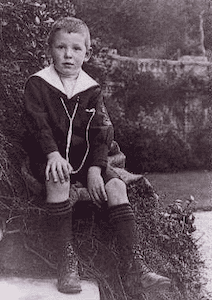
C.S. Lewis
The Lewis Family
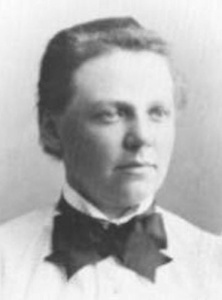
Flora Lewis
The young Jack was soon afterwards sent to boarding school in England. He disliked England immediately and hated most of his schooling, so much so that in his autobiography, he names one of the schools he attended after one of the most notorious World War Two concentration camps, Belsen. Fittingly enough, the headmaster at that school would later be committed to an asylum.
4. Lewis wasn’t always a Christian
Most people who have heard of Lewis will know that he was a famous Christian of his generation. However, he was not a Christian all of his life. He was raised in the Church of Ireland, but became an Atheist as a teenager. There were several reasons for this…
Lewis loved the old Pagan myths, particularly those of the Norse. As he received his education in classics, he was told that Paganism was all false, whereas Christianity was entirely true. Not only did this assessment seem wrong to the young Lewis, but since he saw clear parallels between the two, he assumed that both Paganism and Christianity were simply fanciful stories.
Like many who embraced Atheism, the problem of pain and suffering also loomed large in Jack’s mind. He couldn’t reconcile a good God with the world he saw around him or with the pain he himself had endured in his life. He would often quote the Epicurean poet Lucretius who wrote:
Had God designed the world, it would not be a world so frail and faulty as we see
Lucretius (Epicurean Poet)
5. He was a war veteran
Jack fought in World War One. In fact, he arrived at the front line on his nineteenth birthday. After being wounded in combat about a year later, he returned home.
During his training he had met a young man named Paddy Moore. The two had agreed that if one of them died, that the other would look after his family. Unfortunately, Paddy did not return from the trenches. Lewis was true to his word, living with and taking care of both Paddy’s mother, Janie, and Paddy’s sister, Maureen, for the rest of his life.
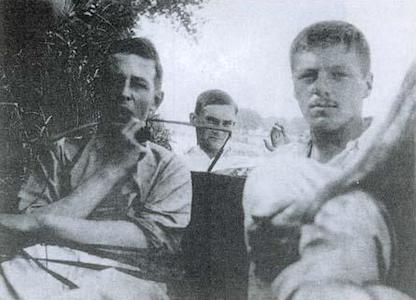
Jack and Paddy Moore
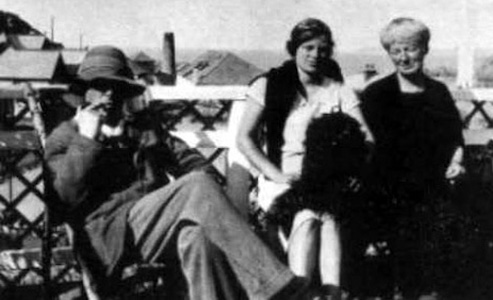
Jack with Janie and Maureen Moore
6. Jack was really, really clever…
Upon returning to Oxford after the war, Lewis excelled in his studies, earning multiple degrees. He got a First in Greek and Latin literature (“Moderations”), Philosophy and Ancient History (“Greats”), and finally in English.
It’s clear that Lewis was very intelligent, particularly when it came to language. He was, unfortunately, terrible at mathematics. In fact, his inability with numbers nearly barred his entrance to Oxford. Fortunately, upon returning from war, his military service granted him a dispensation from those exams.
7. He became a theist before becoming a Christian
Over time, Lewis started to become discontented with the imaginative and explanatory power of Atheism. He had originally embraced Atheism, in part, because of the cruel and unjust nature of the universe. However, as he would later argue in Mere Christianity:
…how had I got this idea of just and unjust? A man does not call a line crooked unless he has some idea of a straight line. What was I comparing this universe with when I called it unjust?
C.S. Lewis, Mere Christianity
Jack moved through a number of philosophical evolutions before he finally accepted the inevitable. In his autobiography he writes:
You must picture me alone in [my] room…, night after night, feeling… the steady, unrelenting approach, of Him whom I so earnestly desired not to meet. That which I greatly feared had at last come upon me. [I eventually]…gave in, and admitted that God was God, and knelt and prayed: perhaps, that night, the most dejected and reluctant convert in all England”.
C.S. Lewis, Surprised By Joy
He was not yet a Christian, but the seeds had already been sown…
8. He really loved his friends
Contrary to some depictions of Lewis, he was not an isolated stoic academic. He loved good beer and good conversation. He really loved his friends and they would play a huge role in his life, particularly J.R.R. Tolkien, the author of The Hobbit and The Lord of the Rings. In fact, Tolkien fans owe a great debt of gratitude to Lewis, as he was for a long time the only audience for these works and he did much to encourage Tolkien to finish them and get them published. Unfortunately, Tolkien disliked much of Lewis’ work, even The Screwtape Letters, a book which Lewis dedicated to him!
Many other names could be added to the list of Lewis’ close friends, such as Hugo Dyson, Charles Williams and Owen Barfield. All of these men shared a love of literature. In The Four Loves, Lewis would write:
Friendship is born at that moment when one person says to another: ‘What! You too? I thought I was the only one!’
C.S. Lewis, The Four Loves
Later these men would come together to form The Inklings, a literary discussion group where they would debate ideas and where they would read their work to each other. They would meet on Tuesday mornings in their favourite pub, The Eagle and Child, affectionately known to locals as The Bird and Baby, but they would also meet on Thursday nights in Lewis’ rooms at Magdalen College where they’d have a drink and smoke.
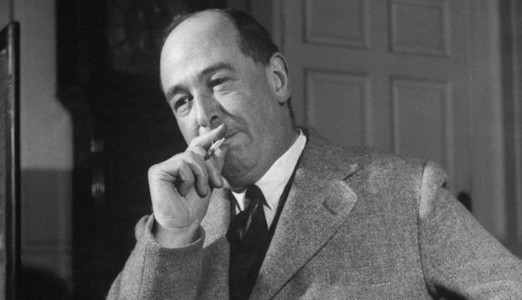
9. Speaking of smoking, Lewis really loved tobacco
I recently came across a biography of Lewis which estimated that he smoked sixty cigarettes a day! Now, since I’m marginally better at mathematics than Lewis, I sat down and worked out that, assuming he was awake for 14 hours a day and that it takes approximately five minutes to smoke a cigarette, that he spent a third of his waking life smoking!
Last year I visited Lewis’ home and although they had repainted the walls in the living room, they left the ceiling untouched so you could see how it was thoroughly stained by the nicotine!
10. His friends helped bring him to Christ
After converting to Theism, Lewis began to suspect that Christianity might be true. However, it was after a long, late-night conversation with Tolkien and Dyson that the last major obstacle was removed. Lewis had regarded Christianity as a myth like any of the other Pagan myths – “lies breathed through silver” – emotionally moving, but false.
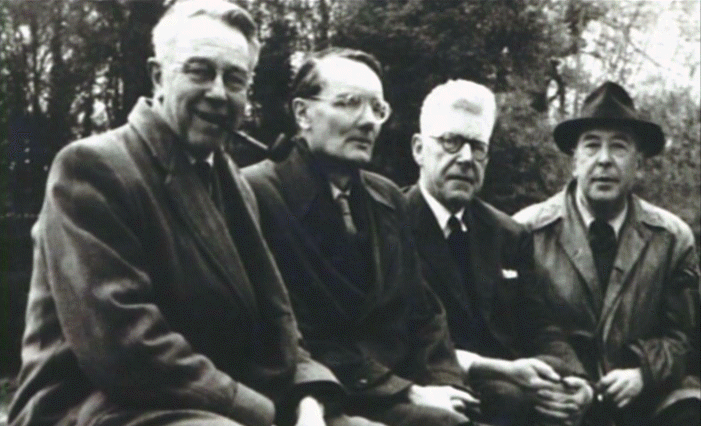
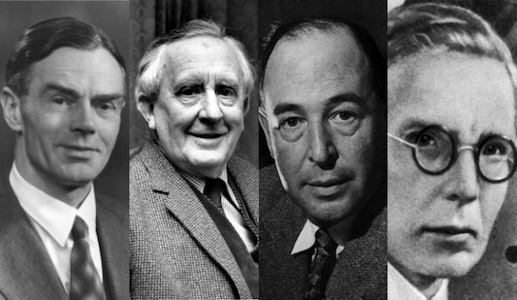
Owen Barfield, Tolkien, Lewis and Charles Williams
Over the course of their conversation, Tolkien and Dyson helped Lewis see that Christianity was the true myth. For centuries before Christianity, man’s myths had intuited a dying and rising God. However, in Jesus of Nazareth, that myth became fact.
That’s the end of the first part of this series! The concluding part will be published tomorrow…
You’ll often hear Muslims say that the Qur’an is the message for all mankind. However, the Qur’anic data doesn’t back this up…
P1. Every nation has been sent a messenger (16:36, 10:47 and 35:24)… despite the historical record not being able to substantiate this.
P2. Messengers are sent in the language of his people (14:4).
P3. Muhammad was the first person sent to warn the Arabs (36:6, 34:44 and 32:3)… despite Abraham and Ishmael supposedly having established the Kaaba generations before.
C. Muhammad was sent to those living in and around Mecca (42:7) to give them a warning in Arabic so that it would be clear to them (41:3, 43:3, 44:58, 26:195-196).
The Qur’an says that the Jews and Christians are to follow their own Scriptures (5:43, 5:68). Rather than having to trust what Christians and Jews *say* about their Greek and Hebrew Scriptures, the Qur’an is sent confirming it in *Arabic* (46:12), a revelation in their own tongue (41:44, 6:155-157).

 I hadn’t planned to write about last weekend’s Gospel reading, but it has kept coming up in conversation and I’ve spoken to some people who have been really troubled by Jesus’ words, perhaps rightly so: