March For Life 2014


"We are travellers…not yet in our native land" – St. Augustine
Earlier this week it was the Feast of the Immaculate Conception. It reminded me of a conversation I had with a member of the Eastern Catholic parish I often visit. I mentioned the fact that I always feel more comfortable with Mary when I’m praying in the Eastern Rite, but I wasn’t sure why…
He then made the observation that in Eastern Christianity, when Mary is mentioned, Christ is almost always mentioned explicitly in the next breath, whereas in the West He is more often implied. I realised he was right! That’s exactly why I found it so much easier when praying in the Eastern liturgy! For example, this is the Eastern form of the Hail Mary:
“Theotokos (God-Bearer) and Virgin, rejoice, Mary full of grace, the Lord is with thee. Blessed art thou amongst women, and blessed is the fruit of thy womb, for thou hast given birth to the Saviour of our souls“
I have often thought that if we (Western) Catholics allowed our Christology to be seen more clearly in our Mariology, fewer non-Catholics to get upset by the honour we give to Mary. Just a thought.

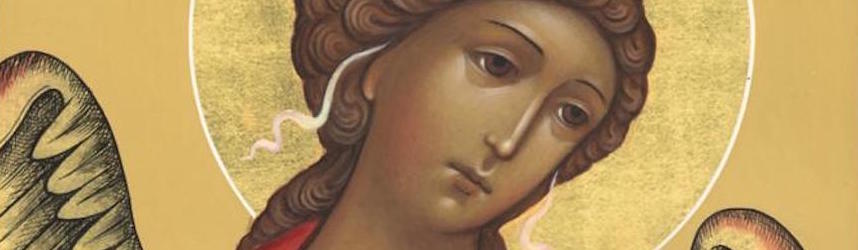
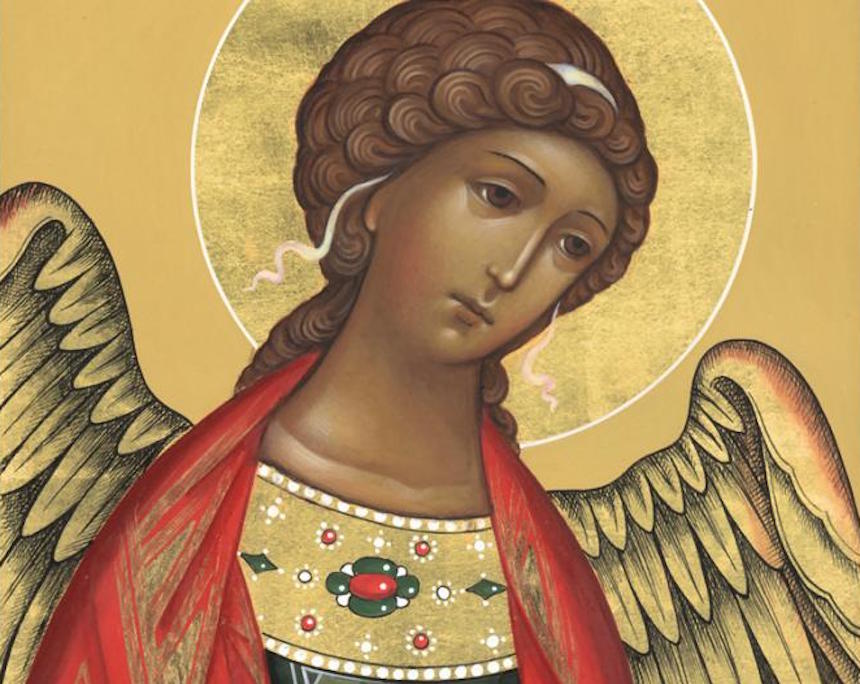
Honour the art and you honour The Artist
Today in Atlanta, my friend’s son was baptized and entered into the Body of Christ! However, there’s no rest for the wicked, so here I am writing up today’s text from Qur’an, Surah 35:
Surah 35 – “The Angels” (Fatir)
The chapter begins with a typical set of assertions relating to Allah’s soveignty and the denial of the existence of any other God.
Some interesting things are said about Satan and evil doers. One phrase I really liked was “[Satan] only invites his party to be among the companions of the Blaze”. This is why Satan’s parties are the worst! Ayah 8 affirms that “Allah sends astray whom He wills”, once again suggesting that Muslims believe in double-predestination.

Facebook continues to buzz with threads discussing the SCOTUS decision concerning same-sex marriage. I have engaged in some of these online discussions but I’ve continued to find them disappointing. As I pointed out in my earlier post, I’ve found the level of argumentation displayed in these exchanges typically to be rather low. I’ve found that even to call into question the soundness of the SCOTUS decision is to simply invite a tirade of abuse and name-calling.
There have, however, been a few occasions where the exchanges have more closely resembled a dialogue. As I’ve previously written, when involved in apologetics, I try to be socratic in my approach, mainly restricting myself to asking questions. Today’s post is simply to share the kinds of questions I typically ask when discussing the subject of same-sex marriage…

 A few people have recently asked me where I get the material for my “Lectionary Notes” posts. Here’s the process I go through each week:
1. After we conclude our Bible Study in the JP2 Group, we all go to the church next door for adoration. In the presence of the Blessed Sacrament I read the Lectionary Scriptures for the following week and spend a little bit of time praying through them.
2. When I next have some time, I read through the texts again using my NIV Study Bible.
Regarding Bible translations, translators have to make a choice between translating from the original language word-for-word (“formal equivalence”) or providing a looser translation but which attempts to better convey the thought expressed by the original writer (“dynamic equivalence”). This essentially results in a trade-off between readability and fidelity to the original words of the text. I quite like the NIV in that it falls somewhere between formal and dynamic equivalence, but with a leaning more towards dynamic equivalence.
The NIV is not a Catholic Bible and unfortunately therefore is missing the books of Wisdom, Sirach etc. Some of the study notes also have a non-Catholic skew, but on the whole it has excellent cross-references and always at least offers an interesting point of view.
3. The next book I reach for is my Ignatius New Testament Study Bible. I can’t say how much I love this book. It’s the RSV translation, which follows the “formal equivalence” approach. I would not-so-humbly suggest that it is a far superior translation to the NAB which is used in the Lectionary. Ignatius Press have produced a superb resource here, with excellent notes, maps and word studies. Every Christian should own a copy – it’s a bargain at $16. I will wait here while you click on the link and go and order a copy from Amazon. Seriously, I’ll wait…Done? Okay, let’s continue!
A while ago I wrote a short post about my friend Mike. He was Baptized at the Easter Vigil this year and I had the honour of being his Godfather. Well, the ol’ boy just chalked up another Sacrament! A couple of weeks ago he married my former neighbor, Mara.
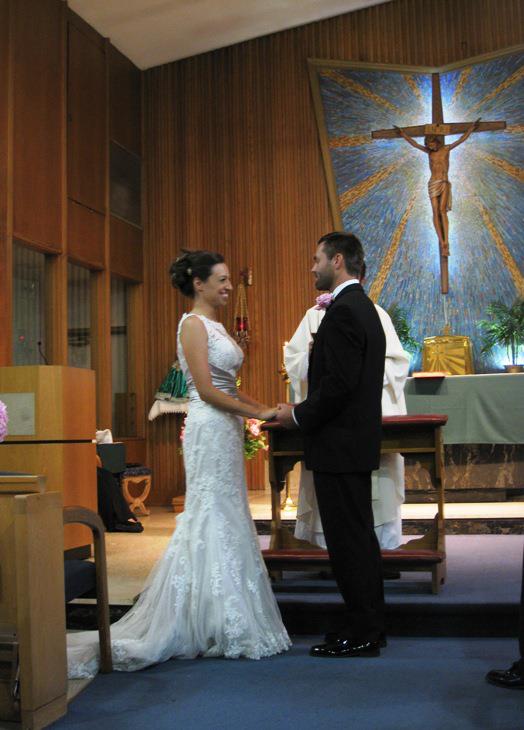
Back when I began Restless Pilgrim I wrote a post entitled Early Church Fathers, Love & Romance and I was going to end this current post with my favourite quotation from St. John Chrysostom, but I thought instead that I’d end with a Scripture as Mike and Mara really did a superb job of choosing the Readings for the wedding. The Second Reading they chose was the same one I read for my sister at her wedding…
…I bow my knees before the Father, from whom every family in heaven and on earth derives its name, that He would grant you, according to the riches of His glory, to be strengthened with power through His Spirit in the inner man, so that Christ may dwell in your hearts through faith; and that you, being rooted and grounded in love, may be able to comprehend with all the saints what is the breadth and length and height and depth, and to know the love of Christ which surpasses knowledge, that you may be filled up to all the fullness of God. – Ephesians 3:14-19
I’d appreciate it if you’d say a prayer for them tonight 🙂
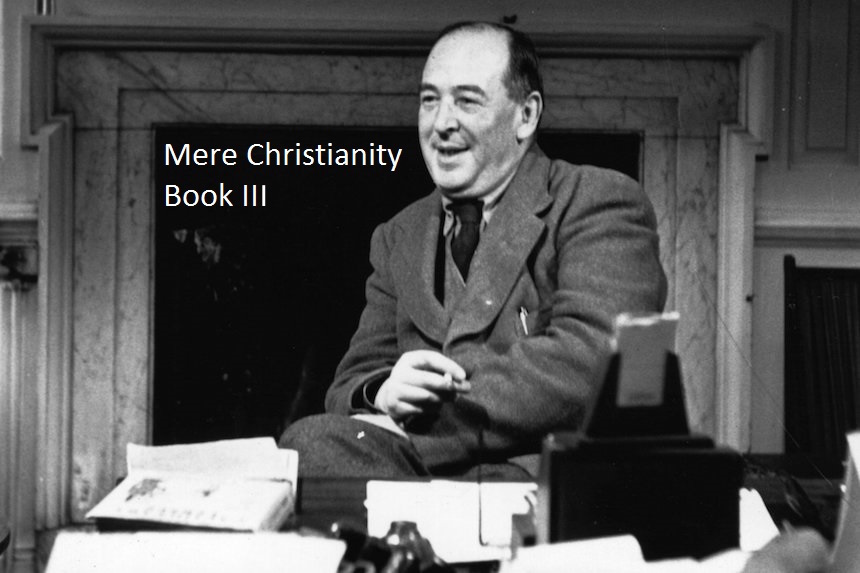
Picking back up my notes for C.S. Lewis’ “Mere Christianity”…
1. The virtue related to sex is called “chastity”
2. “Chastity” is not the same as “modesty” or “proprietary”
(a) “modesty” is a social convention
“The social rule of propriety lays down how much of the human body should be displayed and what subjects can be referred to, and in what words, according to the customs of a given social circle. Thus, while the rule of chastity is the same for all Christians at all times, the rule of propriety changes”
(b) “modesty” doesn’t necessarily imply “chastity”
“A girl in the Pacific islands wearing hardly any clothes and a Victorian lady completely covered in clothes might both be equally “modest,” proper, or decent, according to the standards of their own societies: and both, for all we could tell by their dress, might be equally chaste (or equally unchaste)”
(c) Language is in a state of flux
“While this confusion lasts I think that old, or old-fashioned, people should be very careful not to assume that young or “emancipated” people are corrupt whenever they are (by the old standard) improper; and, in return, that young people should not call their elders prudes or puritans because they do not easily adopt the new standard. A real desire to believe all the good you can of others and to make others as comfortable as you can will solve most of the problems”
3. Chastity is the most unpopular of the Christian virtues
(a) It makes people think that Christianity is wrong
“Now this is so difficult and so contrary to our instincts, that obviously either Christianity is wrong or our sexual instinct, as it now is, has gone wrong. One or the other. Of course, being a Christian, I think it is the instinct which has gone wrong”
(b) But it looks like the sex instinct is the one which is out of kilter
“…if a healthy young man indulged his sexual appetite whenever he felt inclined, and if each act produced a baby, then in ten years he might easily populate a small village. This appetite is in ludicrous and preposterous excess of its function”
4. If we treated food in the same way we treated sex, we would think it preposterous
(a) We don’t have food strip-tease acts
“You can get a large audience together for a strip-tease act-that is, to watch a girl undress on the stage. Now suppose you came to a country where you could fill a theatre by simply bringing a covered plate on to the stage and then slowly lifting the cover so as to let every one see, just before the lights went out, that it contained a mutton chop or a bit of bacon, would you not think that in that country something had gone wrong with the appetite for food?”
(b) Some might respond that this is a sign of starvation
“One critic said that if he found a country in which such striptease acts with food were popular, he would conclude that the people of that country were starving…”
(i) But we’d then need to see if much food was actually consumed…
“But the next step would be to test our hypothesis by finding out whether, in fact, much or little food was being consumed in that country. If the evidence showed that a good deal was being eaten, then of course we should have to abandon the hypothesis of starvation and try to think of another one”
(ii) …and compare to previous generations
“…we should have to look for evidence that there is in fact more sexual abstinence in our age than in those ages when things like the strip-tease were unknown. But surely there is no such evidence. Contraceptives have made sexual indulgence far less costly within marriage and far safer outside it than ever before, and public opinion is less hostile to illicit unions and even to perversion than it has been since Pagan times”
(iii) Besides, we know that appetites grow by indulgence
“Starving men may think much about food, but so do gluttons; the gorged, as well as the famished, like titillations”
5. We have been lied to about sex
“…for the last twenty years, have been fed all day long on good solid lies about sex”
(i) We have been told that sex became a mess because it was hushed up
But for the last twenty years it has not been hushed up. It has been chattered about all day long. Yet it is still in a mess. If hushing up had been the cause of the trouble, ventilation would have set it right. But it has not.
(ii) We have been told that “Sex is nothing to be ashamed of.”
(A) If they are referring to sex itself, they are right
“Christianity says the same… Christianity is almost the only one of the great religions which thoroughly approves of the body… Christianity has glorified marriage more than any other religion… If anyone says that sex, in itself, is bad, Christianity contradicts him at once”
(B) But if they are talking about the current state of the sexual instinct, they are wrong
“I think it is everything to be ashamed of. There is nothing to be ashamed of in enjoying your food: there would be everything to be ashamed of if half the world made food the main interest of their lives and spent their time looking at pictures of food and dribbling and smacking their lips… we grow up surrounded by propaganda in favour of unchastity. There are people who want to keep our sex instinct inflamed in order to make money out of us. Because, of course, a man with an obsession is a man who has very little sales-resistance”
6. We can be cured
(a) But this first requires that we desire to be cured
Those who really wish for help will get it; but for many modern people even the wish is difficult. It is easy to think that we want something when we do not really want it. A famous Christian* long ago told us that when he was a young man he prayed constantly for chastity; but years later he realised that while his lips had been saying, “Oh Lord, make me chaste,” his heart had been secretly adding, “But please don’t do it just yet.”
* St. Augustine of Hippo (4th/5th Century)
However, three reasons make this difficult:
(i) We think it “unhealthy”
“In the first place our warped natures, the devils who tempt us, and all the contemporary propaganda for lust, combine to make us feel that the desires we are resisting are so “natural,” so “healthy,” and so reasonable, that it is almost perverse and abnormal to resist them”
(A) This is a lie based on a truth
“Like all powerful lies, it is based on a truth-the truth, acknowledged above, that sex in itself (apart from the excesses and obsessions that have grown round it) is “normal” and “healthy,” and all the rest of it. The lie consists in the suggestion that any sexual act to which you are tempted at the moment is also healthy and normal”
(B) It’s actually a conflict, not between Christianity and nature, but Christian principle and other principles
“…Surrender to all our desires obviously leads to impotence, disease, jealousies, lies, concealment, and everything that is the reverse of health… Every sane and civilised man must have some set of principles by which he chooses to reject some of his desires and to permit others. One man does this on Christian principles, another on hygienic principles, another on sociological principles… The Christian principles are, admittedly, stricter than the others; but then we think you will get help towards obeying them which you will not get towards obeying the others”
(ii) We think it “impossible”!
(A) We quit before we start
“…many people are deterred from seriously attempting Christian chastity because they think (before trying) that it is impossible”
(B) We should at least try
“…in war, in mountain climbing, in learning to skate, or swim, or ride a bicycle, even in fastening a stiff collar with cold fingers, people quite often do what seemed impossible before they did it. It is wonderful what you can do when you have to”
(C) We need God’s help
“We may, indeed, be sure that perfect chastity…will not be attained by any merely human efforts. You must ask for God’s help”
(D) We need grace to persevere
“After each failure, ask forgiveness, pick yourself up, and try again. Very often what God first helps us towards is not the virtue itself but just this power of always trying again. For however important chastity (or courage, or truthfulness, or any other virtue) may be, this process trains us in habits of the soul which are more important still. It cures our illusions about ourselves and teaches us to depend on God… The only fatal thing is to sit down content with anything less than perfection”
(iii) We think it is being “repressive”
(A) Many people misunderstand what “repression” is
“…it does not mean “suppressed” in the sense of “denied” or “resisted.” A repressed desire or thought is one which has been thrust into the subconscious (usually at a very early age) and can now come before the mind only in a disguised and unrecognisable form. Repressed sexuality does not appear to the patient to be sexuality at all”
(B) Since those pursuing chastity are conscious of their resistance, they are the least likely to become repressed
“…those who are seriously attempting chastity are more conscious, and soon know a great deal more about their own sexuality than anyone else. They come to know their desires as Wellington knew Napoleon, or as Sherlock Holmes knew Moriarty; as a rat-catcher knows rats or a plumber knows about leaky pipes. Virtue – even attempted virtue – brings light; indulgence brings fog”
7. Christian morality doesn’t center on sex
“…I want to make it as clear as I possibly can that the centre of Christian morality is not here”
(a) The worst sins are purely spiritual
“The sins of the flesh are bad, but they are the least bad of all sins. All the worst pleasures are purely spiritual”
(b) It is the diabolical, not the animal which is worse
“For there are two things inside me, competing with the human self which I must try to become. They are the Animal self, and the Diabolical self. The Diabolical self is the worse of the two. That is why a cold, self-righteous prig who goes regularly to church may be far nearer to hell than a prostitute. But, of course, it is better to be neither”
1.What is the difference between chastity and modesty?
2. Either Christianity is wrong about chastity or the sexual instinct is misaligned. Why might we be inclined to think it is the latter?
3. What lies have we been told about sex?
4. Why do we resist chastity?