Baptism Matters: Part 4 (History)

For the past few days (Day 1 | Day 2 | Day 3) we’ve been looking at the case for infant baptism. Today I would like to conclude the series.

So far in our study, we’ve looked at the implicit inclusion of infants in household baptism. We’ve examined how baptism actually affects the soul of the one being baptized. Yesterday, we also briefly looked at how baptism parallels, and is the fulfillment of, the circumcision of the Old Covenant.

Up until this point, I have tried to address the question of infant Baptism as though I were a Protestant, restricting myself to the testimony of Scripture. However, as a Catholic, I do not hold to the Bible alone, but also to Sacred Tradition, the oral teaching of the Church passed down through the generations.

Church-Fathers

Even for a Protestant, who doesn’t hold to belief in Sacred Tradition, the witness of the Early Church in the centuries following the Apostles is a significant, albeit less important, consideration. So, today I would like to ask a simple question: Did the Early Church baptize babies?

Read more

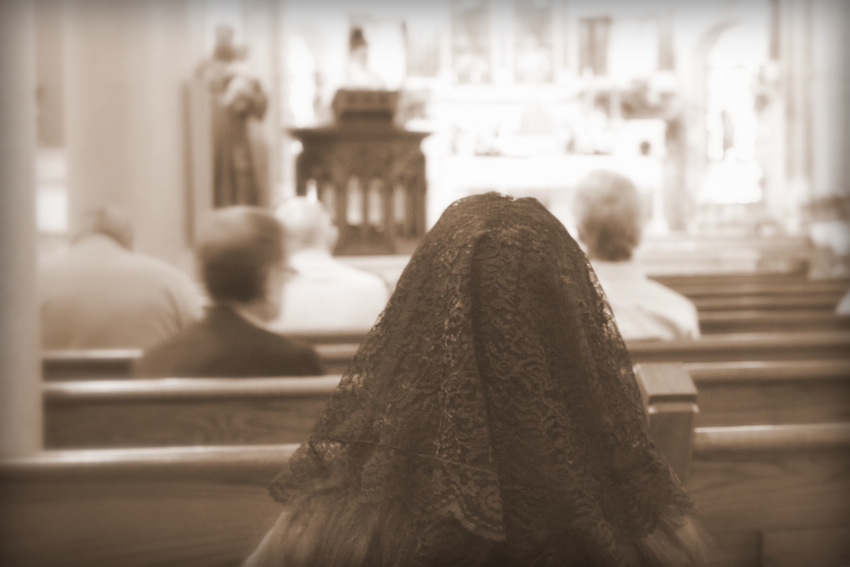
Unveiled Judgement

Veil

A while back a friend posted a story and question on Facebook:

A husband and wife are attending a Tridentine Mass. During the consecration, the wife is tapped on the shoulder. A woman passes her a handwritten note that reads, “Shame on you for not covering your head while attending the sacred Mass” along with a cotton cloth of some sort and a pin.

How do you respond?

Needless to say, a very interesting Facebook discussion ensued…

Read more

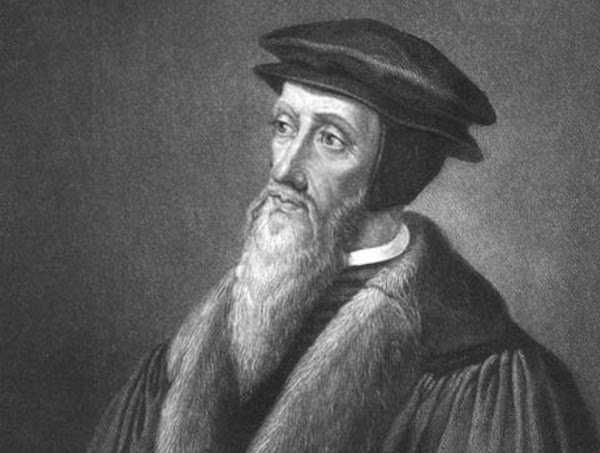
The Reformers and the Fathers

Several months ago I had a lively online exchange with a Protestant from the Reformed tradition. The conversation got really interesting and I had intended to write a series of posts based on our discussion. Alas, before I could do this, his blog was suddenly taken down, meaning that I was unable to use the record of our exchange to save me some work in constructing my posts (yes, I’m rather lazy).

To make sure the same thing doesn’t happen again, today I wanted to do a short post which is effectively a slightly expanded reproduction of my comments on an article over at Reformed Reader, in response to the blog author’s claims concerning Christian history and the Early Church Fathers.

john-calvin

Read more

Word Of The Day: Paroikia

I’m currently preparing the next document we’re going to be reading in the JP2 Group: “The Martyrdom of Polycarp”. Polycarp was a 2nd Century Bishop in Smyrna about whom I’ve written before. I’ve got a lot to do, so I need to get back to my books soon, but before that, I just wanted to share with you something rather cool I’ve just found…

Stranger On The Shore

The account of Polycarp’s martyrdom begins with a covering letter:

“From the Church of God which resides as a stranger at Smyrna, to the Church of God temporarily sojourning in Philomelium, and to all the congregations of the Holy and Catholic Church in every place: may mercy, peace, and love from God the Father and our Lord Jesus Christ be yours in abundance”
– The Martyrdom of Polycarp (Greeting)

The author, a chap called Marcus/Marcion, describes Smyrna’s church as “resid[ing] as a stranger” and Philomelium’s church as “temporarily sojourning” in that city. This concept often comes up in the writings of the Early Church (Clement, Ignatius, …) and draws from an idea we also find expressed in Sacred Scripture:

“Dear friends, I urge you, as foreigners and exiles, …”
– 1 Peter 2:11

The early Christians were keenly aware that they did not permanently belong on this earth, but rather, were citizens of heaven, temporarily away from their homeland. As someone with a blog entitled “Restless Pilgrim”, who has traveled quite a bit and is currently living away from his native country, I find it quite easy to relate to this viewpoint.
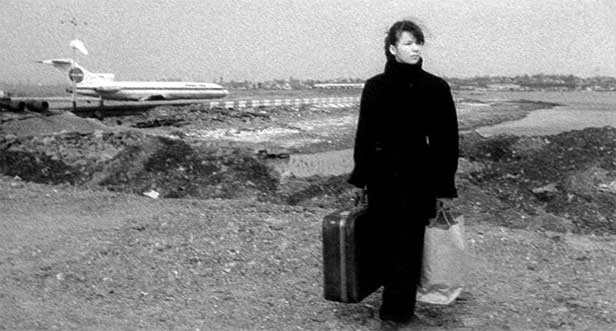
Strangers temporarily staying in a foreign land

Paroikia

So, in the martyrdom’s introduction, the author is simply expressing a deeply ingrained, Early Church mindset – that we reside here temporarily. However, what makes this really cool is that I’ve now seen the Greek. The noun which is used here is  “παροικια”, or, in our alphabet,  “paroikia” (pa-roy-kee-a) and it literally means “a sojourning” or “a  dwelling in a strange land”.

“So what?” I hear you say.

“I’m glad you asked!” I reply.

“Paroikia” is the root of the word which was later used by Christians to describe the local assembly and its location:  “parish”… This etymology tells us a profound spiritual truth. Particularly if you haven’t moved around much, it’s easy to think of your parish as your “home” – we even refer to our “home parish”. To an extent, this is true, but really, our parish, our “paroikia” is only a temporary dwelling, an outpost of Heaven.  One day we will  have to leave and head to our true and everlasting home.

“Christians are not distinguished from the rest of mankind by either country, speech, or customs; the fact is, they nowhere settle in cities of their own… They reside in their respective countries, but only as aliens. They take part in everything as citizens and put up with everything as foreigners. Every foreign land is their home, and every home a foreign land… They spend their days on earth, but hold citizenship in heaven.”
– The Epistle To Diognetus, 2nd Century
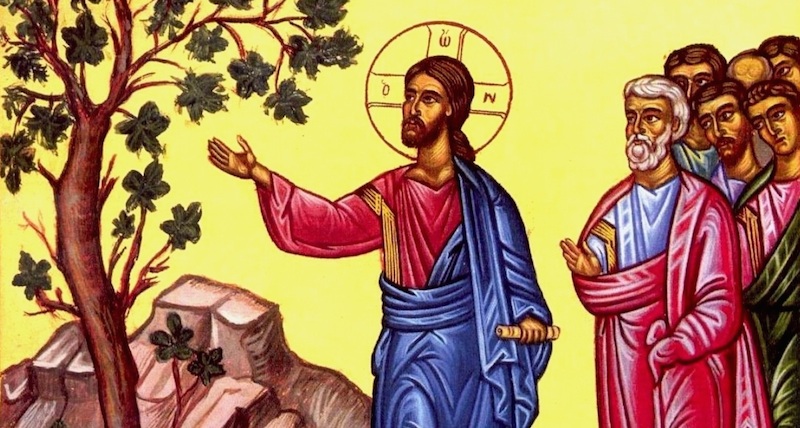
Pray He finds figs

If you’ve ever had the chance to speak about the Christian faith with a Muslim, chances are that you will have heard the following objection raised to the divinity of Jesus (whom they call “Isa”):

“Does God know everything? Of course He does! If so, why did Isa (Jesus) not know when you can get figs? In Mark’s Gospel he goes to a fig tree looking for fruit, but he didn’t even know they weren’t in season! Isa therefore cannot be God”

If you’re a Christian who knows his faith, it’s tempting to laugh at such an objection and ignore it. However, today I would like to respond to this argument. I would like to do this for two reasons. Firstly, Scripture commands us to “be ready to give an answer” (1 Peter 3:15). Secondly, I think that the Biblical text being referred to here is really interesting and one upon which we would do well to meditate.

Fig Tree

Read more

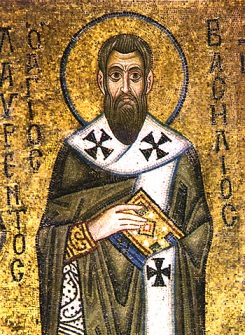
St. Basil’s Priorities

The Gospel this week (Luke 13:25-33) was all about what it means to follow Christ and to have Him as Lord over your life, in first place before anything or anyone.  Doing this, as hard as it is, is also immensely freeing since it results in the things of life being put back into their proper order.

As I was thinking about this, I was reminded of the story of St. Basil.  Now here was a man with his priorities straight!  Basil is known as the father of Oriental monasticism and a forerunner of St. Benedict. Though his ascetic training Basil had very clear ideas about what was truly important in life. This clarity would be needed the day a representative from the Emperor came to visit…

The Emperor Valens was a resolute supporter of the Arians, those who said Jesus was created by and inferior to God the Father. The Emperor Valens had plantedArianism in other provinces of Asia Minor and came to Cappadocia withthe same aim. He sent the Prefect Modestus to Bishop Basil in order to convince him to join the Arians.  Modestus threatened Basil with ruin, exile, torture and even death if he didn’t fall in line.  Basil’s response was priceless:

Read more

No compulsion in religion

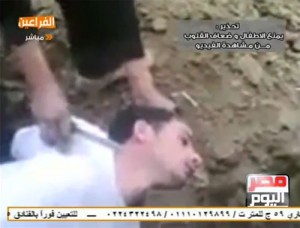
A Tunisian man was recently martyred for converting from Islam to Christianity. As hard as it is to believe, video of his death was broadcast on Egyptian TV:

The footage shows a young man being held down by masked men with a knife to his throat. One man chants a number of Muslim prayers in Arabic, mostly condemning Christianity. The man holding the knife to the Christian convert’s throat begins to cut, slowly severing the head amid cries of “Allahu Akbar” (“god is great”). – GodReports

Allah says: “Let there be no compulsion in religion…”
– The Qu’ran, Surah al-Baqarah: 256

May he rest in peace. Please pray for that man and for all those in the area under persecution.

Then [Jesus] called the crowd to him along with his disciples and said: “Whoever wants to be my disciple must deny themselves and take up their cross and follow me. For whoever wants to save their life will lose it, but whoever loses their life for me and for the gospel will save it. What good is it for someone to gain the whole world, yet forfeit their soul? – Mark 8:34-36

1 … 87 88 89 90 91 … 137