On 11th June 2010, I posted my first article on this blog. As hard as it is to imagine, that was ten years ago…
I began with a free WordPress blog over at thisrestlesspilgrim.wordpress.com, and then I upgraded to get my own domain. I started posting once or twice a week, but after a few months committed to publishing something every day. To date, I have posted a little over 3,600 posts…
Well, today things come to an end. As you may know, in a few months I’ll be getting married and entering a new phase of life. In light of this, while will still from time-to-time still write articles, I’ve decided to stop posting here every day. Since today is my birthday, it seemed like a good day to draw things to a close.
This new chapter in my life will require my full attention…and it’s going to be great 🙂
Today in Atlanta, my friend’s son was baptized and entered into the Body of Christ! However, there’s no rest for the wicked, so here I am writing up today’s text from Qur’an, Surah 35:
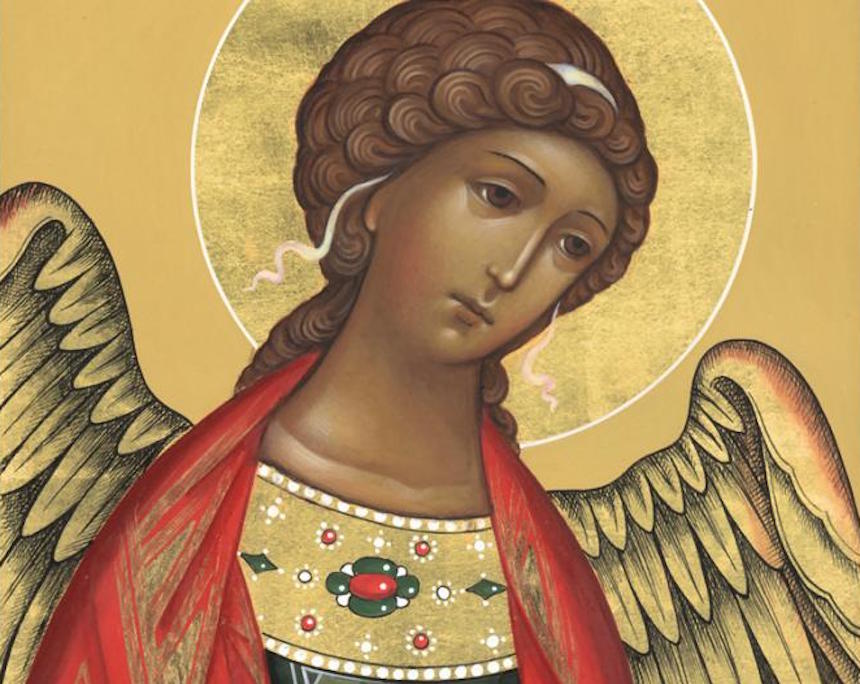
Surah 35 – “The Angels” (Fatir) The chapter begins with a typical set of assertions relating to Allah’s soveignty and the denial of the existence of any other God.
Some interesting things are said about Satan and evil doers. One phrase I really liked was “[Satan] only invites his party to be among the companions of the Blaze”. This is why Satan’s parties are the worst! Ayah 8 affirms that “Allah sends astray whom He wills”, once again suggesting that Muslims believe in double-predestination.
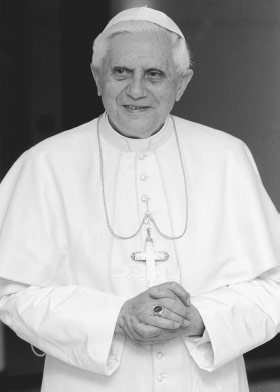
Yesterday, I posted a quotation from Pope John Paul XXIII for this week’s “Wise Words on Wednesday”. When I published it, I was reminded of a conversation I had with Jay about the Papacy.
I have mentioned Jay on this blog before. He was a Protestant with whom I dialogued for a few months several years ago. When speaking about the Pope, here’s what he had to say:
“…[the Pope] has the names of God such as Holy, Father, …Vicar of the Son of God (which means in place of God)” – Jay
So, Jay asserted that Catholics give the Pope “the names of God”.
When I replied to him I responded by working through each those names in turn: “Holy”, “Father” and “Vicar”…
If any of you have watched or listened to debates on atheism, you will have, no doubt, come across William Lane Craig. He is an analytic philosopher, Christian apologist and the driving force behind ReasonableFaith.org.
If you’ve ever heard him debate, you’ll know that he’s very clear, calm and persuasive. In fact, noted Atheist Sam Harris described him as “the one Christian apologist who seems to have put the fear of God into many of my fellow atheists”.
It was therefore with great curiosity that I listened to an interview where he discusses Catholicism:
The interview was rather interesting. Catholics were praised for seeming to read the Bible more these days, and Craig spoke about Catholic liturgy in exalted terms. On the whole he was pretty positive about Catholicism, although he of course still disagrees on certain points, otherwise he wouldn’t still belong to a Protestant denomination.
Objections
In the interview he raises two objections to Catholicism. The first is a classic, Justification. When speaking about this topic, Craig fails to understand how Catholics can speak about the involvement of works in salvation, yet at the same time assert that we are justified by grace.
The other issue raised was another old favourite, the Blessed Virgin. The interviewer, Kevin Harris, tripped up early on, saying “There was a move a while back to really elevate Mary, to almost equality with Christ, co-redemtrix. I don’t think that ever got off the ground in the Catholic Church, but there was a move there…”. This is misleading on two points. Firstly, although it’s not dogma, you’ll still find that title used a lot in reference to Mary, even although it isn’t as established as other titles, such as Mother Of God. Secondly, co-redemtrix does not indicate equality with Christ, simply that Mary has a role in redemption, much in the same way a pastor who leads a person to Christ participates in that person’s redemption.
On both of these issues, Craig seems to find a gap between official Church teaching and the belief of the Catholic faithful, some of which I find understandable.
I’d invite you to have a listen. What do you think of the interview?
It was an extremely nostalgic experience for me, since as a child I watched this show countless times at the theatre, as well as performing in it in a summer school production. Naturally, in that production I played the role of Pharaoh, the show’s coolest character by far. I even had my own backup dancers and everything! 🙂
In preparation for the trip to see the show, a few days before in Bible Study, we read through the Biblical text of the story found at the end of Genesis, beginning around chapter thirty-seven and continuing for about ten chapters.
Today we continue through Chapter 2 of Philippians:
Therefore, my beloved, as you have always obeyed, so now, not only as in my presence but much more in my absence, work out your own salvation with fear and trembling; for God is at work in you, both to will and to work for his good pleasure.
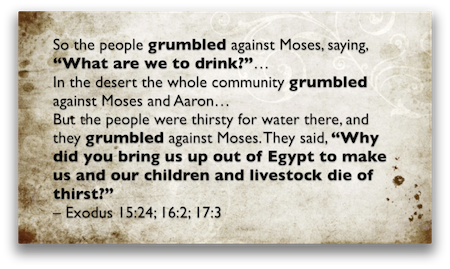
Do all things without grumbling or questioning, that you may be blameless and innocent, children of God without blemish in the midst of a crooked and perverse generation, among whom you shine as lights in the world, holding fast the word of life, so that in the day of Christ I may be proud that I did not run in vain or labor in vain. Even if I am to be poured as a libation upon the sacrificial offering of your faith, I am glad and rejoice with you all. Likewise you also should be glad and rejoice with me. – Philippians 2:12-18
Here’s what I had to say:
For an audio-only version of this video, please click here.


 Yesterday, I posted a
  If any of you have watched or listened to debates on atheism, you will have, no doubt, come across William Lane Craig. He is an analytic philosopher, Christian apologist and the driving force behind

 Today we continue through Chapter 2 of Philippians:
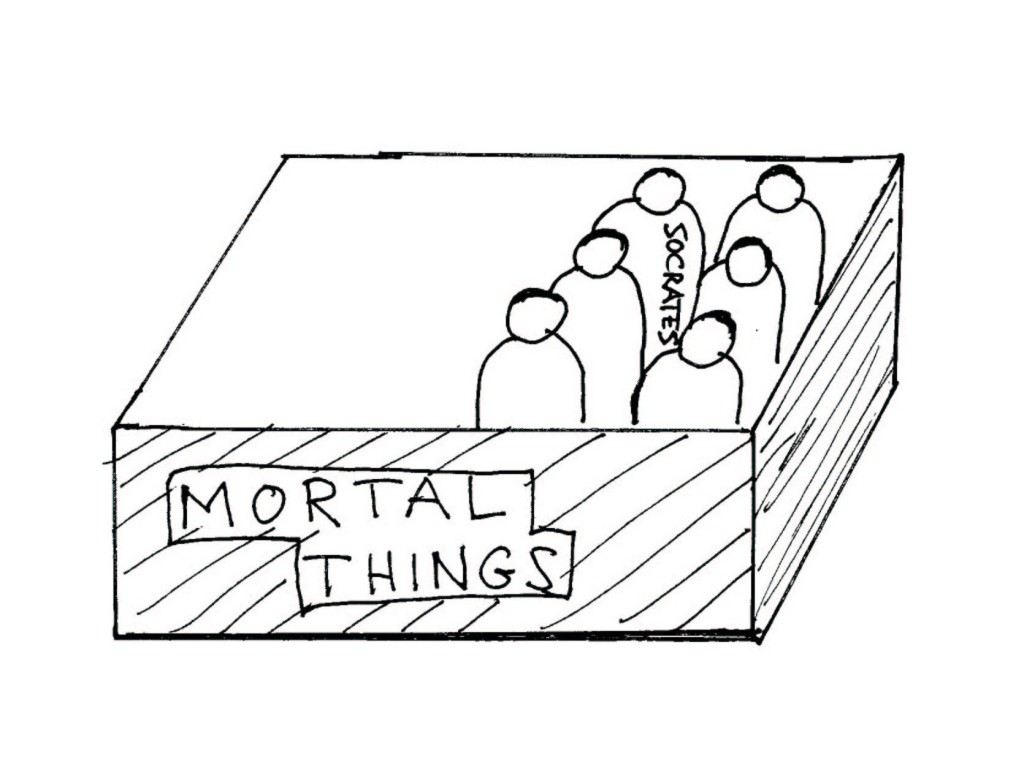 I was clearing out some old files on my harddrive today and came across I snippet I copied from somewhere on the Internet: