"Oh that today you would listen to his voice…"

An extract from my travel journal while in England:

23rd March 2011 – Reading, England

My tour of the UK begins today. This morning I gathered my things and went to the train station. After collecting all of the tickets for my upcoming journeys (the total cost of which  should really entitle me to my own private train), I set off for Leamington Spa to see a sign-language society friend from University.

While on the train I prayed Morning Prayer. Although I often find travelling very tedious, there is also something about it which I find draws my spirit to God. As the English countryside sped past my window, I prayed the opening Psalm of Morning Prayer:

“…Oh that today you would listen to His voice! Harden not your hearts!” – Psalm 95

 I don’t think it was by chance that the Church chose *this* psalm to be the opening prayer at the beginning of each new day. Before we face the world, with its troubles, trials and temptations, we need a reminder. We need to be reminded to attend to the Lord’s voice, both before we begin the day, and also to listen for it attentively, hidden amongst the noise and clamour of a busy world.  A heart, if it is to remain beating and life-giving, must not become stoney or calloused by time spent with the world.

As I begin this tour of England to see friends and family, I realise that I’m walking into a lot of situations where, quite frankly, I’m way out of my depth. What am I to say? What am I to do?

“Oh that today you would listen to His voice, harden not your heart” – Psalm 95

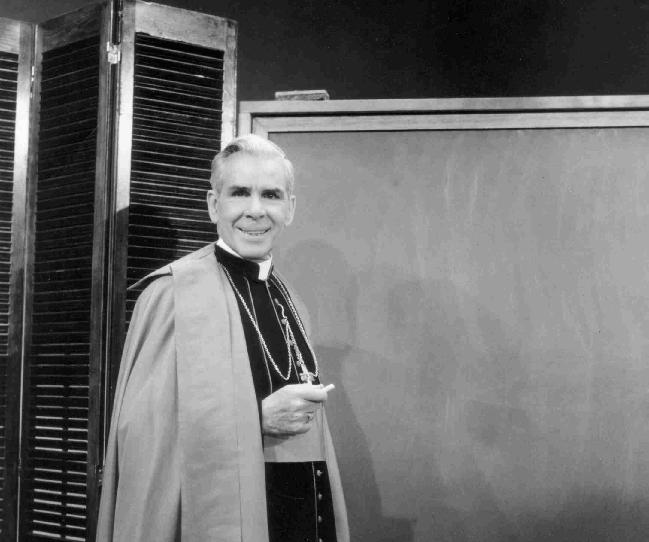
Favourite People: Fulton Sheen

When musicians, artists and writers are interviewed, they are often asked about their influences.

Now, although I’m no Bono, something I’ve been meaning to do ever since I started this blog is to share with you some of my own influences.  These are the people who have made a profound impact upon me and substantially contributed to the person I am today.

In this post I would like to briefly talk about someone who has had an impact upon me and my faith fairly recently. In fact, up until nine months ago, I had never even heard of him. The person I’m talking about here is Archbishop Fulton Sheen.

Read more

It’s all Greek to me…

Okay, I know this title is an incredibly obvious pun (and far below my usual, high standards), but I thought I would make it now before anyone else did. 🙂
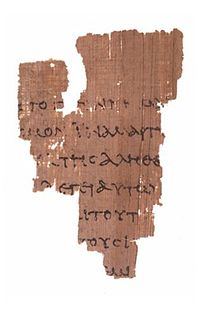
As most of my friends know, I’ve been wanting to study New Testament Greek for some time. However, this has been easier said than done. For a start, my geographical wanderings in recent years have made committing to a course of study difficult. Also, finding somewhere that teaches New Testament Greek is not such a simple task as one might imagine and finding one which is cost-effective only adds to the fun…

When I began my “Introduction to the New Testament” course about a month ago at the Pastoral Center I asked the instructor for suggestions as to how I could bring this desire to learn Biblical Greek to fruition. He suggested that I:

1. Contact Bethel Seminary
2. Learn using a self-study course

Read more

Meditation From Cardinal Newman

The other night I had a meeting with some of the Young Adult leaders in the Diocese. We shared dinner together and were offered a reflection by a Miles Christi priest.


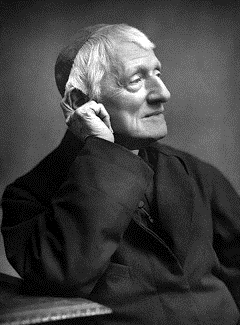
The evening was opened with a meditation by the recently beatified Cardinal John Henry Newman. Newman is someone I’ve like for some time. I haven’t read any of his works in their entirety (yet), but I’ve always enjoyed the excerpts I’ve come across.

One thing I’ve always admired about Newman was his single-minded determination to follow the truth where ever it lead him and to serve Christ whatever the cost…

God has created me to do Him some definite service;
He has committed some work to me which He has not committed to another.
I have my mission, I may never know it in this life, but I shall be told it in the next.

Read more

Who’s your daddy? St. Polycarp

Today is the feast day of St. Polycarp, bishop of Smyrna. Contrary to the insistence of some of my friends, “Polycarp” does not mean “much fish” 😉 Rather, his name means “much fruit”, an appropriate appellation for a man whose life was full of the fruit of one whose life was devoted to Jesus Christ:

“I am the vine; you are the branches. If you remain in me and I in you, you will bear much fruit; apart from me you can do nothing”

– John 15:5

Polycarp, perhaps more so than any other Apostolic Father, provides us with a bridge between the Apostles and the Early Church. When Polycarp was young he sat at the feet of St. John and when Polycarp was old, another young man, St. Irenaeus sat at his feet and would later become one of the great defenders of the faith against the Gnostics.

Polycarp has a link to another Early Church Father. In fact, I have mentioned St. Polycarp on this blog before, when I wrote about the letter of St. Ignatius of Antioch to the Smyrnaeans and his letter to the bishop of that city, Polycarp. In his letter, Ignatius exhorts Polycarp:

“The times call for you, as pilots do for the winds, and as one tossed with tempest seeks for the haven, so that both you and those under your care may attain to God. Be sober as God’s athlete: the prize set before you is immortality and eternal life”

– Ignatius to Polycarp

The turbulent times did indeed call for a great bishop and they did indeed find one in Polycarp…
Read more

Nostra Aetate

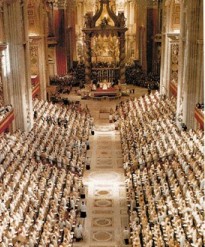
In the concluding post for the “Introduction to Islam” series I quoted the Second Vatican Council document “Nostra Aetate” since it provides Church teaching regarding non-Christian religions in general, and Islam in particular.

In the JP2 Group we will be working through this Council document, once we have concluded our current series.

In preparation for this study I have put together a formatted PDF of this document. I also recorded the text onto MP3, which I thought I would also post here:

Nostra Aetate (Download)

Stuff I’ve Had To Learn: Sun Beats Wind

I’ve been thinking a lot about Aesop’s Fables recently, and one fable in particular which was read to me as a child. I remember the pictures in the book and the story vividly:

“The Wind and the Sun were disputing which was the stronger. Suddenly they saw a traveller coming down the road, and the Sun said:

‘I see a way to decide our dispute. Whichever of us can cause that traveller to take off his cloak shall be regarded as the stronger. You begin.’

So the Sun retired behind a cloud, and the Wind began to blow as hard as it could upon the traveller. But the harder he blew the more closely did the traveller wrap his cloak round him, till at last, the Wind had to give up.

Then the Sun came out and shone in all his glory upon the traveller, who soon found it too hot to walk with his cloak on and took it off.”

I think there’s something intrinsic to human nature which makes us believe that the best way of bringing someone around to our way of thinking is through confrontation and force. Even though this rarely works, we persist in using this approach, probably because it looks like the most direct approach and therefore the most efficient means of achieving a favourable outcome.

However, as this fable teaches, gentleness, kindness and persuasion are often more effective tools than direct force. This is because when we try and force someone to do our will, that person will resist all the more. When we attack, that person will automatically get defensive and when we try to wrestle a belief away from someone, that person will usually only cling to it all the more.

The difficulty is that being “The Sun”, rather than the “The Wind”, is hard… Patience is required because results are often not immediately visible. When we feel someone has an incorrect opinion, our pride all too often gets in the way and we become harsh as we try to “fix” this person.  Finally, treating someone with gentleness is often costly, particularly when we feel we have been wronged or treated badly. Yet, if we are seeking a beneficial and peaceful end, gentleness is what is required:

“A gentle answer turns away wrath, but a harsh word stirs up anger…The soothing tongue is a tree of life, but a perverse tongue crushes the spirit…” – Proverbs 15:1, 4

1 128 129 130 131 132 137