Word Of The Day: Paroikia

I’m currently preparing the next document we’re going to be reading in the JP2 Group: “The Martyrdom of Polycarp”. Polycarp was a 2nd Century Bishop in Smyrna about whom I’ve written before. I’ve got a lot to do, so I need to get back to my books soon, but before that, I just wanted to share with you something rather cool I’ve just found…

Stranger On The Shore

The account of Polycarp’s martyrdom begins with a covering letter:

“From the Church of God which resides as a stranger at Smyrna, to the Church of God temporarily sojourning in Philomelium, and to all the congregations of the Holy and Catholic Church in every place: may mercy, peace, and love from God the Father and our Lord Jesus Christ be yours in abundance”
– The Martyrdom of Polycarp (Greeting)

The author, a chap called Marcus/Marcion, describes Smyrna’s church as “resid[ing] as a stranger” and Philomelium’s church as “temporarily sojourning” in that city. This concept often comes up in the writings of the Early Church (Clement, Ignatius, …) and draws from an idea we also find expressed in Sacred Scripture:

“Dear friends, I urge you, as foreigners and exiles, …”
– 1 Peter 2:11

The early Christians were keenly aware that they did not permanently belong on this earth, but rather, were citizens of heaven, temporarily away from their homeland. As someone with a blog entitled “Restless Pilgrim”, who has traveled quite a bit and is currently living away from his native country, I find it quite easy to relate to this viewpoint.
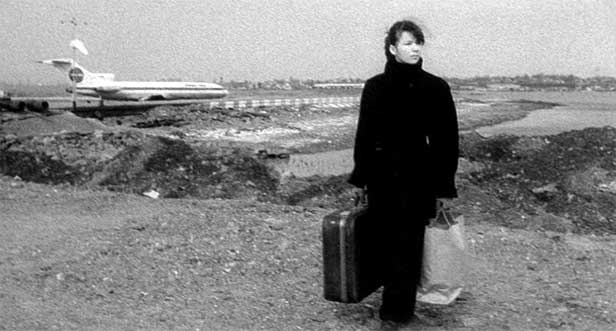
Strangers temporarily staying in a foreign land

Paroikia

So, in the martyrdom’s introduction, the author is simply expressing a deeply ingrained, Early Church mindset – that we reside here temporarily. However, what makes this really cool is that I’ve now seen the Greek. The noun which is used here is  “παροικια”, or, in our alphabet,  “paroikia” (pa-roy-kee-a) and it literally means “a sojourning” or “a  dwelling in a strange land”.

“So what?” I hear you say.

“I’m glad you asked!” I reply.

“Paroikia” is the root of the word which was later used by Christians to describe the local assembly and its location:  “parish”… This etymology tells us a profound spiritual truth. Particularly if you haven’t moved around much, it’s easy to think of your parish as your “home” – we even refer to our “home parish”. To an extent, this is true, but really, our parish, our “paroikia” is only a temporary dwelling, an outpost of Heaven.  One day we will  have to leave and head to our true and everlasting home.

“Christians are not distinguished from the rest of mankind by either country, speech, or customs; the fact is, they nowhere settle in cities of their own… They reside in their respective countries, but only as aliens. They take part in everything as citizens and put up with everything as foreigners. Every foreign land is their home, and every home a foreign land… They spend their days on earth, but hold citizenship in heaven.”
– The Epistle To Diognetus, 2nd Century
The excuses we make

I’m starting to fall significantly behind with my blog. I have a large number of posts in draft, but very few have recently been published.

Anything Worth Doing…

G. K. Chesterton said “Anything worth doing, is worth doing badly”. I think the point he was trying to make is that if something is important, it’s worth giving it a go, rather than endlessly procrastinating. There is a temptation to leave a task until some undefined, almost mythical, point in the future when you finally feel qualified to attempt it.  “Perfect is the enemy of good” might be another way of expressing the same sort of idea. Given my personality, there’s a real danger that all the entries currently sitting in my “drafts” folder will remain there, forever to be tweaked and tinkered but forever found unsatisfactory and remaining unpublished.

I’ve therefore resolved to be a bit braver and to publish more of my thoughts on this blog, even if they’re not formed to my level of satisfaction.

Read more

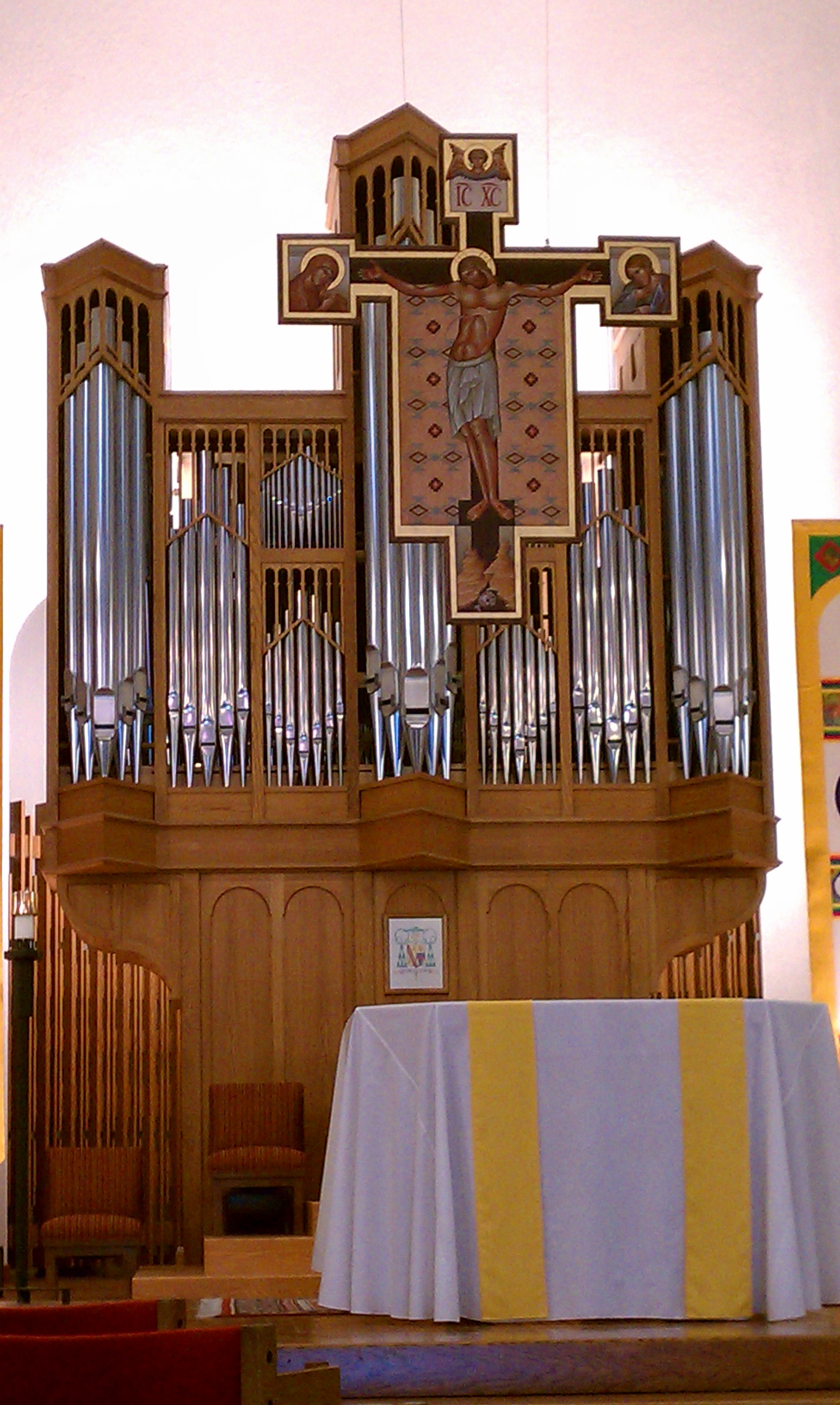
IC XC

This past weekend I was visiting a friend in Washington State and, at the church we visited, saw the following cross hanging above the altar:

Cross at St. Paul’s Cathedral, Yakima

…and this reminded me of something else which I came to understand through studying Greek that I had meant to share…

Read more

Covered By The Cross

I recently told this story to a friend of mine.  As I was driving home afterwards, I thought that it might be worth sharing here too…

When I was living back in England, my parish had a Hospital Visiting Ministry with which I was involved, run by the Society of St. Vincent de Paul. Every Saturday we would hand out free newspapers, identify the patients who would like to receive Holy Communion the following day and spend some time speaking with them. This would be done by two different people every week, each covering half of the hospital.

Out of all the wards we visited, the one I hated visiting the most was the ASU, where stroke victims were treated. I think I disliked visiting this ward more than any other because it was often a very frustrating experience.

I’ve always placed a very high premium on communication, and those in the ASU usually had difficulty with speaking, a common consequence of suffering a stroke. It frustrated them not being able to make themselves easily and fully understood and it frustrated me in not always being able to understand them.

Read more

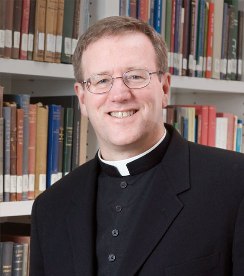
Favourite People: Fr. Robert Barron

In a previous post I spoke about one of my favourite people, Archbishop Fulton Sheen. I spoke about how I came to discover him, his sermons and writings, as well as try and describe something of the impact he had upon me.

I think it is appropriate therefore, that in this next entry, I’ve chosen to talk about someone whom I’ve often heard referred to by other people as “The Next Fulton Sheen”.

This person is Fr. Robert Barron.

If Sheen Had YouTube…

Fr. Robert is a priest who lives near Chicago in the United States. I first came across him on YouTube while I was still living in England.  He is a published author (I finished his book “The Eucharist” this week), but he has also embraced the new media and is using it to extend the reach of his ministry. It is in this sense that he is like Fulton Sheen – he’s a superb communicator and uses all means available to proclaim the faith, although in terms of style he and Archbishop Sheen are very different.

Read more

Byzantine Back and Forth

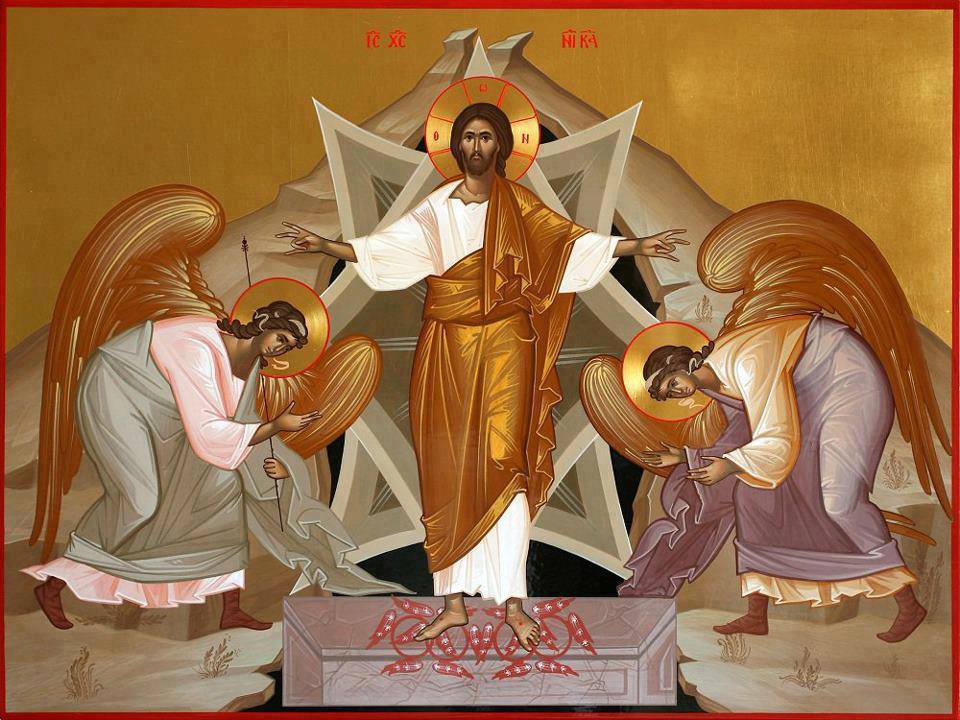
This week is Holy Week and as the LifeTeen band isn’t playing this weekend, it means I can spend Easter at my favourite church, an Eastern Rite (Byzantine) Catholic parish near to where I live. Alleluia!…well, almost 😉

Christ_is_risen_21

One of the things I love about the Byzantine Rite is the standard set of greetings and responses which take place during the year. For example, when I first attended the parish I got there very early on in the morning and heard the priest greet a parishioner with the exclamation: “Glory to Jesus Christ!”, to which the parishioner responded “Glory forever!”. This seems to me like a wonderful way to begin any conversation! 🙂

These responses change throughout the liturgical year.  At “Nativity” (Christmas) it becomes:

“Christ is born!”
“Glorify Him!”

We will shortly be entering the “Pascha” (Easter) season when it will change to:

“Christ is Risen!”
“Indeed He is Risen!”

And at certain blessings, such as at the end of Great Vespers or at the Kiss of Peace:

“Christ is among us!”
“He is and will be!”

 These all seem wonderful ways of proclaiming the faith! Glory to Jesus Christ…

Symbolism: What is the significance of "IHS"?

As I mentioned a while ago, I’ve started teaching myself New Testament Greek.  This endeavor has already started bearing some rather fruity tidbits. In the first few lessons I learnt the Greek alphabet and, even with this basic information, certain things which had previously mystified me, started to make sense. Today I would like to share with you one of my first “aaahhhh…” moments 🙂

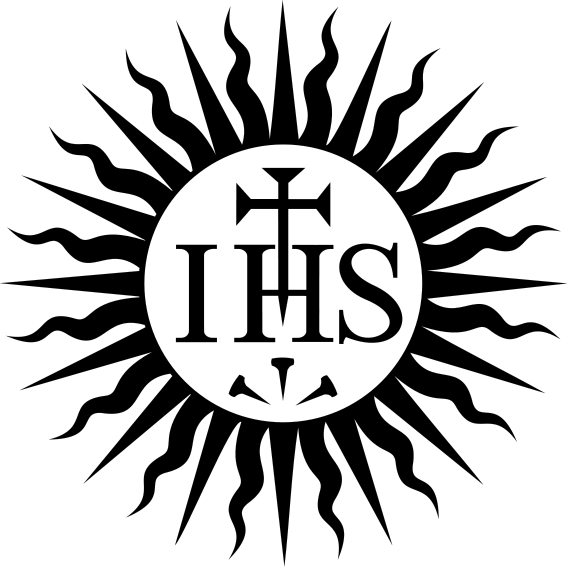
For those Catholics reading this, it’s time for a pop quiz!  Often in churches, you will see the letters “IHS” (it’s even used on the Reformation Wall in Geneva). You see these letters on books, altars, baptismal fonts, communion hosts etc, but what does it mean?

Read more
1 127 128 129 130 131 137