One Holy, Catholic, Apostolic & Intergalactic Church

Happy St. George’s Day! Today I’m leaving Blighty and heading back to the United States with my shiny new visa.  Since I’m going to be on a plane for most of the day I thought today’s post should be something related to the theme of “flight”.

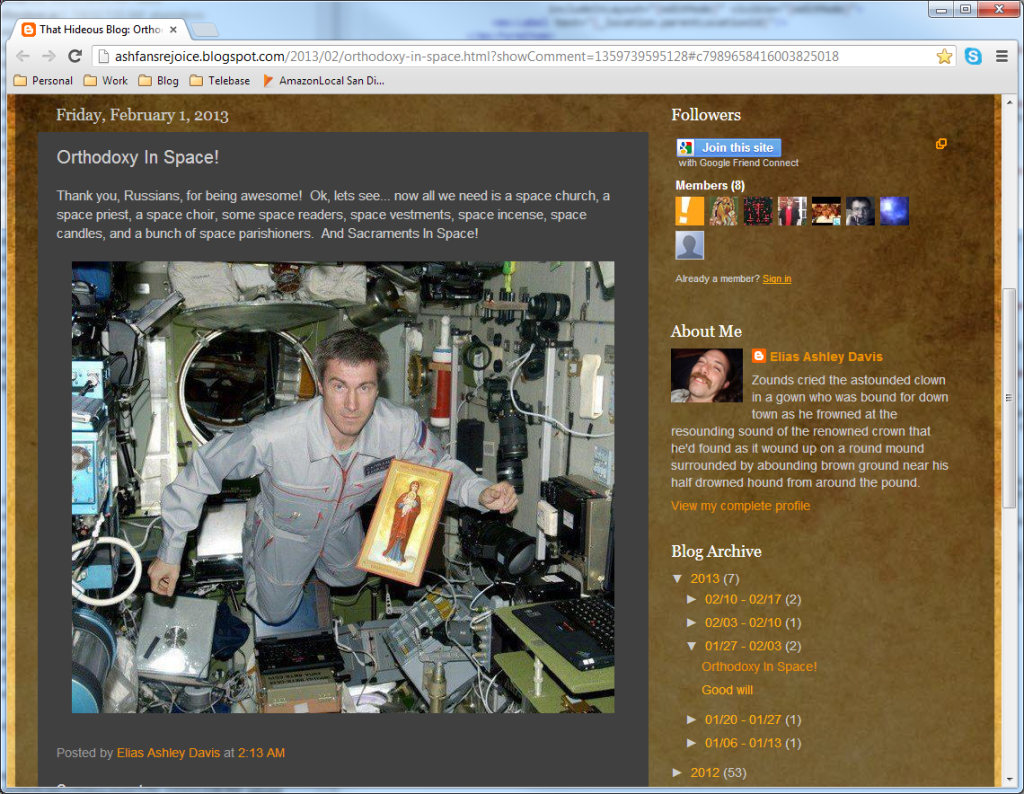
Before Lent, Elias over at “That Hideous Blog” posted a picture of a Russian Astronaut with an icon of the Theotokos (the Virgin Mary):

Orthodoxy in space

This reminded me of an amazing podcast episode by Jimmy Akin from Catholic Answers. In this podcast episdoe he talks about how Catholicism might respond to space colonization. It makes me so happy that someone else is out there thinking about this stuff! 😀

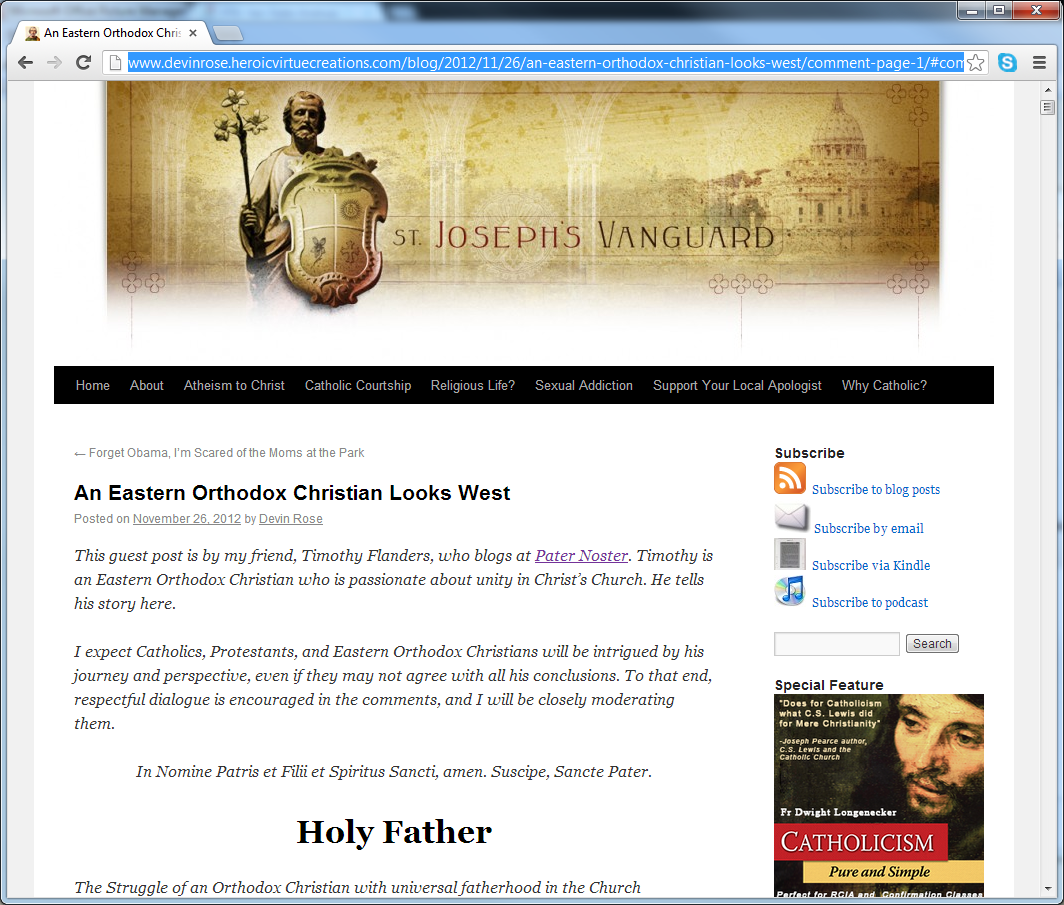
An Eastern Orthodox Christian Looks West

Over lunch I finished reading An Eastern Orthodox Christian Looks West, an article posted on Devin Rose’s blog written by Eastern Orthodox Christian Timothy Flanders. In his extensive article he discusses his journey from Protestantism to Eastern Orthodoxy and then goes on to discuss his investigation of Catholicism.

Eastern Orthodox Christian Looks West

As a Catholic with a great attraction to the Eastern Christian heritage, I found it a really interesting read and I’m planning on reading it again tonight in an attempt to fully digest its content.

Devin is hoping for some really good Comment Box discussions so I decided to publish a link here in an effort to get more people to read it. I know that there are a good number of people who read this blog who come from different religious backgrounds who will have an interesting perspective on this article, particularly my Eastern Catholic friends.

Epicurians and Stoics

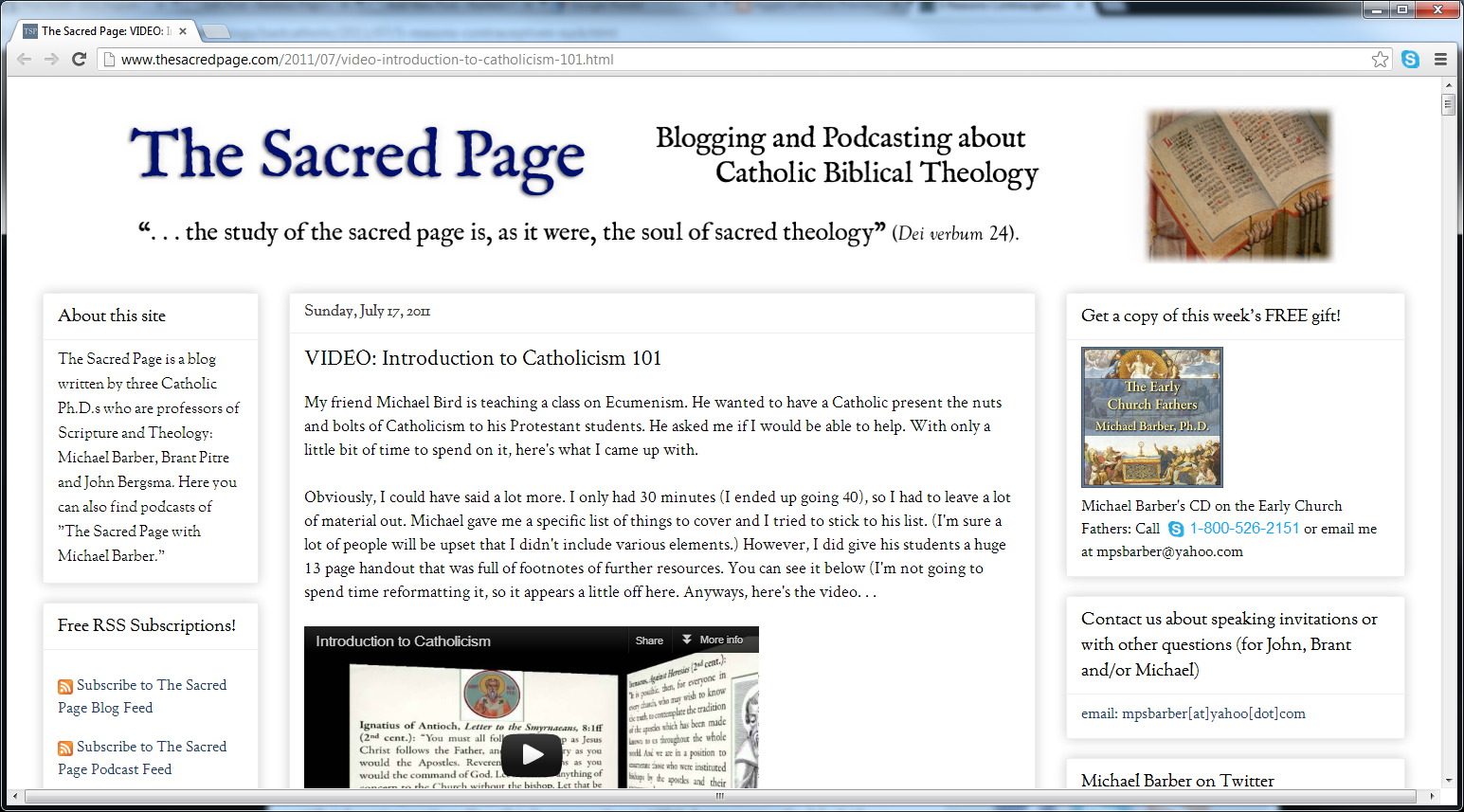
Yesterday, during our Acts of the Apostles Bible study, we read the section in Acts 17 where St. Luke talks about St. Paul’s interaction with some philosophers in Athens:

“While Paul was waiting for them in Athens, he was greatly distressed to see that the city was full of idols. So he reasoned in the synagogue with both Jews and God-fearing Greeks, as well as in the marketplace day by day with those who happened to be there. A group of Epicurean and Stoic philosophers began to debate with him” – Acts 17:16-18

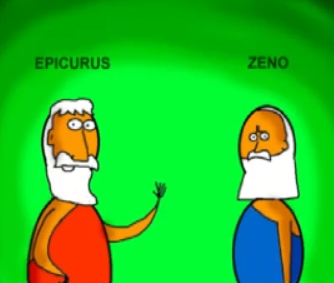
Who were these “Epicurean and Stoic philosophers”? What did they believe? All will be answered in the video below:

So, the Epicureans were founded by Epicurus. They believed that things are “good” and “bad” based upon whether they give pleasure or pain. The Epicureans were negative hedonists, attempting to eliminate desires since Epicurus regarded it as a kind of pain. His followers didn’t fear death because once you’re dead no harm can come to you.

Zeno was the founder of the Stoics. They determined “good” and “bad” based upon whether something was seen as virtue or vice. Pleasure was seen as a vice and was therefore to be avoided. Unrealistic expectations were seen as the source of grief in life.

Sunday Lectionary: Arise and shine!

4th Sunday of Lent, 18th March 2012
In our First Reading last week we read about the giving of the Ten Commandments and this week we continue our Lenten tour through the high points of Old Testament Salvation History.

Our First Reading begins on a rather somber note. The Kingdom of Judah had abandoned God’s Law and, as a result, the Jerusalem Temple was destroyed and the people led into captivity. All of God’s promises to King David seemed to be lost! We hear the people’s song of lament in today’s Psalm.

However, because of God’s mercy and through His divine providence, the pagan King Cyrus decides to grant the Jews their freedom, releasing them from bondage.

In the light of the New Testament, we know that God’s promises to King David were not forgotten, but that they all found their fulfillment in Jesus of Nazareth, both Son of David and Son of God! The freedom granted to God’s people by King Cyrus was simply a foreshadowing of Jesus’ work of salvation. It is through the King of Kings that we are released from the bondage of death and brought to new life.

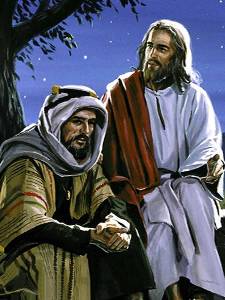
In our Second Reading, St. Paul tells use that because of the great love he had for us, even when we were dead in our transgressions, [He] brought us to life with Christ”.  These words of St. Paul are themselves only an echo of the Master’s teaching. In this week’s Gospel Reading, during His discourse with Nicodemus, Jesus reveals the heart of the Father: For God so loved the world that he gave his only Son, so that everyone who believes in him might not perish but might have eternal life.

Full of confidence, therefore, in God’s mercy and love, let us approach this week’s Eucharistic liturgy with the joy of those who have been granted new life 🙂

Read more
1 4 5 6 7