Rules for Dads…
"We are travellers…not yet in our native land" – St. Augustine
For the past few days (Day 1 | Day 2 | Day 3) we’ve been looking at the case for infant baptism. Today I would like to conclude the series.
So far in our study, we’ve looked at the implicit inclusion of infants in household baptism. We’ve examined how baptism actually affects the soul of the one being baptized. Yesterday, we also briefly looked at how baptism parallels, and is the fulfillment of, the circumcision of the Old Covenant.
Up until this point, I have tried to address the question of infant Baptism as though I were a Protestant, restricting myself to the testimony of Scripture. However, as a Catholic, I do not hold to the Bible alone, but also to Sacred Tradition, the oral teaching of the Church passed down through the generations.
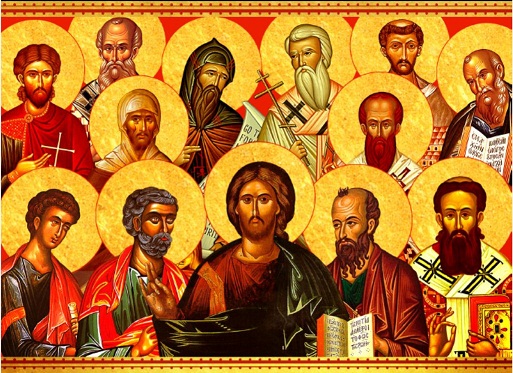
Even for a Protestant, who doesn’t hold to belief in Sacred Tradition, the witness of the Early Church in the centuries following the Apostles is a significant, albeit less important, consideration. So, today I would like to ask a simple question: Did the Early Church baptize babies?
Over the last two days I have been looking at infant baptism. On Day 1 I looked at the evidence of infant Baptism in the New Testament. On Day 2 I demonstrated how the earliest Christians believed that Baptism actually does something to the soul of the one being baptized, thereby making it something that parents would naturally desire for their children.
Today’s entry will be a short post. All I would like to do is very briefly show the relationship between the circumcision of the Old Covenant and the Baptism of the New Covenant…
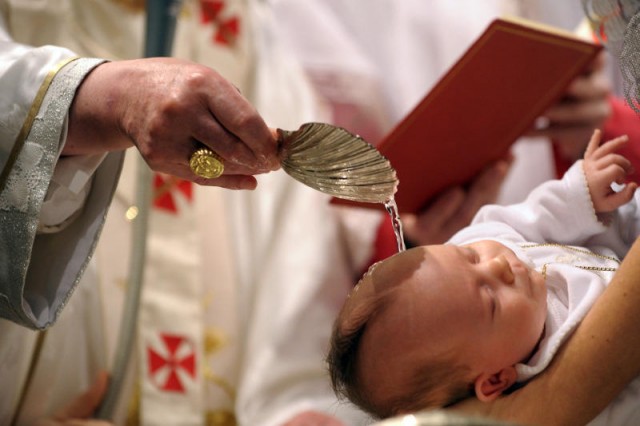
As you may have noticed, I’m doing a bunch of posts at the moment about infant baptism. One issue I’m not going to address in this series is the question of the mode of baptism: immersion, pouring etc.
Fortunately, Doug Beaumont over at Soul Device has just released a post on that very subject:
Yesterday I began to look at the question of infant baptism. We saw how, although we don’t have explicit references to infant baptism in the New Testament, that there are passages which strongly suggest that infants and children were baptized. Today I would like to continue looking at this issue, but from a slightly different angle…
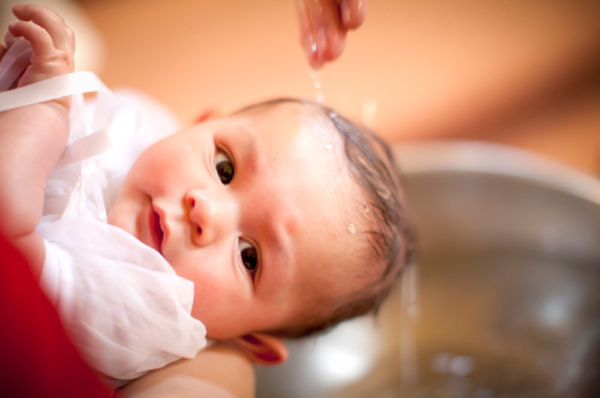
Over the last six months, many of my non-Catholic Christian friends have given birth to their first child. This was brought about, presumably, through the combination of an extremely poor TV lineup last summer and an abundance of free time on their part.
With this wonderful addition to their family, several of these new parents are now facing a dilemma: should they baptize their newborn child?
You see, in many cases, one spouse comes from a denomination where infant baptism isn’t performed (Baptists, Seventh Day Adventists, non-denominationals) and the other has come from a denomination where it is standard practice (Catholic, Orthodox, Lutheran, Anglican, Methodist). The parents typically make the choice to either baptize their child or to have some kind of dedication ceremony.
This is an important issue to me. I was once a member of Protestant congregation where they did infant baptisms, but they also carried out child dedications, depending upon the wishes of the parents. This inconsistency was an important catalyst in my study of the ancient Christian faith and my eventual reversion to the Catholic Church.
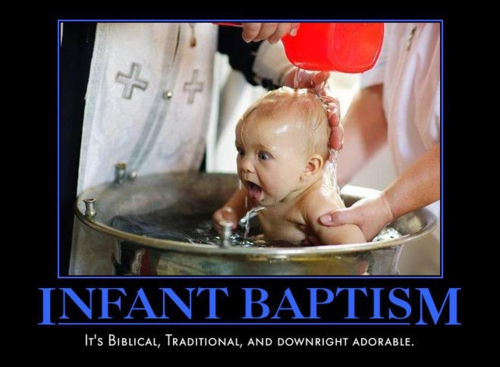
So, in the next few posts I would like to present the basic case in favour of infant baptism…
I’m going to be in DC for the March For Life (22nd January) with a posse of people from San Diego. Are you ready?