Late have I loved thee

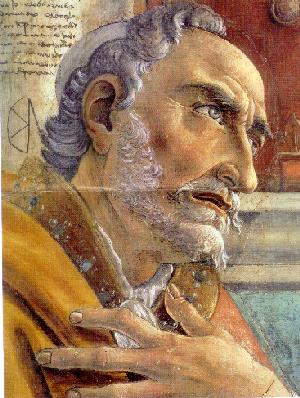
Late have I loved you, O Beauty ever ancient, ever new, late have I loved you!

You were within me, but I was outside, and it was there that I searched for you.

In my unloveliness I plunged into the lovely things which you created.

You were with me, but I was not with you.

Created things kept me from you; yet if they had not been in you they would have not been at all.

You called, you shouted, and you broke through my deafness.

You flashed, you shone, and you dispelled my blindness.

You breathed your fragrance on me; I drew in breath and now I pant for you.

I have tasted you, now I hunger and thirst for more.

You touched me, and I burned for your peace. – St. Augustine

The Shape of the New Testament

One of the wonderful treasures of the Catholic faith in the Roman Rite is the Lectionary.

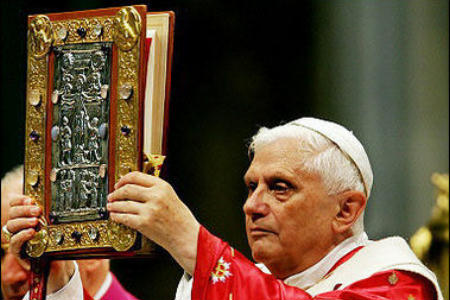
Pope Benedict and the Lectionary

Every Sunday the congregation hears large chunks of Scripture selected from different parts of the Bible, from both the Old and New Testaments:

1. Old Testament passage
2. Psalm
3. New Testament Epistle
4. Gospel Reading

Making Connections

The Readings selected for each week are usually united by a common theme. This is especially true for the Old Testament passage and the Gospel Reading. The brilliance of this arrangement is that it shows the unity between the Old and New Testaments. As the great Early Church Father, St. Augustine, wrote:

“The New Testament is hidden in the Old and the Old is revealed in the New”
– St. Augustine of Hippo, “Quaestiones in Heptateuchum” 2.73

However, as good as this arrangement is, I have found that it can lead to certain difficulties. In particular, Catholics can sometimes have difficulties understanding how the Readings they hear on Sunday relate to the respective books of Scripture from which they are drawn, and also how those books fit into the the New Testament as a whole.

What can be done to address this problem? Well, when leading small Bible study groups, I always begin by asking those present to walk me through their New Testament’s “Table of Contents” page. I do this because, as with most things, once one comprehends the overall structure of something, the contents becomes less intimidating and more memorable because one already understands the framework and context in which that content has been placed.

Read more

Sunday Lectionary: Holy Trinity Sunday

Fairly terse notes today, I’m afraid…

The Solemnity of the Most Holy Trinity: June 3, 2012

Last week we celebrated the Feast of Pentecost and this week we have another great celebration: Trinity Sunday. The Holy Trinity is one of the central truths of the Christian faith, declaring that there is only one God and in that Godhead there are three persons: Father, Son and Spirit.
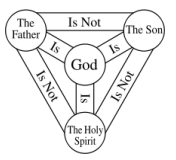
The truth of the Trinity was something which was revealed by Christ, although there are hints found in the Old Testament. For example, the use of the first person, plural pronouns found in the Creation account:

Then God said, “Let us make mankind in our image, in our likeness, so that they may rule over the fish in the sea and the birds in the sky, over the livestock and all the wild animals, and over all the creatures that move along the ground.” So God created mankind in his own image, in the image of God he created them; male and female he created them. – Genesis 1:26–27

Some Fathers also saw a hint of the Trinity in the call of the angels before God’s throne:

 I saw the Lord, high and exalted, seated on a throne; and the train of his robefilled the temple. Above him were seraphim, each with six wings: With two wings they covered their faces, with two they covered their feet, and with two they were flying. And they were calling to one another: “Holy, holy, holy is the Lord Almighty; the whole earth is full of his glory.” – Isaiah 6:3

Although revealed in the New Testament, the word “Trinity” is not found in Sacred Scripture. However, the word “Trinity” does describe the truth which is found in Scripture. The word is first used to describe God in the third century by Tertullian (although the word first makes its appearance in Christian theology in 170 AD through the writings of Theophilus of Antioch).

At every Mass we confess the truth of the Trinity in the Nicene Creed when we confess that Christ is “God of God, Light of Light, very God of very God, begotten, not made, being of one substance (homoousios) with the Father”.

This Trinity is one God from Whom, through Whom, and in Whom all things exist – St. Augustine 

Read more
Sunday Lectionary: Cleaning Out The House

3rd Sunday Of Lent, 11th March 2012

The First Reading and the Gospel this week recall events of epic proportion.

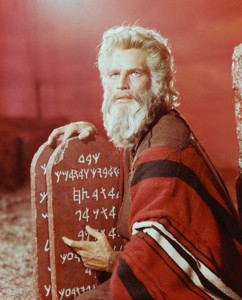
The First Reading takes place three months after the Israelite exodus from Egypt. The Children of Israel have journeyed through the desert and found themselves at the foot of Mount Sinai. The stage is set for arguably one of the most important events of the Old Testament: the giving the Ten Commandments through Charlton Heston Moses.

The Gospel Reading contains no less drama! We read the account from John’s Gospel of the “cleansing of the Temple”. The Lord drives out the money lenders and animal sellers and, when challenged by the authorities, He speaks outlandishly about the destruction of the Temple and its rebuilding in three days…

Moses guarded the nation of Israel and, through God’s grace and guidance, acted as Israel’s leader, law-giver, mediator and intercessor. In Christ all these roles find their fulfillment and perfection.

The Temple has been cleansed. A new dawn is at hand…

Read more

1 2 3 4 5