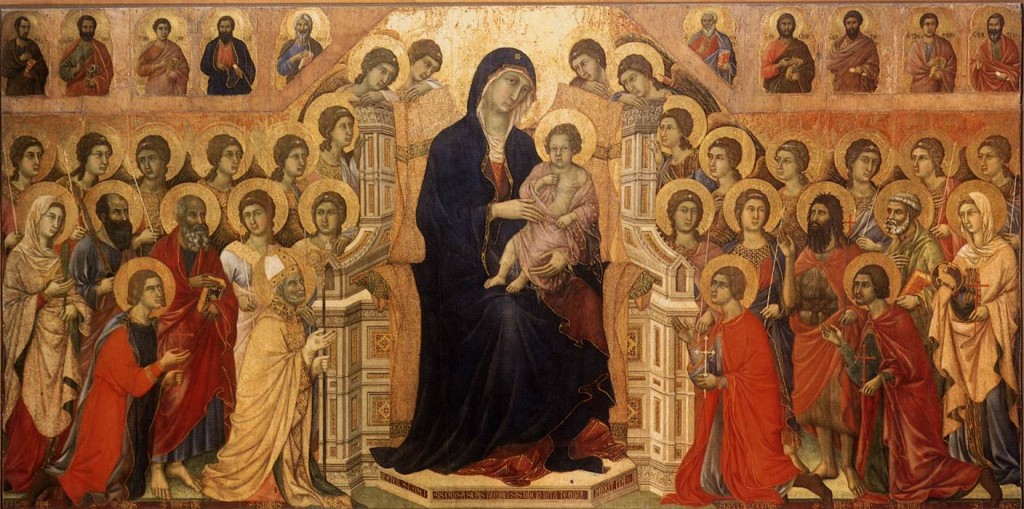
People praying the rosary, singing Mary songs, etc is a form a worship no matter how much catholics want to deny it. These things only belong to God. I have seen pictures of Mary sitting next to God in His throne as she was was co-equal with God when she was only a human like any of us. Of course she was blessed by God and deserves to be honored but it does not imply a godly position. God chose her by His grace, grace is God giving us something we dont deserve.
Why do we need Mary as mediator when Jesus Christ already paid the price for our sins so that we could approach God directly? Saying that we need Mary as mediator is like saying that what Christ did in the cross is worthless or meaningless. Read Luke 23:45 which says that the curtain in the temple was broken apart in two, this symbolizing that the use of mediators (like in the old testament where only the priests could enter the most holy of the holy places and approach God to intercede for people) was terminated.
The Catholic love of Saints is well known, so it is with this in mind that I make my next “Catholic Bucket List” recommendation:
Bucket List Item #7: Read the life of a Saint
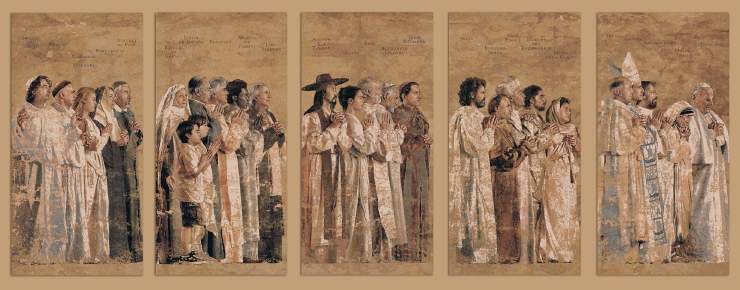
In the 2,000 year history of the Church there have been Christians who have lived lives of courageous virtue. These Christians have been both male and female. Some have been well educated, while others have not. They have come from every country, class, race and people. We call them the Saints.
We have had Saints who have been well-known Popes, others have been obscure. Some were monks, priests, monks, nuns, but others have been laity. Some have been mothers, fathers, husbands and wives. Some have lived to a great age and some died during chidlhood. All these people have been united in their love of Jesus Christ and lived lives as a testimony to His grace.
The lives of the Saints are generally not of much interest to many Protestant congregations. During my time attending Protestant congregations I don’t recall any historical figure prior to the 16th Century ever being mentioned. I did briefly attend an Evangelical congregation in London which had a “Heroes of Faith” section in their Sunday service which gave a little biography of some figure from Protestant history.
It is quite surprising, therefore, that I was introduced to the Saints by a Baptist minister. He had a great love for St. Francis of Assisi and made me watch the movie about his life, “Brother Son, Sister Moon”. Afterwards I got a small book about Francis’ life. I was greatly impressed. The question you often here asked in Christian circles is “What would Jesus do?”. As I read the life of St. Francis I regularly found the answer to that question as I found myself thinking “That’s such a Jesus thing to do!”.
So, I’d invite you to see what Jesus did through His Saints by fulfilling this bucket list item. Read the life of a Saint.
Today’s quotation seems very appropriate since I arrived back into San Diego last night. Who would you like in your heavenly welcoming party?
Just in case God asks who I want to [meet me in Heaven], I’ve got my list ready.
My desired greeting team includes not only my father and grandmother, but also John Fisher and John Paul II, Teresa of Avila, Catherine of Sienna , Fr. Caj, Sr. Rose, Sr. Diane, Blessed Mary, and Jesus Himself. All waiting to receive me as the newest arrival into the family of God once and for all. Waiting to say, “Welcome home!”
I was recently corresponding with someone who kept bringing up the recent scandals in the Catholic Church. Here’s how I replied:
Your constant refrain concerning scandal in the Church suggests to me that this is a significant issue for you. It’s understandable. It is for many people. In fact, during the early centuries of Christianity this was an extremely important and controversial question: should those who denied Christ under persecution, or who surrendered the Holy Scriptures to be burnt, be readmitted to the Church if they repented? Should those ordained members who renounced their faith be able to return to ministry? There was a schismatic group called the Donatists who said “Absolutely not!”
At the heart of the matter was the question: what is the Church? The Donatists viewed the Church as a Museum of Saints. The Catholic Church rejected this limited and narrow understanding. Instead, She said that the Church was a Hospital for Sinners. She would therefore readmit fallen away Christians if they repented.
As a consequence, the Church often looks (and smells!) like a hospital. The Church is full of medicine, nurses and doctors, but She is also full of damaged people and the walking wounded. There are often outbreaks of disease. It often doesn’t look pleasant, but it is the best place to be for those who need healing. For this, I’m grateful, otherwise I fear I could never be admitted.
On October 16th, as part of our recent Theology on Tap series, Kimberly Barber spoke to us on the topic of “Mary, Saints, Angels and more: Getting to know the heroes of our faith in a new way”.
Here are the MP3 audio files available for download:
Kimberly is a Master Catechist for the Diocese. She grew up in Southern California and attended the Franciscan University of Steubenville for her undergraduate degree and then went to Fuller Theological Seminary for her postgraduate study. She now lives in San Diego with her three children and her husband Dr. Michael Barber, Professor of Theology at John Paul The Great Catholic University who himself has spoken at Theology on Tap in the past.
A while ago I promised a friend that I would do an in-depth treatment of the Catholic Church’s teaching on the Communion of Saints. I’m still planning on doing that more detailed examination at some point in the future, but today I’d like to do another brief post following on from yesterday’s posts about All Saints Day.
I’ve mentioned Jay before, a Protestant with whom I dialogued for several months. During our discussions he brought up the subject of the Saints. It wasn’t really pertinent to the subject at hand so I didn’t dwell on it for long, but here was what I wrote to him:
“The Saints” was another issue you raised, but again, in an effort to stay on-topic, I’ll try to be brief.
We don’t worship Saints – we honour them. Worship is for God alone. If you catch any Catholic worshiping a Saint, let me know and I’ll make sure that both their Priest and Bishop find out. I will ensure that they are kept behind after Mass for extra catechism classes while the other parishioners enjoy coffee and donuts 😉
I can pretty much guarantee that all of your disagreements stem from how you view the Church. The Catholic view is that the Body Of Christ is simply one, composed of:
1. …those here on earth (“Church Militant”)
2. …those in purgatory (“Church Expectant”)
3. …and those in heaven (“Church Triumphant”).
Although we may be physically separated by the barrier of death, we nonetheless remain united to each other.
I’m sure you’ve asked people to pray for you before – it’s a very natural thing to do and I’m guessing you would find no conflict here with 1 Timothy 2:5 (to which you allude). Moses, Abraham and Job were all mediators and intercessors. In fact, as you rightly point out, interceding for others is a living out of our universal priestly calling.
I would also suggest that the people you ask to pray for you are often those whose faith is the strongest, as you hope in the power of their intercession (James 5:17). The Catholic response to this is a hearty “Amen!” But how much more powerful will the prayer be of one who has been completely sanctified and is standing before the throne of God?
There’s loads more I could say about this, but I’ll simply say that this is why we ask Saints for their intercession and why the Vatican teaches “filial reverence” – it’s simply because these are people who are part of the Church – it’s just that this part that is in heaven.
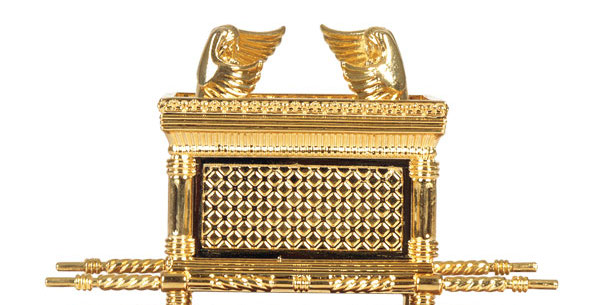
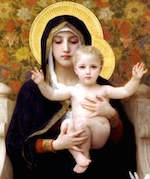 As I mentioned in my previous post, over the next few days I’m going to be responding to some comments left on my Biblical Mary: The Ark of the New Covenant post by a lady named Monica.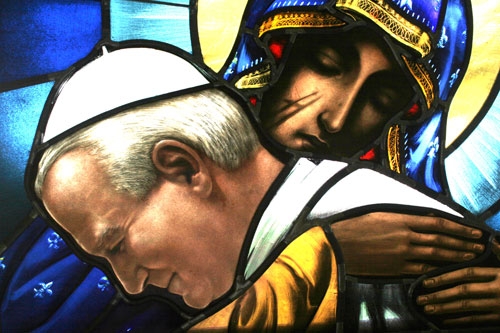
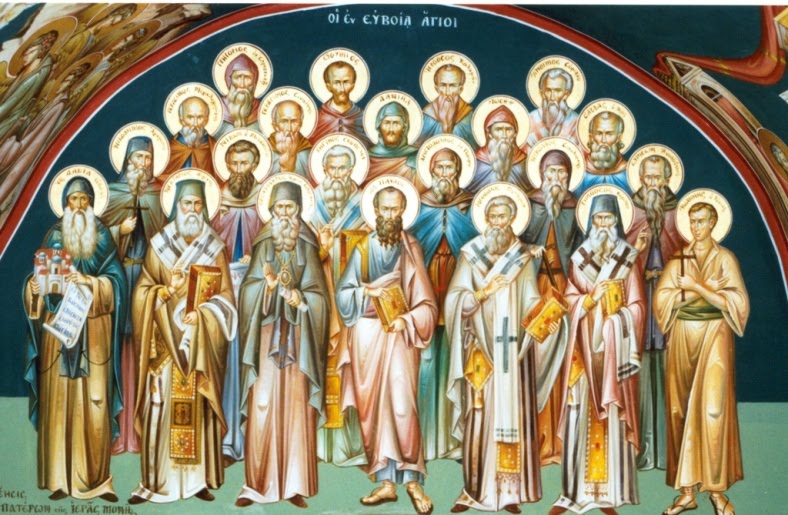
 A while ago I promised a friend that I would do an in-depth treatment of the Catholic Church’s teaching on the Communion of Saints. I’m still planning on doing that more detailed examination at some point in the future, but today I’d like to do another brief post following on from