Reactions to Storms

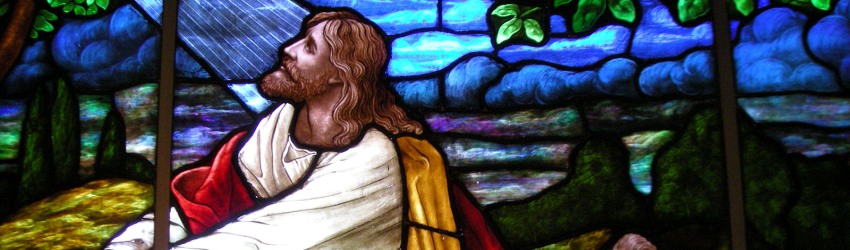
In the Gospels, we read about a time when Jesus and His Apostles were in a boat on the water and a storm hit:

One day he got into a boat with his disciples, and he said to them, “Let us go across to the other side of the lake.” So they set out, and as they sailed he fell asleep. And a storm of wind came down on the lake, and they were filling with water, and were in danger. And they went and woke him, saying, “Master, Master, we are perishing!” And he awoke and rebuked the wind and the raging waves; and they ceased, and there was a calm. He said to them, “Where is your faith?” And they were afraid, and they marveled, saying to one another, “Who then is this, that he commands even wind and water, and they obey him?”

Luke 8:22-25
Read more

When there’s nobody around to hear

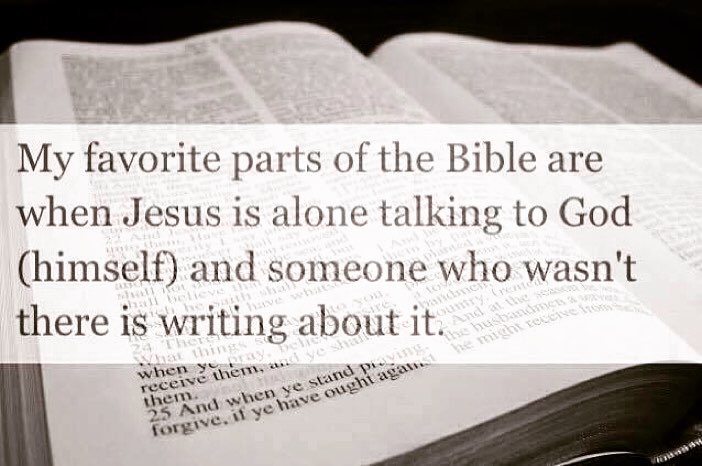
So, another day, another meme. A few days ago, this came across my Facebook newsfeed:

whoknew

So, how might one respond to a meme like this?

Is it accurate?

The first thing to ask is, does this meme accurately represent what Christians believe? After all, if someone’s religion is wrong, it shouldn’t need to be misrepresented to be shown to be false, right?

So, what do Christians believe about the Trinity? Well, we believe that there is only one God, but that within the Godhead that there are three persons: the Father, the Son and the Spirit. So, when the Son was praying, He wasn’t praying to “Himself”, but to the Father.

This meme already isn’t looking that promising…

I wasn’t there…

The meme appears to suggest that, unless you were present at an event, then you couldn’t possibly know what happened.

However, I’m sure there are many events you know much about, but for which you were not present. These events range from the great events in history to the story of how your parents met. The reader will know about these events because those who were there have either told them directly, or because they have read descriptions found in diaries and letters.

The same is true for the life of Jesus. St. Luke didn’t witness Jesus’ ministry, yet he can tell us what happened by reporting the testimony of those who were present at the time. Luke speaks about his sources in the opening of his Gospel:

Inasmuch as many have undertaken to compile a narrative of the things which have been accomplished among us, just as they were delivered to us by those who from the beginning were eyewitnesses and ministers of the word, it seemed good to me also, having followed all things closely for some time past, to write an orderly account for you… that you may know the truth concerning the things of which you have been informed.

Luke 1:1-4

No witnesses

Okay, so it’s possible for me to know about an even if I was not there to witness it… but what about the situations where, say, Jesus was alone and there was nobody to hear what He said and see what He did?

For example, all the Synoptic Gospels (Matthew 4:1-11, Mark 1:12-13, Luke 4:1-13) record Jesus going out into the desert alone for forty days. Despite Jesus doing this alone, Mark tells us that He was tempted by the devil, and Matthew and Luke go into detail about these temptations, even going so far as to narrate the exchanges between Jesus and Satan. How did they know what was said?

The answer to this is, I think, rather obvious. Many of my friends know how I felt when I watched the sunrise each morning as I was walking across Spain. They know this because I told them. Likewise, the events in the desert could easily have been passed onto the Apostles by Jesus Himself. Perhaps one night around the fire, after casting out an unclean spirit in a Synagogue earlier in the day, Jesus told them what had taken place during His time in the wilderness.
TEA: Practical Tools For Everday Evangelism

This past weekend, I drove out to Imperial Valley, a couple of hours east of San Diego, to give a talk at “Java & Jesus”. The event was rather similar to a traditional “Theology On Tap”, except that it was held at a coffee shop.

Practical Tools for Everyday Evangelism (Download)

You can subscribe to “Theology With An English Accent” manually, or any place where good podcasts can be found  (Feed | iTunes | Google Play).

Timestamps

01:34 – Introduction
01:50 – Prayer
03:13 – The Purpose of the Church
08:25 – Tool #1: Your Life
11:19 – Tool #2: Your Testimony
30:08 – Tool #3: Your Community
47:00 – Conclusion and Prayer

A Sunnydale Funeral

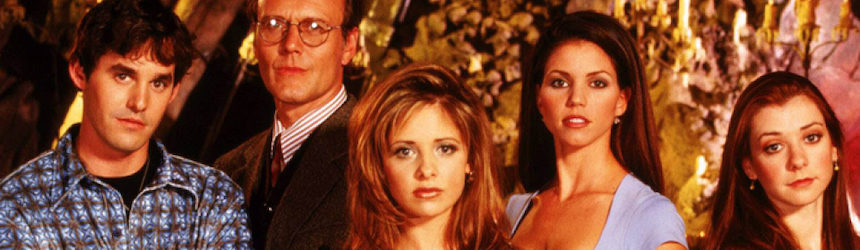
Back in 2017 I was an avid listener to Buffering the Vampire Slayer, a podcast where the hosts would discuss each episode of Buffy the Vampire Slayer in turn. As a teenager I had rather enjoyed the campy movie starring Kirsty Swanson and, although I was suspicious at first, I soon came to really enjoy the TV series starring Sarah Michelle Gueller.

Buffering Mail…

I listened to the first few episodes of the Buffering the Vampire Slayer while I was walking the Camino, and I even sent them an email which they read out on the show. I eventually wrote to them again, this time after listening to Episode 3.08…

In that episode of Buffy the Vampire Slayer, there is a funeral. In their commentary episode, the podcast hosts where shocked to hear the word “Hades” mentioned in the reading at the graveside. They were shocked because the context was clearly Christian, yet the hosts associated the word with the occult. They wondered out loud what Christian denomination this might be.

To the library!

I sent them an email pointing out that the text comes from the first chapter of the Book of Wisdom, also known as The Wisdom of Solomon:  

“…because God did not make death, and he does not delight in the death of the living.
For he created all things that they might exist,
and the generative forces of the world are wholesome,
and there is no destructive poison in them;
and the dominion of Hades is not on earth.
For righteousness is immortal”  

Wisdom of Solomon 1:13–15

I went on and explained that the word “Hades” was simply the Greek name used to describe the realm of the dead. In Hebrew, the word is “Sheol” which is translated in English as either “the grave” or “the dead”.

The fact that this reading comes from the Book of Wisdom gives us a big clue as to the Christian denomination of the person conducting the burial. The Wisdom of Solomon belongs to a collection of books known as the Deuterocanon which was removed from the Bible at the Reformation in the 16th Century. It therefore most likely isn’t a Protestant funeral (Lutheran, Baptist etc.). That pretty much leaves either Catholic or Eastern Orthodox and, given the appearance of the priest, I’d say he it’s a pretty safe bet to assume he was Catholic.

Here’s the clip of the hosts reading out my email on their mailbag episode:

TEA: C.S. Lewis – Apostle To The Skeptics

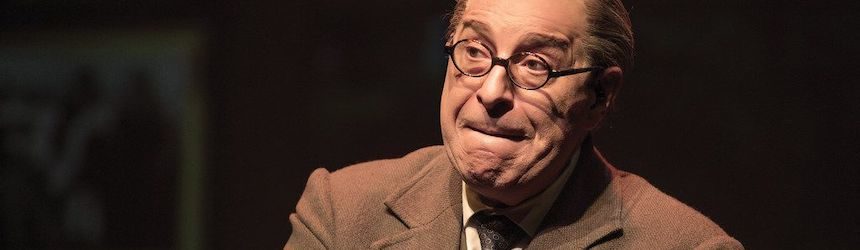
Last night I gave a talk in Charlotte, North Carolina, on C.S. Lewis, telling the story of how he came to faith in Christ and how this journey influenced his own subsequent evangelistic efforts.

C.S. Lewis – Apostle To The Skeptics (Download)

You can subscribe to “Theology With An English Accent” manually, or any place where good podcasts can be found  (Feed | iTunes | Google Play).

Read more

Christian Nation?

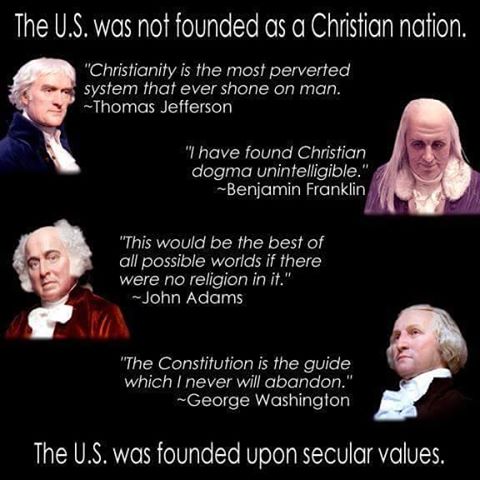
The other week I saw this on Facebook:

christian-nation

Now, I don’t have a particular dog i this fight. Whether the United States was founded on Christian values doesn’t make an iota of difference as to whether Christianity is true. Having said that, I was rather dubious about the claims of this meme, so I did a bit of a googling…

Read more
1 4 5 6 7 8 137