One of the first things which struck me about the Qur’an the first time I read it was how it can suddenly and jarringly jump to a completely different scene,
I’ve often been told that the Torah and the Injil were only for the Jews. However, two problems: The Pickthall translation doesn’t hide it: He hath revealed unto thee (Muhammad)
John Fontain recently debated David Wood on the Islamic Dilemma, which points out that the Qu’ran both affirms the Torah and Gospel while contradicting them. John has a rather different
Those who attempt to say that the Qur’an teaches the corruption of the earlier scriptures, often appeal to Qur’an 5:48, but this argument turns on the translation of the word
I’m reading through the Qu’ran one last time this year and wanted to follow along with a Tafsir. I discovered Quran Garden which was just the sort of thing I
The Qur’an claims that if it were not from God, there would be many contradictions in it. However, there is one Qur’anic verse which presents an inherent contradiction! In chapter
The sun sets in muddy spring (18:86) Semen comes from between backbone & ribs (86:6-7) Stars are missiles to shoot devils (67:5) If a fly lands in your drink, one
The Qur’an speaks about Allah helping the followers of Jesus and keeping them “uppermost”, but this presents a dilemma since, historically, this has to refer to Trinitarian Christians… which is
“In one sense we are always traveling, and traveling as if we did not know where we were going. In another sense we have already arrived. We cannot arrive at the perfect possession of God in this life, and that is why we are traveling and in darkness. But we already possess Him by grace, and therefore, in that sense, we have arrived and are dwelling in the light. But oh! How far have I to go to find You in Whom I have already arrived!”
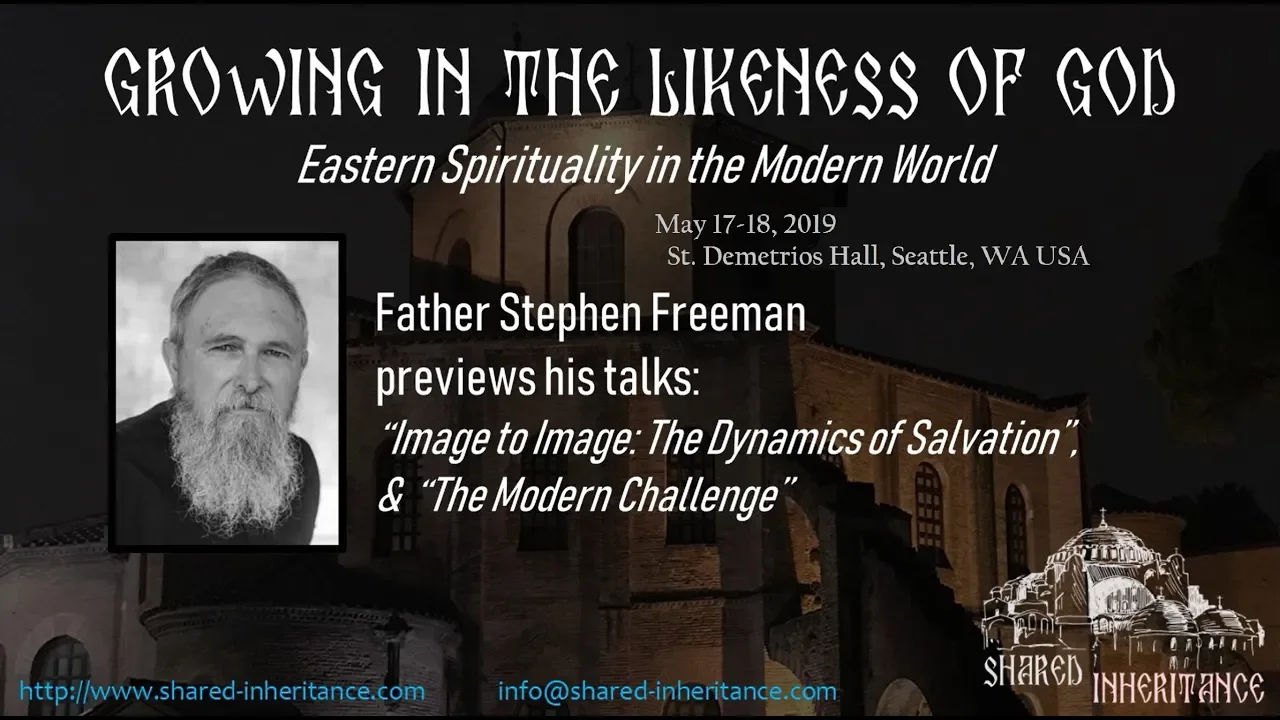
I recently advertised a conference I’ll be attending in Seattle in May. My former pastor, Fr. Michael has released a video explaining what he’s planning to speak about at the Conference:
I was back at St. Ignatius of Loyola Catholic Church in Los Angeles this past week. On this visit I was speaking to their Confirmation group about the Sacrament of Confession and more broadly on the subject of mercy.
The group was in quite a wide semi-circle, so I walked around quite a bit so the microphone couldn’t always pick up all the audio perfectly, but here you go…
God’s Mercy: Freely Received, Freely Given (Download)
So that is the outline of the official story—the talk of the time when God was the underdog and got beaten, when he submitted to the conditions he had laid down and became a man like the men he had made, and the men he had made broke him and killed him.
This is the dogma we find so dull—this terrifying drama of which God is the victim and hero. If this is dull, then what, in Heaven’s name, is worthy to be called exciting? The people who hanged Christ never, to do them justice, accused Him of being a bore; on the contrary, they thought Him too dynamic to be safe. It has been left to later generations to muffle up that shattering personality and surround Him with an atmosphere of tedium. We have very efficiently pared the claws of the Lion of Judah, certified Him “meek and mild,” and recommended Him as a fitting household pet for pale curates and pious old ladies.
To those who knew him, however, he in no way suggested a milk-and-water person; they objected to him as a dangerous firebrand. True, he was tender to the unfortunate, patient with honest inquirers, and humble before heaven; but he insulted respectable clergymen by calling them hypocrites; he referred to King Herod as “that fox”; he went to parties in disreputable company and was looked upon as a “gluttonous man and a wine-bibber, a friend of publicans and sinners”; he assaulted indignant tradesmen and threw them and their belongings out of the Temple; he drove a coach-and-horses through a number of sacrosanct and hoary regulations; he cured diseases by any means that came handy, with a shocking casualness in the matter of other people’s pigs and property; he showed no proper deference for wealth or social position; when confronted with neat dialectical traps, he displayed a paradoxical humor that affronted serious-minded people, and he retorted by asking disagreeably searching questions that could not be answered by rule of thumb. He was emphatically not a dull man in his human lifetime, and if he was God, there can be nothing dull about God either.
But he had “a daily beauty in his life that made us ugly,” and officialdom felt that the established order of things would be more secure without him. So they did away with God in the name of peace and quietness.
Now we may call this story exhilarating or we may call it devastating, we may call it revelation or we may call it rubbish, but if we call “dull” then words have no meaning at all. That God should play the tyrant over man is a dismal story of unrelieved oppression; that man should play the tyrant over man is the usual dreary record of human futility; but that man should play the tyrant over God and find him a better man than himself is an astonishing drama indeed. Any journalist hearing of it for the first time would recognize it as news. Those who did hear it for the first time actually called it news, and good news at that.