Helping the homeless
Yesterday I came across a great post over at Upworthy on how to help those living on the street…

"We are travellers…not yet in our native land" – St. Augustine
Yesterday I came across a great post over at Upworthy on how to help those living on the street…

“If I find in myself a desire which no experience in this world can satisfy, the most probable explanation is that I was made for another world.”
– CS Lewis, Book III, ch. 10
So, as many of you know, a couple of weeks ago I had Jehovah’s Witnesses (JW) scheduled to visit my home. I had already received two rounds of visits from them but had not yet managed to get them across my threshold. However, on their previous visit they had promised that next time they would have time to come in and have a proper chat.
I had received my first visit about a month earlier when two female JWs had called. During our discussion on the doorstep, I had spoken a little bit about my reversion to Catholicism and about how the question of the canon had played an important part in my return, being rather unimpressed with the various Protestant explanations as to the Bible’s Table Of Contents. Since JWs are distinctly set apart from Protestants, I asked the ladies on my doorstep how they would justify the contents of the Biblical canon. They had no explanation, but said that they would find out and get back to me.
Several weeks later, two gentlemen rang my doorbell, saying that they had heard from their associates that I was interested in knowing about the “hidden” books of the Bible. I explained that my question was not about the deuterocanon/apocrypha per se, but rather about the Biblical canon as a whole. How did they know the right books were in the Bible? How did they know that there were no wrong ones included and no books missed out? Unfortunately, they said that they didn’t have time to talk with me there and then, but they booked an appointment for the following week.
In today’s blog post I’d like to explain what happened on this next visit and the rather interesting turn of events towards the end…

Christians have used symbols since the very dawn the Christianity. How many symbols can you see in the following logo?
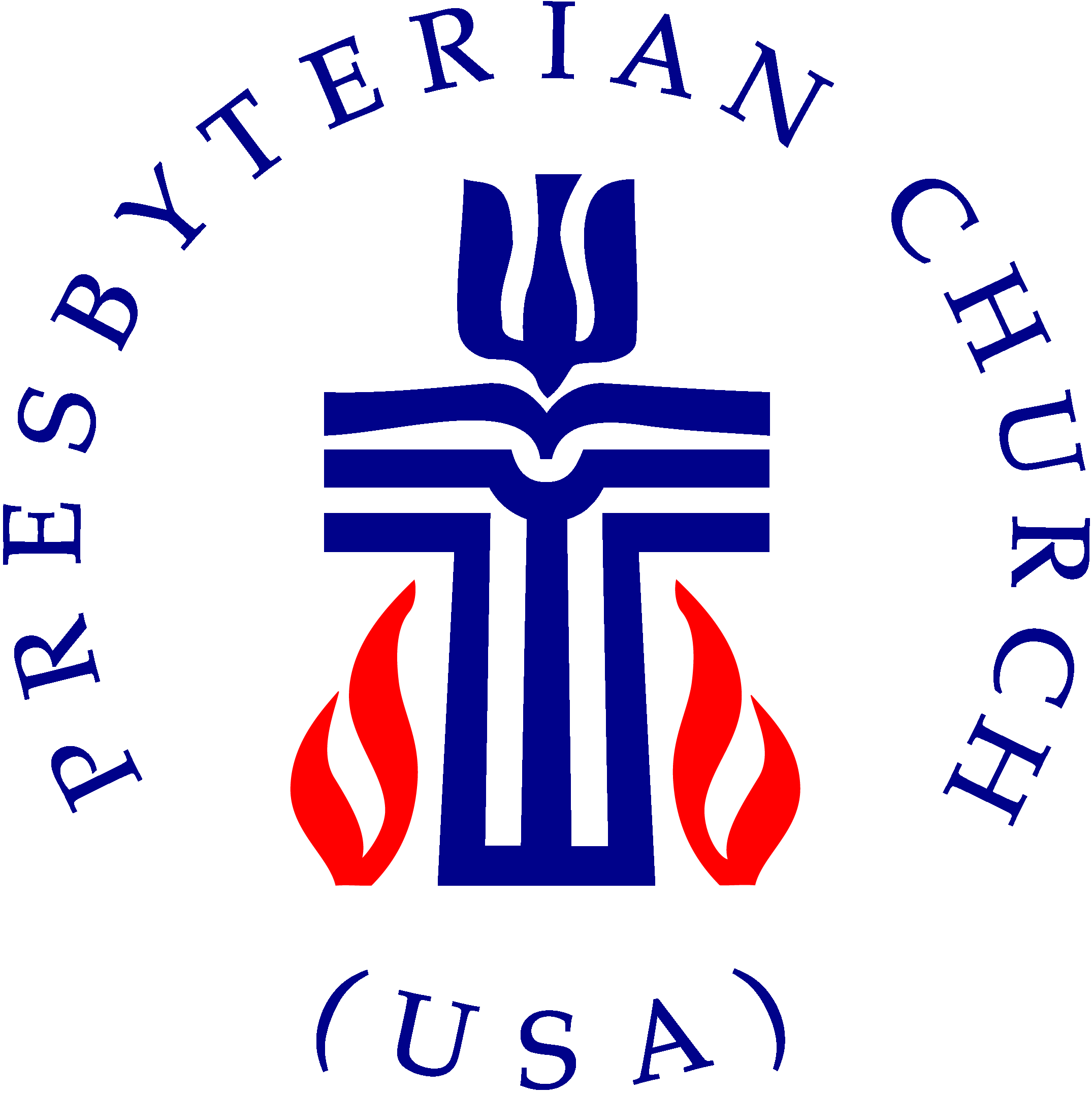
There are eight. The answer after the jump…
Today’s “Quick Apology” is a sequel to an earlier post, Quick Apology: You can’t pray to dead people. In that post I explained how those who have died in friendship with Christ are not “dead”, but are in fact more alive than we are. On Facebook, one of my friends responded with this question…
“But why would you want to pray to a Saint? Why not just go to the source, Christ?”
This question is a reasonable one and makes sense until we consider everyday Christian practice…
When I meet up with my closest Christian friends, I will almost always ask them for their prayers concerning particular things going on in my life. However, if the above objection were valid, shouldn’t I being going directly to Christ? Why would I ask others to intercede for me when I could just instead make my requests to the Source directly?
To be certain, Christ has a special kind of mediation (1 Timothy 2:5), but that doesn’t preclude other kinds of mediation. In fact, we’re told in Scripture that we should intercede for each other (1 Timothy 2:1). So, the reasons why one would ask the Saints for their intercession are the same reasons why one would ask for the prayers of close friends. As my friend Steve said:
I’ve never seen a man in a true emergency when, for example, a car wreck requires emergency surgery for his young child, opt out of having others pray with him because he’d rather go straight to the Source.
It’s not an either/or proposition. Praying to the Lord directly is a good thing. Asking for the intercession of others is also a good thing. These two things don’t have to be in competition.
“We are taught by the Catholic faith that we may pray not only to God himself, but also to the Blessed in heaven, though in different manner; because we ask from God as from the Source of all good, but from the Saints as from intercessors” – Pope Leo XIII (Augustissimae Virginis Mariae 9)
So, back to the question: why would you want to pray to Saint? Well, when we are baptised, we become part of a very large family, a “great cloud of witnesses”, all united together in Christ. What do good families do? They pray for each other.
When we ask friends to pray for us, I think it’s safe to say that we particularly request intercession from those whom we esteem as being strong in faith since “the prayer of a righteous man has great power in its effects” (James 5:16). Who is more righteous than those standing before the throne of God, those in “the city of the living God, the heavenly Jerusalem…just men made perfect”?

PS – I’ll endeavour to do a more thorough post in the future as to what mean when we speak of “prayer” to the Saints. Don’t let me forget…
PPS – Joe over at Shameless Popery also blogged about this topic yesterday. Go check it out 🙂
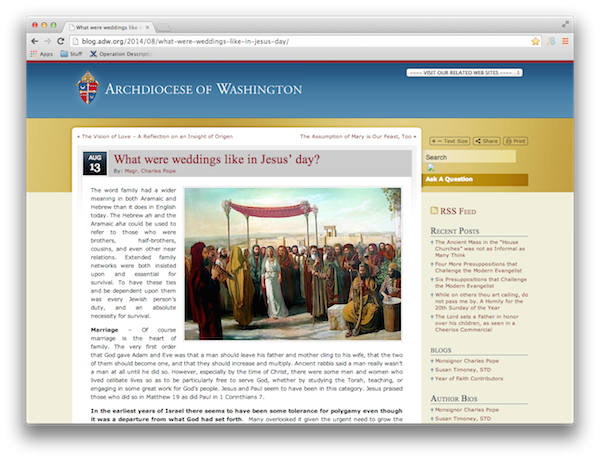
At the moment every single one of my friends is getting married…. So, what were weddings like in Jesus’ day?