San Diego Mission
If you ever get a chance to visit San Diego, I’d strongly recommend you go and visit the Mission:
"We are travellers…not yet in our native land" – St. Augustine
If you ever get a chance to visit San Diego, I’d strongly recommend you go and visit the Mission:
As we all know, Catholics love babies. However, sometimes this can lead us to be rather insensitive to others…

While I was on my blogging sabbatical, a lot happened. In particular, the US Supreme Court ruled in favour of redefining marriage to include unions between same-sex couples. In the run-up to the Court’s decision, Facebook was awash with memes, articles and status posts about the issue.
I’d like to spend today’s post reflecting upon some of the things I saw online this past month…


 So, a while back I wrote a series of posts on the subject of dating which turned out to be rather popular. People clearly love to read and talk about relationships! At the end of the series, several of my friends asked me if I would be writing more entries, but I told them that I’d already said everything I had to share on the subject.
Well…it turns out that I was wrong, because here I am, a year later, writing another post on the subject of dating. A while back, I had a friend of mine message me and say “I wanna ask someone out. Any ideas for a date and how should I ask her out?” Clearly, word had got around that I now have a beautiful girlfriend and this qualifies me to answer a question of this magnitude!
Seriously though, as I wrote in an earlier article, Catholic guys are generally pretty terrible at asking girls out, so I think it’s worth publishing the answer I gave my friend. Not everyone will agree with what I have to say, but that’s fine, please leave a message in the comment box.
Now, I have not always followed the suggestions I am about to give below, but I wish I had. My advice represents the solution to some of the different kinds of mistakes I’ve made in the past… 🙂
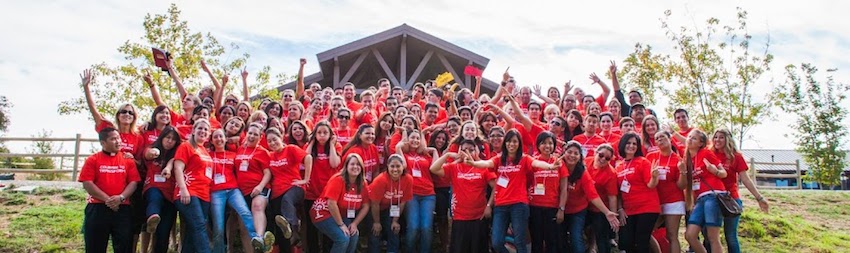
I know that a lot of people who read this blog don’t live in San Diego. I also know that many of you are involved in ministry in some way, especially youth and young adult ministry. Therefore, I thought I’d do a post outlining some of the things we do here in San Diego which have proven popular, in case you wanted to try the same thing in your Diocese.
1. Theology On Tap
I expect most areas of the country have implemented a Theology On Tap programme. Simply put, you take over a restaurant or bar and have a speaker present on a topic for 45 minutes. There’s usually some Q&A and some group discussion. If you want a good turn-out make sure you do a talk on relationships every now and again 🙂
2. The Mega Series
This was something that we came up with in this diocese. Very often Catholics can feel isolated. This is particularly true of young Catholics when most of the people in their parish are significantly older. What the Mega Series attempts to do is bring large numbers of young adults together in traditional devotions, followed by a social. The goal of this is to remind Catholics that they are not alone and are part of a much larger Church. The three main “mega” events we’ve had have been:
(a) Mega Mass
(b) Mega Adoration
(c) Mega Rosary
3. Bible Study
One of the most popular events in the Diocese is the Young Adult Bible study and it’s very often one of the first “spiritual” events new arrivals attend. Given this, it’s important that the Bible study has a strong social and welcoming dimension.
4. Rosary and Adoration
Very often we try complicated, clever things to attract young adults and youths. However, I’ve seen time and again that simply having a night of adoration or recitation of the rosary attracts significant numbers of people.
5. Holiday Parties
The Young Adult Christmas Party in San Diego this is the social event of the year. Everyone gets dressed up, has dinner together and dances the night away. The other major holidays of the year (Memorial Day etc.) are likewise marked with a substantial gathering.
6. Sports
Here is San Diego there is a thriving Catholic Ultimate Frisbee community, in addition to many other sports.
7. Dancing
About four times a year I teach a dance lesson in the Diocese, usually either Salsa or Swing, and there’s always a solid turn-out.
Do any San Diegans have any other thoughts on what works well in our Diocese? What about those of you from elsewhere in the country? What events seem to be most engaging?

This last weekend I was in LA to attend a debate between Dr. James White and Shaykh Mustafa Umar on the divinity of Christ.
Despite Dr. White’s rather scathing view of Catholicism, even denying it the classification of “Christian”, I jumped at the opportunity to see him in-person. You see, I have consumed a lot of his material over the years. His apologetics material concerning the Watchtower, Mormonism and Islam have been of considerable help to me in my own encounters with members of those groups. Not only that, but my understanding of Reformed theology is almost entirely drawn from his various videos which are available online.
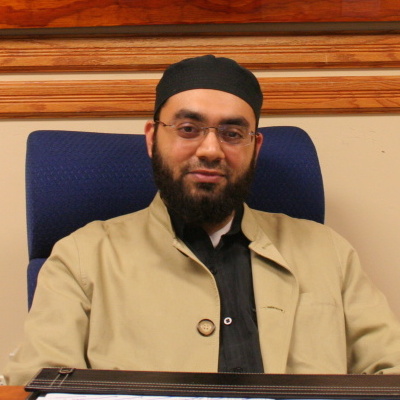

The debate itself was constructive and enjoyable, despite having a rather disappointingly truncated Q&A session at the end. After the debate, the line for Dr. White was considerable, but I did get a change to speak to Shaykh Umar. Although I found the Shaykh’s answers to my questions unconvincing, I found him to be down-to-earth and very pleasant.
Aside from announcing that I’ve ticked off another bucket list item, I wanted to do a quick post about this last weekend because I wanted to briefly mention a line of argumentation used by Dr. White during the debate…

Before I left San Diego, I went through all the Johannine epistles (1, 2, 3 John). Here are the questions we devised:
72. Who wrote this letter?
The Early Church identified it as John the Apostle, son of Zebedee. This would explain the preservation of the letter as well as the numerous parallels with John’s Gospel and the Book of Revelation. In recent years some have suggested that it is a disciple known as “John the elder”, a character from the Early Church about whom we know relatively little.
73. When was this letter written?
It was probably written after the publication of John’s Gospel, sometime in the 90s.
74. To whom was it written?
Probably to the Christians around Ephesus where John is said to have settled.
75. Why was this letter written?
Primarily to respond to a heretical, schismatic group. These could have possibly been Docetists, Gnostics, Cerinthians or possibly even converts from Judaism. The issue seemed to surround the nature and identity of Christ. John spends most of the letter talking about the authentic fellowship with God.
76. What are some of the words which John uses a lot in his writings?
Life, death, light, dark, beginning, abide, …
77. To whom is this letter addressed?
It is addressed to “the elect lady and her children”. Although this could have possibly been an actual person, it is more likely that John is speaking of a neighbouring Church is sisterly, feminine terms.
78. What is the main content of this letter?
John is writing to a sister church. He encourages them and warns them of the antichrist
79. Who is the antichrist?
According to John, anyone who “will not acknowledge the coming of Jesus Christ in the flesh”.
80. To whom is this letter addressed?
It is addressed to “the beloved Gaius”. He is most likely in the leadership of the one of the local congregations.
81. What is the main content of the letter?
A man named “Diotrephes” is exalting himself, refusing to accept John’s authority, refusing welcome to those John sends and excommunicating anyone who does so.
1-16 | 17-27 | 27-42 | 43-52 | 53-57 | 58-67 | 68-71 | 72-81