Today I’d like to address an objection to Christianity which you hear every now and again:
“Jesus prophesied that the Jerusalem Temple would be completely destroyed. However, the “Wailing Wall” is still standing, proving him wrong. Jesus is therefore a failed prophet and therefore can’t be God”
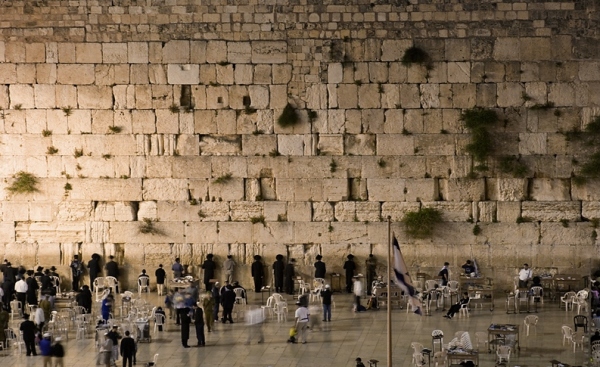
Jews praying in front of The Wailing Wall, Jerusalem
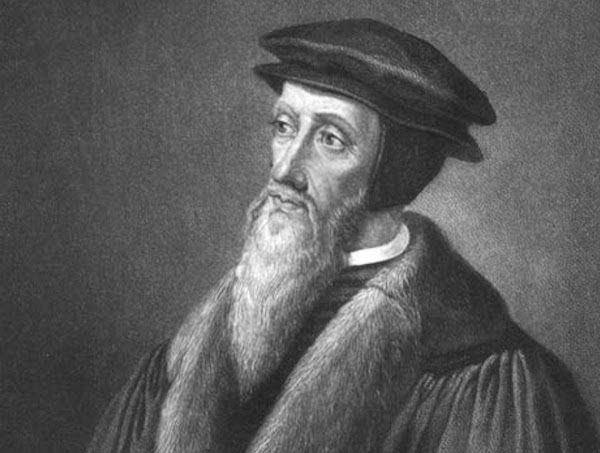
Several months ago I had a lively online exchange with a Protestant from the Reformed tradition. The conversation got really interesting and I had intended to write a series of posts based on our discussion. Alas, before I could do this, his blog was suddenly taken down, meaning that I was unable to use the record of our exchange to save me some work in constructing my posts (yes, I’m rather lazy).
To make sure the same thing doesn’t happen again, today I wanted to do a short post which is effectively a slightly expanded reproduction of my comments on an article over at Reformed Reader, in response to the blog author’s claims concerning Christian history and the Early Church Fathers.
I’ve posted quite a few links to Soul Device over the years. It’s probably one of my favourite apologetics sites. Here is the story of blog’s author, Douglas, and his conversion to Catholicism:
People say lots of dumb things on the Internet. To be fair, they say lots of dumb things in real life too. Fortunately, my good friend Paul Kim is here to rebut the statement “The Church is full of Pedophiles”…
Yesterday on Facebook, Joe from Shameless Popery shared that he had intended to write a post on the supposed Pagan origins of Easter, but that our mutual friend, Steve, had referred him to Easter: The Pagan Conspiracy, a post I wrote on the same subject last year.
Joe had initially said he wasn’t going to write his own defense. Fortunately for us, rather than depriving the world of another of Joe’s excellent articles, he did write his own post on the subject, building off my original entry:
It is often asserted that the Catholic Church was founded by the Constantine, who was Emperor of the Roman Empire from AD 306-337. A couple of weeks ago, a lady named Monica made such an assertion and in earlier post I pointed out some of the problems with such a theory.
However, today I would like to do something a little different… In this post I would like to set forth the positive historical case for the existence of the Catholic Faith in the generations prior to Constantine. I will show how twenty-two different Catholic doctrines were taught long before Constantine rose to power:
The Church is Catholic
The Church has a three-fold structure of leadership
There is unity through episcopal authority and schism is evil
Sacred Tradition is authoritative
Worship is liturgical
There is Apostolic Succession
Peter has Primacy
The Eucharist is a Sacrifice
Jesus is truly present in the Eucharist
The Eucharist is taken to the sick
Infants are to be baptized
Baptism actually washes away sin
Priests forgive sins
Works are involved in salvation
Prayers are said for the dead
There is purgation after death
Relics are venerated and Saints are celebrated
Mary is the New Eve
Mary was a perpetual virgin
Mary is the Mother of God
Prayers are made to Saints
Songs are sung to Mary
I will demonstrate these early Christian belief by looking at primary sources alone and restricting myself to writings produced prior to AD 300.