Anti-Catholic Bigotry in America
 Michael Knowles offers a short history lesson on anti-Catholic bigotry in the United States (past and present) in one of his recent episodes:
"We are travellers…not yet in our native land" – St. Augustine
Michael Knowles offers a short history lesson on anti-Catholic bigotry in the United States (past and present) in one of his recent episodes:
I just saw this picture shared on Facebook…
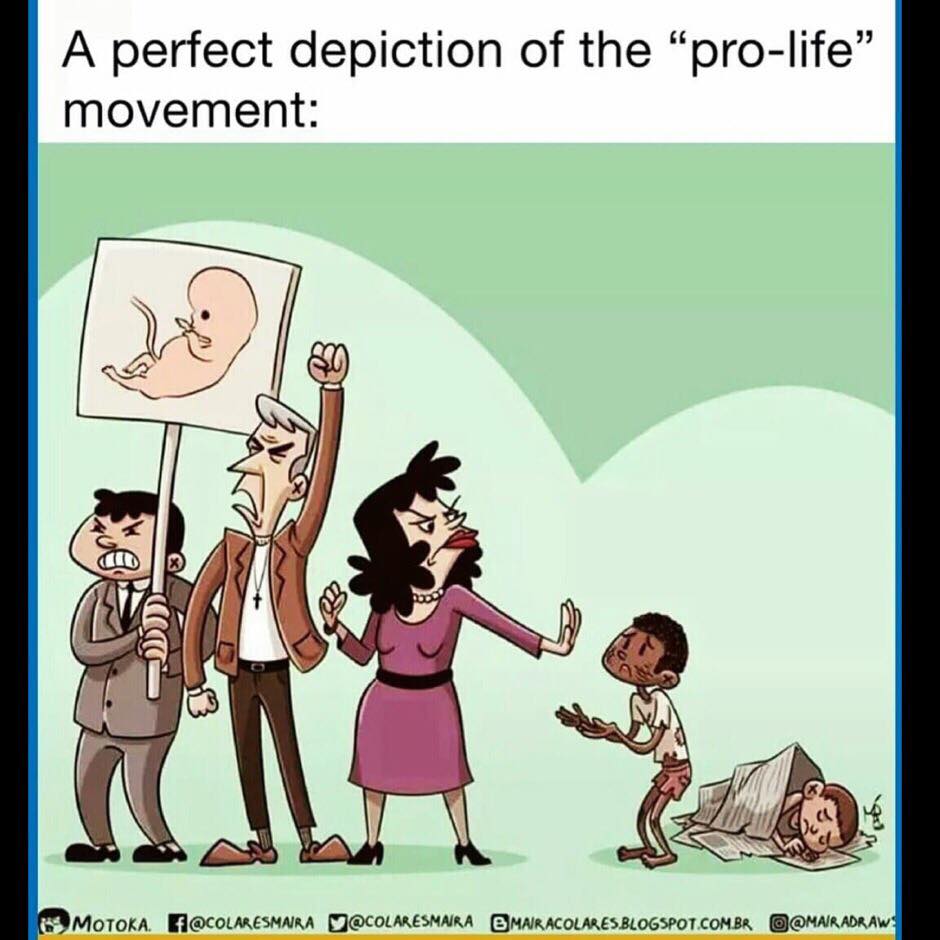
I responded by saying that, to be pro-life means to seek to end the killing of children in the womb because it is intrinsically wrong to kill the most defenseless, innocent human beings. Even IF the above caricature were true (which I would vigorously argue against), that doesn’t change one iota the morality of abortion.
In response to this, one of my friends wrote that he thought “pro-life” has a wider definition. I said that he could broaden the term if he wanted, but the genesis of that term comes from the movement which was focused upon ending the killing of those in the womb. That is the stated goal of the pro-life movement.
I think this broadening of the term has been chiefly attempted by those who want to keep abortion legal and wish to discredit those who want to see it end. The argument is “You don’t get to ban abortion until an unspecified list of social programmes have been implemented to my satisfaction”. The beauty of this argument is, of course, it can never be satisfied…
The logic of the argument itself is nonsense anyway. Would someone object to me protecting a toddler from being killed by her mother because I don’t also support a programme for free after school babysitting? Of course not – a child’s life is at stake! So, if you don’t think that logic stands up when a toddler is involved, why would it stand up with a child still in the womb?
Now, I’m aware that some Christians also try to broaden the definition of pro-life. I’m sure they have good intentions and I have some sympathy with this attempt. However, I find that when this broadening happens, the term “pro-life” effectively becomes meaningless. When you broaden its meaning to cover everything related to human justice and flourishing, it basically ends up encompassing all morality! I mean, what moral choices would it not concern? At this point, “pro-life” simply means “moral”, and we already had a word for that…moral. All we’ve managed to achieve is to empty the term “pro-life” of its meaning.
I’ve spoken to many pro-choice advocates who have begun the conversation using an argument that we should provide comprehensive social programmes for the poor before we even consider arguing against abortion. However, I’ve noticed something often happens after continued conversation and the pointing out logical flaws with this approach. After a while, their argument degredates to something like this:
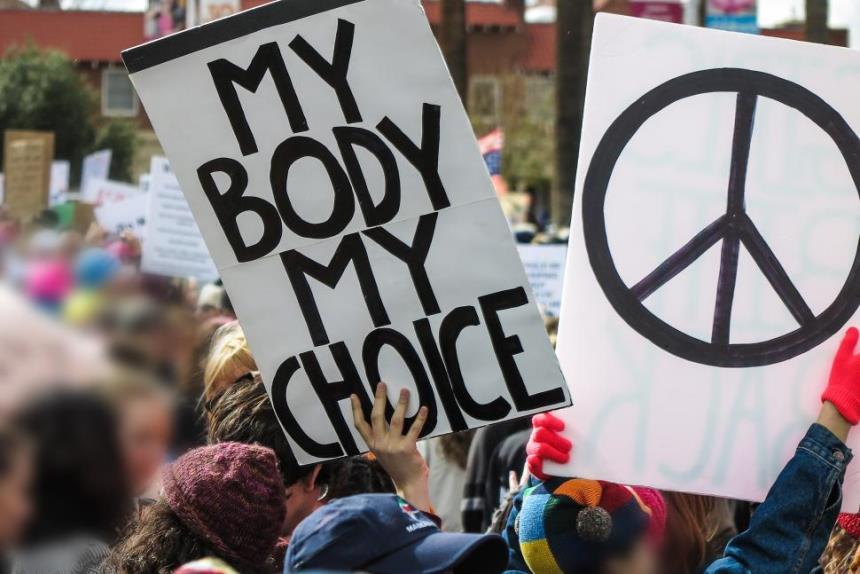
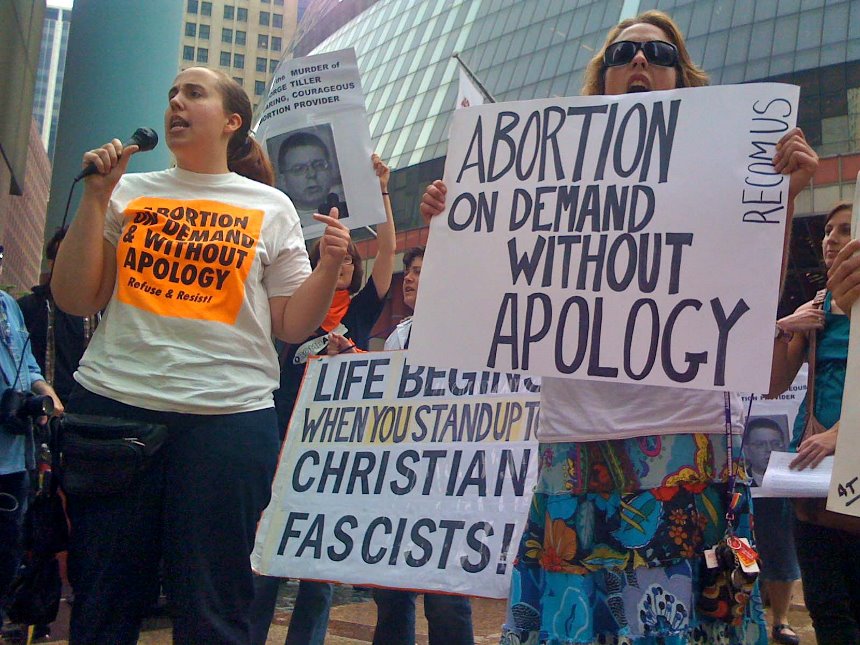
“My body, my choice”? “Abortion on demand, no apologies”? I would suggest that this shows that their objection to the pro-life movement has little to with care for the poor.
I see something similar when a pro-choice advocate wants to talk about abortion in the case of rape. Rape is presented as the reason we need abortion, although after further questioning it is revealed that they think abortion should be made available regardless of whether someone was raped.
The reason behind all this is that they see the the ability for a mother to kill her unborn child as a fundamental right. I would ask, if this is the case, wouldn’t it be more straight-forward to state that up front?
A few weeks ago, a friend on Facebook posted this:
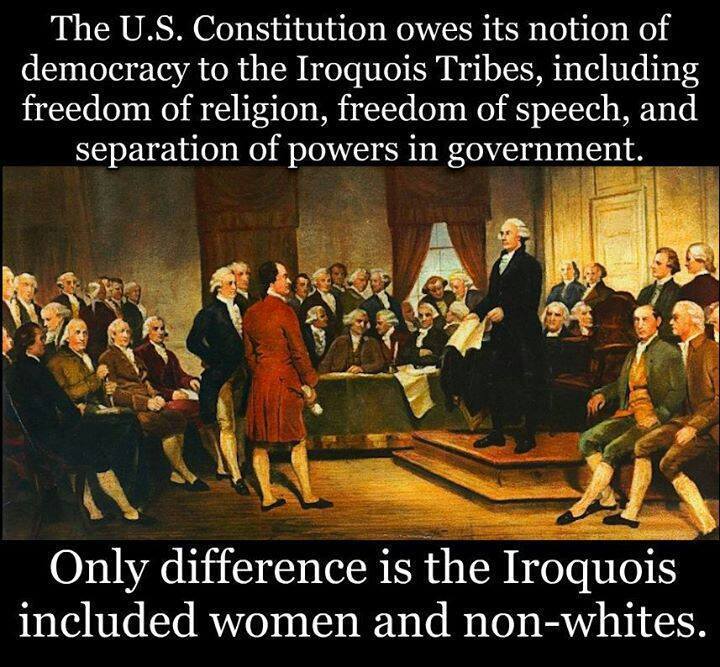
This just didn’t seem right, so I asked him what evidence he had to back up this assertion. Several weeks later my friend still hasn’t responded to my request for evidence…
I went and looked at a Fact-Checker website which assessed that it was Mostly False.
People are often afraid of doing apologetics, but honestly most of the time you’re just asking some basic questions, particularly “Do you have any evidence to back up that claim?”. If none is presented, it betrays that the opinion is primarily held because the person would like it to be true, rather than as a result of conscientious study.
 Here’s Steven Crowder picking apart a piece recently from John Oliver. Crowder is a bit more combative than I would like (and he commits the unforgivable sin of mocking the English accent!), but other than that, it’s a pretty good response to these kind of claims about Crisis Pregnancy Centers (CPCs).
 In my talks, Evangelization for the terrified and Apologetics for the confused, I emphasize how important it is to ask questions. Here’s a shot video from Summit Ministries explaining why…
Summary
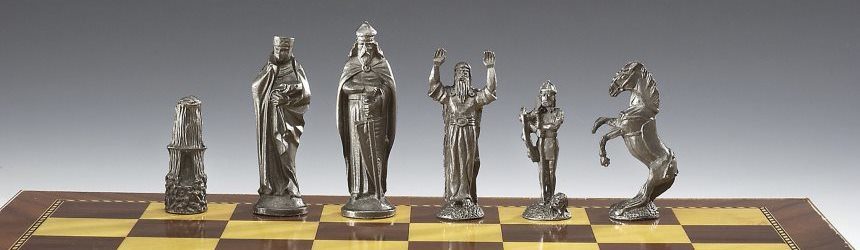
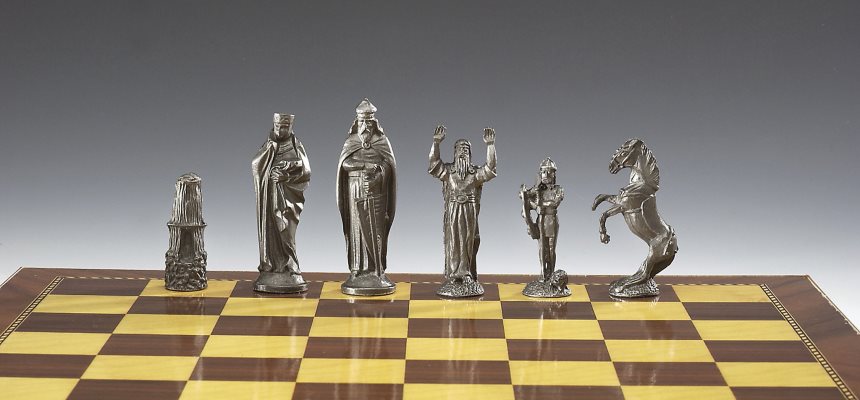
Lewis suddenly sees a vision, “a great assembly of gigantic forms all motionless…standing forever about a little silver table…[where] there were little figures like chessmen who went to and fro doing this and that…[each the] puppet representative of some one of the great presences that stood by. And the silver table is Time. And those who stand and watch are the immortal souls of those same men and women”. This vision terrifies Lewis and asks MacDonald if “all that I have been seeing in this country false? These conversations between the Spirits and the Ghosts were they only the mimicry of choices that had really been made long ago?”. His teacher says that alternatively you might say they were “anticipations of a choice to be made at the end of all things”, but that it would be better to say neither. The point was that on this journey he had seen the choices a bit more clearly than on earth because “the lens was clearer. But it was still seen through the lens. Do not ask of a vision in a dream more than a vision in a dream can give”. It is at this point that Lewis realizes that he is not actually dead and only dreaming. MacDonald warns him that, when he tells others, to emphasize that it was only a dream.
The vision of the chessemen fades and he is back in the wood again. Standing with his back to the sunrise, Lewis seeing the land light up before him as the sun rises. Suddenly the air is filled with “hounds, and horns; …ten thousand tongues of men and woodland angels and the wood itself sang”. Screaming, Lewis buries his face in the folds of MacDonald’s robe, but “The light, like solid blocks, intolerable of edge and weight, came thundering upon my head”. In the next moment, the folds of MacDonald’s garment become the folds of Lewis’ ink-stained cloth which he had pulled down as he fell from his chair. The blocks of light turn out to only be the books which he had pulled from the table. He wakes up “in a cold room, hunched on the floor beside a black and empty grate, the clock striking three, and the siren howling overhead”.
Questions
Q1. How do you understand the vision of the chessmen? How does Lewis now understand this journey? What warning does MacDonald give Lewis?
Q2. Why is Lewis terrified by the sun?
Previous Chapter | Index | End of Book!
Summary
The branches of trees down one aisle of the forest dance with light and Lewis thinks there must be another river nearby. It turns out the light is coming from people in a procession. Lewis tells us that “If I could remember their singing and write down the notes, no man who read that score would ever grow sick or old”. Behind them came a beautiful lady in whose honour all this was being done.
Lewis whispers to MacDonald, “Is it? … is it?”. His teacher responds that it’s actually a lady from Golders Green named Sarah Smith, who is “one of the great ones” in this country. MacDonald identifies some of the people in the procession as angels, and others as “her sons and daughters” who were any child she met on earth. She is also surrounded by animals: cats, dogs, birds and horses. MacDonald explains that “Every beast and bird that came near her had its place in her love. In her they became themselves. And now the abundance of life she has in Christ from the Father flows over into them.”
The Lady moves towards “two phantoms: a great tall Ghost, horribly thin and shaky”, whom Lewis dubs “The Tragedian”, who is being led on a chain by another Ghost who is “no bigger than an organ-grinder’s monkey”. When they meet, despite the Tragedian being the one who speaks, the Lady addresses only the Dwarf Ghost. She kisses him and asks for his forgiveness “For all I ever did wrong and for all I did not do right since the first day we met”. The Dwarf shakes the chain and the Tragedian responds, saying he accepts her apology.
The Tragedian says that he’s been thinking only about her “all these years…breaking your heart about me”. In a small, bleating voice, the Dwarf Ghost asks if she missed him. When the Lady tells him that he’ll understand it soon enough, the Dwarf and Tragedian speak in unison to each other, saying that she didn’t answer the question. It is at this point that Lewis “realised then that they were one person, or rather that both were the remains of what had once been a person”, Sarah’s husband, Frank. The Dwarf and the Tragedian tell each other that “it would be rather fine and magnanimous not to press the point” but they aren’t sure if she’d notice, recalling a time when they let her have the last stamp and she didn’t “see how unselfish we’d been”.
The Dwarf and the Tragedian are shocked to find out that the Lady has been happy in Heaven without him. The Tragedian asks here if she even knows the meaning of the word “Love”! The Lady responds: “How should I not?.. I am in love. In love, do you understand? Yes, now I love truly”. Rather than being comforted by this, the Tragedian asks if this means she didn’t love him on earth. The Lady says she did but “only in a poor sort of way… mostly the craving to be loved… I needed you”. The Tragedian is horrified at the idea that she no longer needs him, even though she says that “We shall have no need for one another now: we can begin to love truly”.
The Tragedian, becoming even more melodramatic, laments “Would to God I had seen her lying dead at my feet before I heard those words”. The Lady tries to snap him out of it by saying to the Dwarf “Frank! … Look at me… What are you doing with that great, ugly doll? Let go of the chain. Send it away. It is you I want. Don’t you see what nonsense it’s talking?”. Her message seems to get through and he starts to smile and grow a little bigger.
Questions
Q1. How would you describe the procession? What is Lewis’ suspicion regarding the identity of the lady?
Q2. Who are the ghosts in this chapter? Why are there two ghosts, one of them on a chain? Why are the ghosts shocked to find that the lady has been happy in Heaven?
Q3. How does the lady describe her love for her husband on earth? How is it different now in Heaven?
Q4. How does the lady try to snap Frank out of the melodrama? Why might this work?