Happy Easter!
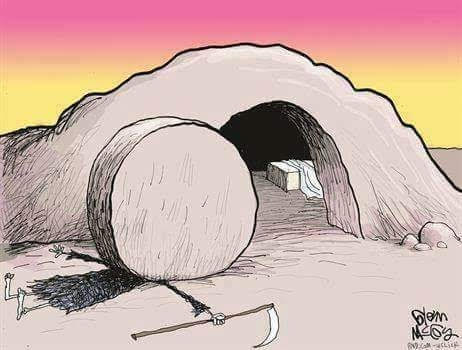
Christ is risen from the dead! By death, he trampling death and to those in the tomb, he granted life!
"We are travellers…not yet in our native land" – St. Augustine
Christ is risen from the dead! By death, he trampling death and to those in the tomb, he granted life!
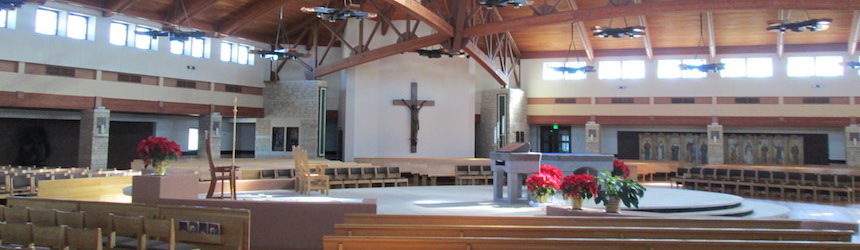
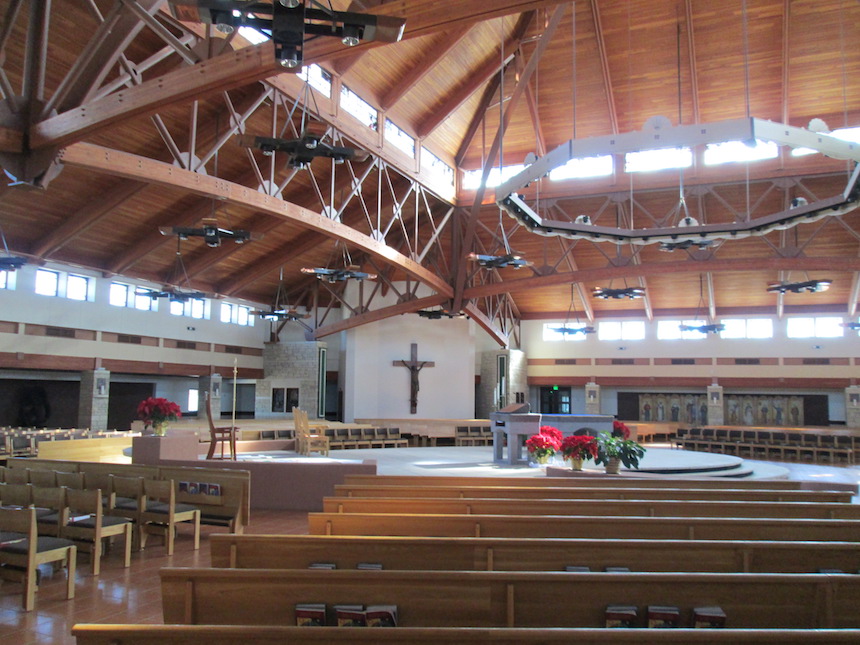
As I mentioned yesterday, this past weekend I was in Dodge City, Kansas for SKYAC, the Southern Kansas Young Adult Conference.
During the afternoon, I gave one of the “FED Talks”. For those of you familiar with TED Talks, it was of a very similar format. However, whereas TED Talks are short presentations on Technology, Entertainment and Design, the FED Talks in Kansas were focussed on the subjects of Faith, Evangelization and Discipleship.
My own FED presentation was a version of my talk on “Getting More out of the Mass”. Preparing for a ten-minute talk was a surprisingly time-consuming process! It’s hard to clearly communicate something of value in a restricted time window! It completely validated the quotation which is commonly ascribed to Woodrow Wilson:
“If I am to speak ten minutes, I need a week for preparation;
if fifteen minutes, three days;
if half an hour, two days;
if an hour, I am ready now”
For those of you who would like to hear the full-length version of the talk, I should be giving it in San Diego sometime in May.
Getting More Out Of The Mass (Download)


So this past weekend I was at the Southern Kansas Young Adult Conference (SKYAC). I gave a few talks on the retreat, which I’ll post here over the next couple of days.
The afternoon opened up with a talk on relationships from the magnificently-bearded Dave DiNuzzo (“Relationship Martyrdom vs Relationship Suicide”).
Following Dave’s presentation, the married couples on the retreat had their own breakout talk, but all those without wedding rings on their fingers were sent to another room to listen to…me! In my talk, I tried to answer the all-important question…is there life before marriage?
“Is there life before marriage?” (Download)


I know I said I wouldn’t be posting during Lent, but this weekend I gave a talk, “Evangelization for the terrified”, at the San Pedro Calungsod Young Adult Retreat in San Diego and promised that I’d upload the audio the following week, together with links to the resources I mentioned in my talk.
Unfortunately, the original recording has the last ten minutes cut off… 🙁 Fortunately, I just re-recorded the entire talk here at home. Since I didn’t have the time restrictions I had on the retreat, this recording is a little longer. Think of it as the Director’s Cut or the Extended Edition, which includes ten minutes of never-before-heard material!
 I began my talk by referencing the Papal Encyclical Evangelization In The Modern World.
When I speak about learning your faith, I mention a number of low-cost services which will help you learn the Catholic Faith:
FORMED (Catholic Answers)
ClaritasU (Brandon Vogt)
New St. Thomas Institute (Dr. Taylor Marshall)
I also mentioned recommend the following sites which are completely free:
Institute of Catholic Culture
St. Paul Center for Biblical Theology
I mention that you can buy cheap books/CDs/DVDs to give away from Dynamic Catholic.
For staying up-to-date with Catholicism in the media, I recommend listening to Hearts & Minds and the Don Johnson Show.
If you would like lots of good examples of how seasoned apologists engage non-Catholics, please check out Catholic Answers Live.
The talk was concluded with a retelling of the story of the Sun and the Wind from Aesop’s Fables.

“Someone I love gave me a box of darkness. It took me years to understand that that too was a gift”
– Mary Oliver
Although in the West Lent begins this coming (Ash) Wednesday, in the Byzantine Church the Great Fast (“Lent”) begins tomorrow.
 For the duration of the Fast, I’m going to be off social media and I’m also not going to be posting anything here at the blog. I’ll be back on April 16th, Easter Sunday…which also happens to be my birthday 🙂
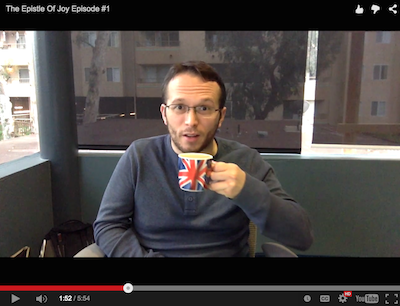
If you’re looking for something to do during Lent, I’d recommend reading a book of the Bible, Paul’s Epistle to the Philippians in particular. A couple of years ago, I did a video series during Lent on that book of the Bible. You can either watch all the videos on YouTube or check in at the site’s Facebook page where I’ll be uploading the videos several times a week.
In the Byzantine Church, as part of our final preparation for Lent, tonight we celebrate “Forgiveness Vespers”. It is similar to the usual service of Vespers, but we also ask for forgiveness from each other for any hurts we have inflicted upon one another this past year. It therefore seemed appropriate to share in this final post a quotation from my spiritual father, Fr. Nicholas:
“At one and the same time, forgiving is the hardest thing in the world and the easiest. It is the hardest because we don’t want to. It is the easiest when we let Jesus do it”
– Our God Heals, Fr. Nicholas Broadbridge
 I’m currently trying to get into the habit of watching one debate each week. Here’s this week’s entry, “Does God Exist?”, with Dr. William Lane Craig (affirmative) and the late Christopher Hitchens (negative):