Tag: Morality
Legality and Morality
Despite its obvious flaw, I’m often told that abortion is fine because it’s legal…

Resources Concerning The Moral Argument
I’ll be giving a talk this weekend where I’ll be talking about The Moral Argument for the existence of God, so I thought I’d pull together all my resources on the subject…
Frank Turek discusses major Mistakes concerning The Moral Argument: Part 1, Part 2 and Part 3.
Where do Good and Evil Come From?

The Trolley Problem
There’s been a lot of talk on Social Media about “The Trolley Problem”, as though this somehow defeats the pro-life position. Here is a great response from Catholic Answers:

Mere Christianity – Book III – Chapter 6 (“Christian Marriage”)
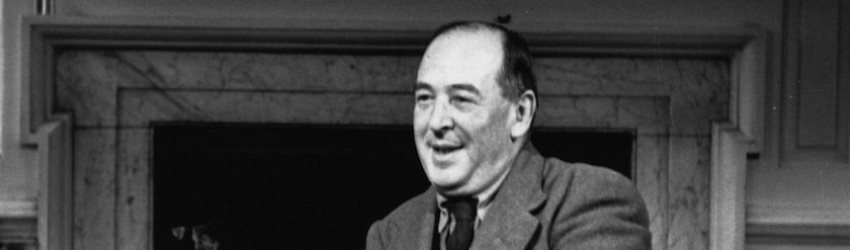
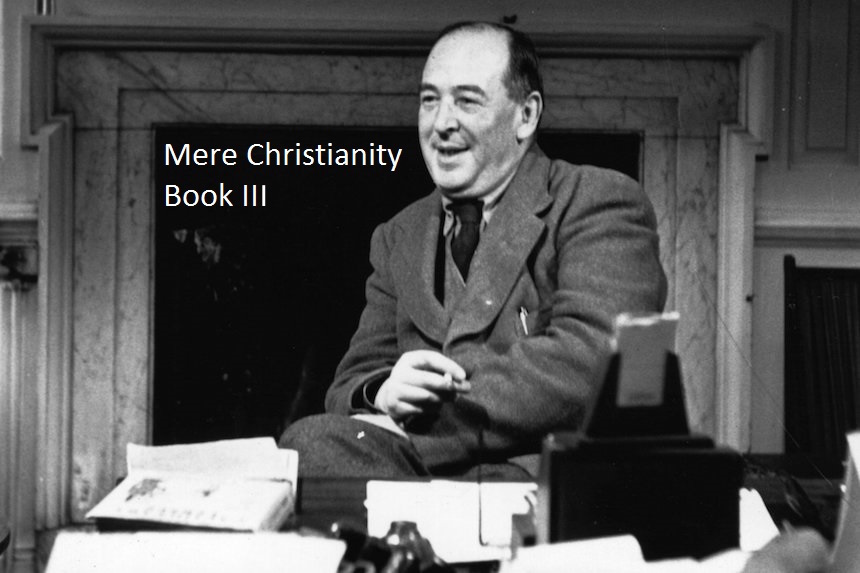
Picking back up my notes for C.S. Lewis’ “Mere Christianity”…
Notes & Quotes
1. Jack doesn’t want to talk about marriage
(a) Christian doctrines surrounding marriage are very unpopular
(b) He (at the time) hadn’t been married
…but he can’t ignore it when he is speaking on the subject of morality!
2. The idea of Christian marriage is based on Christ’s words
(a) Husband and wife are “one flesh”
“The Christian idea of marriage is based on Christ’s words that a man and wife are to be regarded as a single organism… He was not expressing a sentiment but stating a fact – just as… when one says that a lock and its key are one mechanism, or that a violin and a bow are one musical instrument”
(b) …and therefore what makes fornication wrong is that it tries to separate the different intended unions, isolating the pleasures
“…those who indulge in it are trying to isolate one kind of union (the sexual) from all the other kinds of union which were intended to go along with it and make up the total union. The Christian attitude does not mean that there is anything wrong about sexual pleasure, any more than about the pleasure of eating. It means that you must not isolate that pleasure and try to get it by itself, any more than you ought to try to get the pleasures of taste without swallowing and digesting, by chewing things and spitting them out again”
3. Marriage is permanent
(a) There are some differences on this subject between different Churches
(i) They different on when, if ever, there can be divorce (or, more strictly remarriage)
“…some do not admit divorce at all; some allow it reluctantly in very special cases. It is a great pity that Christians should disagree about such a question…”
(ii) …but they agree with each other much more than they agree with the world
“…they all regard divorce as something like cutting up a living body, as a kind of surgical operation. Some of them think the operation so violent that it cannot be done at all; others admit it as a desperate remedy in extreme cases. They are all agreed that it is more like having both your legs cut off than it is like dissolving a business partnership…they all disagree with is the modern view that it is a simple readjustment of partners…”
(b) Its permanence isn’t just rooted in the virtue of chastity, but in justice because just involves keeping promises
“…everyone who has been married in a church has made a public, solemn promise to stick to his (or her) partner till death. The duty of keeping that promise has no special connection with sexual morality: it is in the same position as any other promise.
If, as modern people are always telling us, the sexual impulse is just like all our other impulses, then it ought to be treated like all our other impulses; and as their indulgence is controlled by our promises, so should its be. If, as I think, it is not like all our other impulses, but is morbidly inflamed, then we should be especially careful not to let it lead us into dishonesty”
(c) Some might respond saying that the promise was a mere formality which they never intended to keep
“Whom, then, was he trying to deceive when he made it? God? That was really very unwise. Himself? That was not very much wiser. The bride, or bridegroom, or the “in-laws”? That was treacherous. Most often, I think, the couple (or one of them) hoped to deceive the public. They wanted the respectability that is attached to marriage without intending to pay the price… If people do not believe in permanent marriage, it is perhaps better that they should live together unmarried than that they should make vows they do not mean to keep. It is true that by living together without marriage they will be guilty (in Christian eyes) of fornication. But one fault is not mended by adding another: unchastity is not improved by adding perjury”
(d) Some might respond saying that the whole point of marriage is “being in love”
(i) In which case, there’s no point of making a promise!
“…[but this] leaves no room for marriage as a contract or promise at all. If love is the whole thing, then the promise can add nothing; and if it adds nothing, then it should not be made…
(ii) But, this is what lovers naturally do!
As Chesterton* pointed out, those who are in love have a natural inclination to bind themselves by promises. Love songs all over the world are full of vows of eternal constancy. The Christian law is not forcing upon the passion of love something which is foreign to that passion’s own nature: it is demanding that lovers should take seriously something which their passion of itself impels them to do…
* G.K. Chesterton, the Catholic writer and apologist
(iii) A promise is about action, not feelings
A promise must be about things that I can do, about actions: no one can promise to go on feeling in a certain way. He might as well promise never to have a headache or always to feel hungry.
(iv) There are sound, social reasons why two people should remain together, even if they are no longer “in love”
“…to provide a home for their children, to protect the woman (who has probably sacrificed or damaged her own career by getting married) from being dropped whenever the man is tired of her. “
(A) “Being in love” is a good thing, but not the best thing.
“[People] like thinking in terms of good and bad, not of good, better, and best, or bad, worse and worst… “What we call ‘being in love’ is a glorious state… It helps to make us generous and courageous, it opens our eyes not only to the beauty of the beloved but to all beauty, and it subordinates (especially at first) our merely animal sexuality; in that sense, love is the great conqueror of lust. No one in his senses would deny that being in love is far better than either common sensuality or cold self-centredness… Being in love is a good thing, but it is not the best thing.
(B) Feelings fade
It is a noble feeling, but it is still a feeling. Now no feeling can be relied on to last in its full intensity, or even to last at all. Knowledge can last, principles can last, habits can last; but feelings come and go.
(C) Feelings fade
“…ceasing to be “in love” need not mean ceasing to love… It is a deep unity, maintained by the will and deliberately strengthened by habit; reinforced by (in Christian marriages) the grace which both parents ask, and receive, from God. They can have this love for each other even at those moments when they do not like each other; as you love yourself even when you do not like yourself. They can retain this love even when each would easily, if they allowed themselves, be “in love” with someone else… It is on this love that the engine of marriage is run: being in love was the explosion that started it”
(d) If you disagree with me, are you doing this based on real experience?
(i) Books and movies often distort the truth
“If you disagree with me, of course, you will say, ‘He knows nothing about it, he is not married.’ You may quite possibly be right. But before you say that, make quite sure that you are judging me by what you really know from your own experience and from watching the lives of your friends, and not by ideas you have derived from novels and films… Our experience is coloured through and through by books and plays and the cinema, and it takes patience and skill to disentangle the things we have really learned from life for ourselves“
(ii) They tell us that you can be “in love” always and forever
People get from books the idea that if you have married the right person you may expect to go on “being in love” for ever. As a result, when they find they are not, they think this proves they have made a mistake and are entitled to a change – not realising that, when they have changed, the glamour will presently go out of the new love just as it went out of the old one.
In this department of life, as in every other, thrills come at the beginning and do not last. The sort of thrill a boy has at the first idea of flying will not go on when he has joined the R.A.F. and is really learning to fly. The thrill you feel on first seeing some delightful place dies away when you really go to live there. Does this mean it would be better not to learn to fly and not to live in the beautiful place? By no means. In both cases, if you go through with it, the dying away of the first thrill will be compensated for by a quieter and more lasting kind of interest… it is just the people who are ready to submit to the loss of the thrill and settle down to the sober interest, who are then most likely to meet new thrills in some quite different direction. The man who has learned to fly and becomes a good pilot will suddenly discover music; the man who has settled down to live in the beauty spot will discover gardening.
(iii) They tell us that falling in love is irresistible
“Another notion we get from novels and plays is that ‘falling in love’ is something quite irresistible; something that just happens to one, like measles. And because they believe this, some married people throw up the sponge and give in when they find themselves attracted by a new acquaintance. But I am inclined to think that these irresistible passions are much rarer in real life than in books, at any rate when one is grown up. When we meet someone beautiful and clever and sympathetic, of course we ought, in one sense, to admire and love these good qualities. But is it not very largely in our own choice whether this love shall, or shall not, turn into what we call “being in love”? No doubt, if our minds are full of novels and plays and sentimental songs, and our bodies full of alcohol, we shall turn any love we feel into that kind of love: just as if you have a rut in your path all the rainwater will run into that rut, and if you wear blue spectacles everything you see will turn blue. But that will be our own fault”
(e) Should Christian matrimony and marriage be distinguished?
“…if [Christians] are voters or Members of Parliament, ought [they] try to force their views of marriage on the rest of the community by embodying them in the divorce laws[?] A great many people seem to think that if you are a Christian yourself you should try to make divorce difficult for every one. I do not think that. At least I know I should be very angry if the Mohammedans tried to prevent the rest of us from drinking wine. My own view is that the Churches should frankly recognise that the majority of the British people are not Christians and, therefore, cannot be expected to live Christian lives. There ought to be two distinct kinds of marriage: one governed by the State with rules enforced on all citizens, the other governed by the Church with rules enforced by her on her own members. The distinction ought to be quite sharp, so that a man knows which couples are married in a Christian sense and which are not”
4. Headship
“Christian wives promise to obey their husbands. In Christian marriage the man is said to be the ‘head'”
(a) Why should there be a head at all – why not equality?
“The need for some head follows from the idea that marriage is permanent. Of course, as long as the husband and wife are agreed, no question of a head need arise; and we may hope that this will be the normal state of affairs in a Christian marriage. But when there is a real disagreement, what is to happen? Talk it over, of course; but I am assuming they have done that and still failed to reach agreement What do they do next? They cannot decide by a majority vote, for in a council of two there can be no majority. Surely, only one or other of two things can happen: either they must separate and go their own ways or else one or other of them must have a casting vote. If marriage is permanent, one or other party must, in the last resort, have the power of deciding the family policy. You cannot have a permanent association without a constitution”
(b) Why should it be the man?
(i) Is there any very serious wish that it should be the woman?
“… as far as I can see, even a woman who wants to be the head of her own house does not usually admire the same state of things when she finds it going on next door…. I do not think she is even very flattered if anyone mentions the fact of her own “headship.” There must be something unnatural about the rule of wives over husbands, because the wives themselves are half ashamed of it and despise the husbands whom they rule.
(ii) Foreign policy
“The relations of the family to the outer world-what might be called its foreign policy – must depend, in the last resort, upon the man, because he always ought to be, and usually is, much more just to the outsiders. A woman is primarily fighting for her own children and husband against the rest of the world. Naturally, almost, in a sense, rightly, their claims override, for her, all other claims. She is the special trustee of their interests. The function of the husband is to see that this natural preference of hers is not given its head. He has the last word in order to protect other people from the intense family patriotism of the wife.
(A) Who would you prefer to deal with?
“If your dog has bitten the child next door, or if your child has hurt the dog next door, which would you sooner have to deal with, the master of that house or the mistress?
(B) If you are a married woman…
“Much as you admire your husband, would you not say that his chief failing is his tendency not to stick up for his rights and yours against the neighbours as vigorously as you would like? A bit of an Appeaser?”
Discussion Questions
1. On what is Christian marriage based?
2. How does Jack defend the idea that Christian marriage is permanent? What are the main objections presented?
3. How does Jack defend the idea of headship in marriage? How does he respond to the different objections to this? Do you think there are other arguments which can be marshaled?
C.S. Lewis Doodle
Mere Christianity – Book III – Chapter 5 (“Sexual Morality”)
Picking back up my notes for C.S. Lewis’ “Mere Christianity”…
Notes & Quotes
1. The virtue related to sex is called “chastity”
2. “Chastity” is not the same as “modesty” or “proprietary”
(a) “modesty” is a social convention
“The social rule of propriety lays down how much of the human body should be displayed and what subjects can be referred to, and in what words, according to the customs of a given social circle. Thus, while the rule of chastity is the same for all Christians at all times, the rule of propriety changes”
(b) “modesty” doesn’t necessarily imply “chastity”
“A girl in the Pacific islands wearing hardly any clothes and a Victorian lady completely covered in clothes might both be equally “modest,” proper, or decent, according to the standards of their own societies: and both, for all we could tell by their dress, might be equally chaste (or equally unchaste)”
(c) Language is in a state of flux
“While this confusion lasts I think that old, or old-fashioned, people should be very careful not to assume that young or “emancipated” people are corrupt whenever they are (by the old standard) improper; and, in return, that young people should not call their elders prudes or puritans because they do not easily adopt the new standard. A real desire to believe all the good you can of others and to make others as comfortable as you can will solve most of the problems”
3. Chastity is the most unpopular of the Christian virtues
(a) It makes people think that Christianity is wrong
“Now this is so difficult and so contrary to our instincts, that obviously either Christianity is wrong or our sexual instinct, as it now is, has gone wrong. One or the other. Of course, being a Christian, I think it is the instinct which has gone wrong”
(b) But it looks like the sex instinct is the one which is out of kilter
“…if a healthy young man indulged his sexual appetite whenever he felt inclined, and if each act produced a baby, then in ten years he might easily populate a small village. This appetite is in ludicrous and preposterous excess of its function”
4. If we treated food in the same way we treated sex, we would think it preposterous
(a) We don’t have food strip-tease acts
“You can get a large audience together for a strip-tease act-that is, to watch a girl undress on the stage. Now suppose you came to a country where you could fill a theatre by simply bringing a covered plate on to the stage and then slowly lifting the cover so as to let every one see, just before the lights went out, that it contained a mutton chop or a bit of bacon, would you not think that in that country something had gone wrong with the appetite for food?”
(b) Some might respond that this is a sign of starvation
“One critic said that if he found a country in which such striptease acts with food were popular, he would conclude that the people of that country were starving…”
(i) But we’d then need to see if much food was actually consumed…
“But the next step would be to test our hypothesis by finding out whether, in fact, much or little food was being consumed in that country. If the evidence showed that a good deal was being eaten, then of course we should have to abandon the hypothesis of starvation and try to think of another one”
(ii) …and compare to previous generations
“…we should have to look for evidence that there is in fact more sexual abstinence in our age than in those ages when things like the strip-tease were unknown. But surely there is no such evidence. Contraceptives have made sexual indulgence far less costly within marriage and far safer outside it than ever before, and public opinion is less hostile to illicit unions and even to perversion than it has been since Pagan times”
(iii) Besides, we know that appetites grow by indulgence
“Starving men may think much about food, but so do gluttons; the gorged, as well as the famished, like titillations”
5. We have been lied to about sex
“…for the last twenty years, have been fed all day long on good solid lies about sex”
(i) We have been told that sex became a mess because it was hushed up
But for the last twenty years it has not been hushed up. It has been chattered about all day long. Yet it is still in a mess. If hushing up had been the cause of the trouble, ventilation would have set it right. But it has not.
(ii) We have been told that “Sex is nothing to be ashamed of.”
(A) If they are referring to sex itself, they are right
“Christianity says the same… Christianity is almost the only one of the great religions which thoroughly approves of the body… Christianity has glorified marriage more than any other religion… If anyone says that sex, in itself, is bad, Christianity contradicts him at once”
(B) But if they are talking about the current state of the sexual instinct, they are wrong
“I think it is everything to be ashamed of. There is nothing to be ashamed of in enjoying your food: there would be everything to be ashamed of if half the world made food the main interest of their lives and spent their time looking at pictures of food and dribbling and smacking their lips… we grow up surrounded by propaganda in favour of unchastity. There are people who want to keep our sex instinct inflamed in order to make money out of us. Because, of course, a man with an obsession is a man who has very little sales-resistance”
6. We can be cured
(a) But this first requires that we desire to be cured
Those who really wish for help will get it; but for many modern people even the wish is difficult. It is easy to think that we want something when we do not really want it. A famous Christian* long ago told us that when he was a young man he prayed constantly for chastity; but years later he realised that while his lips had been saying, “Oh Lord, make me chaste,” his heart had been secretly adding, “But please don’t do it just yet.”
* St. Augustine of Hippo (4th/5th Century)
However, three reasons make this difficult:
(i) We think it “unhealthy”
“In the first place our warped natures, the devils who tempt us, and all the contemporary propaganda for lust, combine to make us feel that the desires we are resisting are so “natural,” so “healthy,” and so reasonable, that it is almost perverse and abnormal to resist them”
(A) This is a lie based on a truth
“Like all powerful lies, it is based on a truth-the truth, acknowledged above, that sex in itself (apart from the excesses and obsessions that have grown round it) is “normal” and “healthy,” and all the rest of it. The lie consists in the suggestion that any sexual act to which you are tempted at the moment is also healthy and normal”
(B) It’s actually a conflict, not between Christianity and nature, but Christian principle and other principles
“…Surrender to all our desires obviously leads to impotence, disease, jealousies, lies, concealment, and everything that is the reverse of health… Every sane and civilised man must have some set of principles by which he chooses to reject some of his desires and to permit others. One man does this on Christian principles, another on hygienic principles, another on sociological principles… The Christian principles are, admittedly, stricter than the others; but then we think you will get help towards obeying them which you will not get towards obeying the others”
(ii) We think it “impossible”!
(A) We quit before we start
“…many people are deterred from seriously attempting Christian chastity because they think (before trying) that it is impossible”
(B) We should at least try
“…in war, in mountain climbing, in learning to skate, or swim, or ride a bicycle, even in fastening a stiff collar with cold fingers, people quite often do what seemed impossible before they did it. It is wonderful what you can do when you have to”
(C) We need God’s help
“We may, indeed, be sure that perfect chastity…will not be attained by any merely human efforts. You must ask for God’s help”
(D) We need grace to persevere
“After each failure, ask forgiveness, pick yourself up, and try again. Very often what God first helps us towards is not the virtue itself but just this power of always trying again. For however important chastity (or courage, or truthfulness, or any other virtue) may be, this process trains us in habits of the soul which are more important still. It cures our illusions about ourselves and teaches us to depend on God… The only fatal thing is to sit down content with anything less than perfection”
(iii) We think it is being “repressive”
(A) Many people misunderstand what “repression” is
“…it does not mean “suppressed” in the sense of “denied” or “resisted.” A repressed desire or thought is one which has been thrust into the subconscious (usually at a very early age) and can now come before the mind only in a disguised and unrecognisable form. Repressed sexuality does not appear to the patient to be sexuality at all”
(B) Since those pursuing chastity are conscious of their resistance, they are the least likely to become repressed
“…those who are seriously attempting chastity are more conscious, and soon know a great deal more about their own sexuality than anyone else. They come to know their desires as Wellington knew Napoleon, or as Sherlock Holmes knew Moriarty; as a rat-catcher knows rats or a plumber knows about leaky pipes. Virtue – even attempted virtue – brings light; indulgence brings fog”
7. Christian morality doesn’t center on sex
“…I want to make it as clear as I possibly can that the centre of Christian morality is not here”
(a) The worst sins are purely spiritual
“The sins of the flesh are bad, but they are the least bad of all sins. All the worst pleasures are purely spiritual”
(b) It is the diabolical, not the animal which is worse
“For there are two things inside me, competing with the human self which I must try to become. They are the Animal self, and the Diabolical self. The Diabolical self is the worse of the two. That is why a cold, self-righteous prig who goes regularly to church may be far nearer to hell than a prostitute. But, of course, it is better to be neither”
Discussion Questions
1.What is the difference between chastity and modesty?
2. Either Christianity is wrong about chastity or the sexual instinct is misaligned. Why might we be inclined to think it is the latter?
3. What lies have we been told about sex?
4. Why do we resist chastity?
C.S. Lewis Doodle