When Jehovah Witnesses come to call…

I have two Jehovah Witnesses (JW) coming to see me this weekend…
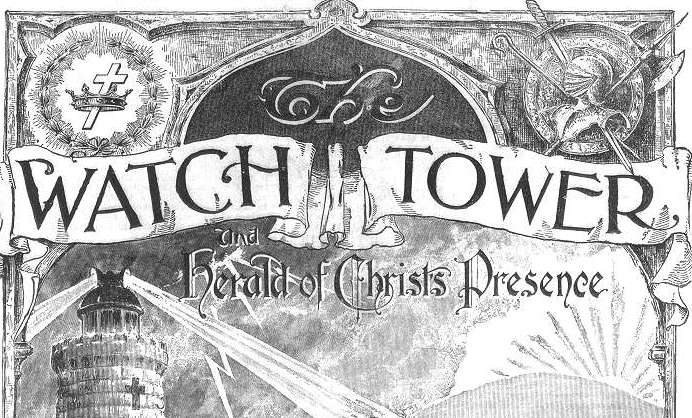
early_watch_tower_cover

Knock, knock…

You see, two JWs turned up at my door about a month ago. They asked about religion so I told them a little bit about my faith journey. I explained how the issue of the canon (the Bible’s table of contents) was one of the decisive topics which brought about my return to Catholicism. 

How did they know that the table of contents was correct, I asked. I knew the various standard Protestant answers to this question and found them all unconvincing, but I wondered how a JW would answer it. The two missionaries at my door said they couldn’t answer that question, but they’d go find out and get back to me.

(This was, by the way, an excellent answer. When someone asks you a question and you don’t know the answer, it’s far better to say you don’t know, rather than trying to make something up on the spot. Just make sure that you do actually find out the answer and come back)

Well, this last Saturday I had two older chaps turn up at my door. I invited them in but they didn’t want to and instead booked an appointment with me for this weekend. I’m currently looking to find an icon of St. Nicholas to put up in time for their visit 😉

(There was a legend that St. Nicholas punched Arias in the face at the Council of Nicaea for denying the full deity of Christ, a doctrine also affirmed by JWs)

“But I’m no theology expert…”

I didn’t want to end this post without briefly mentioning something else on the subject of JWs. Not all Catholics will feel comfortable meeting with JWs and discussing theology, and others might just simply don’t have the time. However, I would like to share something that a friend of mine does when JWs call. She simply says the following:

glass-of-water“It’s really great that you care so much about your faith that you’re willing to give up your Saturday mornings to do this, but I should probably tell you I’m Catholic. In fact, I’m reeeeally Catholic, so I think I’d probably just be a waste of your time. 

It’s pretty hot outside today though, so would you like to take a chilled bottle of water to take with you?”

So, if you have to go pick up the kids for soccer practice or you’re busy getting brunch together and don’t have the time, I think this is a great response to give. It’s simple, it takes a grand total of thirty seconds to say and demonstrates concretely the love of Christ to those who love God enough to face rejection and abuse from strangers every week.

For truly, I say to you, whoever gives you a cup of water to drink because you bear the name of Christ, will by no means lose his reward. – Mark 9:41

Hints & Guesses

The album “Hints & Guesses” is the first full-length album from Alanna-Marie Boudreau, a young musician from New York who was recently touring here in San Diego.  About a month ago I received a copy of Alanna’s new album in advance of its release this September (iTunes, Website), so after a few weeks of listening to the album in my car, I wanted to share my impression of it.
The title of the album comes from a line in a TS Elliot poem, The Four Quartets, which speaks about the glimpses we get of something beautiful and awe-inspiring, but which hasn’t yet been fully revealed. In an interview on her YouTube channel, Alanna compared it to seeing the early morning sunlight before the sun itself has risen, explaining it as “the sense of home-sickness that you can’t really describe”. These are themes to which a restless pilgrim can certainly relate!

Read more

What’s the earliest depiction of the crucifixion?

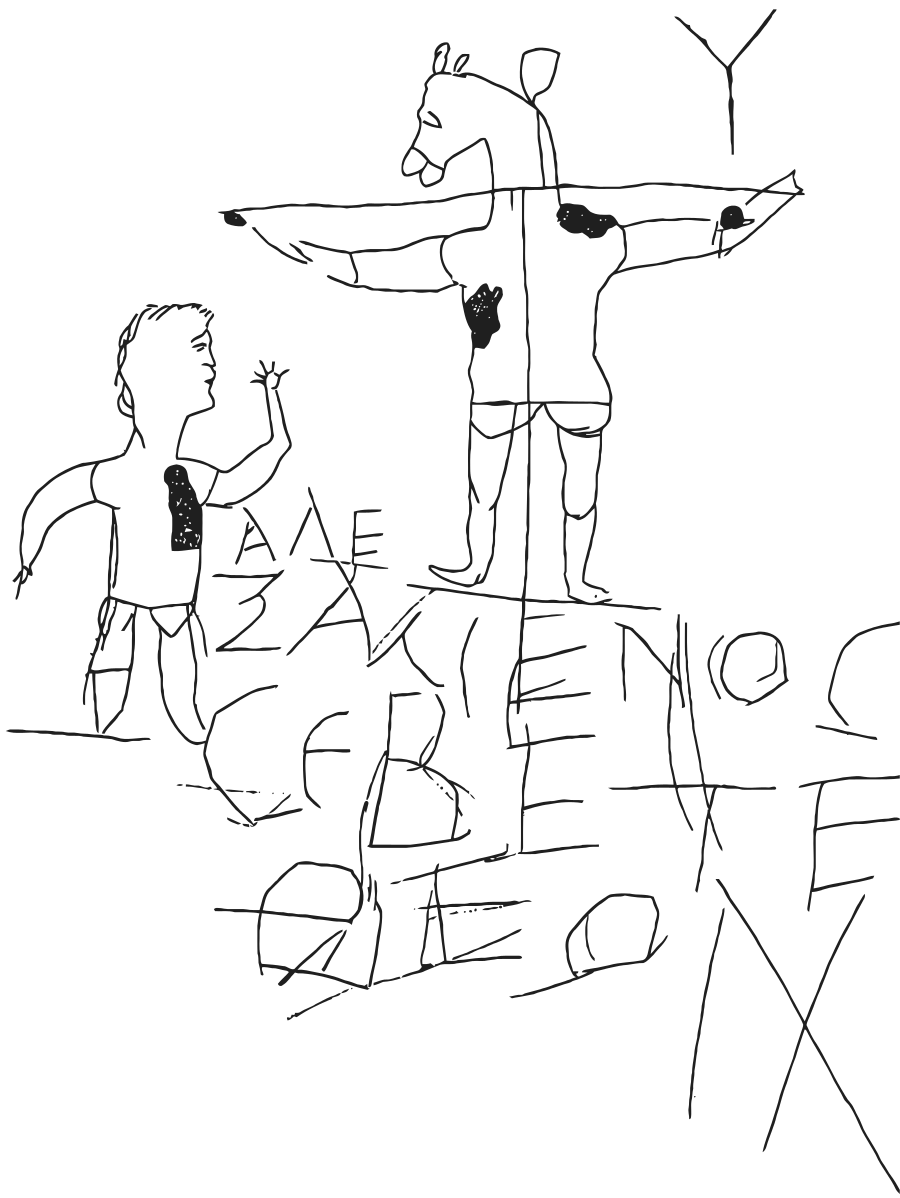
The earliest depiction of Jesus’ crucifixion doesn’t, in fact, come from a Christian source. It is known as Alexamenos Graffito and, as the name suggests, it’s a piece of graffiti. It was found near Rome’s Palatine Hill and is dated sometime between 1st and 3rd Century:

AlexGraffito

The text underneath the picture says in Greek “Alexamenos worships [his] God”. The picture itself shows Jesus on a cross with a donkey’s head, with another person on the left (presumably “Alexamenos”) raising his hand in worship. It’s clear that this was written by someone who knew Alexamenos and wanted to mock him and his Christian faith.

Read more

Quick Apology: You can’t pray to dead people

Continuing in my series of brief apologetic responses, today I would like to look at the subject of Saintly intercession. As I mentioned last time, these will not be thorough, nuanced rebuttals, but simply how I typically would reply when I only have a brief window of opportunity to respond to objections to my Faith.

Objection

I often see on internet forums the following common objection to Saintly intercession:

“You can’t pray to dead people”

Response

In response to this objection I point out that the Saints are not dead:

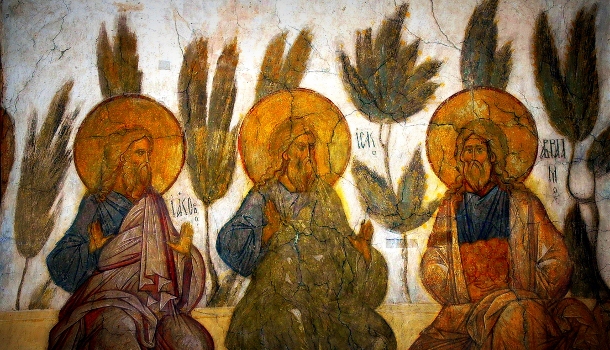
“…have you not read what was said to you by God, ‘I am the God of Abraham, and the God of Isaac, and the God of Jacob’? He is not God of the dead, but of the living.” – Matthew 22:32

If Jesus says that the Saints (“Abraham…Isaac….Jacob”) are alive and well, then I think it’s pretty safe to assume that they are indeed alive. Last week we had the Feast of the Transfiguration when Jesus speaks with Moses…a “dead” man (Matthew 17:1-4). Therefore, it is incorrect to call those Christians who have passed away “dead”. They are more alive in God than they have ever been!

Abraham-Isaac-and-Jacob-610x350

Why palms?

Today’s post is one of those blog entries which I wrote quickly wrote and then forgot to schedule for publishing. Well, better late than never…

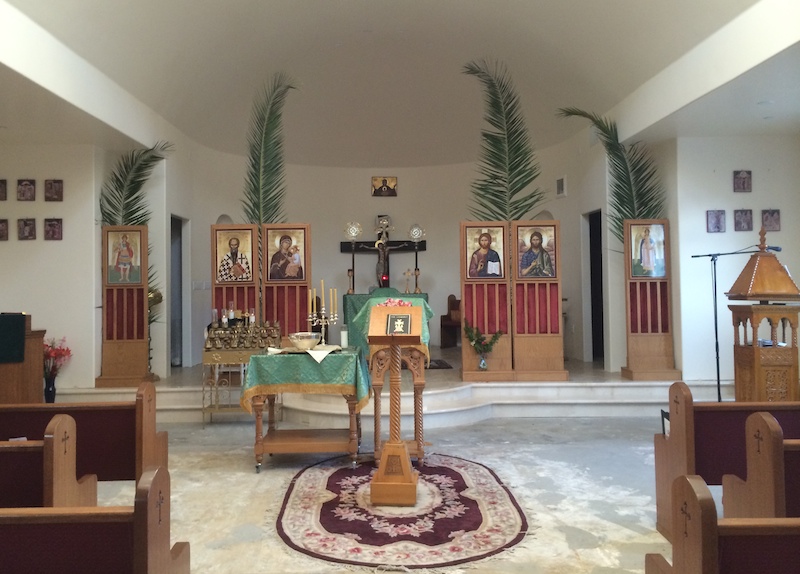
Tonight I went to an Eastern Orthodox parish for Saturday Vespers and I was struck by how they decorated their church in preparation for Palm Sunday:

Gregory Of Nyssa

Now, the reason for decorating with palms was obvious, given that Sunday is called “Palm Sunday” and in the liturgy we’ll hear the account of Jesus being welcomed with palm branches:

The next day a great crowd who had come to the feast heard that Jesus was coming to Jerusalem. So they took branches of palm trees and went out to meet him, crying, “Hosanna! Blessed is he who comes in the name of the Lord, even the King of Israel!” – John 12:12-13

However, I got to wondering…why palms? Was there any significance to it?

Thinking about it, I realized that many of the icons in my own parish featured palm branches. What was the symbolism? I was curious, so I went looking…

Read more

Quick Apology: You don’t believe in Thor, do you?

Up until now, all of the “Quick Apology” posts have dealt with Catholic-Protestant disputes. Today I would like to address a Theist-Atheist issue. I wrote this post several weeks ago, but I heard this specific objection was just a few days ago…

Objection

Probably as a result of the writings of the “New Atheists”, I’ve heard with increasing regularity the statement:

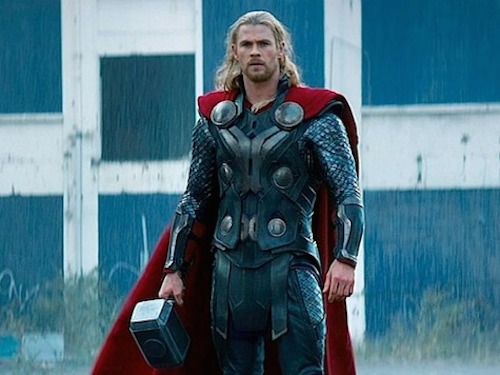
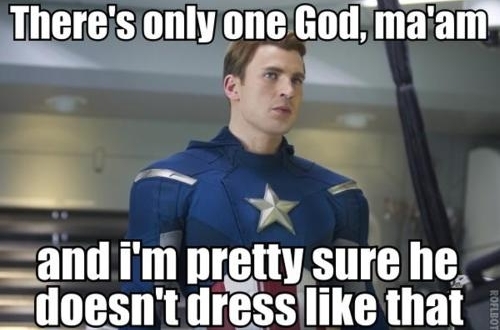
“You don’t believe in Thor do you? You’re almost an atheist – I just believe in one less god than you”

Response

The suggestion here is that Christians are, in fact, basically atheists since they don’t believe in the gods of other religions. The atheist is just like the Christian except that she rejects the Christian God as well.

There’s the suggestion that, since Thor doesn’t exist, then neither does the God of Abraham, Isaac and Jacob. However, this doesn’t really follow, does it? After all, does the existence of counterfeit money mean that real money doesn’t exist? I hope not, otherwise I’ve worked 40 hours this week for nothing! Does the existence of counterfeit love mean that real love doesn’t exist? The recently dumped may think so, but I think generally we can agree that counterfeit love doesn’t disprove real love.

So, in conclusion, the non-existence of Thor has no bearing on the existence of Yahweh. The evidence for each must be weighed independently…

Thor-the-Dark-World

captain-american-one-god

Quick Apology: Chained Bibles

In today’s Quick Apology post I wanted to turn to the subject of history…

Objection

When speaking about the Catholic approach to Scripture, some Protestants will make the following accusation:

“The Catholic Church used to chain up Bibles!”

Response

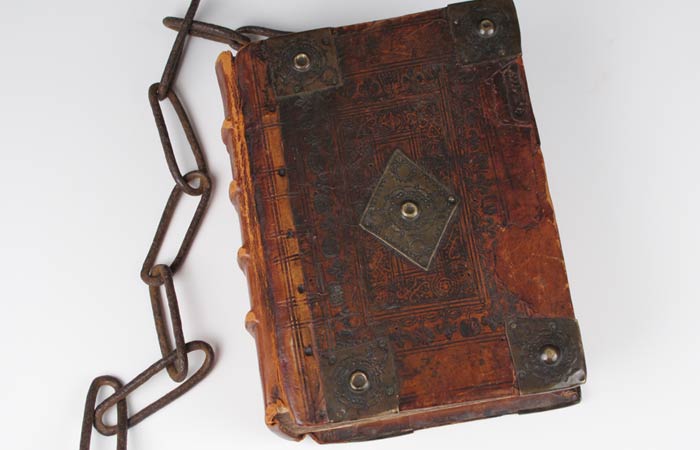
The statement is absolutely true; it was not uncommon prior to the Reformation for Bibles to be chained up. When I am told this in a discussion I concede the point, but I then ask the person speaking if they know why this was done…

It is not uncommon to receive as a response, “They chained them up to stop people reading the Bible!”. While the initial statement was true, this explanation as to why Bibles were chained is completely incorrect. In fact, Bibles were chained for completely the opposite reason. Bibles were chained up so that more people had access to the Scriptures!*

You see, prior to the Fifteen Century and the invention of the movable type printing press, Bibles were hand-written. This was an colossal undertaking and therefore extremely costly. This meant that Bibles were expensive items liable to be stolen by thieves. Therefore, in an attempt to provide people with access to the Scriptures, it was common for a Bible to be made available in or around a church building, but to prevent theft, it was chained to a heavy object. If you had a Bible worth tens of thousands of dollars, would you want to leave it unsecured and unattended in a public building?!

If you visit a post office or a bank, you will often see pens chained to immovable services. Do these institutions chain these pens because they don’t want you to use them? Of course not! They want you to use the pens, but they want to make sure nobody steals them! Why? Because if they are stolen then other people won’t have the opportunity to use the pens. It is the same logic at work concerning the chaining of Bibles.

Chained Bible

* It is probably worth pointing out that literacy rates were also extremely low even until the 19th Century. It is for this reason that the most common way of learning the Bible throughout Christian history has been the hearing the Scriptures proclaimed at the Eucharistic liturgy.

1 59 60 61 62 63 137