What about Charlie?

JohnstonThere’s a good chance that by now, if you read a lot of Catholic blogs, you’ve heard of Charlie Johnston.

Charlie is a Catholic layman who lives in Denver, Colorado. A convert from Protestantism, he claims to have received visitations from Jesus, Saints and angels for most of his life.

I’d like to take today’s post to give a little introduction to what Charlie has been teaching and share a few thoughts as to how one might respond to this sort of thing.

The Message

So what has Charlie been saying? His central message is that there is “a Great Storm” coming, a series of catastrophic events for the entire world. He speaks of wars, governments falling, economic collapse and millions dying. North Korea, China and the Islamic religion have all made appearances in his messages at some point.

In addition to his warning of coming troubles, Charlie spends a lot of time talking about how Christians are to behave during this coming tumult: “Acknowledge God; take the next right step; and be a sign of hope to those around you, knowing that God is always close at hand”.

Charlie says that, during the the troubles, people will think it’s the end of the world but that will not be the case. He speaks of of an eventual rescue through the Immaculate Heart of Mary, which ultimately renders his message as one of hope. After this divine rescue, Charlie says that there will be a long period of peace, prosperity and Christian unity.

Read more

Analysis paralysis and making your first move

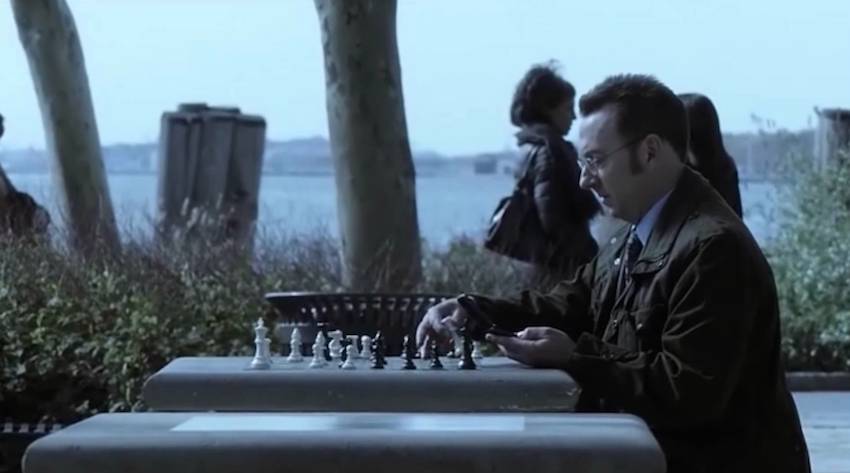
One of my recently-discovered TV shows is Person of Interest starring Jim Caviezel and Michael Emerson. It was introduced to me by my housemate, Aaron, so thanks to him I’ve been binge-watching the last four seasons on Netflix.

I don’t want to give too much away, but the basic gist of the show’s storyline is that a man named Harold has built an extremely advanced artificial intelligence which he simply refers to as “The Machine”.

One of my favourite scenes from Season 4 was a flashback in episode 11 (“If-then-else”) where we see Harold teaching The Machine to play chess. The Machine is taking a very long time to make its opening moves because it is checking all the possible moves and permutations. The Machine is effectively stuck in what is commonly known as “Analysis Paralysis”, so Harold speaks to the machine… 

Harold’s dialogue in the show is typically very profound, but I found what he says in this scene particularly striking:

Each possible move [in chess] represents a different game… By the second move, there are 72,084 possible games. By the third, 9 million. By the fourth there are more possible games of chess than there are atoms in the universe. No one could possibly predict them all, even you.

Which means that that first move can be terrifying. It’s the furthest point from the end of the game, there’s a virtually infinite sea of possibilities between you and the other side…

…But it also means that if you make a mistake, there’s a nearly infinite amount of ways to fix it. So you should simply relax and play.

Harold Finch, Person of Interest

My personality type certainly predisposes me towards Analysis Paralysis. Like The Machine, I’m often afraid of making a mistake, so much so that I spend protracted periods of time considering all the options and possible consequences. Now while prudence is a good thing, this kind of analysis can be debilitating. It’s a problem when you’re so risk averse that you never actually take a course of action.

It is here that I find Harold’s words comforting. In life, much like in a game a chess, it’s virtually impossible to check every possible scenario and say for absolute certain what will happen, but the sooner you start, the sooner you can make adjustments. So, “…simply relax and play”.

Head back to Sunday School, Colbert…

On Catholic Memes, I just saw a video where Stephen Colbert challenged another celebrity to a Catholic throwdown. This time his opponent was Patricia Heaton, star of “Everybody loves Raymond” and “The Middle”:

Oh Stephen…you disappoint me.

I counted at least three major Catholic mistakes in this throwdown, three “maxima culpas”, if you will. So get out your sackcloth and ashes, and let me I teach you something about the Catholic Faith…

Read more

The Counterfeit Heralds

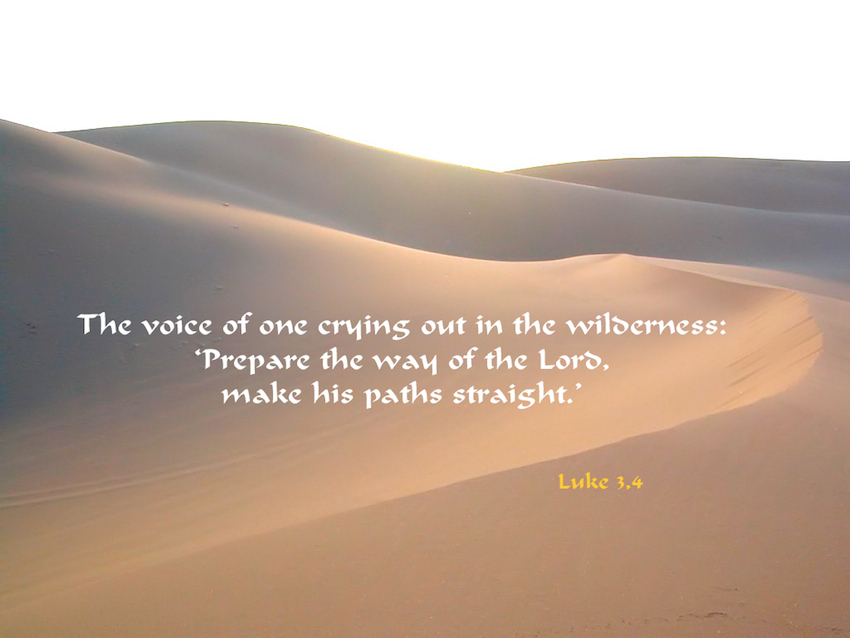
In yesterday’s post, I spoke about the New Exodus, giving a little bit of background as to the expectations of the Jewish people and a brief summary of how this was fulfilled in John the Baptist and Jesus. In today’s post I would just like to identify briefly some other people who tried to assume these roles…
Prepare

1. The Dead Sea Scroll Community

The people behind “The Dead Sea Scrolls”, thought by most to be a community of Essenes, saw themselves as fulfilling prophesy. For example, consider the following extract from the rule of their community:

…[having] become a community…they are to be segregated from within the dwelling of the men of sin to walk in the desert in order to open there His path. As it is written: “In the desert, prepare the way of YHWH, straighten in the steppe a roadway for our God”

Here we see the Dead Sea Scroll community associate themselves with the same prophesy of Isaiah which is used in Matthew’s Gospel to identify John the Baptist.

2. Theudas

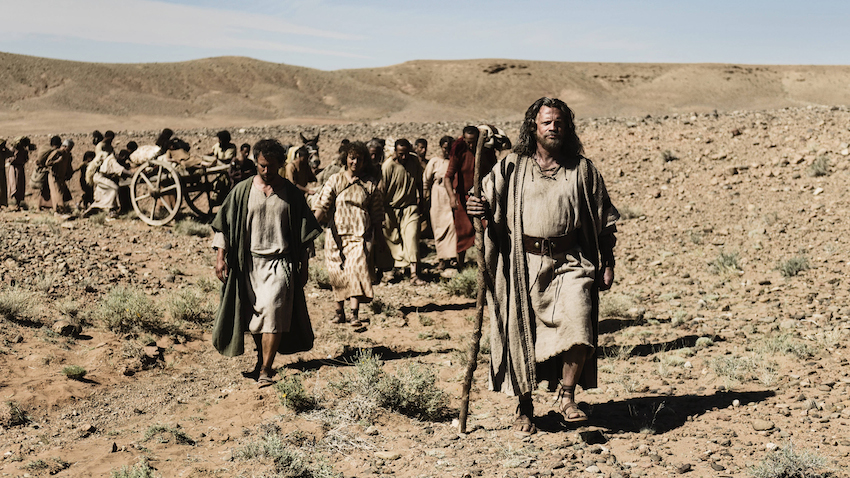
Yesterday we saw the significance of the Jordan in the New Exodus. In his writings, the Jewish historian Josephus tells about a man in the First Century who clearly understood this:

…a certain impostor named Theudas persuaded the majority of the masses to take up their possessions and follow him to the Jordan River. He stated that he was a prophet and that at his command the river would be parted and would provide them an easy passage. With this talk he deceived many.

Fadus [the procurator of Judaea], however, did not permit them to reap the fruit of their folly, but sent against them a squadron of cavalry. These fell upon them unexpectedly, slew many of them and took many prisoners. Theudas himself was captured, whereupon they cut off his head and brought it to Jerusalem.

– Josephus, Antiquities 20:97-99

Theudas wasn’t the only false herald to suffer an unfortunate fate…

3. The Egyptian

In the previous post we briefly recounted the conquest of the Holy Land by the Children of Israel. Josephus tells us of another First Century character, simply known as “The Egyptian”, who was expecting victory over the Romans from Israel in a similar manner:

At this time there came to Jerusalem from Egypt a man who declared that he was a prophet and advised the masses of the common people to go out with him to the mountain called the Mount of Olives, which lies opposite the city at a distance of five furlongs. For he asserted that he wished to demonstrate from there that at his command Jerusalem’s walls would fall down, through which he promised to provide them an entrance into the city.

When Felix heard of this he ordered his soldiers to take up their arms. Setting out from Jerusalem with a large force of cavalry and infantry, he fell upon the Egyptian and his followers, slaying four hundred of them and taking two hundred prisoners. The Egyptian himself escaped from the battle and disappeared.

– Josephus, Antiquities 20:169-72

Hopefully this background lends some more context to the drama we find in the Gospels, particularly when we are introduced to St. John the Baptist, why the people were so interested in the Baptist and also why he also attracted the attention of the authorities.

Making everything new

The other day I was at the pub discussing theology with one of my friends. During our discussion, I referred to “the New Exodus”, a phrase which he hadn’t heard before. I can’t say for sure, but I think I first heard it used by either Brant Pitre or Scott Hahn…someone like that…

Actually, if you listen to other theologians at the St. Paul Center for Biblical Theology, you’ll hear them use the word “new” an awful lot. They speak about the New Moses, New Manna, New Solomon, New Temple… In light of this, today I would like to give a brief overview of this way of viewing Scripture, with particular reference to the New Exodus. Understanding this perspective on Scripture can be really helpful, particularly in seeing the overarching unity of Scripture in the Old and New Testaments.

Read more

Quick Apology: Sinai Bible vs KJV

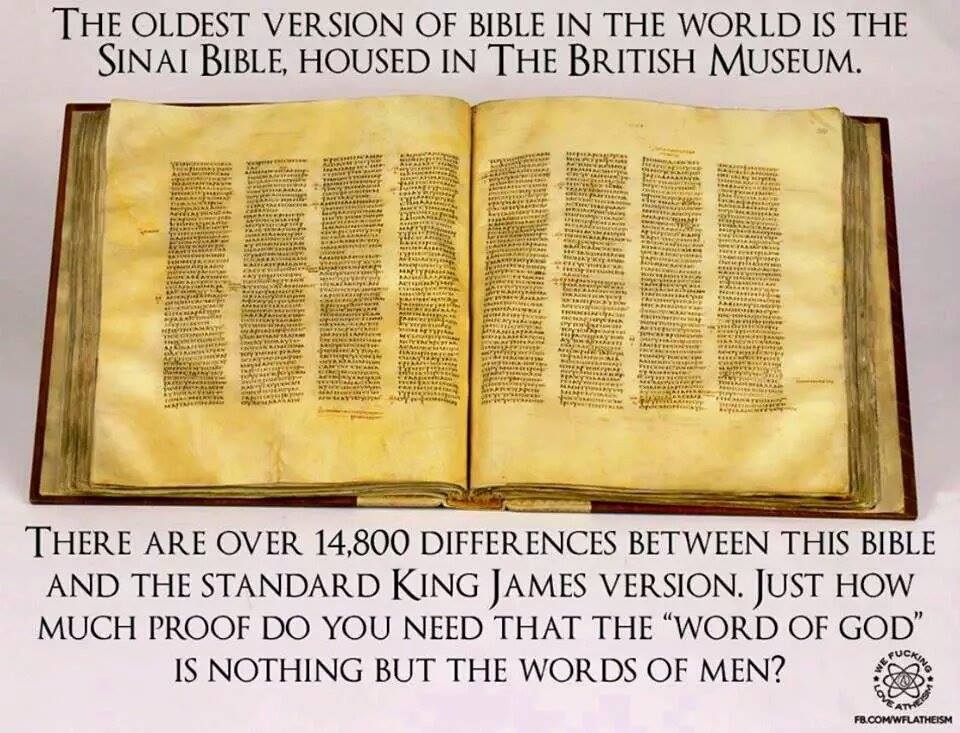
Last week I published an article outlining my response to an abortion meme posted on Facebook by a friend. Today I would like to do something similar. Below is a meme which I also saw on Facebook during Advent:

Sinai

Once again, I would like to share a modified version of the response I posted in reply as I know some readers find it helpful to see how different Christians respond to stuff like this.

Read more

1 37 38 39 40 41 137