Parallel Consequences

Unanswered Questions

Yesterday I outlined the various parallels which can be found between Jesus’ Passion and Polycarp’s Martyrdom. I ended the entry by asking:

“But what does this all mean? Why are there these similarities between the deaths of Jesus and Polycarp?”

The martyrdom account itself ascribes these similarities to the providence of God:

“By almost every step that led up to Polycarp’s martyrdom, the Lord intended to show us anew the type of martyrdom narrated in the Gospel…” – Mart. Pol., 1.1

But that then raises the question: why might God wish to present to His Church a death like that of Christ?

Read more

Polycarp Parallels

In the introduction to the Martyrdom of Polycarp, the author tells us that “By almost every step that led up to Polycarp’s martyrdom, the Lord intended to show us anew the type of martyrdom narrated in the Gospel” (Mart. Pol 2.1).

We’re currently working our way through this martyrdom account in the JP2 Group so I thought I’d put together a post highlighting all the parallels I’ve found between Jesus’ death and Polycarp’s witness (martyrdom) to his Lord.

The full text and audio of the Martyrdom is available here.

Some of these parallels are much stronger than others (I put a star rating next to each one of them). In many ways, the fact that there are many inexact parallels actually adds to the credibility of the martyrdom account. Were it fabricated, one would expect the parallels to be “tidied up” a bit more and closer to that of our account of Jesus’ Passion.

Both foretold their deaths (Rating: *****)
In the Martyrdom of Polycarp, after seeing a vision of his pillow aflame, Polycarp turns to his companions and states “I must be burnt alive” (Mart. Pol 5.2). Jesus, likewise, foretold his own death saying “We are going up to Jerusalem, and [I]  will be delivered over to the chief priests and the teachers of the law. They will…hand [me] over to the Gentiles to be mocked and flogged and crucified” (Matt 20:18-19).

Both were betrayed (Rating: **)
Jesus was betrayed, of course, by Judas (Matt. 26:15). The author of the Martyrdom points out that “those who betrayed [Polycarp] were of his own household” and directly compares the betrayer to Judas (Mart. Pol 6.2). Both betrayers accompany the arresting party. However, I can’t help but think that this comparison is a little unfair. Polycarp’s betrayal was neither malicious nor for profit. The slave didn’t reveal Polycarp’s location until he had suffered abuse at the hands of the policemen. In fact, you might call this a “tortured” parallel… 😉

Both begin in an upper room (Rating: *)
When the police arrive for Polycarp he’s in the “upper room of a certain little house” (Mart. Pol. 7.1). Jesus’ Passion was preceded by the Last Supper held also in an Upper Room (Luke 22:12).

Read more

A year of blogging

Today marks my blogging anniversary. I have now been writing this blog for one year exactly.

[Pause for applause]

Over of the 365 days of this blog’s existence I have written 137 posts, which works out at about a post every two or three days. Not bad at all.

Not a lot of people know this, but I was officially declared dyslexic at school when I was ten years old. As such, writing has never come easily to me.  Even if you see a post on this blog which is composed of even just a few sentences, I can guarantee you that I put quite some time into its composition. Therefore, the fact that I’ve managed to regularly write on this blog every two or three days for a year is really quite an achievement for me 🙂

Read more

Saints and Sense Of Humour

I spent the last few days in Vegas on vacation so I’ve been catching up with my blog reading and found that, a couple of days ago, Joe Heschmeyer from Shameless Popery wrote a great post entitled Preparing Ourselves as Tabernacles For The Lord. This is a subject related to my post below. I began writing this entry about a month ago and scheduled it for publishing today – I’m not copying you Joe, honest!

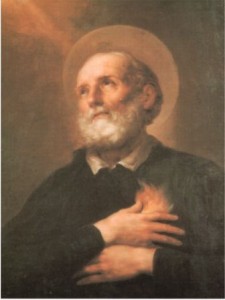
A couple of weeks ago it was the feast day of St. Philip Neri.

Philip was born in Florence in 1515. At about the age of eighteen he experienced a deep conversion of heart and moved to Rome with no money or plan, but simply trusted in God’s providence. He worked for two years as a live-in tutor, but otherwise led a simple life of solitude and prayer.

He studied Philosophy and Theology for about three years but then brought his studies to an abrupt close. He launched a mission to the people of Rome, which was fortunate since, at that time, both the people and the Church of Rome were in a particularly shabby spiritual state.

There are many praiseworthy aspects of Philip’s life which are worth sharing, but the episode I would like to recount here is one which demonstrates his rather cheeky sense of humour…

Read more

My thoughts on quantum gravity

Last month I read an article about Professor Steven Hawking in which he was quoted as saying:

“I regard the brain as a computer which will stop working when its components fail. There is no heaven or afterlife for broken down computers; that is a fairy story for people afraid of the dark”

Well, that’s nice… As intelligent and qualified as you are to answer questions about black holes and quantum gravity, I’m afraid Professor Hawking, this is a philosophical question. It was for this reason, after reading the article, my Facebook status quickly became:

“Hey Stephen, do want to hear my thoughts on String Theory?”

Professor Hawking has recently been increasingly vocal over the question of God. I was originally going to write a longer post about Professor Hawking’s recent assertions, but then I remembered that Fr. Barron had produced a superb video where he addressed some of these issues:

Read more

25 Random Facts

One of my friends commented that there’s not a whole lot of “me” on this blog, so today I’m cheating and rehashing something which I posted on Facebook two years ago…

It was a craze that went around Facebook where you wrote twenty-five random facts about yourself in a Note and then tagged a load of friends who then had to do the same. Rinse and repeat.

The content of my Facebook Note was as follows:

Man, this was difficult! It was particularly hard coming up with things that people may not know about me but that I’m also comfortable with putting into the public domain!

I think this “25 Random Facts” thing has been the best thing in Facebook to date – I’ve really enjoyed reading everyone else’s, so here goes…

1. I was a bit of a handful in Primary School – I became very familiar with the Headmaster’s office, having usually been sent there for getting into fights. I wasn’t at all academic then either.

2. I hated school up until the age of 16. After that, it just got better and better…

3. I was a very arty child (drawing, poetry etc) until about the age of twelve when I swapped my soul for an Amiga 600 with 1MB of RAM…

4. I have a scar by my right elbow from a moped accident in France when I was fifteen. I’m really proud of it. Chicks dig scars.

5. I’ve been a Christian all my life, but at the age of twenty I had a major renewal in my faith. I couldn’t imagine life otherwise.

6. I love chick-flicks. There, I said it.

UPDATE: If you know me, this really isn’t news… 😉

Read more

A most misunderstood doctrine: Purgatory

Today I’d like to look at one of the most misunderstood doctrines of the Catholic Faith: Purgatory.

I’m not going to try and give a thorough theological treatment of this doctrine; others infinitely more qualified than I have done that. Rather, I would just like to offer a few thoughts that have helped me in my own acceptance and understanding of this teaching.

The doctrine of Purgatory is something that a lot of non-Catholics struggle with, yet in an odd twist, it was actually one of the first Catholic doctrines I came to hold during my return journey to the Catholic Church.  I came to believe in it because it’s a doctrine that is beautiful, Scriptural and profoundly logical.

Odd Ideas

Unfortunately, it’s also one of those doctrines which is often poorly understood. For example, I’ve come across Catholics and ex-Catholics who were under the impression that Purgatory is basically Hell, or that Hell is still a possibility for those in Purgatory.  The Catholic Catechism denies both of these ideas, saying:

“[Purgatory is a] purification, so as to achieve the holiness necessary to enter the joy of heaven… [It is experienced by those]…who die in God’s grace and friendship, but [who are] still imperfectly purified…  This final purification of the elect…is entirely different from the punishment of the damned”

CCC 1030-1031

The common objection you hear from non-Catholics is “But ‘purgatory’ isn’t even mentioned the Bible!” And they’re right.  The word “purgatory” does not exist in the Bible, but then again, neither does “Trinity” nor “Hypostatic Union”, yet all mainstream Christians believe in both of these doctrines. A simple word-search is not enough to understand this teaching…

Read more

1 160 161 162 163 164 172