One good Lawrence deserves another
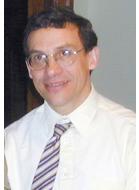
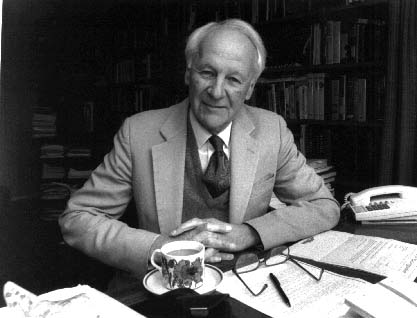
Yesterday was the Feast of St. Lawrence, so to mark this occasion I thought I would give a quick “tip of the hat” to another Lawrence, Dr. Lawrence Feingold.

Now, I’ve never actually met Dr. Feingold, but I have heard many of his talks and they’ve all been, without exception, brilliant. He comes across as unassuming, yet he clearly knows his stuff and is genuinely excited by the material he’s presenting.

I can’t recall exactly how it came about, but towards the end of 2009 I followed a hyperlink that took me to the website belonging to The Association of Hebrew Catholics. On that website I found the first couple of lectures by Dr. Feingold in his series “Themes of the Early Church Fathers“. I liked his tone and style immediately. At that time I had just started to discover these early Christian writers and Dr. Feingold’s series was a superb catalyst in helping familiarize me with the Early Church.
Read more

Lectionary Resources

A few people have recently asked me where I get the material for my “Lectionary Notes” posts. Here’s the process I go through each week:

1. After we conclude our Bible Study in the JP2 Group, we all go to the church next door for adoration. In the presence of the Blessed Sacrament I read the Lectionary Scriptures for the following week and spend a little bit of time praying through them.

2. When I next have some time, I read through the texts again using my NIV Study Bible.

Regarding Bible translations, translators have to make a choice between translating from the original language word-for-word (“formal equivalence”) or providing a looser translation but which attempts to better convey the thought expressed by the original writer (“dynamic equivalence”). This essentially results in a trade-off between readability and fidelity to the original words of the text. I quite like the NIV in that it falls somewhere between formal and dynamic equivalence, but with a leaning more towards dynamic equivalence.

The NIV is not a Catholic Bible and unfortunately therefore is missing the books of Wisdom, Sirach etc. Some of the study notes also have a non-Catholic skew, but on the whole it has excellent cross-references and always at least offers an interesting point of view.

3. The next book I reach for is my Ignatius New Testament Study Bible. I can’t say how much I love this book. It’s the RSV translation, which follows the “formal equivalence” approach. I would not-so-humbly suggest that it is a far superior translation to the NAB which is used in the Lectionary. Ignatius Press have produced a superb resource here, with excellent notes, maps and word studies. Every Christian should own a copy – it’s a bargain at $16. I will wait here while you click on the link and go and order a copy from Amazon. Seriously, I’ll wait…Done? Okay, let’s continue!

Read more

Lectionary Notes, August 14th

August 14, 2011: Twentieth Sunday in Ordinary Time

The readings this week focus around the Gentiles (those of non-Jewish ethnicity) and their place in salvation history. In the First Reading we hear the Lord proclaim through the Prophet Isaiah, that His house will be a house of prayer “for all peoples” and in the Psalm we sing about God’s glory being proclaimed “among all nations”. In the Second Reading, St. Paul gives us some insight into the relationship between the Jews and Gentiles in God’s plan for salvation. Finally, in the Gospel we read about Jesus’ encounter with a Canaanite women who, although a Gentile, is granted her request by the Lord because of her great faith.

Read more

“Uncle John” RIP

Last week John Stott fell asleep in Christ.

Dr. Stott was born in England in 1921. As a teenager, he came to faith in Christ through the Anglican church. He would go on to dedicate his life to serving Christ for the next seventy years.

As well as being Curate and Rector of All Souls Langham Place for thirty years, he was a superb scholar, authoring over fifty books, including “Basic Christianity”. He lived a modest life and the royalties of his books were poured back into missionary work and leadership training overseas. Even after retiring, he continued to work tirelessly for the Kingdom and continued to inspire the new generation of Bible teachers. All of this earned him something of a household name among evangelicals.

Read more

Lectionary Notes, August 7th

19th Sunday in Ordinary Time

Reading 1: 1 Kgs 19:9a, 11-13a

The events of this passage take place after Elijah has defeated the Prophets of Baal (1 Kings 18:22-40). As a result of this humiliating defeat, Princess Jezebel has sworn to kill him (1 Kings 19:1-2). Elijah flees into the desert where, dejected and overcome by fear, he tells God that he may as well let him die (1 Kings 19:3-4). He then goes to sleep, but is awoken twice in the night by an angel who gives him bread and water. Strengthened by this food, he travels for 40 days to Mt. Horeb (1 Kings 19:5-8), also known as Mt. Sinai, the mountain where God revealed the Law to Moses.

Whereas Moses interceded for the Israelites (Exodus 32:11-13), Elijah appears to have reached the end of his tether (1 Kings 19:10). Elijah complains about his lack of success, saying that the people have abandoned God and he effectively condemn them. In saying this, there is the subtle implication that God’s promises have failed…

Then in the passage assigned for this Sunday, God reveals Himself to Elijah, indicating his patience, mercy and gentleness with His people. In the text that follows afterwards, God gives Elijah instructions as to what to do next.

At the mountain of God, Horeb, Elijah came to a cave where he took shelter. Then the LORD said to him, “Go outside and stand on the mountain before the LORD; the LORD will be passing by.”

A strong and heavy wind was rending the mountains and crushing rocks before the LORD— but the LORD was not in the wind.

After the wind there was an earthquake— but the LORD was not in the earthquake.

After the earthquake there was fire— but the LORD was not in the fire.

After the fire there was a tiny whispering sound. When he heard this, Elijah hid his face in his cloak and went and stood at the entrance of the cave.

Suggested Questions:

  • What is this “mountain of God” mentioned? Does it have another name? What other events have also taken place there? Why does Elijah go there?
  • What do you think is the significance of the “wind…earthquake…fire”? Why was the Lord not “in” them?
  • What do you think is the significance of the “tiny whispering sound”?
  • Why does Elijah hide his face?

Read more

Secret city on a hill

Often in Scripture we have to harmonize two passages which seem to present some kind of conflict with each other. Today I would like to present one such conflict,  one with which I’ve struggled over the years.

In the fifth chapter of Matthew’s Gospel, Jesus says:

“You are the light of the world. A city built on a hill cannot be hidden. Neither do people light a lamp and put it under a bowl. Instead they put it on its stand, and it gives light to everyone in the house. 

“In the same way, let your light shine before others, that they may see your good deeds and glorify your Father in heaven” – Matthew 5:14-16

So, we’re supposed to let our light shine before others. Got it. Yet…in the next chapter it says…

“Be careful not to practice your righteousness in front of others to be seen by them. If you do, you will have no reward from your Father in heaven. So when you give to the needy, do not announce it with trumpets, as the hypocrites do in the synagogues and on the streets, to be honored by others. Truly I tell you, they have received their reward in full. But when you give to the needy, do not let your left hand know what your right hand is doing, so that your giving may be in secret. Then your Father, who sees what is done in secret, will reward you” – Matthew 6:1-4

So we should let our light shine….but only in secret? Hmm….

I’ve had people ask me about these two passages before and I have given them an answer, providing some distinctions between each of these passages, but today I’d like to turn the question over to you. How do we reconcile these two passages? What is Jesus trying to teach us? And if we follow His teaching here, what does it practically look like?

Please answer in the comments below.

Lectionary Notes: Feeding The Hungry

Things have been a bit non-stop this last week, so I’m afraid these notes are late, slightly shorter than usual and a little bit rushed, but as GK Chesterton said, “If something is worth doing, it’s worth doing badly”…

18th Sunday in Ordinary Time: 31st July, 2011

Reading 1: Isaiah 55:1-3

After Jeremiah, Isaiah is my favourite prophet. This book is often called “The Fifth Gospel” and, with a passage like this, it’s easy to see why. Here, God gives a beautiful invitation to His people to come and be satisfied, to return to Him, to come and be filled free of charge! Why settle for anything less?

When we recognize our hunger and our dependence on God, He will fill us and give us life.

Thus says the LORD:

“All you who are thirsty, come to the water!
You who have no money, come, receive grain and eat;
Come, without paying and without cost, drink wine and milk!

Why spend your money for what is not bread; your wages for what fails to satisfy?
Heed me, and you shall eat well, you shall delight in rich fare.
Come to me heedfully, listen, that you may have life.
I will renew with you the everlasting covenant, the benefits assured to David”

Suggested Questions:

  • What is the general invitation of this passage?
  • What does this food and drink cost? What does this say about God?
  • What do you think the “water” here represents?
  • What do you think the “grain” here represents?
  • What do you think the “wine” here represents?
  • What do you think the “milk” here represents?
  • In what way do we “spend [our] money on what is not bread”?
  • Why do we do spend our “wages for what fails to satisfy”?
  • What is promised together with this food?
  • What was the promise God made to David?
  • How do we experience the invitation of this passage today?

Read more

1 158 159 160 161 162 172