Loving Aslan more than Jesus?

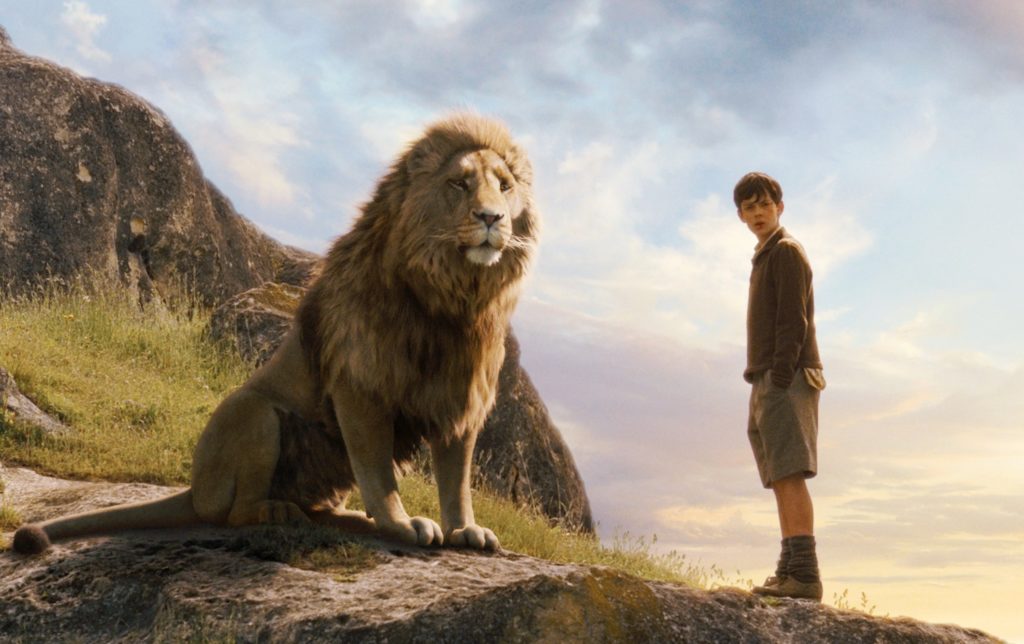
I recently came across a letter from C.S. Lewis. A mother had written to the author of the Chronicles of Narnia because her son was afraid that he loved Aslan more than Jesus. Lewis’ response was pure gold…

Laurence can’t really love Aslan more than Jesus, even if he feels that’s what he is doing. For the things he loves Aslan for doing or saying are simply the things Jesus really did and said. So that when Laurence thinks he is loving Aslan, he is really loving Jesus: and perhaps loving Him more than he ever did before.

If I were Laurence I’d just say in my prayers something like this: “Dear God, if the things I’ve been thinking and feeling about those books are things You don’t like and are bad for me, please take away those feelings and thoughts. But if they are not bad, then please stop me from worrying about them. . . . And if Mr. Lewis has worried any other children by his books or done them any harm, then please forgive him and help him never to do it again.”

– C. S. Lewis: Letters to Children, pp. 52-53

The Great Divorce: Chapter 14

Summary

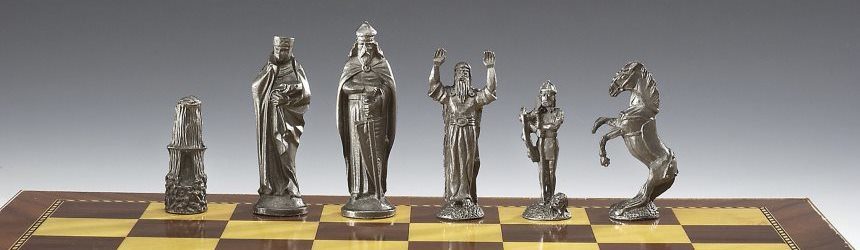
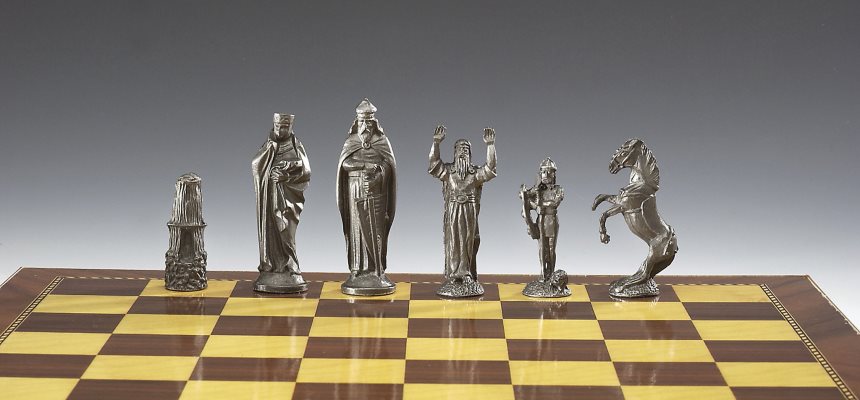
Lewis suddenly sees a vision, “a great assembly of gigantic forms all motionless…standing forever about a little silver table…[where] there were little figures like chessmen who went to and fro doing this and that…[each the] puppet representative of some one of the great presences that stood by. And the silver table is Time. And those who stand and watch are the immortal souls of those same men and women”. This vision terrifies Lewis and asks MacDonald if “all that I have been seeing in this country false? These conversations between the Spirits and the Ghosts were they only the mimicry of choices that had really been made long ago?”. His teacher says that alternatively you might say they were “anticipations of a choice to be made at the end of all things”, but that it would be better to say neither. The point was that on this journey he had seen the choices a bit more clearly than on earth because “the lens was clearer. But it was still seen through the lens. Do not ask of a vision in a dream more than a vision in a dream can give”. It is at this point that Lewis realizes that he is not actually dead and only dreaming. MacDonald warns him that, when he tells others, to emphasize that it was only a dream.

The vision of the chessemen fades and he is back in the wood again. Standing with his back to the sunrise, Lewis seeing the land light up before him as the sun rises. Suddenly the air is filled with “hounds, and horns; …ten thousand tongues of men and woodland angels and the wood itself sang”. Screaming, Lewis buries his face in the folds of MacDonald’s robe, but “The light, like solid blocks, intolerable of edge and weight, came thundering upon my head”. In the next moment, the folds of MacDonald’s garment become the folds of Lewis’ ink-stained cloth which he had pulled down as he fell from his chair.  The blocks of light turn out to only be the books which he had pulled from the table. He wakes up “in a cold room, hunched on the floor beside a black and empty grate, the clock striking three, and the siren howling overhead”.

Questions

Q1. How do you understand the vision of the chessmen? How does Lewis now understand this journey? What warning does MacDonald give Lewis?

Q2. Why is Lewis terrified by the sun?

Previous Chapter | Index | End of Book!

The Great Divorce: Chapter 13

Summary

The Dwarf struggles against joy. It “was not the meeting [the ghost] had pictured; he would not accept it”. He tugs at the chain and the Tragedian acts offended, saying, “It is fortunate that you give yourself no concern about my fate. Otherwise you might be sorry afterwards to think that you had driven me back to Hell”. The Lady replies “Dear, no one sends you back. Here is all joy. Everything bids you stay”. Saying this does no good –  the Tragedian says he still has some self-respect and the dwarf starts to shrink.

When the Lady tells the Dwarf to not “let it talk like that, the “Tragedian caught her words greedily as a dog catches a bone”, complaining that she always had to be “sheltered”. The Lady explains that wasn’t what she meant, rather that she wanted him to “stop acting… He is killing you. Let go of that chain. Even now”.

Sarah tells Frank to stop “using…other people’s pity, in the wrong way…”. She explains that “Pity was meant to be a spur that drives joy to help misery. But it…can be used for a kind of blackmailing… [to] hold joy up to ransom”. This is something he did ever since he was a child. She asks him “Did you think joy was created to live always under that threat? Always defenceless against those who would rather be miserable than have their self-will crossed?” She explains that “you can no longer communicate your wretchedness… Our light can swallow up your darkness: but your darkness cannot now infect our light”.

The Dwarf and the chain having disappeared, for the first time the Lady addresses the Tragedian, asking who he is and where Frank has gone. She invites him to stay, but the Tragedian vanishes. The lady returns to her retenue who begin to sing a song: “The Happy Trinity is her home: nothing can trouble her joy…”

After departing, Lewis asks his teacher: “Is it really tolerable that she should be untouched by his misery, even his self-made misery?”. MacDonald asks him if he would prefer it if “he still had the power of tormenting her”. He talks about “The demand of the loveless and the self-imprisoned… to blackmail the universe: that till they consent to be happy (on their own terms) no one else shall taste joy… that Hell should be able to veto Heaven… Either the day must come when joy prevails and all the makers of misery are no longer able to infect it: or else for ever… the makers of misery can destroy in others the happiness they reject for themselves”.

Lewis says he finds it horrible to say that pity must someday die. His teacher distinguishes between the action which will last forever and passion of pity which will come to the end. He says that the passion of pity “draws men to concede what should not be conceded” whereas the action “changes darkness into light and evil into good”. However, “we will not call blue yellow to please those who insist on still having jaundice”.

Lewis once again asks why the Spirits don’t go down into Hell to rescue the damned. Going down on his knees and using a blade of grass as a pointer, MacDonald points to a tiny crack, saying, “…through a crack no bigger than that ye certainly came…”. The idea that the infinitely empty Grey Town is down in a little crack blows his mind, but Lewis now realizes that the Lady couldn’t even fit into Hell. MacDonald concurs that “Hell could not open its mouth wide enough”. Referring to Jesus, MacDonald says that “Only the Greatest of all can make Himself small enough to enter Hell…” Lewis asks if He ever will descend again, but MacDonald explains that time doesn’t work that way, but assures Lewis that “There is no spirit in prison to Whom He did not preach”.

Lewis asks MacDonald about his Universalist beliefs, but MacDonald says “it’s ill talking of such questions…because all answers deceive. If ye put the question from within Time…the choice of ways is before you… But if ye are trying to leap on into eternity… then ye ask what cannot be answered to mortal ears. Time is the very lens through which ye see…something that would otherwise be too big for ye to see at all…[but] every attempt to see the shape of eternity except through the lens of Time destroys your knowledge of Freedom”

Questions

Q1. Why does the ghost resist joy? What does the Tragedian threaten? How does the Lady respond?

Q2. What did the Tragedian hold love hostage? What does MacDonald say about pity?

Q3. How does the Lady respond to the Ghost’s disappearance? Why is Lewis troubled by her reaction?

Q4. What does Lewis find out about Hell from MacDonald? Why couldn’t the lady go there?

Q5. What does MacDonald say about time, freedom and predestination?

Previous Chapter | Index | Next Chapter
The Great Divorce: Chapter 12

Summary

The branches of trees down one aisle of the forest dance with light and Lewis thinks there must be another river nearby. It turns out the light is coming from people in a procession. Lewis tells us that “If I could remember their singing and write down the notes, no man who read that score would ever grow sick or old”. Behind them came a beautiful lady in whose honour all this was being done.

Lewis whispers to MacDonald, “Is it? … is it?”. His teacher responds that it’s actually a lady from Golders Green named Sarah Smith, who is “one of the great ones” in this country. MacDonald identifies some of the people in the procession as angels, and others as “her sons and daughters” who were any child she met on earth. She is also surrounded by animals: cats, dogs, birds and horses. MacDonald explains that “Every beast and bird that came near her had its place in her love. In her they became themselves. And now the abundance of life she has in Christ from the Father flows over into them.”

The Lady moves towards “two phantoms: a great tall Ghost, horribly thin and shaky”, whom Lewis dubs “The Tragedian”, who is being led on a chain by another Ghost who is “no bigger than an organ-grinder’s monkey”. When they meet, despite the Tragedian being the one who speaks, the Lady addresses only the Dwarf Ghost. She kisses him and asks for his forgiveness “For all I ever did wrong and for all I did not do right since the first day we met”. The Dwarf shakes the chain and the Tragedian responds, saying he accepts her apology.

The Tragedian says that he’s been thinking only about her “all these years…breaking your heart about me”. In a small, bleating voice, the Dwarf Ghost asks if she missed him. When the Lady tells him that he’ll understand it soon enough, the Dwarf and Tragedian speak in unison to each other, saying that she didn’t answer the question. It is at this point that Lewis “realised then that they were one person, or rather that both were the remains of what had once been a person”, Sarah’s husband, Frank. The Dwarf and the Tragedian tell each other that “it would be rather fine and magnanimous not to press the point” but they aren’t sure if she’d notice, recalling a time when they let her have the last stamp and she didn’t “see how unselfish we’d been”.

The Dwarf and the Tragedian are shocked to find out that the Lady has been happy in Heaven without him. The Tragedian asks here if she even knows the meaning of the word “Love”! The Lady responds: “How should I not?.. I am in love. In love, do you understand? Yes, now I love truly”. Rather than being comforted by this, the Tragedian asks if this means she didn’t love him on earth. The Lady says she did but “only in a poor sort of way… mostly the craving to be loved… I needed you”. The Tragedian is horrified at the idea that she no longer needs him, even though she says that “We shall have no need for one another now: we can begin to love truly”.

The Tragedian, becoming even more melodramatic, laments “Would to God I had seen her lying dead at my feet before I heard those words”. The Lady tries to snap him out of it by saying to the Dwarf “Frank! … Look at me… What are you doing with that great, ugly doll? Let go of the chain. Send it away. It is you I want. Don’t you see what nonsense it’s talking?”. Her message seems to get through and he starts to smile and grow a little bigger.

Questions

Q1. How would you describe the procession? What is Lewis’ suspicion regarding the identity of the lady?

Q2. Who are the ghosts in this chapter? Why are there two ghosts, one of them on a chain? Why are the ghosts shocked to find that the lady has been happy in Heaven?

Q3. How does the lady describe her love for her husband on earth? How is it different now in Heaven?

Q4. How does the lady try to snap Frank out of the melodrama? Why might this work?

Previous Episode | Index | Next Episode

1 5 6 7 8 9 17