In preparation for the meeting of our C.S. Lewis reading group today, I watched this wonderful presentation from Andrew Lazo on the transformation power of friendship and how it transformed the lives of C.S. Lewis and J.R.R. Tolkien:
This weekend, our San Diego C.S. Lewis reading group will be meeting to discuss Chapter 4 of “The Four Loves”, which is the chapter which speaks about “Friendship”. In preparation for this, I watched the following cracking lecture from Dr. Louis Markos. It certainly gave me a lot to think about, including the question: “Should I go to events more often wearing a tux?”
Given that we’ve just celebrated Christmas and the New Year is just around the corner, it seems a fitting time to post this video from Douglas Gresham, C.S. Lewis’ stepson, who gave this sermon at Liberty University back in 2011…
At the 50th Anniversary of C.S. Lewis’ death, he was honoured in Westminster Abbey’s “Poet’s Corner”. To mark the anniversary and this honour, there was a C.S. Lewis Symposium with lectures given by noted C.S. Lewis experts. Here are the videos of those presentations:
In the New Year, Matt and I will be discussing the chapter in “Mere Christianity” on the subject of sexual morality. In that episode, I intend to speak briefly about masturbation. C.S. Lewis doesn’t explicitly address the subject of masturbation in that work, but he does in a letter he wrote to the young American named Keith Masson:
“For me the real evil of masturbation would be that it takes an appetite which, in lawful use, leads the individual out of himself to complete (and correct) his own personality in that of another (and finally in children and even grandchildren) and turns it back; sends the man back into the prison of himself, there to keep a harem of imaginary brides. And this harem, once admitted, works against his ever getting out and really uniting with a real woman.
For the harem is always accessible, always subservient, calls for no sacrifices or adjustments, and can be endowed with erotic and psychological attractions which no woman can rival. Among those shadowy brides he is always adored, always the perfect lover; no demand is made on his unselfishness, no mortification ever imposed on his vanity.
In the end, they become merely the medium through which he increasingly adores himself. . . . After all, almost the main work of life is to come out of our selves, out of the little dark prison we are all born in. Masturbation is to be avoided as all things are to be avoided which retard this process. The danger is that of coming to love the prison.”
– Personal Letter From Lewis to Keith Masson (1956) The Collected Letters of C.S. Lewis, Volume 3
“Some people feel guilty about their anxieties and regard them as a defect of faith. I don’t agree at all. They are afflictions, not sins. Like all afflictions, they are, if we can so take them, our share in the Passion of Christ”
― C.S. Lewis, Letters to Malcolm: Chiefly on Prayer
Since it is the 500th anniversary of the Reformation, Nessa and I are devoting the next to episodes to the two key doctrines of the Reformation: “Sola Fide” (Faith Alone) and “Sola Scriptura” (Scripture Alone). Today we’ll begin by looking at the first of these doctrines, Sola Fide.
• Over the next two weeks we’re going to look at “Sola Fide” (Faith Alone) and “Sola Scriptura” (Scripture Alone)
• Luther thought that Sola Fide was the central element of Christianity:
“If the doctrine of justification is lost, the whole of Christian doctrine is lost” – Luther, Lectures On Galatians
• I quoted from the Protestant apologetics site “Got Questions”:
“Sola fide or faith alone is a key point of difference between not only Protestants and Catholics but between biblical Christianity and almost all other religions and teachings. The teaching that we are declared righteous by God (justified) on the basis of our faith alone and not by works is a key doctrine of the Bible and a line that divides most cults from biblical Christianity…
If we abandon the doctrine of justification by faith, we abandon the only way of salvation…
The Bible teaches that those that trust Jesus Christ for justification by faith alone are imputed with His righteousness, while those who try to establish their own righteousness or mix faith with works will receive the punishment due to all who fall short of God’s perfect standard” – GotQuestions.org (Emphasis added)
• A key text for Luther in relation to his doctrine of Sola Fide was:
“For we maintain that a person is justified by faith apart from the works of the law” – Romans 3:28
However, when he translated it, he added an additional word:
“For we maintain that a person is justified by faith ALONE apart from the works of the law” – Romans 3:28
To justify this change, Luther responded thus:
“If your papist wishes to make a great fuss about the word sola [alone], say this to him: ‘Dr. Martin Luther will have it so, and he says that a papist and a donkey are the same thing.'” – An Open Letter on Translating by Martin Luther
(The term “papist” here refers to Catholics)
• Luther was a master at insults. So much so, that today you can generate an insult from the Luther Insult Generator.
• When Paul talks about “works”, he is talking about the works of the Mosaic Law. In fact, he spends a lot of time in his letters comparing the Old Covenant with Moses to the New Covenant with Jesus.
• There only verse of the Bible which speaks of “faith alone” is the following passage from the Epistle of James:
“You see that a man is justified by works and not by faith alone” – James 2:24
Luther referred to this epistle as an “epistle of straw” and he moved it to the appendix of his translation of the Bible:
“We should throw the Epistle of James out of this school, for it doesn’t amount to much. It contains not a syllable about Christ. Not once does it mention Christ, except at the beginning. I maintain that some Jew wrote it who probably heard about Christian people but never encountered any.” – Luther’s works, vol. 54: Table Talk
• Nessa asked about what a Catholic should do if he “has a beef” with the Catholic Church. I suggested that it would probably depend upon the kind of issue at hand:
1. Doctrinal Issue
If you disagree with Catholic doctrine, first of all make sure that what you’re rejecting actually is the Catholic teaching on the matter and not some distortion of it. Once you have done this, find yourself a knowledgable Catholic to explain the basis of the doctrine.
2. Issues of Scandal
Reform yourself first! Be an example for others to imitate, imitating St. Francis and St. Dominic.
• I discussed my approach when discussing the Epistle of James. I ask a series of questions:
1. Can a dead faith save you? No? So you’re saying that you need a faith that’s alive?
2. Can a barren faith save you? No? So you’re saying that you need a fruitful faith?
3. Can an incomplete faith save you? No? So you’re saying that you need a complete faith?
• This then leads to another round of questions:
1. How is faith given life?
2. How is a barren faith made fruitful?
3. What is the difference between a complete faith and an incomplete faith?
The answer, according to the Epistle of James, is “Works”. In his letter, James teaches that faith must be living, fruitful and complete:
1. Living Faith “In the same way, faith by itself, if it is not accompanied by action, is dead”
– James 2:17
2. Fruitful Faith “Do you want to be shown, you foolish fellow, that faith apart from works is barren?”
– James 2:20
3. Complete Faith “[Abraham’s] faith was made complete by what he did”
– James 2:22
• On the subject of faith and works, I quote CS Lewis who said:
“Christians have often disputed as to whether what leads the Christian home is good actions, or Faith in Christ…it does seem to me like asking which blade in a pair of scissors is most necessary”
– Mere Christianity
• The Catholic Church does not teach a works-based righteousness. She condemned this heresy (“Pelagianism”) in the Fifth Century!
• I quote Lewis a second time when he’s explaining how the divine life should be nurtured and protected:
“Your natural life is derived from your parents; that does not mean it will stay there if you do nothing about it. You can lose it by neglect, or you can drive it away by committing suicide. You have to feed it and look after it: but always remember you are not making it, you are only keeping up a life you got from someone else. In the same way a Christian can lose the Christ-life which has been put into him, and he has to make efforts to keep it. But even the best Christian that ever lived is not acting on his own steam – he is only nourishing or protecting a life he could never have acquired by his own efforts”
– Mere Christianity
• The pithiest summary of salvation really comes from St. Paul’s epistle to the Galatians:
“The only thing that counts is faith expressing itself through love” – Galatians 5:6
• Pope Emeritus Benedict articulated this in one of
Being “just” simply means being with Christ and in Christ. And this suffices. Further observances are no longer necessary. For this reason Luther’s phrase: “faith alone” is true, if it is not opposed to faith in charity, in love. Faith is looking at Christ, entrusting oneself to Christ, being united to Christ, conformed to Christ, to his life. And the form, the life of Christ, is love; hence to believe is to conform to Christ and to enter into his love. So it is that in the Letter to the Galatians in which he primarily developed his teaching on justification St Paul speaks of faith that works through love – Pope Benedict XVI, Wednesday Audience, 19th November 2008
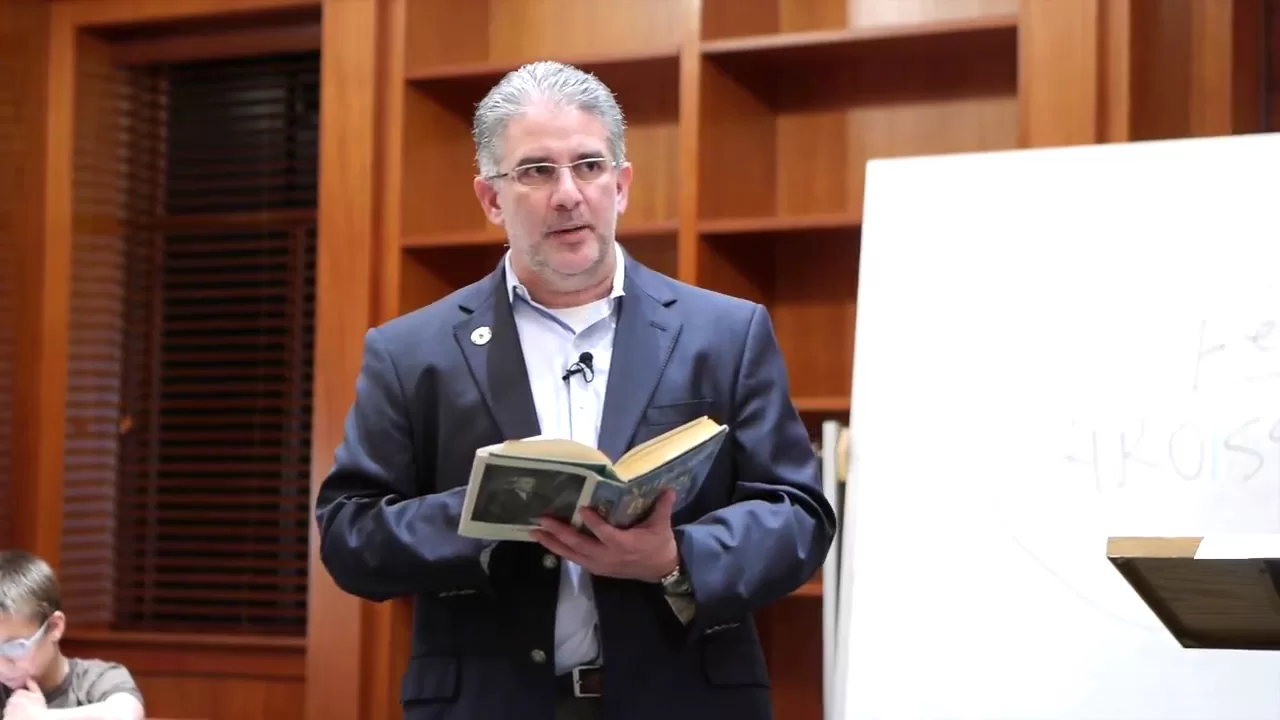 In preparation for the meeting of our C.S. Lewis reading group today, I watched this wonderful presentation from Andrew Lazo on the transformation power of friendship and how it transformed the lives of C.S. Lewis and J.R.R. Tolkien:
 This weekend, our San Diego
 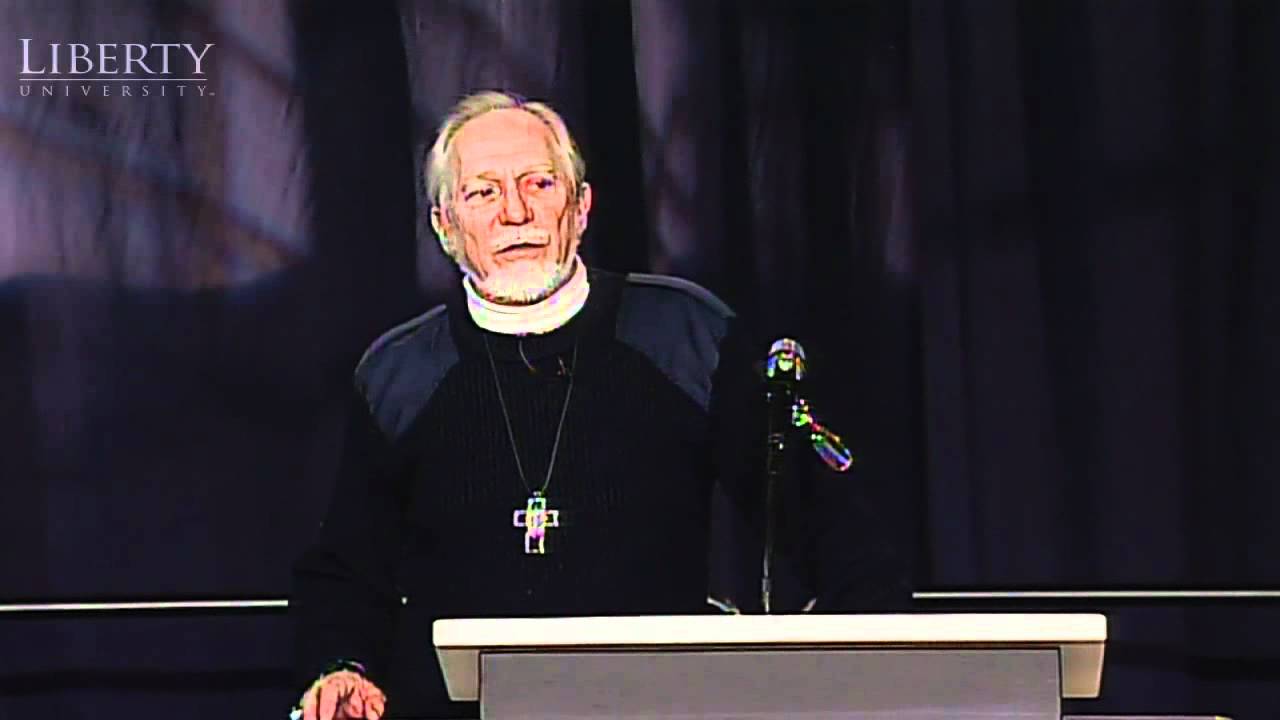 Given that we’ve just celebrated Christmas and the New Year is just around the corner, it seems a fitting time to post this video from Douglas Gresham, C.S. Lewis’ stepson, who gave this sermon at Liberty University back in 2011…
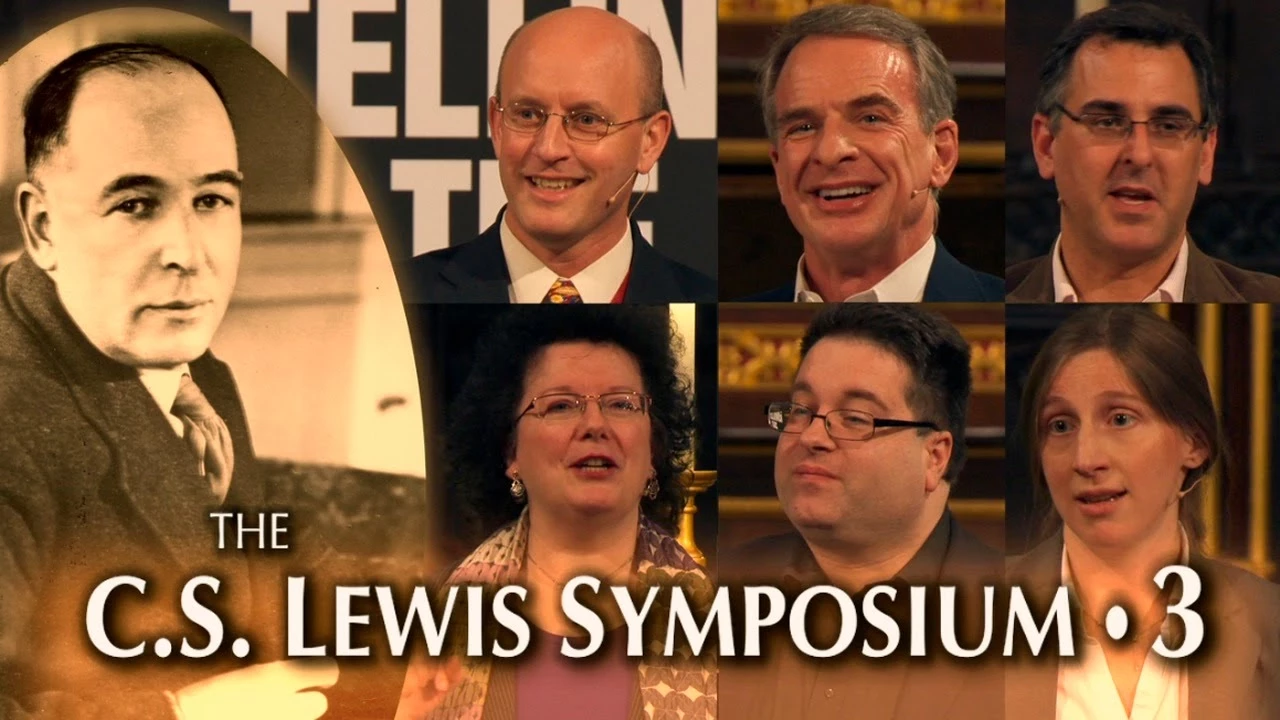 At the 50th Anniversary of C.S. Lewis’ death, he was honoured in Westminster Abbey’s “Poet’s Corner”. To mark the anniversary and this honour, there was a