One of the first things which struck me about the Qur’an the first time I read it was how it can suddenly and jarringly jump to a completely different scene,
I’ve often been told that the Torah and the Injil were only for the Jews. However, two problems: The Pickthall translation doesn’t hide it: He hath revealed unto thee (Muhammad)
John Fontain recently debated David Wood on the Islamic Dilemma, which points out that the Qu’ran both affirms the Torah and Gospel while contradicting them. John has a rather different
Those who attempt to say that the Qur’an teaches the corruption of the earlier scriptures, often appeal to Qur’an 5:48, but this argument turns on the translation of the word
I’m reading through the Qu’ran one last time this year and wanted to follow along with a Tafsir. I discovered Quran Garden which was just the sort of thing I
The Qur’an claims that if it were not from God, there would be many contradictions in it. However, there is one Qur’anic verse which presents an inherent contradiction! In chapter
The sun sets in muddy spring (18:86) Semen comes from between backbone & ribs (86:6-7) Stars are missiles to shoot devils (67:5) If a fly lands in your drink, one
The Qur’an speaks about Allah helping the followers of Jesus and keeping them “uppermost”, but this presents a dilemma since, historically, this has to refer to Trinitarian Christians… which is
Lent begins this week, so I thought a penitential song was in order, so here is Misere Mei, Deus which is a song based on Psalm 51:
Miserere mei, Deus: secundum magnam misericordiam tuam. Have mercy on me, O God, according to Thy great mercy.
Et secundum multitudinem miserationum tuarum, dele iniquitatem meam. According unto the multitude of Thy tender mercies remove my transgressions.
Amplius lava me ab iniquitate mea: et a peccato meo munda me. Wash me thoroughly from my iniquities, and cleanse me from my sin.
Quoniam iniquitatem meam ego cognosco: et peccatum meum contra me est semper. I knowingly confess my transgressions: and my sin is ever before me.
Tibi soli peccavi, et malum coram te feci: ut justificeris in sermonibus tuis, et vincas cum judicaris. Against Thee only have I sinned, and done evil before Thee: that they may be justified in Thy sayings, and might they overcome when I am judged.
Sacrificium Deo spiritus contribulatus: cor contritum, et humiliatum, Deus, non despicies. Sacrifices of God are broken spirits: dejected and contrite hearts, O God, Thou wilt not despise.
Benigne fac, Domine, in bona voluntate tua Sion: ut aedificentur muri Ierusalem. Deal favorably, O Lord, in Thy good pleasure unto Zion: build Thou the walls of Jerusalem.
Tunc acceptabis sacrificium justitiae, oblationes, et holocausta: tunc imponent super altare tuum vitulos. Then shalt Thou be pleased with the sacrifices of righteousness, with small and large burnt offerings: then shall they lay calves upon your altar.
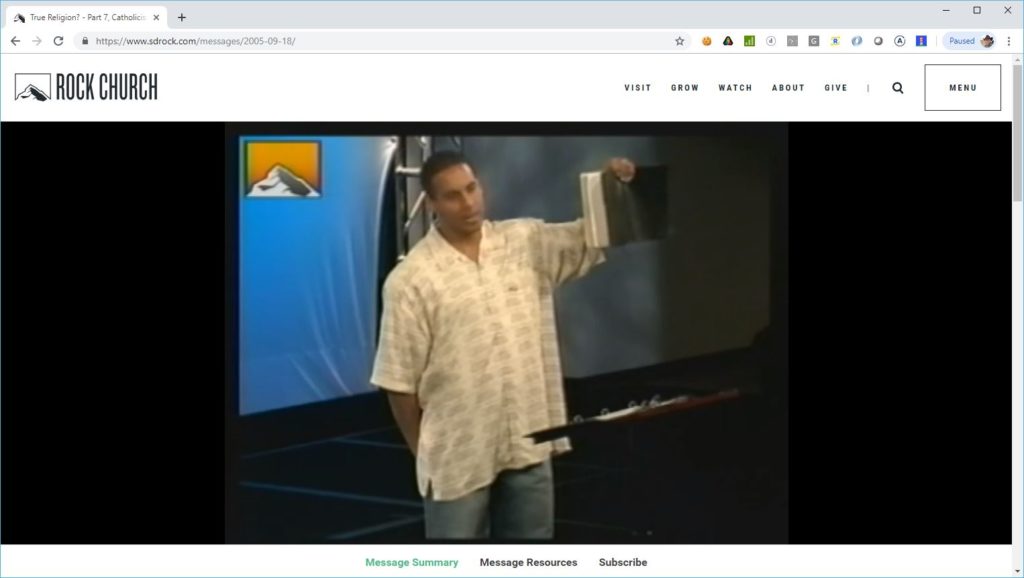
I came across a series from a local large evangelical church called “The Rock”. The series is called “True Religion”:
While Pastor Miles seems nice, his explanation of Catholicism leaves a lot to be desired. In general, he offers a surface explanation of Catholicism and then a simple prooftext to counter its claims.
The Protestant Tradition
For example, when he speaks about the importance in Catholicism of tradition, he neglects important passages which support this, such as the following passage where St. Paul places the importance and authority of his letters (Sacred Scripture) with what has been passed on to the Thessalonians orally (Sacred Tradition):
So then, brethren, stand firm and hold to the traditions which you were taught by us, either by word of mouth or by letter.
2 Thessalonians 2:15
Now, Pastor Miles might disagree with the interpretation of this verse, but to omit it entirely from the discussion is to present the Catholic case poorly.
Another common pattern in his presentation is that he makes an assumption without justification. For example, he (quite correctly) says that if a tradition conflicts with Scripture then the tradition is wrong:
Then Pharisees and scribes came to Jesus from Jerusalem and said, “Why do your disciples transgress the tradition of the elders? For they do not wash their hands when they eat.” He answered them, “And why do you transgress the commandment of God for the sake of your tradition? For God commanded, ‘Honor your father and your mother,’ and, ‘He who speaks evil of father or mother, let him surely die.’ But you say, ‘If any one tells his father or his mother, What you would have gained from me is given to God, he need not honor his father.’ So, for the sake of your tradition, you have made void the word of God.
Matthew 15:1-6
This is all entirely true…but to successfully make the case he is trying to build, he must first prove that particular Catholic Traditions conflict with Scripture.
Historical Fiction
As expected, Pastor Miles tells the usual canards concerning Constantine, suggesting to me that Pastor Miles hasn’t read any serious books concerning Church History.
He cites Johann Tetze as though his claims were official Catholic teaching. His explanation of the Council of Trent, which he keeps calling a “Conference”, was also lacking.
Faith and Works
Pastor Miles makes the quite a mess of his section concerning faith and works. Aside from the fact that he conflates “works” and “works of the law”, he seems to think penance is earning forgiveness, as are indulgences, neither of which is correct.
In his presentation, we were told that Catholicism leads to idolatry, with the usual complaints about the Saints, skipping over the Catholic distinctions between worship and veneration, as well as the Scriptural evidence of the Saints in Heaven praying.
He made a poor argument from St. Paul in an attempt to discredit the idea of Saints praying:
For there is one God, and there is one mediator between God and men, the man Christ Jesus
1 Timothy 2:5
He claimed that Mary didn’t remain a virgin, using Matthew 13:55 in an attempt to show that she had at least seven children. At this point it became clear to me that Pastor Miles doesn’t seem to have ever read a Catholic defence of this doctrine, otherwise he would know the Biblical references which show his claim to be untenable.
The usual stuff about repetitious prayers was said, which I found a bit amusing, since I’ve been to his church and sung along with his congregation which likes to sing choruses over again and again.
Sola Scriptura
Naturally, the fatal assumption throughout his presentation was Sola Scriptura. He would talk about a Catholic doctrine and ask “Where is that in the Bible?”. That is a doctrine which must first be proved.
He didn’t really talk about where the canon of Scripture comes from. There’s just a throw-away comment about Catholics adding books to the Bible, once more confirming that history isn’t Pastor Miles’ strong suit.
Purgatory
Pastor Miles claimed that “The Catholic tradition offers the false hope of purgatory to cleanse unforgiven sins while the Bible teaches that Jesus alone is the forgiver of all sin”. Clearly he hasn’t read the two paragraphs in the Catechism about Purgatory.
He asks how on earth someone could become a Christian and not be perfectly purified. I would have thought a little bit of self-examination should answer this question. I’d be very surprised if Pastor Miles said that he was perfectly free from all sin and attachment to sin. If that’s not the case, then he needs further purification. I think another problem is that he conflates purification and unforgiveness.
Conclusion
All-in-all, this was a rather lacklustre rebuttal of Catholicism. Pastor Miles demonstrated his lack of familiarity with Church History and Catholic teaching. If he were to do this again, I would recommend that he “steel man” the Catholic position, offering arguments, history and Scripture before attempting to refute it.
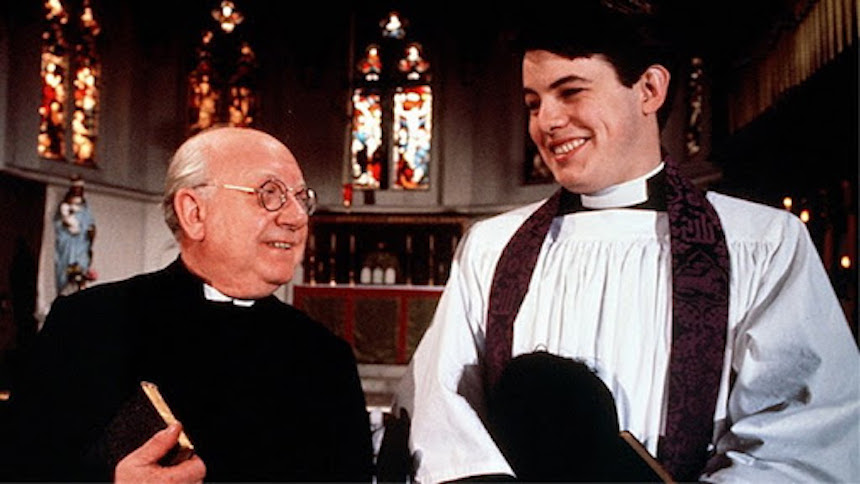
Here’s a TV show I recently came across, which I somehow never saw in my youth, Bless Me Father. Not only is it a sit-com about a Catholic priest, it stars Arthur Lowe who played the iconic Captain Mainwaring from one of my all-time favourites, Dad’s Army…
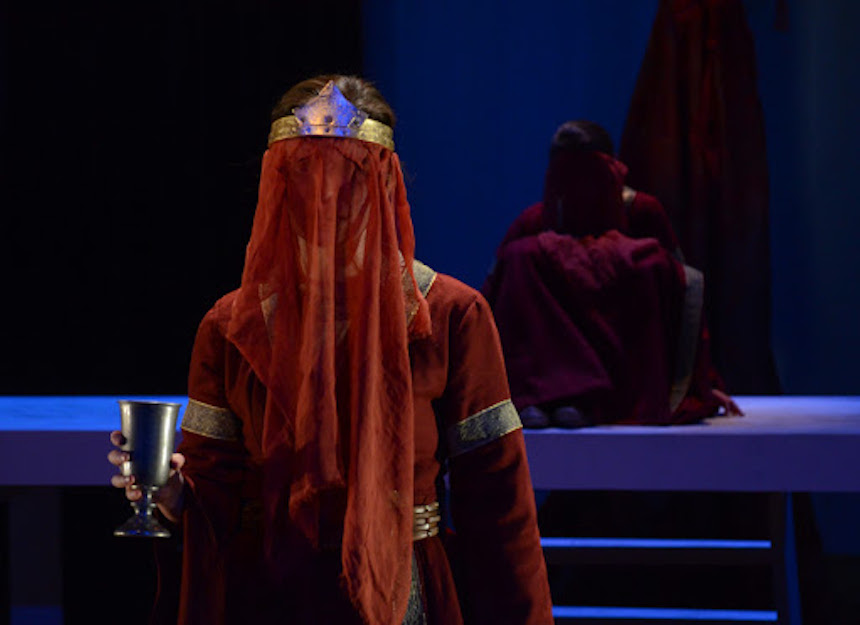
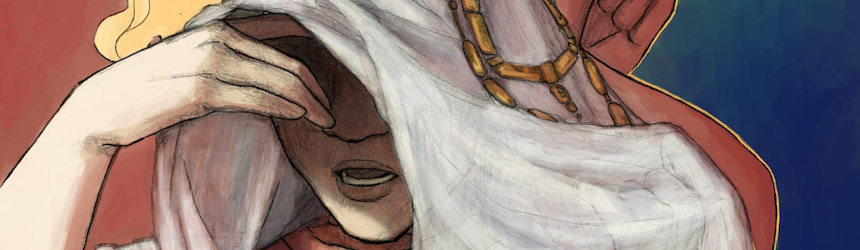
Orual, desperate to save Psyche from the life which she says she loves, resorts to some tough love. Orual blackmails her sister into shining a lamp on her “husband” in the middle of the night…with heart-breaking consequences.