One of the first things which struck me about the Qur’an the first time I read it was how it can suddenly and jarringly jump to a completely different scene,
I’ve often been told that the Torah and the Injil were only for the Jews. However, two problems: The Pickthall translation doesn’t hide it: He hath revealed unto thee (Muhammad)
John Fontain recently debated David Wood on the Islamic Dilemma, which points out that the Qu’ran both affirms the Torah and Gospel while contradicting them. John has a rather different
Those who attempt to say that the Qur’an teaches the corruption of the earlier scriptures, often appeal to Qur’an 5:48, but this argument turns on the translation of the word
I’m reading through the Qu’ran one last time this year and wanted to follow along with a Tafsir. I discovered Quran Garden which was just the sort of thing I
The Qur’an claims that if it were not from God, there would be many contradictions in it. However, there is one Qur’anic verse which presents an inherent contradiction! In chapter
The sun sets in muddy spring (18:86) Semen comes from between backbone & ribs (86:6-7) Stars are missiles to shoot devils (67:5) If a fly lands in your drink, one
The Qur’an speaks about Allah helping the followers of Jesus and keeping them “uppermost”, but this presents a dilemma since, historically, this has to refer to Trinitarian Christians… which is
The final two letters of St. Ignatius which we read are both sent to the city of Smyrna. The first letter is sent to the Church as a whole, the second specifically to their bishop, Polycarp.
This first letter is special for many reasons, but particularly because it contains Ignatius’ clearest declaration of faith about the Eucharist, as well as being the earliest recorded use of the phrase “Catholic Church”. Invented at Nicea? I don’t think so.
The Scripture which will be proclaimed at Mass in the upcoming weeks looks at the subject of prayer.
The other day, whilst surfing the Internet, I came across the prayer which I used during my time of preparation prior to receiving the Sacrament of Confirmation. To my surprise, I found that there was an “extra bit” that I had not heard before. Here it is:
God grant me the serenity to accept the things I cannot change; courage to change the things I can; and wisdom to know the difference.
Living one day at a time; Enjoying one moment at a time; Accepting hardships as the pathway to peace; Taking, as He did, this sinful world as it is, not as I would have it; Trusting that He will make all things right if I surrender to His Will; That I may be reasonably happy in this life and supremely happy with Him forever in the next. Amen.
A few weeks ago I compiled the list of “Top Twenty Catholic Pick-up Lines” (Part 1, Part 2). Did you wonder what it might be like if somebody incorporated them into a song? Well, wonder no more! Thanks to Jenna for bringing this video to my attention.
As I was watching this I realized that a lot of these lines aren’t new, they’ve been used at least since ever there was a Romeo and a Juliet…
Romeo:“If I profane with my unworthiest hand, this holy shrine, the gentle sin is this: My lips, two blushing pilgrims, ready stand to smooth that rough touch with a tender kiss”
Juliet: “Good pilgrim, you do wrong your hand too much, which mannerly devotion shows in this; for saints have hands that pilgrims’ hands do touch, and palm to palm is holy palmers’ kiss”
Romeo: “Have not saints lips, and holy palmers too?”
Juliet: “Ay, pilgrim, lips that they must use in prayer”
Romeo:“O, then, dear saint, let lips do what hands do; they pray, grant thou, lest faith turn to despair”
Juliet:“Saints do not move, though grant for prayers’ sake”
Romeo: “Then move not, while my prayer’s effect I take.Thus from my lips, by yours, my sin is purged…”
Thus far we have been reading the letters this inspirational martyr wrote from the city of Smyrna, but we must now follow him to Troas where he will write his last three letters before completing his journey to Rome and to the mouths of the wild beasts!
Ignatius now addresses the schism and the Judaising attempts at the church in the city of brotherly love, Philadelphia. Here is my abridged version of the letter:
This week in the JP2 Group we will be continuing our study of the letters of St. Ignatius of Antioch, martyr of the early 2nd Century.
Last week we read his words to the Trallians where Ignatius presents unity with the bishop as a defence against heresy. This week we move on to the letter he wrote to the Ephesians, the community in which Paul lived for three years and to whom he wrote a letter which we find in Sacred Scripture.
In this letter Ignatius pulls together all the different topics we have seen him address in his letters thus far: unity, the episcopacy, heresy, the Eucharist etc. However, as well as being a nice revision of all we have seen thus far, he also gives us some advice on how to deal with those outside the Church.
After looking at several different translations, I have, again, created my own abridged version so that we will be able to complete our study of this letter in a single evening. The letter to the Ephesians is quite long so unfortunately I had to cut quite a bit. Anyway, here it is:


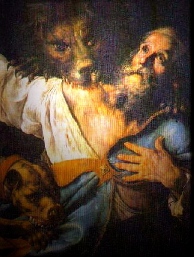 The final two letters of St. Ignatius which we read are both sent to the city of Smyrna. The first letter is sent to the Church as a whole, the second specifically to their bishop, Polycarp.
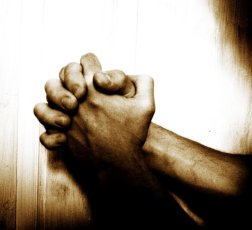 The Scripture which will be proclaimed at Mass in the upcoming weeks looks at the subject of prayer.